Abalone Diver
Abalone divers hand-harvest wild abalone from rocky reefs, working underwater in a fishery managed by quota and state licences.
- Median salary*
- $96,200
3.8%vs last year, before tax
- People employed*
- 260
13.3%vs last year
- Projected growth*
- −3%
to 2035
- AI exposure*
- Low
- automation risk
- Average hours*
- 40/wk
matches all-jobs average
- Shortage status*
- Not in shortage
national
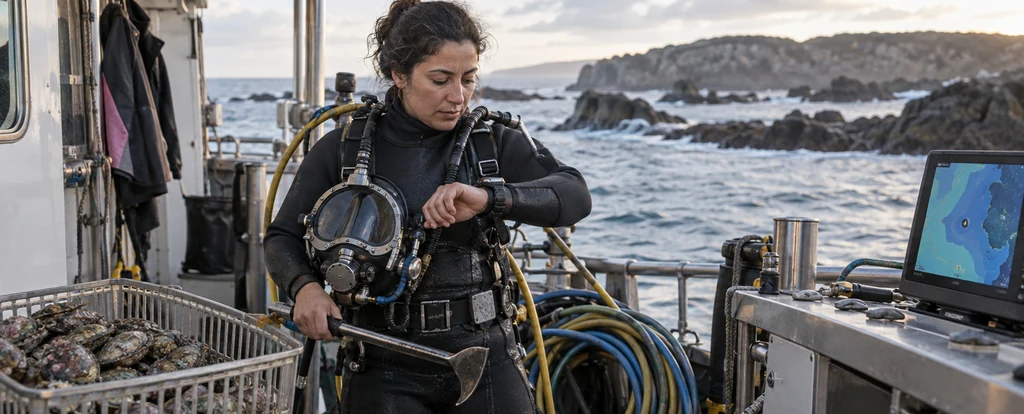
Abalone divers work the kelp-covered reefs of southern Australia, prizing abalone from the rocks by hand on scuba or surface-supply air rather than catching them with gear. Most work as crew or owner-operators on small boats, and the catch goes to live and frozen markets where condition decides the price. The job sits apart from commercial diving more broadly because it depends on holding, or crewing under, a state abalone licence or quota unit.
How much do abalone divers earn?
The median full-time salary for an abalone diver is $96,200 per annum, before tax, up $19,900 since 2018.
How a diver is engaged matters more than anything else: quota holders take the value of the catch less fuel, air, maintenance and licence costs, while crew are usually paid a share of the catch or a day rate. Catch quality, the price paid for live abalone and the number of fishable days all move earnings, and a run of bad weather or a closed area can cut a season short.
What does an abalone diver do day to day?
The list below is what fills most weeks; the exact mix shifts with seniority and whatever stage the current work is at.
- Diving onto rocky reefs on scuba or surface-supply air
- Prying abalone from the rocks with a hand iron
- Measuring each shell and returning undersized abalone to the reef
- Recording catch, location and quota details as the day goes
- Maintaining dive gear, air systems and the vessel
What skills do abalone divers need?
Employers look for plant and equipment operation, environmental assessment, operations management, backed by Suunto dive computer fluency and strong physical stamina and dexterity.
Specialist skills
- Plant and equipment operation
- Environmental assessment
- Operations management
Software and tools
- Suunto dive computer
- Garmin GPS chartplotter
- Hydraulic abalone iron
- Marine radio
- Catch recording app
General skills
- Physical stamina and dexterity
- Safety and compliance awareness
- Attention to detail
- Problem solving
Is the job growing?
About 260 people work as abalone divers in Australia, and employment is projected to decline 3% over the decade to 2035. That's a real decline, worth weighing carefully before training into the role.
How do you become an abalone diver?
Here's the path most abalone divers take, step by step.
- 1Get a commercial diving qualification
This is commercial diving, so you need a certificate such as ADAS Part 1 through the Australian Diver Accreditation Scheme, which covers both scuba and surface-supply work. Recreational dive certification on its own does not meet the standard expected on a commercial boat.
- 2Pass a commercial dive medical
Divers must meet the fitness requirements of the Australian diving medical standard and be reassessed at intervals, because the work involves repeated dives deep enough to carry decompression risk.
- 3Build deck and boat experience
Most people start as a deckhand or tender, learning to read currents and swell, handle the boat and grade catch before they dive for a living. That time on the water is also how crew positions become available.
- 4Get access to a licence or quota
Each state runs its own abalone fishery, and licences and quota units are limited and usually bought from an existing holder rather than granted. Crewing for a quota holder is the common way in, and the rules differ by state.
- 5Add sea safety and vessel qualifications
A coxswain certificate, marine radio, first aid and sea survival training are commonly needed to run the boat and to meet workplace safety duties on the water.
Ready to apply as an abalone diver?
Whether you're working toward becoming an abalone diver or already are one and want a hand with the next step (sharpening your resume for ATS screening, tightening your cover letter, or knowing what you'll actually be asked at interview), here are examples grounded in this specific role, not generic templates.
What jobs can an abalone diver move to?
Moving into Commercial Diver typically comes with the biggest pay rise, worth $18,200 a year more on average.
| Move to | Typical pay change | Overlap | Retraining |
|---|---|---|---|
| Commercial Diver Abalone divers bring underwater work experience and dive certification, but need additional commercial tickets for construction and inspection diving. | +$18,200 | 27% | reskill |
| Fishing Skipper Abalone divers bring boat handling and marine knowledge, and can take a skipper's ticket to run fishing operations. | −$2,600 | 53% | short course |
| Aquaculture Worker Abalone divers bring marine husbandry and harvest skills to aquaculture work, though it involves a different setting and steady farm routines. | −$31,200 | 81% | short course |
Moves are chosen from Jobs and Skills Australia's Data on Occupation Mobility, which follows income tax records between 2011-12 and 2020-21, together with entry requirements and skill overlap. A known move is one people were seen making in that data. Pay change compares median full-time pay for the two roles.
Who works as an abalone diver?
The typical abalone diver is 46 years old; 95% are men, 88% work full-time, and full-timers average 40 hours a week.
- 46
- Median age
- 5%
- Female share
- 88%
- Full-time
- +0h
- vs all-jobs avg
What's it like being an abalone diver?
Abalone diving is seasonal, weather-led work with long days on the water and short, intense dives in cold water. Crews are tiny, often the same few people year after year, and the day's plan follows the swell, the tide and the quota still to fill. It suits someone who is comfortable alone underwater and willing to carry the commercial side of the job as well as the physical one.
What people like
- Working on your own terms. Most divers run their own operation or crew on a share basis, so the day is shaped by the weather and the boat rather than by a supervisor.
- Knowing the ground in detail. Divers return to the same reefs season after season, and reading the bottom, the weed and the current is a large part of the skill.
- A product that rewards care. Live abalone is judged on condition, so careful handling and quick grading show up directly in what the catch is worth.
- A season with a shape. Most states run the fishery to a defined calendar, which gives the year a rhythm and a genuine off-season for maintenance and other work.
What people find hard
- The weather sets the calendar. Swell and wind can keep the boat ashore for days, and those lost days are hard to make up before the season closes.
- The physical toll. Repeated diving in cold water and hauling gear on a moving deck wears on backs, shoulders and ears, and bottom time is limited by decompression.
- Entry is expensive. Licences and quota units are limited and normally bought from an existing holder, so getting access is the hardest part of the career rather than passing a course.
- Income follows the market. Prices for live and frozen abalone move with export demand, and a crew share falls when they do.
Based on our synthesis of professional-body surveys and public accounts of the role, not first-person verified reviews.
Which industries employ abalone divers?
Fishing, hunting and trapping employs the largest share of abalone divers, followed by Aquaculture.
Top employing industries
- 1Fishing, hunting and trapping
- 2Aquaculture
- 3Seafood processing
- 4Food and beverage wholesaling
Ranked by employment share; the source doesn't publish an exact percentage per industry.
| Certificate III/IV | 34% | |
|---|---|---|
| Diploma / Advanced Diploma | 26% | |
| Bachelor degree | 20% | |
| Year 12 or below | 20% |
Will AI replace abalone divers?
AI and automation reach only the edges of this job. The harvest itself is physical work done by hand in cold, moving water, which is why the role stays low exposure. What has changed is the administration around it: dive computers, chartplotters and catch-recording apps now handle position, depth and quota logging that used to be kept on paper.
Share of typical working time by exposure level
- Diving on the reef and harvesting abalone by handPrying each abalone from the rock with a hand iron is manual work done in swell and murky water, where the diver judges size and condition by eye.45%low
- Reading conditions and planning the diveWeather and swell models are increasingly automated, but deciding whether it is safe to put a diver in the water remains a judgement made on the boat.20%moderate
- Maintaining dive gear, air systems and the boatServicing regulators, compressors and the vessel depends on hands-on inspection and knowing how equipment feels when it is running right.20%low
- Recording catch, position and quotaCatch-recording apps and GPS already log position, size and quota as the diver works, which has taken most of the paperwork out of the day.15%high
Common questions about becoming an abalone diver
Straight answers to the questions people ask most.
How much do abalone divers earn?
Abalone divers earn $96,200 per year before tax at the median for full-time workers. What a diver actually takes home swings widely with the catch, the market price and whether they hold quota or crew for someone who does.
How do you become an abalone diver?
You need a commercial diving qualification such as ADAS certification, a current commercial dive medical, and access to a state abalone licence or quota. Most people spend time as crew on an established boat first, which is how both the experience and the openings usually come.
Are abalone divers in demand?
Abalone divers are currently not in shortage, and employment is projected to decline 3% over the decade to 2035. The fishery is capped by quota, so the workforce is small and entry depends on a licence or crew position coming up rather than on employers hiring in bulk.
Will AI replace abalone divers?
AI exposure here is low, because the harvest is physical work done by hand in cold, moving water that no current system can carry out. Divers already use dive computers, chartplotters and catch-recording apps, which handle position, planning and logging rather than the diving itself.
What else can an abalone diver do?
Divers move into commercial diving, which pays $18,200 more and uses the same underwater skills, though construction and inspection work needs further certification. Others shift into aquaculture work or take a coxswain or skipper certificate and run a fishing operation. Owning quota and a vessel is the usual way earnings grow, and plenty of divers move across to that side of the business as the physical work gets harder.
Is abalone diving dangerous?
It carries the ordinary risks of diving and small boats: decompression illness, cold, rough water and gear failure. Commercial medicals, dive plans and safety procedures are compulsory for that reason, and experienced divers manage the risk with conservative dive profiles and by staying ashore when conditions are poor.
Related roles
Not sure this is you? Take the career quiz and get a ranked shortlist of roles that fit how you like to work.