Home Manufacturing & Production
Fitter
Fitters build, install and repair the machinery that keeps factories, mines and processing plants running.
- Median salary*
- $91,000
4.1%vs last year, before tax
- People employed
- 75,800
0.3%vs last year
- Projected growth*
- +2%
to 2035
- AI exposure*
- Moderate
- automation risk
- Average hours*
- 40/wk
matches all-jobs average
- Shortage status*
- In shortage
national
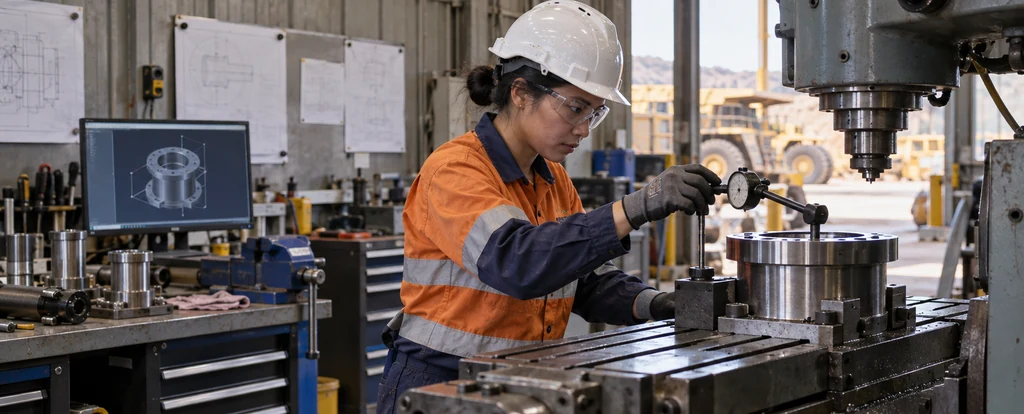
Fitters work in workshops, factories, mines and processing plants, assembling machinery to fine tolerances from engineering drawings and then keeping it running once it is installed. The role sits close to a machinist or fitter and turner, but the emphasis falls on fitting, aligning and repairing equipment rather than cutting new parts at the lathe. Mining, manufacturing and construction are the largest employers, and much of the work happens on site around production equipment.
How much do fitters earn?
The median full-time salary for a fitter is $91,000 per annum, before tax, up $19,000 since 2018.
What fitters earn moves with where they work as much as with experience, with mine sites, remote processing plants and shutdown crews generally paying above general manufacturing. Shift rosters, overtime and site allowances add to base rates, and enterprise agreements set the terms with larger employers. Extra qualifications such as welding certification or hydraulics training also affect what you are offered.
What does a fitter do day to day?
The list below is what fills most weeks; the exact mix shifts with seniority and whatever stage the current work is at.
- Reading engineering drawings, specifications and job instructions
- Fitting and assembling metal parts, subassemblies and machine components to fine tolerances
- Operating lathes, milling machines and presses to make or modify one-off parts
- Installing, aligning and levelling machinery on site, then commissioning it so production can restart
- Diagnosing mechanical faults and carrying out maintenance and repair, often during a planned shutdown
What skills do fitters need?
Employers look for installation and maintenance, hand and power tool work, reading plans and specifications, backed by Lathes and milling machines fluency and strong problem solving.
Specialist skills
- Installation and maintenance
- Hand and power tool work
- Reading plans and specifications
- Fabrication and finishing
- Plant and equipment operation
- Worksite safety management
Software and tools
- Lathes and milling machines
- Micrometers, verniers and dial gauges
- Hydraulic and pneumatic tooling
- AutoCAD
- MEX or SAP maintenance systems
General skills
- Problem solving
- Attention to detail
Is the job growing?
About 75,800 people work as fitters in Australia, and employment is projected to grow 2% over the decade to 2035. That's modest growth: demand is steady rather than booming.
How do you become a fitter?
Here's the path most fitters take, step by step.
- 1Finish Year 10 or Year 12
Most employers ask for Year 10 at a minimum, and maths and English help with the drawings, measurements and job instructions you will work with daily.
- 2Start a Certificate III in Engineering (Mechanical Trade) apprenticeship
The apprenticeship runs about four years, is paid, and combines TAFE study with supervised work on real machinery. It is the standard entry route and the qualification employers recognise nationally.
- 3Complete your trade qualification and site requirements
Finishing the apprenticeship gives you a nationally recognised trade certificate. If you will work on construction sites you also need a White Card, and some employers ask for a forklift licence or current first aid training.
- 4Specialise through the equipment you work on
Hydraulics and pneumatics, welding, precision alignment and fixed plant maintenance are common directions, and short courses in them often lead to better-paid site and shutdown work.
- 5Move into supervision or maintenance planning
After a few years, leading hand roles come from knowing the plant and the crew, while maintenance planning usually adds a Certificate IV or training in a system such as SAP or MEX.
Ready to apply as a fitter?
Whether you're working toward becoming a fitter or already are one and want a hand with the next step (sharpening your resume for ATS screening, tightening your cover letter, or knowing what you'll actually be asked at interview), here are examples grounded in this specific role, not generic templates.
What jobs can a fitter move to?
Moving into Metal Machinist typically comes with the biggest pay rise, worth $44,500 a year more on average.
| Move to | Typical pay change | Overlap | Retraining |
|---|---|---|---|
| Metal Machinist A fitter brings machinery assembly and precision measurement skills to metal machining, learning to set and operate machine tools. | +$44,500 | 85% | reskill |
| Pressure Welder A fitter brings metalworking and welding experience to pressure welding, gaining specialised certification for high-pressure work. | +$5,200 | 85% | reskill |
| Fitter and Turner A fitter brings mechanical fitting and assembly skills to fitter and turner work, adding turning and machining through further training. | −$5,200 | 100% | reskill |
| Toolmaker A fitter brings tooling and machinery maintenance skills to toolmaking, adding precision machining and die-making techniques. | −$26,000 | 54% | reskill |
Moves are chosen from Jobs and Skills Australia's Data on Occupation Mobility, which follows income tax records between 2011-12 and 2020-21, together with entry requirements and skill overlap. A known move is one people were seen making in that data. Pay change compares median full-time pay for the two roles.
Who works as a fitter?
The typical fitter is 40 years old; 98% are men, 92% work full-time, and full-timers average 40 hours a week.
- 40
- Median age
- 2%
- Female share
- 92%
- Full-time
- +0h
- vs all-jobs avg
What's it like being a fitter?
Fitting is a trade with a clear finish line: the machine runs to tolerance or it does not. The week mixes bench and workshop time with site work on live plant, and breakdowns or planned shutdowns set the pace, which sometimes means early starts, weekend work and call-outs. People who like working a fault out with their hands, and who do not mind heat, noise and dirt, tend to settle into it.
What people like
- The fix is visible. Tracking down a failing bearing, coupling or misalignment and then hearing the machine run smoothly is immediate feedback on a job done properly.
- Work moves between industries. The same skills apply to a mine's fixed plant, a food processing line and a manufacturer's production floor, so you are not tied to one sector.
- The qualification travels. A trade certificate is recognised across states and industries, which makes it easier to move for work or change sectors later.
- Specialising lifts your options. Adding hydraulics, welding or precision alignment training opens higher-paid site work and shutdown contracts.
What people find hard
- Breakdowns do not keep office hours. Unplanned failures mean call-outs, overtime and weekend work, because the machine has to run before production can restart.
- Hard physical work in tight spots. Lifting, confined spaces, hot plant and awkward positions are part of the job, and much of the day is spent standing, kneeling and reaching.
- Shutdown pressure. Planned shutdowns compress a lot of work into a short window, with long shifts while the plant waits to come back online.
- Site conditions. Mining and remote site roles often mean camp accommodation, long rosters away from home, and work in dust or heat.
Based on our synthesis of professional-body surveys and public accounts of the role, not first-person verified reviews.
Which industries employ fitters?
Mining employs the largest share of fitters, followed by Manufacturing.
Top employing industries
- 1Mining
- 2Manufacturing
- 3Other Services
- 4Construction
- 5Wholesale Trade
Ranked by employment share; the source doesn't publish an exact percentage per industry.
| Certificate III/IV | 34% | |
|---|---|---|
| Diploma / Advanced Diploma | 26% | |
| Bachelor degree | 20% | |
| Year 12 or below | 20% |
Will AI replace fitters?
Fitting sits in the middle: the planning and paperwork around the job have moved onto computers, while the work itself is still done with tools, hands and feel. Maintenance systems such as MEX and SAP schedule and record jobs, and condition monitoring sensors can flag a failing bearing before anyone hears it, but someone still has to confirm the fault, pull the machine apart and get the fit right. Diagnostic software changes how quickly you find a problem, not whether you can fix it.
Share of typical working time by exposure level
- Fitting, assembly and alignmentSetting clearances, shimming a base and aligning a coupling to tolerance come down to judgement and feel that sensors do not replace.40%low
- Maintenance, repair and reassemblyPulling a pump apart, replacing seals and getting it back together on site is physical work in conditions software cannot reach.30%low
- Fault-finding and diagnosisVibration and temperature data point you towards a bearing or coupling, but confirming it still means inspecting the machine itself.20%moderate
- Reading drawings and job instructionsDrawings now arrive as CAD models you can measure on screen, which speeds up checking a fit before anything is cut.10%moderate
Moves least exposed to AI
These career moves from fitter work are rated low for AI exposure:
- Pressure Welder
High skill overlap (85%), reskill to get there, and a low automation-risk profile.
Common questions about becoming a fitter
Straight answers to the questions people ask most.
How much do fitters earn?
The median full-time pay for fitters is $91,000 per year before tax, which means half earn more and half earn less. Site work, shift rosters, overtime and enterprise agreements push earnings above that, while general manufacturing workshops tend to sit closer to the middle.
How do you become a fitter?
The usual route is a Certificate III in Engineering (Mechanical Trade) apprenticeship, which takes about four years and is paid while you train. You need an employer to take you on first, so applying directly to engineering firms, maintenance contractors and mining companies works as well as going through a group training organisation.
Are fitters in demand?
Fitters are currently in shortage nationally, and employment is projected to grow 2% over the decade to 2035. The trade feeds mining, manufacturing, construction and processing, so hiring shifts between industries rather than disappearing with any one of them, and it pays to watch which sectors are busy in your area.
Will AI replace fitters?
Not the hands-on side of it. CAD drawings, maintenance systems and condition monitoring sensors have taken over documentation, scheduling and part of the diagnosis, but fitting, aligning and repairing machinery in place still needs someone with tools and judgement. The change is more about what you are expected to do with the systems around the job.
What is the difference between a fitter and a fitter and turner?
A fitter and turner does both fitting and machining, so spends more time at the lathe making and repairing parts to fine tolerances. A fitter focuses on assembling, installing and maintaining machinery and often works on site rather than in a workshop, though the two roles overlap heavily and people move between them.
Where can fitting take you?
Fitting skills transfer easily to nearby trades, with further training doing the rest. Metal machining adds setting and operating machine tools and pays $44,500 more, while pressure welding builds on the metalwork you already do and adds certification for high-pressure work, with pay $5,200 more. Moving into fitting and turning pays $5,200 less, and the change is mostly about the extra machining work.
Related roles
Not sure this is you? Take the career quiz and get a ranked shortlist of roles that fit how you like to work.