Home Manufacturing & Production
Food Technologist
Food technologists develop and test food products, checking they're safe, consistent and compliant before they reach supermarket shelves.
- Median salary
- $114,100
4.2%vs last year, before tax
- People employed
- 1,400
0.0%vs last year
- Projected growth
- +19.6%
to 2035
- AI exposure*
- Moderate
- automation risk
- Average hours
- 41/wk
+1h vs all jobs
- Shortage status
- Not in shortage
national
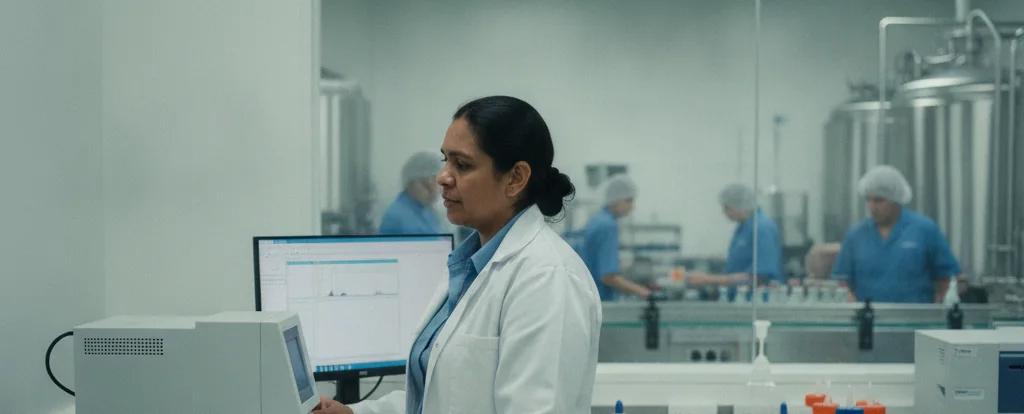
Food technologists work in laboratories and on production floors across food and beverage manufacturing, moving between formulation, testing and troubleshooting. They overlap with food science, but the focus is on making a product work at scale: fixing the texture, shelf-life or taste problems that only show up once a recipe leaves the test kitchen for the factory. Most are employed by manufacturers, with some working for ingredient suppliers or testing labs that service several producers.
How much do food technologists earn?
The median full-time salary for a food technologist is $114,100 per annum, before tax, up $24,000 since 2018.
What you earn depends heavily on where you work: large manufacturers and ingredient suppliers generally pay more than small producers, and a product development role usually sits above a straight laboratory or quality assurance position. Site-based and shift work can attract penalty rates or allowances, and food manufacturing is covered by a mix of enterprise agreements and awards, so two technologists with the same title may be on noticeably different packages.
What does a food technologist do day to day?
The list below is what fills most weeks; the exact mix shifts with seniority and whatever stage the current work is at.
- Testing food samples for microbiological and chemical safety, using methods such as HPLC and culture plating
- Adjusting a formulation or process to fix a texture, shelf-life or taste problem found in trials
- Running a batch on the production line to see how a product behaves at full scale, because a bench sample rarely behaves the same way
- Setting up shelf-life studies and sensory panels, then writing the results up against food safety standards
- Working with production and quality staff to sort out a problem before it turns into a recall
What skills do food technologists need?
Employers look for laboratory analysis, food safety and hygiene, data analysis, backed by HPLC (High-Performance Liquid Chromatography) fluency and strong problem solving.
Specialist skills
- Laboratory analysis
- Food safety and hygiene
- Data analysis
- Regulatory compliance
- Process improvement
Software and tools
- HPLC (High-Performance Liquid Chromatography)
- Microbiological culture media and incubators
- Food safety management software (HACCP, FSMS)
- Laboratory Information Management System (LIMS)
- Statistical analysis software (Minitab, JMP)
General skills
- Problem solving
- Attention to detail
- Written communication
Is the job growing?
About 1,400 people work as food technologists in Australia, and employment is projected to grow 19.6% over the decade to 2035. That's healthy, above-average growth, and the role should stay in solid demand.
How do you become a food technologist?
Here's the path most food technologists take, step by step.
- 1Complete a bachelor degree in food science or food technology
Three or four years full time, covering food chemistry, microbiology, processing and food law. It's the standard entry point, and around 57% of people working as food technologists hold one.
- 2Get food manufacturing experience while you study
Placements, vacation work or a part-time lab job give you the hands-on testing and production exposure employers weigh heavily. A graduate who has run micro tests or worked a shift on a line stands out against a transcript alone.
- 3Add food safety training
A HACCP course or a food safety supervisor qualification shows you can work to the standards manufacturers are audited against, and many entry-level job ads ask for it.
- 4Start in a laboratory, quality or product development role
Graduates typically enter as a food technologist, a quality assurance officer or a product development assistant. These roles build the testing, specification and trial experience that later narrows into development, compliance or process work.
- 5Consider a diploma or a conversion qualification if you're coming from another field
A Diploma of Food Science and Technology (FBP50121) can lead into technician and quality assurance work for people without a degree, though technologist roles generally ask for one. Chemistry or biology graduates usually add a graduate certificate or masters in food science rather than starting a bachelor degree again.
Ready to apply as a food technologist?
Whether you're working toward becoming a food technologist or already are one and want a hand with the next step (sharpening your resume for ATS screening, tightening your cover letter, or knowing what you'll actually be asked at interview), here are examples grounded in this specific role, not generic templates.
What jobs can a food technologist move to?
Moving into Quality Manager typically comes with the biggest pay rise, worth $33,800 a year more on average.
| Move to | Typical pay change | Overlap | Retraining |
|---|---|---|---|
| Quality Manager Food technologists bring product safety, quality systems and compliance knowledge to quality management roles, though additional management study is needed.Known move | +$33,800 | 44% | reskill |
| Chemist Food technologists with strong chemistry foundations can move into analytical or formulation chemistry, though further chemistry study is needed.Known move | +$0 | 57% | requalify |
Moves are chosen from Jobs and Skills Australia's Data on Occupation Mobility, which follows income tax records between 2011-12 and 2020-21, together with entry requirements and skill overlap. A known move is one people were seen making in that data. Pay change compares median full-time pay for the two roles.
Who works as a food technologist?
The typical food technologist is 36 years old; 67% are women, 80% work full-time, and full-timers average 41 hours a week.
- 36
- Median age
- 67%
- Female share
- 80%
- Full-time
- +1h
- vs all-jobs avg
What's it like being a food technologist?
The work moves between the bench and the plant, so a week can hold methodical lab time, a run of trial batches and an urgent call from the line about a batch that isn't behaving. Timelines are long, because a product can take months or years to get from concept to shelf, and much of the early work happens before anyone knows whether the idea is viable. It suits people who like solving concrete problems with evidence, and who don't mind that the answer often sits in a spec or a spreadsheet as much as in a beaker.
What people like
- A product you worked on reaches the shelf. You can point at something in a supermarket and know which parts of it you tested, adjusted or argued for.
- The lab and the plant in the same week. Bench work and production trials use different skills, which keeps the job from settling into one routine.
- Problems with evidence behind them. A failed micro test or a texture that won't hold is a question you can answer with data rather than opinion.
- Explaining the science to people who need it plainly. Production staff, marketers and buyers all need the same result described differently, and translating it well is a real skill.
What people find hard
- The gap between a bench sample and a full production run. A recipe that works perfectly in the lab can fail at scale, and closing that gap takes repeated trials that are rarely glamorous.
- The documentation load. Specifications, test records and audit paperwork are constant, and an out-of-date document can hold up a product release.
- Long timelines. Most products take months of testing before launch and many never get there, so the work you put in doesn't always end in a finished product.
- High stakes when something goes wrong. Food safety failures carry real consequences for consumers and for the business, so a suspected issue is handled quickly and carefully.
Based on our synthesis of professional-body surveys and public accounts of the role, not first-person verified reviews.
Which industries employ food technologists?
Manufacturing employs the largest share of food technologists, followed by Professional, Scientific and Technical Services.
Top employing industries
- 1Manufacturing
- 2Professional, Scientific and Technical Services
- 3Wholesale Trade
Ranked by employment share; the source doesn't publish an exact percentage per industry.
| Bachelor degree | 57.2% | |
|---|---|---|
| Postgraduate | 29.3% | |
| Diploma / Advanced Diploma | 6.9% | |
| Year 12 or below | 3.7% | |
| Certificate III/IV | 1.6% |
Will AI replace food technologists?
Food technology sits in the middle range for AI exposure. The paperwork around the job, including specifications, test records, compliance documentation and pattern-finding in lab data, is already being sped up by laboratory information systems and statistical software, and that will continue. The physical side of the work, running a trial batch, judging texture and flavour, and chasing down a problem on a production line, still depends on someone being there.
Share of typical working time by exposure level
- Laboratory testing and analysisAutomated analysers and laboratory information systems take on more of the sample runs and recording, but method setup, interpreting an out-of-spec result and deciding what happens next stay with the technologist.30%moderate
- Documentation and compliance recordsSpecifications, HACCP records and audit paperwork are the most exposed part of the job; software drafts and cross-checks much of it, and the technologist reviews and signs it off.25%high
- Formulation and product trialsFormulation software and predictive modelling narrow down which recipes are worth testing, but the bench trial and the sensory panel still decide whether a product works.25%moderate
- Production floor troubleshootingWhen a batch goes wrong on the line, working out why from the texture, the equipment and the shift records is hands-on work that software supports rather than replaces.20%low
Common questions about becoming a food technologist
Straight answers to the questions people ask most.
How much do food technologists earn in Australia?
Food technologists earn a median of $114,100 per year before tax. Pay rises with experience and with the type of employer: large manufacturers and ingredient suppliers generally pay more than small producers, and product development roles usually sit above straight quality or laboratory positions.
How do you become a food technologist?
Most food technologists start with a bachelor degree in food science or food technology, which covers food chemistry, microbiology, processing and food law over three or four years. From there, lab, quality assurance or product development roles build the hands-on experience employers look for, and a HACCP or food safety qualification helps.
Are food technologists in demand in Australia?
Food technologists are currently not in shortage, and employment is projected to grow 19.6% over the decade to 2035. It's a small occupation, so openings tend to come up steadily rather than in large rounds, and a degree plus some food manufacturing experience puts you in a good position when they do.
Will AI replace food technologists?
Not entirely, but it will change parts of the job. Software already handles much of the record-keeping, documentation and pattern-finding in test data, while bench work, trial batches, sensory judgement and production troubleshooting still need a person on site.
What can food technologists move into?
Quality manager is a common move, drawing on the same food safety and compliance knowledge, and it typically pays $33,800 more more, though it usually needs some management experience or study. Analytical or formulation chemistry is another option for those with a strong chemistry background; the pay is about the same and further chemistry study is needed.
What's the difference between a food technologist and a food scientist?
The titles overlap and are sometimes used interchangeably, but a food technologist's work usually sits closer to production: scaling a recipe up, fixing problems on the line and keeping the product within spec. A food scientist is more likely to be researching the underlying chemistry and microbiology of food.
Related roles
Not sure this is you? Take the career quiz and get a ranked shortlist of roles that fit how you like to work.