Hydrographer
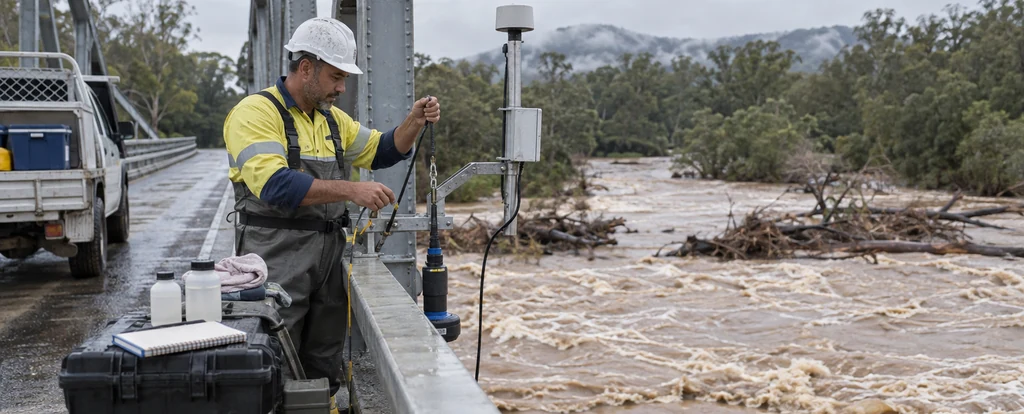
Hydrographers measure the flow, level and quality of water in rivers, storages and aquifers, and the records they keep underpin flood warnings, water licensing and the design of dams and bridges.
- Median salary*
- $101,400
4.3%vs last year, before tax
- People employed
- 700
0.0%vs last year
- Projected growth*
- +4%
to 2035
- AI exposure*
- Moderate
- automation risk
- Average hours*
- 38/wk
−2h vs all jobs
- Shortage status*
- Not in shortage
national
The work sits with water agencies, catchment authorities, hydro-electricity operators and environmental consultancies, and is split between field sites and the office. A hydrographer's job is to produce a measured record; the hydrologist who uses that record to model catchments and forecast floods is a different role. Field trips can mean a long day at a remote gauging station, and the numbers gathered there stay in use for decades.
How much do hydrographers earn?
The median full-time salary for a hydrographer is $101,400 per annum, before tax, up $21,400 since 2018.
Pay depends heavily on the employer: state water agencies and hydro-electricity operators set rates under public sector agreements, while consultancies vary with the size of the firm and the amount of remote fieldwork involved. Field allowances, flood roster or on-call payments and a move into a senior technical or supervisory classification are the main things that lift a hydrographer's pay. Location matters less than the employer, though remote postings usually come with additional allowances.
What does a hydrographer do day to day?
The list below is what fills most weeks; the exact mix shifts with seniority and whatever stage the current work is at.
- Gauging streamflow by wading, from a bridge or by boat, using current meters and acoustic Doppler profilers, including during flood flows when the measurements matter most
- Installing, calibrating and repairing stage sensors, loggers, telemetry and gauging stations
- Taking water quality, sediment and groundwater samples, and logging bore and aquifer levels
- Processing and validating hydrometric records, building rating curves and flagging suspect readings before publication
- Writing site reports and producing hydrographs and data extracts for flood forecasters, water planners and engineers
What skills do hydrographers need?
Employers look for field research and sampling, environmental assessment, data analysis, backed by Hydstra fluency and strong safety and compliance awareness.
Specialist skills
- Field research and sampling
- Environmental assessment
- Data analysis
- Surveying and geospatial work
- Field inspection and testing
- Statistical modelling
Software and tools
- Hydstra
- Aquarius
- WinRiver II
- QGIS
- Excel
General skills
- Safety and compliance awareness
Is the job growing?
About 700 people work as hydrographers in Australia, and employment is projected to grow 4% over the decade to 2035. That's modest growth: demand is steady rather than booming.
How do you become a hydrographer?
Here's the path most hydrographers take, step by step.
- 1Build the maths and science base at school
Year 12 maths plus physics, chemistry or geography keeps the widest range of degrees open, because the role combines measurement, statistics and environmental science.
- 2Complete a degree in environmental science, engineering or geography
About 52% of the people working as hydrographers hold Bachelor degree as their highest qualification, and most employers recruit at that level.
- 3Consider a TAFE qualification in water industry operations
A certificate or diploma in water industry operations can get you started as a hydrographic or field technician, and some agencies support further study while you work.
- 4Apply for a graduate program or cadetship with a water agency
State water agencies, catchment authorities and the larger consultancies are the standard way in, and these roles are paid. Field skills take a few years to build because gauging in high flow is learned on site under supervision.
- 5Learn the monitoring and data systems
Fluency in Hydstra, Aquarius, WinRiver II and GIS tools is what separates a field technician from someone who can run a monitoring program, and it is normally picked up on the job rather than in a degree.
Ready to apply as a hydrographer?
Whether you're working toward becoming a hydrographer or already are one and want a hand with the next step (sharpening your resume for ATS screening, tightening your cover letter, or knowing what you'll actually be asked at interview), here are examples grounded in this specific role, not generic templates.
What jobs can a hydrographer move to?
Moving into Hydrogeologist typically comes with the biggest pay rise, worth $50,100 a year more on average.
| Move to | Typical pay change | Overlap | Retraining |
|---|---|---|---|
| Hydrogeologist Hydrographers' bore and groundwater monitoring experience supports a move into hydrogeology, though a geoscience degree must be completed. | +$50,100 | 30% | requalify |
| Hydrologist Hydrographers bring practical flow measurement and water monitoring skills into hydrologist roles, with little further training needed. | +$5,200 | 65% | minimal |
Moves are chosen from Jobs and Skills Australia's Data on Occupation Mobility, which follows income tax records between 2011-12 and 2020-21, together with entry requirements and skill overlap. A known move is one people were seen making in that data. Pay change compares median full-time pay for the two roles.
Who works as a hydrographer?
The typical hydrographer is 40 years old; 79% are men, 88% work full-time, and full-timers average 38 hours a week.
- 40
- Median age
- 21%
- Female share
- 88%
- Full-time
- −2h
- vs all-jobs avg
What's it like being a hydrographer?
Hydrographers work to two rhythms: routine monitoring rounds in settled weather, then flood response, when crews head out to measure the peak flows that matter most. Much of the job is careful instrument work and patient data checking, so it suits someone who likes being outdoors but is also comfortable at a desk with spreadsheets and records. The pressure comes from getting a measurement right the first time, because a flood peak that passes unmeasured is gone.
What people like
- Days on the water. The field work is genuinely outdoors: wading a river with a current meter or running a boat across a reservoir is a normal part of the week, not an occasional break.
- Records that outlast the job. A rating curve or a long water level record is still used by flood forecasters, dam engineers and water planners years after you collect it.
- Small teams and real autonomy. Field crews are often two or three people, and once you are trained you run your own sites and decide how the day is organised.
- Hands and analysis in the same role. The week rotates between fixing a logger, taking samples and processing the numbers, which suits people who don't want to do only one of those.
What people find hard
- Remote travel. Many gauging stations are hours from the nearest town, so the job can mean long drives, early starts and nights away from home.
- Measuring floods is genuinely risky. The flows that matter most are the ones you have to go out in, which is why high flow gauging runs under strict safety procedures, and sometimes does not happen at all.
- Data validation is slow. Before a record is published it has to be checked and graded, and tracing a faulty sensor's effect through months of readings is patient, unglamorous work.
- A small number of employers. Most jobs sit with a handful of water agencies, catchment authorities and larger consultancies, so you may need to move or travel for the role you want.
Based on our synthesis of professional-body surveys and public accounts of the role, not first-person verified reviews.
Which industries employ hydrographers?
Water supply, sewerage and drainage services employs the largest share of hydrographers, followed by Central government administration.
Top employing industries
- 1Water supply, sewerage and drainage services
- 2Central government administration
- 3Professional, scientific and technical services
- 4Electricity supply
- 5Environmental and conservation services
Ranked by employment share; the source doesn't publish an exact percentage per industry.
| Bachelor degree | 52% | |
|---|---|---|
| Postgraduate | 26% | |
| Diploma / Advanced Diploma | 13% | |
| Other | 9% |
Will AI replace hydrographers?
Hydrography sits in the middle: the measuring is hands-on, but the record keeping around it is increasingly handled by software. Data validation, rating development and report writing are the exposed parts, while station maintenance and field gauging are not. Telemetry and automated loggers have already cut down how often someone visits a site, which changes the routine rather than removing the need for anyone to go.
Share of typical working time by exposure level
- Validating and rating hydrometric recordsSoftware already flags anomalies and drafts rating curves, and the hydrographer's time goes increasingly into reviewing and signing off what the system produces.30%high
- Gauging streamflow in the fieldWading a river or running a boat with an acoustic Doppler profiler needs someone on site deciding where and how to measure, especially at high flow.25%low
- Servicing gauging stations and sensorsCalibrating a logger, clearing a blocked stilling well or tracing a telemetry fault is physical troubleshooting that no software can do remotely.25%low
- Reporting and data productsStandard hydrographs, site summaries and data extracts can be generated automatically, while the interpretation and the caveats that go with them still need a person.20%moderate
Common questions about becoming a hydrographer
Straight answers to the questions people ask most.
How much do hydrographers earn?
Hydrographers earn a median of $101,400 per year before tax, covering full-time workers across government agencies and private consultancies. Public sector classification and field or flood allowances move it more than location does.
How do you become a hydrographer?
Most hydrographers enter through a science or engineering degree and a graduate or cadetship program with a water agency, though a TAFE qualification in water industry operations can get you started as a field technician. The instrumentation and data systems are usually learned on the job.
Are hydrographers in demand?
Hydrographers are currently not in shortage, and employment is projected to grow 4% over the decade to 2035. With about 700 people in the role nationally, most openings come from retirements and turnover in agency monitoring teams rather than from new positions.
Will AI replace hydrographers?
Not the field work. Software already handles rating calculations, anomaly detection and draft reporting, which is where most of the exposure sits, but servicing a station, gauging a river in flood and judging whether a record can be trusted still need a person on site.
What can a hydrographer move into?
Hydrologists earn $5,200 more compared with hydrographers, and the move uses the same datasets and monitoring records, so little further training is needed. Hydrogeology pays $50,100 more, but it requires a geoscience degree, so treat that as a requalification rather than a sideways step.
What is the difference between a hydrographer and a hydrologist?
A hydrographer measures the water and produces the record; a hydrologist interprets that record to model catchments, forecast flows and advise on water allocation. The two work closely together, and hydrographers often move into hydrology later in their careers.
Related roles
- Hydrologist
- Hydrogeologist
- Geology Technician
- Aboriginal and Torres Strait Islander Ranger
- Marine Biologist
- Botanist
Not sure this is you? Take the career quiz and get a ranked shortlist of roles that fit how you like to work.