Oral and Maxillofacial Surgeon
Oral and maxillofacial surgeons operate on the mouth, jaws, face and neck, rebuilding function and appearance after injury, disease or a congenital condition.
- Median salary*
- $234,000
4.1%vs last year, before tax
- People employed*
- 300
0.0%vs last year
- Projected growth
- +35.8%
to 2035
- AI exposure*
- Low
- automation risk
- Average hours*
- 48/wk
+8h vs all jobs
- Shortage status
- In shortage
national
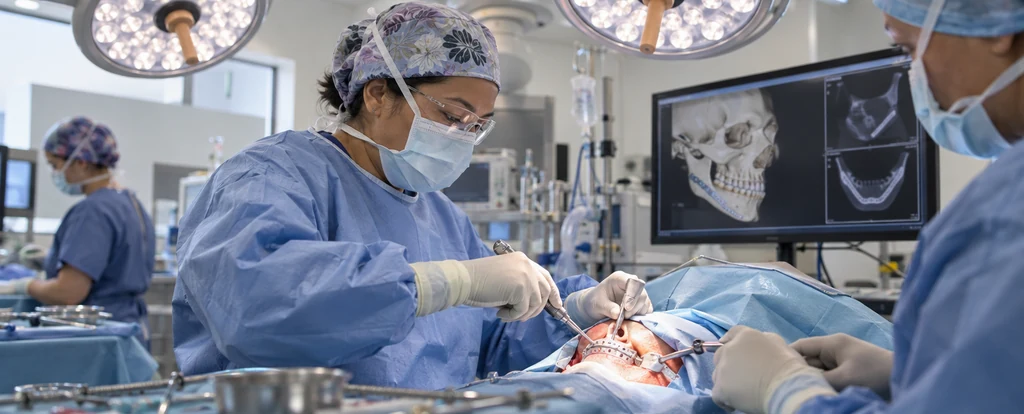
Oral and maxillofacial surgeons work where dentistry meets surgery, treating the mouth, jaws, face and neck. Most split their week between public hospital theatres, where facial trauma and head and neck cancer arrive, and private practice doing wisdom teeth, implants and corrective jaw surgery. They are the specialists dentists and emergency doctors call when a problem runs past the teeth into bone and soft tissue, and they hold specialist registration with AHPRA.
How much do oral and maxillofacial surgeons earn?
The median full-time salary for an oral and maxillofacial surgeon is $234,000 per annum, before tax, up $49,000 since 2018.
How the week is split matters more than the headline figure. Salaried public hospital posts sit on state health enterprise agreements with on-call and overtime loading, while private work is fee for service, so a surgeon doing mostly day surgery and rooms will usually earn more than one in a full-time hospital role. Sub-specialty counts too, with head and neck cancer and complex reconstruction attracting higher fees than routine extractions.
What does an oral and maxillofacial surgeon do day to day?
The list below is what fills most weeks; the exact mix shifts with seniority and whatever stage the current work is at.
- Reviewing referrals and imaging to work out what is causing a patient's pain, swelling or bite problem
- Operating in theatre, from removing impacted wisdom teeth to repairing fractured jaws and taking out tumours
- Fitting plates, screws and bone grafts to rebuild facial bones after trauma or correct a condition present from birth
- Running outpatient clinics for post-operative checks and long-term orthognathic planning alongside orthodontists
- Taking emergency on-call shifts for facial injuries, which often arrive at night after accidents
What skills do oral and maxillofacial surgeons need?
Employers look for patient care and support, clinical assessment and treatment, backed by 3D surgical planning software fluency and strong attention to detail.
Specialist skills
- Patient care and support
- Clinical assessment and treatment
Software and tools
- 3D surgical planning software
- CT and MRI imaging systems
- Electronic medical records (EMR)
- Surgical navigation systems
General skills
- Attention to detail
- Problem solving
- Written communication
- Empathy and interpersonal care
- Time and deadline management
Is the job growing?
About 300 people work as oral and maxillofacial surgeons in Australia, and employment is projected to grow 35.8% over the decade to 2035. That's very strong growth. Few roles in Australia are expanding this fast, and it points to solid demand for years to come.
How do you become an oral and maxillofacial surgeon?
Here's the path most oral and maxillofacial surgeons take, step by step.
- 1Complete a dental or medical degree
A five-year dental degree or a medical degree is the starting point, and most surgeons go on to hold both, which adds years to the path before specialist training even begins.
- 2Work in hospital residency
Paid hospital years in oral and maxillofacial surgery, general surgery or a related unit build the operating experience and references that training selection looks for.
- 3Enter specialist training
The oral and maxillofacial surgery training program, run in Australia through the Royal Australasian College of Dental Surgeons, runs for several years and combines hospital rotations, exams and research.
- 4Apply for fellowship and specialist registration
Finishing training and gaining fellowship allows you to apply for specialist registration with AHPRA, which is what permits independent practice and Medicare billing.
Ready to apply as an oral and maxillofacial surgeon?
Whether you're working toward becoming an oral and maxillofacial surgeon or already are one and want a hand with the next step (sharpening your resume for ATS screening, tightening your cover letter, or knowing what you'll actually be asked at interview), here are examples grounded in this specific role, not generic templates.
What jobs can an oral and maxillofacial surgeon move to?
We don't list lateral moves for oral and maxillofacial surgeons: leaving means a full new qualification rather than a career move, and the realistic routes in are covered under how to become one.
Who works as an oral and maxillofacial surgeon?
The typical oral and maxillofacial surgeon is 47 years old; 88% are men, 90% work full-time, and full-timers average 48 hours a week.
- 47
- Median age
- 12%
- Female share
- 90%
- Full-time
- +8h
- vs all-jobs avg
What's it like being an oral and maxillofacial surgeon?
The week runs on theatre lists, clinics and on-call. Planned operations are booked months ahead, while facial trauma can interrupt a weekend, and a single reconstruction can keep you in theatre for eight hours or more. It suits people who like solving a physical problem precisely and are prepared to keep sitting exams well into their thirties.
What people like
- You can see the result. A patient whose fractured jaw was wired shut, or whose bite was realigned over two years, comes back visibly fixed.
- Elective and emergency work side by side. One morning is a booked orthognathic case, the next could be a Saturday night facial fracture from a road accident.
- A small field with familiar colleagues. Only a few hundred people work in the specialty nationally, so you deal with the same orthodontic, plastic and cancer teams across a career.
- Routine procedures with fast feedback. Wisdom tooth removal is bread-and-butter work where most patients recover within days and tell you so at the follow-up.
What people find hard
- A long qualification and long hours. This is one of the longest training paths in health, and full-time weeks average 48 hours with study continuing through specialist training.
- On-call for facial trauma. Fractures and lacerations arrive at night and on weekends, so the phone disrupts sleep and family plans.
- Emotionally heavy cases. Head and neck cancer, and cleft lip and palate repairs in children, carry a weight that routine dental work does not.
- Administration and compliance. Consent, imaging records, implant traceability and Medicare paperwork take up a real share of the week.
Based on our synthesis of professional-body surveys and public accounts of the role, not first-person verified reviews.
Which industries employ oral and maxillofacial surgeons?
Hospitals (except Psychiatric Hospitals) employs the largest share of oral and maxillofacial surgeons, followed by Specialist Medical Services.
Top employing industries
- 1Hospitals (except Psychiatric Hospitals)
- 2Specialist Medical Services
- 3Dental Services
- 4Outpatient Care Services
Ranked by employment share; the source doesn't publish an exact percentage per industry.
| Bachelor degree | 52% | |
|---|---|---|
| Postgraduate | 26% | |
| Diploma / Advanced Diploma | 13% | |
| Other | 9% |
Will AI replace oral and maxillofacial surgeons?
Exposure to automation is low, because the core of the job is operating on bone and soft tissue by hand, and no current tool does that. Digital planning has changed the preparation: CT scans are segmented in software and virtual models of the jaw are built before orthognathic surgery, which shortens planning time and improves the fit of cutting guides. Those tools support the surgeon's plan and do not make the decisions or the cuts.
Share of typical working time by exposure level
- Operating in theatreRemoving impacted wisdom teeth, plating a fractured jaw and reshaping facial bones are done by hand under direct vision.45%low
- Clinic consultations and consentExamining the patient, explaining the operation and its risks, and judging who is fit enough for surgery are conversations that cannot be automated.20%low
- Ward rounds and follow-up careChecking healing, managing swelling and infection and adjusting pain relief relies on looking at and talking to the patient.20%low
- Surgical planning from CT scans and 3D modelsSoftware segments the scan and positions the cuts, but the surgeon still chooses the plan and checks it against the patient in front of them.15%high
Common questions about becoming an oral and maxillofacial surgeon
Straight answers to the questions people ask most.
How much does an oral and maxillofacial surgeon earn in Australia?
Oral and maxillofacial surgeons earn a median of $234,000 per year before tax. Because most combine salaried hospital sessions with private practice, take-home pay varies more than that median suggests. On-call load, sub-specialty and how much private work you take on all move the figure.
How do you become an oral and maxillofacial surgeon?
You complete a dental or medical degree, spend several years in hospital residency, then enter specialist training through the Royal Australasian College of Dental Surgeons. Most surgeons hold both degrees by the end, which is why the path from first year of university to independent practice runs well over a decade.
Are oral and maxillofacial surgeons in demand in Australia?
Oral and maxillofacial surgeons are currently in shortage nationally, and employment is projected to grow 35.8% over the decade to 2035. About 300 people work in the specialty nationally, so what limits entry is the number of accredited training places each year rather than the volume of patients needing surgery.
Will AI replace oral and maxillofacial surgeons?
No, this is one of the least exposed medical specialties because the operating itself is manual. Planning software already segments CT scans and builds virtual models of a jaw for orthognathic surgery, but it produces options for the surgeon to check and choose between. Handling bone and soft tissue, and deciding in the moment how much to cut, stay with the surgeon.
What can an oral and maxillofacial surgeon move into?
Most build a private practice alongside their hospital sessions, and that is often where earnings grow. Dentists who add the medical and surgical training move into the specialty, and they currently earn $65,900 more than oral and maxillofacial surgeons. Others narrow into head and neck cancer or cleft and craniofacial work.
Do you need both a dental and a medical degree?
In Australia the specialist training program expects both qualifications, which is what makes this pathway longer than most surgical specialties. Some trainees start with medicine and add dentistry later, or the reverse, but the surgical training happens after both are complete.
Specialisation of
Related roles
Not sure this is you? Take the career quiz and get a ranked shortlist of roles that fit how you like to work.