Personal Shopper
Personal shoppers choose clothes, gifts and other goods for clients who would rather pay for the time and judgement than spend a Saturday in fitting rooms.
- Median salary*
- $65,000
4.5%vs last year, before tax
- People employed
- 12,800
0.8%vs last year
- Projected growth*
- +3%
to 2035
- AI exposure*
- Moderate
- automation risk
- Average hours*
- 38/wk
−2h vs all jobs
- Shortage status*
- Not in shortage
national
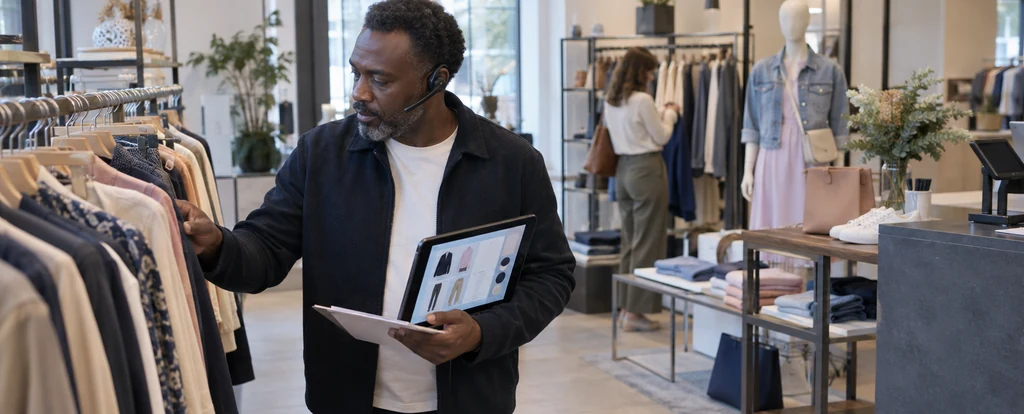
Personal shoppers work with individual clients to choose clothing, gifts or other goods, either shopping alongside them in store or buying on their behalf. They work to a brief covering budget, size, style and occasion, and the difference from a retail assistant is whose side they are on: a personal shopper is paid to represent the buyer, not to move stock for a store. Fashion retail is the largest employer, but corporate gifting, bridal and homewares each support their own specialists, and many personal shoppers work freelance.
How much do personal shoppers earn?
The median full-time salary for a personal shopper is $65,000 per annum, before tax, up $13,800 since 2018.
Where you work decides most of your pay: store employees are usually covered by the retail award or an enterprise agreement, with penalty rates for weekend and evening appointments, while freelance personal shoppers set a fee per appointment or package. Commission on sales and the size of a client's budget also shift what a year looks like, and corporate or gift buying tends to pay better than one-off fashion appointments. Freelance income depends on how quickly you build a client list, so the first year or two is often the leanest.
What does a personal shopper do day to day?
The list below is what fills most weeks; the exact mix shifts with seniority and whatever stage the current work is at.
- Meeting a client to set the brief, covering budget, size, the occasion and what they already own
- Researching stock and availability across stores and shortlisting pieces before the appointment
- Accompanying clients through stores, pulling sizes and giving honest advice in the fitting room
- Buying on a client's behalf online and keeping to the budget they have set
- Arranging alterations, delivery or returns, and noting what worked for the next appointment
What skills do personal shoppers need?
Employers look for selling and negotiation, merchandising and stock presentation, backed by Point-of-sale (POS) systems fluency and strong customer service.
Specialist skills
- Selling and negotiation
- Merchandising and stock presentation
Software and tools
- Point-of-sale (POS) systems
- Customer relationship management (CRM) software
- E-commerce platforms (e.g. Shopify)
- Styling and wardrobe apps
- Google Workspace
General skills
- Customer service
- Client relationships and advisory
- Written communication
- Attention to detail
- Digital literacy
Is the job growing?
About 12,800 people work as personal shoppers in Australia, and employment is projected to grow 3% over the decade to 2035. That's modest growth: demand is steady rather than booming.
How do you become a personal shopper?
Here's the path most personal shoppers take, step by step.
- 1Get retail experience first
Most personal shoppers start on a shop floor, where you learn product ranges, sizing and how to read what a customer actually wants. Paid retail work also builds the store contacts you rely on later for holds and stock checks.
- 2Take a short course in personal styling
TAFE and private colleges run short courses covering body shape, colour and wardrobe planning, usually over a few weeks or months. They are not a licence to practise, but they give you a working vocabulary and a certificate that helps with clients who ask about your training.
- 3Build a client list
Begin with friends, family and colleagues, charge a low rate while you learn, and ask every satisfied client for a referral. Photos, a few testimonials and a simple booking page do most of the marketing for freelance work.
- 4Set up as a sole trader if you go freelance
Freelance personal shoppers need an Australian Business Number, public liability insurance and a simple way to invoice. Store employees skip this and are paid through the retail award instead.
Ready to apply as a personal shopper?
Whether you're working toward becoming a personal shopper or already are one and want a hand with the next step (sharpening your resume for ATS screening, tightening your cover letter, or knowing what you'll actually be asked at interview), here are examples grounded in this specific role, not generic templates.
What jobs can a personal shopper move to?
Moving into Retail Buyer typically comes with the biggest pay rise, worth $14,800 a year more on average.
| Move to | Typical pay change | Overlap | Retraining |
|---|---|---|---|
| Retail Buyer Personal shoppers bring customer insight and trend awareness to retail buying, with further study in range planning and procurement. | +$14,800 | 32% | reskill |
| Antique Dealer Personal shoppers bring an eye for quality and value to antique dealing, with a short course in collectables. | +$0 | 53% | short course |
| Visual Merchandiser Personal shoppers bring styling judgement and product knowledge to visual merchandising, adding a short course in display design. | −$2,600 | 60% | short course |
Moves are chosen from Jobs and Skills Australia's Data on Occupation Mobility, which follows income tax records between 2011-12 and 2020-21, together with entry requirements and skill overlap. A known move is one people were seen making in that data. Pay change compares median full-time pay for the two roles.
Who works as a personal shopper?
The typical personal shopper is 29 years old; 75% are women, 27% work full-time, and full-timers average 38 hours a week.
- 29
- Median age
- 75%
- Female share
- 27%
- Full-time
- −2h
- vs all-jobs avg
What's it like being a personal shopper?
The job runs on appointments, so the week is a mix of preparation, store visits and follow-up, with evenings and weekends the busiest hours because that is when clients are free. Freelance work brings the most control over rates and clients, and also the most uncertainty, while a store-employed role trades some of that freedom for a steady hourly rate and a staff discount. It tends to suit people who enjoy shopping with a purpose and can give an honest opinion about a garment that does not work.
What people like
- Seeing the change in a client. Someone who dreaded shopping leaves with clothes that fit and a clearer sense of what suits them, and that shift is visible inside the appointment.
- Repeat clients and referrals. Regular clients and word of mouth fill the diary, so the relationships you build matter more than advertising.
- First look at new stock. You see new season ranges before they reach the floor and often receive a staff discount, which is part of what draws people to the job.
- Every brief is different. One appointment might be a wedding outfit, the next a corporate gift list or a wardrobe reset after a change of job.
What people find hard
- Uneven income. Freelance rates can look generous per appointment, but cancellations, quiet months and unpaid preparation all come out of the same money.
- Evenings and weekends. Clients shop when they are not working, so the busy hours are exactly the ones most people spend at home.
- Long days on your feet. An appointment can run for hours across several stores, carrying bags and walking between fitting rooms and stockrooms.
- Advice is not always welcome. You are paid for your judgement, but some clients want confirmation rather than a second opinion, and returns and exchanges come out of your own time.
Based on our synthesis of professional-body surveys and public accounts of the role, not first-person verified reviews.
Which industries employ personal shoppers?
Retail Trade employs the largest share of personal shoppers, followed by Wholesale Trade.
Top employing industries
- 1Retail Trade
- 2Wholesale Trade
Ranked by employment share; the source doesn't publish an exact percentage per industry.
| Bachelor degree | 38% | |
|---|---|---|
| Diploma / Advanced Diploma | 24% | |
| Certificate III/IV | 20% | |
| Postgraduate | 10% | |
| Other | 8% |
Will AI replace personal shoppers?
This is a moderately exposed job. AI tools now carry a real share of the research, comparing stock across retailers, flagging price drops and drafting shortlists, which used to take a personal shopper hours. The parts clients book and pay for, judging fit and colour on a real body and being in the fitting room with them, still need a person there.
Share of typical working time by exposure level
- Buying trips with clientsHours in store trying on, adjusting and deciding is what clients book you for, and it needs someone who can read a fitting room and a client's hesitation.35%low
- Product research and shortlistingStock searches and price comparisons across retailers are increasingly done by shopping tools and marketplace filters before the appointment starts.25%moderate
- Styling and fit adviceApps can suggest outfits from photos, but advice on a particular garment for a particular body still comes from seeing it worn.20%moderate
- Budgets, orders and purchase adminRunning totals, tracking orders, processing returns and keeping invoice records are the kind of record-keeping that software now handles.20%high
Common questions about becoming a personal shopper
Straight answers to the questions people ask most.
How much do personal shoppers earn?
Personal shoppers earn $65,000 per year before tax at the median for full-time work. Where you sit around that figure depends on whether you are a store employee on an award rate or a freelancer charging per appointment, and on how much corporate or gift-buying work you take on.
How do you become a personal shopper?
Most people come into the job from retail, then add a short course in personal styling and start building a client list. There is no licence or registration, so the practical route is paid retail work, a styling course, and a handful of appointments you can show as a portfolio.
Are personal shoppers in demand?
Personal shoppers are currently not in shortage, and employment is projected to grow 3% over the decade to 2035. Roles sit in fashion retail, department stores and corporate gifting, with a good share of the work freelance, so knowing which of those you are aiming at matters more than watching job boards.
Will AI replace personal shoppers?
AI already handles parts of the job, including stock searches, price comparisons and draft shortlists that used to take an evening. Clients pay for someone to judge fit and colour on a real body and to make the call in a fitting room, and that part stays with the shopper.
What can a personal shopper move into?
Retail buying is a common next step, paying $14,800 more, and it builds on the customer insight and trend awareness the job already gives you, with further study in range planning and procurement. Many personal shoppers instead stay freelance and grow their own client list, which is often where their earnings increase most.
Can you work as a personal shopper part time or freelance?
Both are common: plenty of personal shoppers work evenings, weekends or by appointment around another job, and many move to freelance once they have a client list. Freelance work needs an ABN and public liability insurance, and it pays per appointment rather than per hour.
Related roles
- Visual Merchandiser
- Retail Buyer
- Antique Dealer
- Retail Assistant
- Checkout Operator
- Door-to-door Salesperson
Not sure this is you? Take the career quiz and get a ranked shortlist of roles that fit how you like to work.