Pest Controller
Pest controllers inspect homes, businesses and food premises for insects, rodents and other pests, treat the problem and show clients how to keep it from coming back.
- Median salary*
- $70,200
4.2%vs last year, before tax
- People employed
- 6,100
0.0%vs last year
- Projected growth
- +4.2%
to 2035
- AI exposure*
- Low
- automation risk
- Average hours
- 42/wk
+2h vs all jobs
- Shortage status*
- Not in shortage
national
Pest controllers work on their feet and on the road, moving between houses, restaurants, warehouses, schools and farms, usually alone in a company van. The trade is regulated: every state and territory requires a licence to apply pesticides, so training and record keeping matter as much as the treatment itself. It sits close to cleaning and grounds maintenance work, but inspecting a building and identifying the species involved is what sets it apart.
How much do pest controllers earn?
The median full-time salary for a pest controller is $70,200 per annum, before tax, up $14,700 since 2018.
How you are paid shapes the figure more than anything else. Technicians employed by larger companies often earn a base wage plus overtime and after-hours or on-call loadings, while owner-operators and franchisees earn from each job and carry their own vehicle, chemical and insurance costs. The pest types you are licensed for also matters, since termite management and fumigation work generally sits above general spraying.
What does a pest controller do day to day?
The list below is what fills most weeks; the exact mix shifts with seniority and whatever stage the current work is at.
- Inspecting buildings, yards and food premises for droppings, damage, live insects and entry points
- Identifying the pest species and working out how far an infestation has spread
- Applying sprays, dusts, baits and traps, and fitting physical barriers
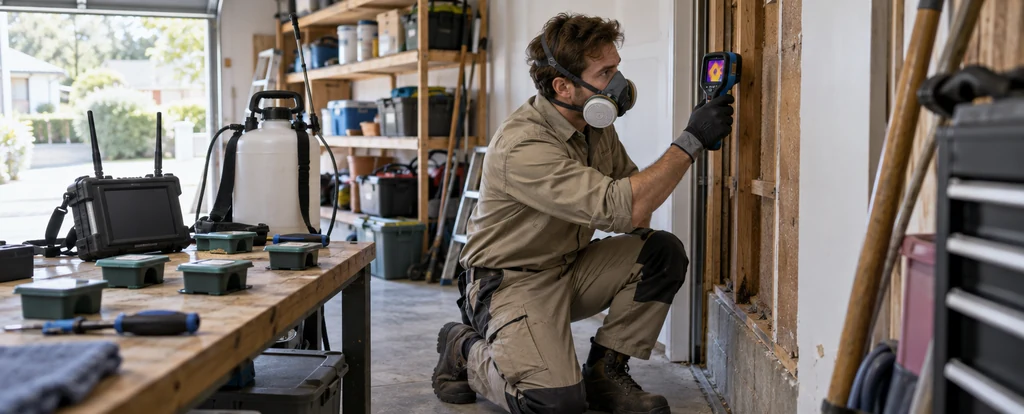
- Installing and checking termite barriers and monitoring stations, sometimes using thermal imaging or radar to find activity behind walls
- Recording each treatment, writing up client reports and advising on hygiene, proofing and follow-up visits
What skills do pest controllers need?
Employers look for worksite safety management, plant and equipment operation, regulatory compliance, backed by Backpack and knapsack sprayers fluency and strong customer service.
Specialist skills
- Worksite safety management
- Plant and equipment operation
- Regulatory compliance
- Cleaning and grounds maintenance
Software and tools
- Backpack and knapsack sprayers
- Termatrac termite detection radar
- Thermal imaging cameras
- PestPac
- ServSuite
General skills
- Customer service
- Problem solving
- Attention to detail
Is the job growing?
About 6,100 people work as pest controllers in Australia, and employment is projected to grow 4.2% over the decade to 2035. That's modest growth: demand is steady rather than booming.
How do you become a pest controller?
Here's the path most pest controllers take, step by step.
- 1Finish school and get your driver's licence
Year 12 is not essential, but you will spend much of the day driving between jobs, so a full licence is usually expected before an employer will put you on the road.
- 2Complete a Certificate III in Pest Management
This is the qualification most state and territory regulators expect. It covers pesticide safety, pest biology, termite work and the relevant legislation, and can be done through TAFE or another registered training organisation, often as a traineeship while you work.
- 3Apply for a pest control licence in your state or territory
Licensing sits with the state health or environment regulator and the requirements differ, so check yours directly. Most ask for proof of training, a police check and, in some cases, a period of supervised field experience.
- 4Work alongside an experienced controller
New technicians normally start on the road with someone senior, learning to inspect a building properly, mix and apply chemicals safely and handle the conversation with a client who has just found termites.
- 5Keep the licence current and add endorsements
Licences are renewed periodically and usually require continuing professional development. Separate units are needed for termite management or fumigation if you want that work, and each one opens up different jobs.
Ready to apply as a pest controller?
Whether you're working toward becoming a pest controller or already are one and want a hand with the next step (sharpening your resume for ATS screening, tightening your cover letter, or knowing what you'll actually be asked at interview), here are examples grounded in this specific role, not generic templates.
What jobs can a pest controller move to?
Moving into Truck Driver typically comes with the biggest pay rise, worth $31,700 a year more on average.
| Move to | Typical pay change | Overlap | Retraining |
|---|---|---|---|
| Truck Driver Pest controllers' route planning, vehicle care and independent outdoor work suit truck driving, though a heavy vehicle licence and training are required.Known move | +$31,700 | 8% | reskill |
| Weeds Officer Pest controllers bring chemical handling, inspection and record keeping to weed control, with retraining in conservation and land management required.Known move | +$5,200 | 21% | reskill |
| Asbestos Removalist Pest controllers bring hazardous chemical safety, protective equipment and site inspection habits to asbestos removal, with a short course in removal work required. | +$5,200 | 68% | short course |
| Restoration Technician Pest controllers' treatment, containment and safety skills transfer to restoration work, with short course training in water, fire and mould damage required. | +$0 | 63% | short course |
Moves are chosen from Jobs and Skills Australia's Data on Occupation Mobility, which follows income tax records between 2011-12 and 2020-21, together with entry requirements and skill overlap. A known move is one people were seen making in that data. Pay change compares median full-time pay for the two roles.
Who works as a pest controller?
The typical pest controller is 45 years old; 94% are men, 68% work full-time, and full-timers average 42 hours a week.
- 45
- Median age
- 6%
- Female share
- 68%
- Full-time
- +2h
- vs all-jobs avg
What's it like being a pest controller?
The job follows the seasons and the phone. Warmer months bring the bulk of the work, with wasp nests, ant trails and rodent problems arriving in bursts, and food premises need attention year round because of health inspections. Days are spent driving between sites, working alone in roof spaces, subfloors and yards, and then explaining what you found to someone who may be worried about their home or their business.
What people like
- You work on your own most of the day. Once you are licensed, you are usually given a run of jobs and left to organise them, with the office only checking in about scheduling or a tricky site.
- The problem has a clear answer. You inspect, identify the species, treat it and see the result on the follow-up visit, which suits people who like finishing something rather than chipping away at it.
- Every site is different. A restaurant kitchen, a heritage house with a subfloor and a grain shed each call for different tools and different judgement about what is safe to use.
- The licence travels with you. Chemical handling, inspection and reporting are wanted in land management, restoration and building maintenance, so the skills keep their value if you move on.
What people find hard
- Summer is relentless. Insect activity peaks in the warmer months, which means long days, early starts and after-hours callouts when a food business finds rodents or a family finds a wasp nest.
- Chemical safety is unforgiving. Full protective equipment in a hot roof cavity is uncomfortable, and the rules on mixing, applying and recording pesticides carry health and legal consequences if you cut corners.
- Some clients are distressed. Finding termites or cockroaches in a kitchen is upsetting for the person who called you, so part of the job is calming the conversation before you can discuss the treatment.
- A lot of driving and paperwork. The gaps between jobs add up, and every visit needs a treatment record, a chemical log and a report before you move on to the next address.
Based on our synthesis of professional-body surveys and public accounts of the role, not first-person verified reviews.
Which industries employ pest controllers?
Administrative and Support Services employs the largest share of pest controllers.
Top employing industries
- 1Administrative and Support Services
Ranked by employment share; the source doesn't publish an exact percentage per industry.
| Certificate III/IV | 32.3% | |
|---|---|---|
| Year 12 or below | 29.1% | |
| Diploma / Advanced Diploma | 7.4% | |
| Bachelor degree | 5.4% | |
| Postgraduate | 2% |
Will AI replace pest controllers?
Pest control is a hands-on trade with low exposure to automation. Scheduling, quoting and reporting software has already changed the office side of the job, and thermal cameras and termite radar make detection more precise, but the inspection, the identification and the safe application of chemicals still happen in person at the site.
Share of typical working time by exposure level
- Inspecting sites and identifying pestsReading a roof cavity, a subfloor or a restaurant kitchen for entry points and species takes sight, smell and experience with the building that no camera replaces.30%low
- Applying treatments and fitting barriersMixing pesticide at the correct rate, applying it around food handling areas and positioning termite barriers is licensed manual work.30%low
- Job records, reports and schedulingTools such as PestPac and ServSuite generate treatment records, chemical logs and quotes, which trims the paperwork after each visit.25%moderate
- Advising clients on preventionSoftware can produce a generic prevention checklist, but explaining what is happening in this particular building and what has to change is a conversation.15%moderate
Common questions about becoming a pest controller
Straight answers to the questions people ask most.
How much do pest controllers earn?
Pest controllers earn a median of $70,200 per year before tax. Termite and fumigation endorsements, after-hours and on-call work, and commercial contracts tend to push pay up, while owner-operators earn from the jobs they win rather than a weekly wage.
How do you become a pest controller?
The usual route is a Certificate III in Pest Management plus a state or territory licence to apply pesticides. A Certificate III/IV is the most common qualification in the workforce, held by about 32% of people doing the job, and most new technicians get their supervised hours through a traineeship with an employer.
Are pest controllers in demand?
Pest controllers are currently not in shortage, and employment is projected to grow 4.2% over the decade to 2035 over the decade to 2035. Food premises, strata buildings and rental properties need routine treatments regardless of the wider economy, so for someone entering the trade the licence is the main gate, with employers generally wanting it held or in progress.
Will AI or automation replace pest controllers?
Very little of this work can be done off site. Thermal imaging cameras, termite detection radar and job software such as PestPac and ServSuite make inspection and record keeping quicker, but someone still has to get into the roof space, identify the species and apply the treatment safely.
What can a pest controller move into?
Treatment, containment and safety skills transfer to restoration technician work at about about the same, and to weed control as a weeds officer at $5,200 more, which needs retraining in conservation and land management. Truck driving pays $31,700 more more if you earn a heavy vehicle licence, and pest control is also a trade people commonly run as their own business, which is often where earnings grow.
Do you need a licence to work as a pest controller?
You do. Every state and territory licenses the application of pesticides, and the requirements differ, so check with your local health or environment regulator before you enrol in training. Licences are renewed periodically and usually require continuing professional development to stay current.
Related roles
- Weeds Officer
- Truck Driver
- Asbestos Removalist
- Restoration Technician
- Weeds Officer
- Warehouse Storeperson
Not sure this is you? Take the career quiz and get a ranked shortlist of roles that fit how you like to work.