Restoration Technician
Restoration technicians make homes and businesses safe and habitable again after water, fire, smoke or mould damage.
- Median salary*
- $70,200
4.5%vs last year, before tax
- People employed*
- 5,000
2.0%vs last year
- Projected growth*
- +8%
to 2035
- AI exposure*
- Low
- automation risk
- Average hours*
- 38/wk
−2h vs all jobs
- Shortage status*
- In shortage (regional)
national
They work on site in houses, offices, shops and apartment blocks, usually for a restoration company, a building services firm or an insurer's repair network. The job is to stabilise the damage, dry the structure and remove what cannot be saved, which is the stage that comes before a builder rebuilds. Water damage is the most common call, and the drying science is what sets the role apart from general cleaning or trade work.
How much do restoration technicians earn?
The median full-time salary for a restoration technician is $70,200 per annum, before tax, up $14,900 since 2018.
Pay in this trade moves with the hours you are willing to work and the certifications you hold. Emergency callouts, overnight storm work and weekend rosters often attract penalty rates or on-call allowances, while technicians who complete industry courses or move into estimating and supervision earn more. Insurer panel work brings steady volume but tight job budgets, and rates differ between metropolitan and regional employers.
What does a restoration technician do day to day?
The list below is what fills most weeks; the exact mix shifts with seniority and whatever stage the current work is at.
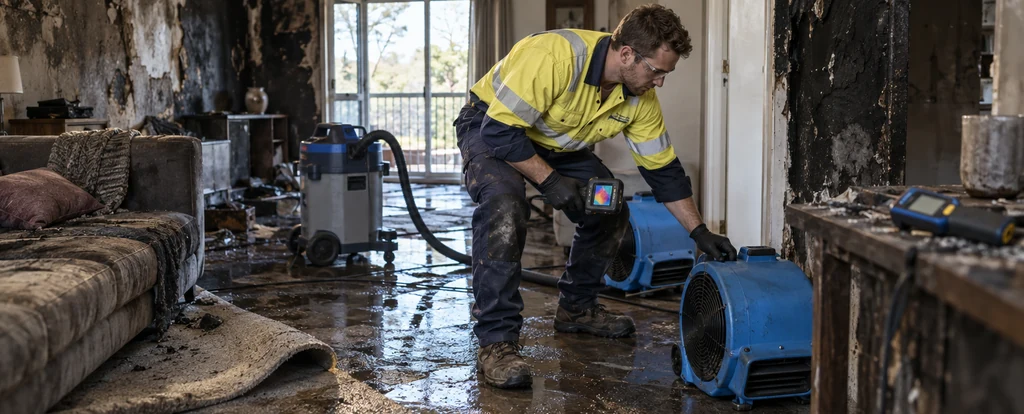
- Reading moisture meters and thermal images to map where water has travelled
- Extracting standing water and positioning air movers and dehumidifiers
- Removing soaked carpet, plaster and contaminated materials
- Cleaning surfaces and applying antimicrobial treatments to stop mould
- Writing drying logs and scope reports in Xactimate for insurers and owners
What skills do restoration technicians need?
Employers look for worksite safety management, hand and power tool work, cleaning and grounds maintenance, backed by Moisture meters fluency and strong customer service.
Specialist skills
- Worksite safety management
- Hand and power tool work
- Cleaning and grounds maintenance
- Plant and equipment operation
Software and tools
- Moisture meters
- Thermal imaging cameras
- Air movers and dehumidifiers
- Water extraction units
- Xactimate estimating software
General skills
- Customer service
- Attention to detail
- Problem solving
- Written communication
Is the job growing?
About 5,000 people work as restoration technicians in Australia, and employment is projected to grow 8% over the decade to 2035. That's modest growth: demand is steady rather than booming.
How do you become a restoration technician?
Here's the path most restoration technicians take, step by step.
- 1Get a White Card and first aid certificate
A White Card (general construction induction) is required to work on building sites, and first aid is often listed alongside it in job ads. Both are short courses you can finish before you start applying.
- 2Start as an assistant or labourer with a restoration firm
Entry roles are paid and usually involve water extraction, setting up drying equipment and logging readings under supervision. Most employers train on the job and do not expect qualifications on day one.
- 3Add a Certificate III or IV
Certificates in cleaning operations, building or maintenance are a common background in the role and cover the safety, materials and building knowledge larger employers look for.
- 4Complete industry certifications
The IICRC's water damage restoration and applied structural drying courses run over a few days and are widely recognised by restoration employers. Some firms pay for them, and others expect them before you move off general labouring.
- 5Choose a specialism
Mould remediation, fire and smoke, contents restoration and large commercial losses each need different equipment and paperwork. Titles such as senior technician or project supervisor follow once you can run a job from the first call to sign-off.
Ready to apply as a restoration technician?
Whether you're working toward becoming a restoration technician or already are one and want a hand with the next step (sharpening your resume for ATS screening, tightening your cover letter, or knowing what you'll actually be asked at interview), here are examples grounded in this specific role, not generic templates.
What jobs can a restoration technician move to?
Moving into Demolition Worker typically comes with the biggest pay rise, worth $7,800 a year more on average.
| Move to | Typical pay change | Overlap | Retraining |
|---|---|---|---|
| Demolition Worker Restoration technicians strip out damaged structures and make sites safe, skills that carry into demolition work with a short course. | +$7,800 | 71% | short course |
| Asbestos Removalist Restoration technicians already manage hazardous materials and containment, so moving into asbestos removal builds on that safety and strip-out experience with a short course. | +$5,200 | 65% | short course |
| Pest Controller Restoration technicians handle chemicals and contaminated environments, so pest control is an adjacent specialism using similar inspection and treatment skills with a short course. | +$0 | 63% | short course |
Moves are chosen from Jobs and Skills Australia's Data on Occupation Mobility, which follows income tax records between 2011-12 and 2020-21, together with entry requirements and skill overlap. A known move is one people were seen making in that data. Pay change compares median full-time pay for the two roles.
Who works as a restoration technician?
The typical restoration technician is 36 years old; 90% are men, 85% work full-time, and full-timers average 38 hours a week.
- 36
- Median age
- 10%
- Female share
- 85%
- Full-time
- −2h
- vs all-jobs avg
What's it like being a restoration technician?
The job runs on the weather and the phone. Storm season brings overnight callouts and long days, while quieter weeks are filled with smaller insurance repairs, drying checks and documentation. It suits people who like hands-on work, can stay steady in someone's damaged home, and are willing to keep records straight between jobs.
What people like
- Every job is a small puzzle. Water travels in odd ways through old buildings, so you read moisture maps and thermal images to work out where it has gone and where it will settle.
- You can see the room come back. A soaked carpet and a damp wall become a dry, usable space over a few days, and the drying log shows the progress in numbers.
- There is a technical side to it. Drying is applied science, because material type, humidity, air movement and temperature all change the plan, which keeps the work from feeling like cleaning.
- Work arrives through insurers. Most jobs come from insurance panels and repair networks rather than chasing customers one at a time, so the schedule tends to stay full.
What people find hard
- On-call and after-hours callouts. Storms, burst pipes and kitchen fires do not keep office hours, so storm season brings night work, weekend rosters and days that run long.
- Insurance paperwork. Drying logs, photos and scope reports have to be accurate and submitted on time, or the claim stalls and the office chases you for it.
- Contaminated water and tight spaces. Sewage spills, mould and asbestos in older buildings mean respirators, gloves and full protective gear, often in hot, humid rooms with the windows closed.
- Heavy, wet work. Extraction hoses, dehumidifiers and soaked carpet are awkward to move, and much of it happens up stairwells or in basements.
Based on our synthesis of professional-body surveys and public accounts of the role, not first-person verified reviews.
Which industries employ restoration technicians?
Building cleaning, pest control and other support services employs the largest share of restoration technicians, followed by Construction.
Top employing industries
- 1Building cleaning, pest control and other support services
- 2Construction
- 3Insurance and superannuation funds
- 4Real estate services
Ranked by employment share; the source doesn't publish an exact percentage per industry.
| Certificate III/IV | 34% | |
|---|---|---|
| Diploma / Advanced Diploma | 26% | |
| Bachelor degree | 20% | |
| Year 12 or below | 20% |
Will AI replace restoration technicians?
Restoration work rates as low exposure, because it happens by hand in a flooded or smoke damaged building. Moisture meters, thermal cameras and Xactimate estimating software already handle part of the measurement and paperwork, and drying calculations now run in apps, but the readings have to be taken in the right place and checked against what the building is made of. Air movers, extraction units and strip-out still need a person on site, and the decision to pull out a wall or a floor rests on what is found behind it.
Share of typical working time by exposure level
- Extracting water and running drying equipmentExtraction units, air movers and dehumidifiers are moved and repositioned by hand as the readings change from day to day.30%low
- Assessing moisture and damage on siteThermal imaging and meter readings feed straight into software, though judging how far water has climbed through plaster or brick still takes experience.25%moderate
- Strip-out, cleaning and antimicrobial treatmentPulling up soaked carpet, cutting out swollen plasterboard and treating mould in a ceiling cavity is physical work in awkward spaces.25%low
- Documenting jobs and drying logs for insurersXactimate and photo assisted estimating speed up scope writing, but someone still has to confirm what is damaged and record the readings each visit.20%high
Common questions about becoming a restoration technician
Straight answers to the questions people ask most.
How much do restoration technicians earn?
$70,200 per year before tax is the median for full-time restoration technicians, so treat it as a guide rather than a starting rate. Overtime, on-call allowances and industry certifications push earnings above that figure, while assistants new to the trade usually start below it.
How do you become a restoration technician?
Most people start by getting a White Card and applying for an assistant or labouring role with a restoration firm, because the trade is learned on the job. A Certificate III or IV in cleaning operations or building adds useful background, and short IICRC courses in water damage and structural drying open up more senior work.
Are restoration technicians in demand?
Restoration technicians are currently in shortage in regional areas, and employment is projected to grow 8% over the decade to 2035. The workload follows insurance claims, so it rises after storms, floods and fires, and the short training pathway means people can be on site within months.
Will AI replace restoration technicians?
Automation reaches this job lightly, because the work happens by hand inside someone's damaged building. Software already handles drying calculations, remote monitoring and estimating, which reduces time at a laptop, but the readings, the strip-out and the equipment still need a person.
What jobs can a restoration technician move into?
Restoration skills carry into asbestos removal, where containment and hazardous material handling are already part of the job, and into demolition work, which pays $7,800 more for much the same strip-out and site safety experience. Pest control is a short step as well, since chemical handling and inspection overlap closely. Some experienced technicians start their own restoration business or subcontract to insurers, which is often where earnings grow.
Do restoration technicians need a licence?
There is no single national licence for restoration work, but a White Card is required on construction sites, and asbestos and mould remediation have their own training and licensing rules that vary by state. Employers usually list the certifications they accept in the job advertisement.
Related roles
- Demolition Worker
- Asbestos Removalist
- Pest Controller
- Asbestos Removalist
- Demolition Worker
- Pest Controller
Not sure this is you? Take the career quiz and get a ranked shortlist of roles that fit how you like to work.