Pilates Instructor
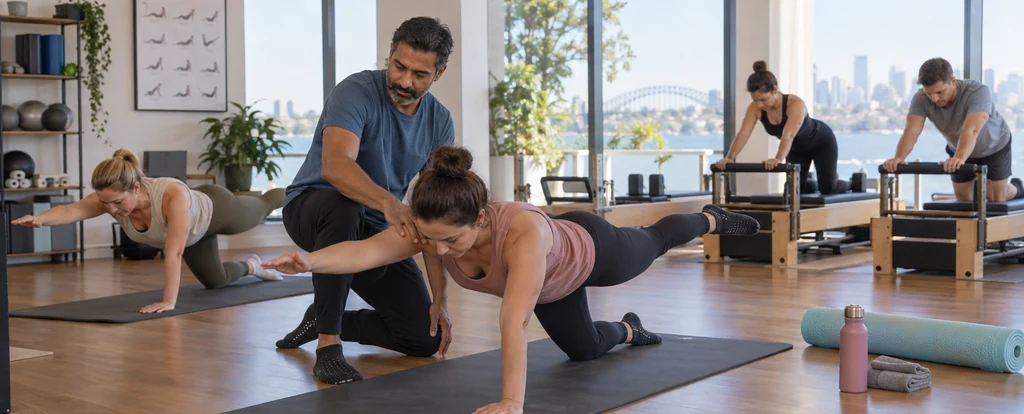
Pilates instructors teach mat and reformer classes that build strength, flexibility and body awareness in the people they work with.
- Median salary*
- $52,000
3.8%vs last year, before tax
- People employed
- 2,900
0.0%vs last year
- Projected growth*
- +9%
to 2035
- AI exposure*
- Low
- automation risk
- Average hours*
- 38/wk
−2h vs all jobs
- Shortage status*
- Not in shortage
national
Most work in dedicated Pilates studios, gyms or community halls, teaching a group of six to twelve people or one client at a time. The job sits close to personal training and general fitness instruction, but the focus stays on controlled movement, breathing and alignment rather than cardio or heavy loads. Studios commonly hire instructors for a handful of classes a week, so part-time and casual arrangements are the norm.
How much do pilates instructors earn?
The median full-time salary for a pilates instructor is $52,000 per annum, before tax, up $10,800 since 2018.
How the work is arranged matters as much as the hourly rate: casual and part-time instructors are usually paid per class, so earnings rise with the number of classes you hold and how well they fill. One-on-one sessions and clinical or rehabilitation settings pay more per hour than large group classes, and reformer training or a comprehensive qualification lets you charge more. Building a client following, or eventually running your own studio, is where income grows most.
What does a pilates instructor do day to day?
The list below is what fills most weeks; the exact mix shifts with seniority and whatever stage the current work is at.
- Teaching mat and reformer classes to groups and individuals
- Watching how clients move and adapting exercises to suit injuries or limits
- Planning class sequences that build over a term or a program
- Cueing breathing and technique while correcting positions by hand
- Checking and cleaning reformers, mats and small equipment before and after classes
What skills do pilates instructors need?
Employers look for fitness coaching and instruction, health education and advice, backed by Mindbody fluency and strong written communication.
Specialist skills
- Fitness coaching and instruction
- Health education and advice
Software and tools
- Mindbody
- Momence
- Zoom
- Google Workspace
- Canva
General skills
- Written communication
- Customer service
- Attention to detail
- Empathy and interpersonal care
Is the job growing?
About 2,900 people work as pilates instructors in Australia, and employment is projected to grow 9% over the decade to 2035. That's modest growth: demand is steady rather than booming.
How do you become a pilates instructor?
Here's the path most pilates instructors take, step by step.
- 1Complete a recognised Pilates qualification
Matwork training usually takes a few months through a registered training organisation. Comprehensive training, which covers the reformer and other equipment, takes longer, often six months to a year, and is what most studios ask for. Instructors who already hold a fitness qualification often add Pilates through a shorter course.
- 2Add a first aid certificate and insurance
A current first aid certificate and professional indemnity and public liability insurance are usually required before a studio will put you on its timetable. Industry associations such as Pilates Alliance Australasia accredit training providers and offer membership, and cover needs renewing every year or two.
- 3Start teaching wherever you can get on the timetable
Casual shifts and covering other instructors' classes at a few studios are the usual way in, and they build both teaching hours and a client following. Pay per class is modest early on, so most people combine teaching with another job.
- 4Specialise as you gain experience
Extra training in clinical Pilates, pre and postnatal work, older adults or rehabilitation lets you charge more and work alongside physiotherapists. This is often the point where instructors move from casual class cover to a steady roster.
Ready to apply as a pilates instructor?
Whether you're working toward becoming a pilates instructor or already are one and want a hand with the next step (sharpening your resume for ATS screening, tightening your cover letter, or knowing what you'll actually be asked at interview), here are examples grounded in this specific role, not generic templates.
What jobs can a pilates instructor move to?
Moving into Personal Trainer typically comes with the biggest pay rise, worth $26,000 a year more on average.
| Move to | Typical pay change | Overlap | Retraining |
|---|---|---|---|
| Personal Trainer Pilates instructors can apply their movement analysis and cueing skills to personal training with minimal retraining. | +$26,000 | 75% | minimal |
| Fitness Instructor Pilates instructors can move into general fitness instruction, using their group teaching experience after a short course. | +$26,000 | 53% | short course |
| Yoga Instructor Pilates instructors can retrain as yoga instructors, leveraging their understanding of breath and alignment in a new discipline. | +$26,000 | 42% | reskill |
Moves are chosen from Jobs and Skills Australia's Data on Occupation Mobility, which follows income tax records between 2011-12 and 2020-21, together with entry requirements and skill overlap. A known move is one people were seen making in that data. Pay change compares median full-time pay for the two roles.
Who works as a pilates instructor?
The typical pilates instructor is 38 years old; 95% are women, 15% work full-time, and full-timers average 38 hours a week.
- 38
- Median age
- 95%
- Female share
- 15%
- Full-time
- −2h
- vs all-jobs avg
What's it like being a pilates instructor?
The week runs on the class timetable, which means early mornings, evenings and weekends.
What people like
- You watch clients change. Progress in Pilates is slow and visible, from someone who cannot lift an arm overhead to a full reformer sequence, and you are the person who got them there.
- The room is calm and the classes are small. Groups are usually six to twelve people, so you learn your clients by name and their injuries by memory, which is a different job from running a packed gym floor.
- The work fits around other commitments. Many instructors teach a few classes a week alongside study, parenting or another job, and studios are used to arranging rosters around that.
- You keep refining the craft. Reformer, clinical and pre and postnatal training each open up new work, and experienced instructors spend years sharpening how they cue a single movement.
What people find hard
- There is no pay for the gaps. Casual instructors are paid per class, so a cancelled class, a drive between studios or an hour of programming is unpaid time in your day.
- The timetable owns your week. Early morning and evening classes fill first and Saturday mornings are prime teaching time, which makes ordinary social plans harder to keep.
- You use your own body all day. Demonstrating and hands-on cueing through back-to-back classes adds up, and many instructors end up managing their own neck, back or wrist problems.
- Building a full roster takes time. Regular classes go to instructors with a following, so the first year or two is often spent covering classes at several studios before a steady timetable appears.
Based on our synthesis of professional-body surveys and public accounts of the role, not first-person verified reviews.
Which industries employ pilates instructors?
Other Services employs the largest share of pilates instructors, followed by Education and Training.
Top employing industries
- 1Other Services
- 2Education and Training
- 3Arts and Recreation Services
- 4Health Care and Social Assistance
- 5Retail Trade
Ranked by employment share; the source doesn't publish an exact percentage per industry.
| Certificate III/IV | 34% | |
|---|---|---|
| Diploma / Advanced Diploma | 26% | |
| Bachelor degree | 20% | |
| Year 12 or below | 20% |
Will AI replace pilates instructors?
The job's exposure to AI is low, because the service clients pay for happens in the room and in real time. Booking platforms such as Mindbody and Momence, and AI drafting tools, already handle scheduling, payments, class plans and marketing, which trims the admin hours a small studio needs. Hands-on cueing, watching a body move and adjusting mid-class are what remain, and none of that is automatable.
Share of typical working time by exposure level
- Teaching mat and reformer classesYou read the room, cue breathing and adjust a position by hand while the class keeps moving, and a screen cannot do that.45%low
- Assessing clients and adapting exercisesPosture apps and video can flag a pattern, but deciding whether a client should load a movement today, and how much, still comes from watching them move and asking questions.30%moderate
- Planning class sequences and programsAI can draft a six-week sequence from a short prompt, which saves time, though the instructor still checks it against the class, the equipment and the injuries in the room.15%high
- Bookings, payments and client adminStudio software already handles scheduling, reminders and payments, and AI assistants increasingly reply to routine client messages about class times and waitlists.10%high
Common questions about becoming a pilates instructor
Straight answers to the questions people ask most.
How much do Pilates instructors earn?
Pilates instructors earn a median of $52,000 per year before tax in full-time work. Many teach part time or casually and are paid per class, so take-home pay depends on how many classes you hold, whether they are one-on-one or group, and what the studio charges.
How do you become a Pilates instructor?
Most start with a matwork course through a registered training organisation, then complete comprehensive training in the reformer and other equipment, which is what studios usually ask for. You also need a current first aid certificate and professional indemnity insurance before most studios will add you to their timetable.
Are Pilates instructors in demand?
Pilates instructors are currently not in shortage, and employment is projected to grow 9% over the decade to 2035. The occupation is small and most openings are not advertised widely, so they tend to come through studios where you already teach or through instructors you know.
Will AI replace Pilates instructors?
AI affects the admin around teaching more than the teaching itself. Booking platforms handle timetables and payments, and AI tools can suggest class sequences or write marketing posts, but they cannot see how a client is moving or feel where a position needs adjusting.
What other jobs can Pilates instructors move into?
Personal training and general fitness instruction are the closest moves, because both use the same client assessment, program design and cueing skills, and personal trainers typically need little extra study to add Pilates or switch across. Yoga instruction is a bigger step, trading equipment work and precision for a different discipline, though breath and alignment knowledge carries over. Many experienced instructors eventually open their own studio or teach as a contractor across several venues, which is often where earnings grow.
How many hours do Pilates instructors work?
Full-time Pilates instructors work around 38 hours a week, but a large share of the work is casual or part time. Classes run early in the morning, in the evening and on weekends, so the timetable tends to shape the rest of your day.
Related roles
Not sure this is you? Take the career quiz and get a ranked shortlist of roles that fit how you like to work.