Home Manufacturing & Production
Plastics Fabricator
Plastics fabricators cut, weld and shape plastic sheet, pipe and profile into parts made to a drawing.
- Median salary*
- $68,600
3.6%vs last year, before tax
- People employed
- 900
0.0%vs last year
- Projected growth
- +5.1%
to 2035
- AI exposure*
- Moderate
- automation risk
- Average hours
- 48/wk
+8h vs all jobs
- Shortage status
- Not in shortage
national
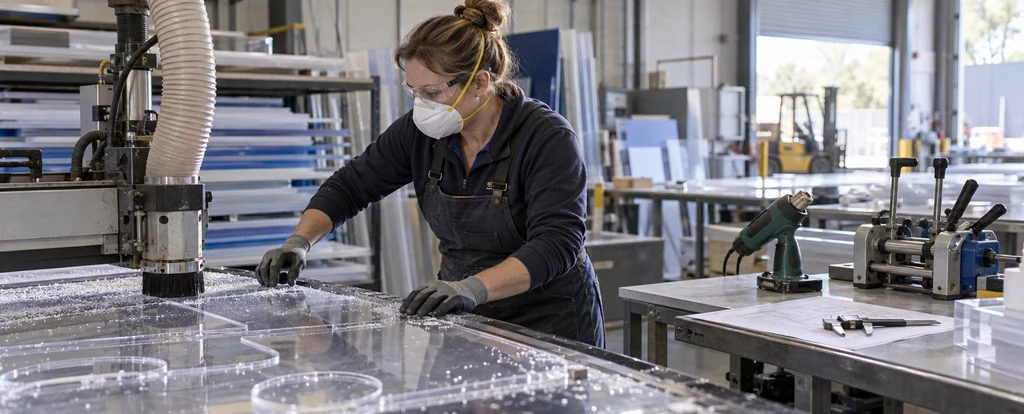
Most of the work happens in a workshop, cutting and welding polyethylene, PVC and acrylic into tanks, ducting, pipework, machine guards and one-off components. It is custom work rather than production-line plastics, which separates the job from injection moulding or extrusion, and the pieces usually have to fit existing pipework and machinery. About 900 people work as plastics fabricators in Australia, chiefly for manufacturers, construction contractors and mining suppliers.
How much do plastics fabricators earn?
The median full-time salary for a plastics fabricator is $68,600 per annum, before tax, up $14,700 since 2018.
Where you work moves pay more than anything else: construction and mining sites pay above general manufacturing, and site, shift and height allowances sit on top of the base rate. Fabricators covered by an enterprise agreement usually earn more than those on the award, and overtime is common when a job has to be finished before a site crew can continue. A trade qualification and the ability to weld pipe to a tested standard both lift what you can ask for.
What does a plastics fabricator do day to day?
The list below is what fills most weeks; the exact mix shifts with seniority and whatever stage the current work is at.
- Reading drawings and setting out dimensions before any cutting starts
- Cutting sheet, pipe and profile with saws, routers and CNC equipment
- Welding and bonding plastic sections using hot air, extrusion or butt fusion methods
- Heating plastic and forming it over jigs to bend or shape it to size
- Trimming, checking and fitting finished components, often on site
What skills do plastics fabricators need?
Employers look for craft and handmade production, hand and power tool work, reading plans and specifications, backed by CNC router fluency and strong attention to detail.
Specialist skills
- Craft and handmade production
- Hand and power tool work
- Reading plans and specifications
- Fabrication and finishing
- Plant and equipment operation
- Worksite safety management
- Process improvement
Software and tools
- CNC router
- Hot air plastic welder
- Butt fusion welding machine
- Thermoforming machine
- Fusion 360 (CAD)
General skills
- Attention to detail
Is the job growing?
About 900 people work as plastics fabricators in Australia, and employment is projected to grow 5.1% over the decade to 2035. That's modest growth: demand is steady rather than booming.
How do you become a plastics fabricator?
Here's the path most plastics fabricators take, step by step.
- 1Finish Year 12 or a pre-vocational course
There is no single prerequisite, and around 47% of people in the role list Year 12 or below as their highest qualification. Year 12 maths and any workshop, design and technology or engineering subjects make the entry maths easier.
- 2Start as a trade assistant or process worker
Many fabricators begin in a plastics workshop doing cutting, trimming and packing, which is paid work and shows you the machines before you commit to training. That experience also helps when you apply for a traineeship.
- 3Complete a Certificate III
Certificate III in Polymer Processing (PMB30121) covers plastic welding, forming and fabrication, and an engineering fabrication trade qualification is also accepted by many employers. A traineeship or apprenticeship runs about three to four years and combines paid workshop time with off-the-job training at TAFE.
- 4Add the licences and qualifications your worksite needs
A forklift licence helps in most workshops, and a White Card is required before you set foot on a construction site. Rigging, dogging or elevated work platform qualifications open up installation work on larger projects.
- 5Specialise
Fabricators who learn butt fusion welding for large pipe, thermoforming, or CNC programming and nesting take on the more complex jobs, including tank and pressure pipework built to tested standards.
Ready to apply as a plastics fabricator?
Whether you're working toward becoming a plastics fabricator or already are one and want a hand with the next step (sharpening your resume for ATS screening, tightening your cover letter, or knowing what you'll actually be asked at interview), here are examples grounded in this specific role, not generic templates.
What jobs can a plastics fabricator move to?
Moving into Welder typically comes with the biggest pay rise, worth $19,200 a year more on average.
| Move to | Typical pay change | Overlap | Retraining |
|---|---|---|---|
| Welder Plastics fabricators move into welding, where their fabrication skills transfer and further apprenticeship training is required.Known move | +$19,200 | 50% | requalify |
| Metal Fabricator Metal fabricator is a common next step, using similar metalwork and fabrication skills with additional apprenticeship training.Known move | +$19,200 | 50% | requalify |
| Plastics Technician Plastics technicians work with similar materials and processes, and a short course builds on the fabricator's existing skills.Known move | +$6,300 | 48% | short course |
Moves are chosen from Jobs and Skills Australia's Data on Occupation Mobility, which follows income tax records between 2011-12 and 2020-21, together with entry requirements and skill overlap. A known move is one people were seen making in that data. Pay change compares median full-time pay for the two roles.
Who works as a plastics fabricator?
The typical plastics fabricator is 41 years old; 96% are men, 87% work full-time, and full-timers average 48 hours a week.
- 41
- Median age
- 4%
- Female share
- 87%
- Full-time
- +8h
- vs all-jobs avg
What's it like being a plastics fabricator?
The week mixes workshop time with site installation, and deadlines set the rhythm, since a tank or a run of ducting usually has to be finished before another crew can carry on. Full-time weeks average 48 hours, and late finishes are part of the job when a project is close to handover. It suits someone who likes working with their hands and solving problems with heat, measurement and material rather than sitting at a desk.
What people like
- Something different most weeks. Because so much of the work is custom, you are rarely running the same part for months; a tank on Monday and machine guards on Thursday is normal.
- You can see the finished job. Components leave the workshop as objects you can measure and check, and installation puts them into a plant or building you can point to later.
- Skills that carry across industries. Welding, forming and reading drawings are understood by employers in construction, mining and manufacturing, and the same foundation transfers to metal fabrication.
- One-off problem solving. Plastic behaves differently from metal, and working out the heat, jig or weld that will hold a shape is a large part of the craft.
What people find hard
- Fumes, dust and heat. Hot air welding, thermoforming and cutting all produce fumes or dust, so extraction, masks and ventilation are part of the job rather than optional extras.
- Material that moves on you. Plastic warps, shrinks and holds stress, so a part that measured correctly on the bench can pull out of shape after welding, which means rework and rechecking.
- Tight tolerances on one-offs. Custom components often have to fit pipework or machinery already in place, leaving little room for error on a piece you have never made before.
- Site days are less comfortable. Installations happen in operating plants and on construction and mine sites, sometimes in confined spaces or at height, which is a different day from the workshop.
Based on our synthesis of professional-body surveys and public accounts of the role, not first-person verified reviews.
Which industries employ plastics fabricators?
Manufacturing employs the largest share of plastics fabricators, followed by Construction.
Top employing industries
- 1Manufacturing
- 2Construction
- 3Mining
Ranked by employment share; the source doesn't publish an exact percentage per industry.
| Year 12 or below | 46.9% | |
|---|---|---|
| Certificate III/IV | 38.4% | |
| Diploma / Advanced Diploma | 4% | |
| Bachelor degree | 2.8% | |
| Postgraduate | 0.4% |
Will AI replace plastics fabricators?
Plastics fabrication sits in the middle: drawings, quoting and cutting layouts are increasingly produced by CAD and CAM software, while welding, forming and fitting still depend on hands and on reading how the material behaves. CNC routers and butt fusion machines have been in workshops for years and change how quickly a job runs, not whether a person is needed to set it up and check it.
Share of typical working time by exposure level
- Welding and bonding plastic componentsHot air, extrusion and butt fusion welding rely on feel for heat and bead, and while automated machines run long straight welds in volume shops, one-off tanks and pipework are welded by hand.35%low
- Finishing, inspecting and fitting on siteTrimming, checking a weld and lining a component up with existing pipework in a plant involve physical access and judgement that no current tool handles for you.25%low
- Drawing and setting out dimensionsModels and digital takeoffs speed up measurement, but a customer's rough sketch, an existing pipe run or a damaged part still has to be interpreted by someone on the floor.20%moderate
- Programming and running CNC cutsNesting software and CAM now work out the cut layout from a model, leaving the fabricator to load sheets, set the machine and check the first part against the drawing.20%high
Moves least exposed to AI
These career moves from plastics fabricator work are rated low for AI exposure:
- Welder
Solid skill overlap (50%), requalify to get there, and a low automation-risk profile.
- Metal Fabricator
Solid skill overlap (50%), requalify to get there, and a low automation-risk profile.
Common questions about becoming a plastics fabricator
Straight answers to the questions people ask most.
How much do plastics fabricators earn?
Plastics fabricators earn a median of $68,600 per year before tax. Pay rises with site and shift allowances, enterprise agreements and overtime, and construction and mining work generally pays above general manufacturing.
How do you become a plastics fabricator?
Most people start in a workshop as a trade assistant or process worker, then take on a Certificate III in Polymer Processing (PMB30121) or an engineering fabrication traineeship. The training is paid, takes about three to four years, and no degree is required.
Are plastics fabricators in demand?
Plastics fabricators are currently not in shortage, and employment is projected to grow 5.1% over the decade to 2035. The occupation is small at about 900 people, so openings cluster around the workshops and manufacturers doing this work in your area, and it pays to know who they are.
Will AI replace plastics fabricators?
AI and automation reach parts of the job rather than the whole of it. Software now produces drawings, nesting layouts and CNC cutting files, which removes some marking-out and layout work, but welding, forming and fitting plastic still depend on a person reading how the material behaves.
What can a plastics fabricator move into?
Welding and metal fabrication are established moves, since the fabrication skills transfer, pay is $19,200 more, and 50% of the skills carry over, though both require apprenticeship training to requalify. Plastics technician is a smaller step across, using similar materials with a short course. Many fabricators eventually set up their own workshop making custom components, and running that business is often where earnings grow.
Is the work hard on your body?
It can be. Sheet and pipe are heavy, you stand for most of the day, and welding positions are often awkward, so lifting equipment and good technique matter. Workshops vary a lot in how much mechanical help they provide.
Related roles
Not sure this is you? Take the career quiz and get a ranked shortlist of roles that fit how you like to work.