Plumbing Inspector
Plumbing inspectors check plumbing, drainage and gas work against the Plumbing Code of Australia and confirm it is safe and compliant before a certificate is issued.
- Median salary*
- $91,000
4.1%vs last year, before tax
- People employed
- 350
16.7%vs last year
- Projected growth
- +14.2%
to 2035
- AI exposure*
- Moderate
- automation risk
- Average hours
- 38/wk
−2h vs all jobs
- Shortage status
- Not in shortage
national
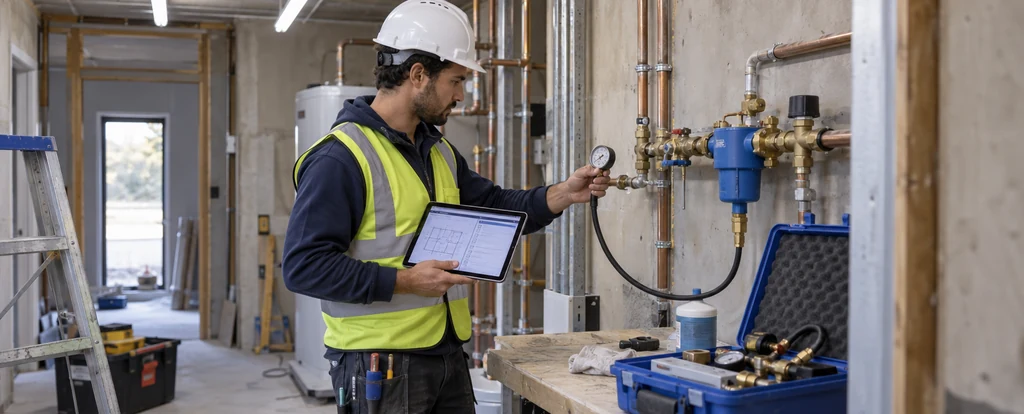
Plumbing inspectors work for councils, water authorities and private certifiers, visiting sites at rough-in and completion stages. It is the mirror image of the trade it regulates: instead of installing pipework, inspectors assess installations against the approved plans and the relevant standards, then decide whether a certificate of compliance can be issued. Days split between short site visits and desk work on plans, test results and records.
How much do plumbing inspectors earn?
The median full-time salary for a plumbing inspector is $91,000 per annum, before tax, up $19,100 since 2018.
Pay is set by the employer and by the authorisation you hold. Councils and water authorities pay within enterprise agreement bands that step up with experience, while private certification practices set their own rates and often pay for accreditation and site experience. The endorsements you carry, such as gasfitting or backflow prevention, can also shift what you are offered.
What does a plumbing inspector do day to day?
The list below is what fills most weeks; the exact mix shifts with seniority and whatever stage the current work is at.
- Inspecting plumbing, drainage, gas and sanitary installations at rough-in and final completion stages
- Reading approved plans and specifications before an inspection so the checks match what was signed off
- Witnessing pressure, flow and backflow prevention tests and reviewing the results
- Issuing certificates of compliance, defect notices and written directions to rectify
- Advising licensed plumbers, builders and property owners on what has to change before the next visit
What skills do plumbing inspectors need?
Employers look for building codes and standards, regulatory compliance, field inspection and testing, backed by Water authority compliance portals fluency and strong attention to detail.
Specialist skills
- Building codes and standards
- Regulatory compliance
- Field inspection and testing
- Worksite safety management
Software and tools
- Water authority compliance portals
- Backflow prevention test kits
- Drain inspection cameras
- Pressure and flow test gauges
- Council asset and inspection record systems
General skills
- Attention to detail
- Written communication
- Problem solving
- Stakeholder management
Is the job growing?
About 350 people work as plumbing inspectors in Australia, and employment is projected to grow 14.2% over the decade to 2035. That's healthy, above-average growth, and the role should stay in solid demand.
How do you become a plumbing inspector?
Here's the path most plumbing inspectors take, step by step.
- 1Finish a plumbing apprenticeship
The Certificate III in Plumbing (CPC32420) is the base qualification, usually completed over about four years as an apprentice while you work on site. It gives you the trade knowledge that inspection work depends on.
- 2Get your plumbing licence and work in the trade
Most inspectors spend years as a licensed plumber first, because the job rests on recognising compliant work when you see it. Licensing is handled by the plumbing regulator in your state and the requirements differ, so check yours early.
- 3Add inspection or building study
A Certificate IV in Plumbing and Services (CPC40920), or study in building surveying, covers the code, documentation and inspection units employers ask for. Some councils accept trade experience plus in-house training instead.
- 4Apply to a council, water authority or private certifier
Those are the three main employers, and vacancies are advertised rather than entered through a graduate program. Inspector roles are paid, permanent positions, usually with a probation period.
- 5Get authorised to issue certificates
Signing off work needs an authorisation or registration from the state plumbing regulator, and what you can approve depends on the endorsements you hold.
Ready to apply as a plumbing inspector?
Whether you're working toward becoming a plumbing inspector or already are one and want a hand with the next step (sharpening your resume for ATS screening, tightening your cover letter, or knowing what you'll actually be asked at interview), here are examples grounded in this specific role, not generic templates.
What jobs can a plumbing inspector move to?
Moving into Building Inspector typically comes with the biggest pay rise, worth $27,600 a year more on average.
| Move to | Typical pay change | Overlap | Retraining |
|---|---|---|---|
| Building Inspector Plumbing inspectors bring code knowledge and site compliance experience to building inspection, with further study in building surveying. | +$27,600 | 79% | reskill |
| Plumber Plumbing inspectors bring code knowledge and site assessment experience to plumbing work, with licensing and registration requirements to meet.Known move | +$12,500 | 32% | reskill |
| Underground Services Locator Plumbing inspectors bring an understanding of drainage plans and buried services to locating underground assets, with a short locating course. | +$2,600 | 55% | short course |
Moves are chosen from Jobs and Skills Australia's Data on Occupation Mobility, which follows income tax records between 2011-12 and 2020-21, together with entry requirements and skill overlap. A known move is one people were seen making in that data. Pay change compares median full-time pay for the two roles.
Who works as a plumbing inspector?
The typical plumbing inspector is 52 years old; 95% are men, 92% work full-time, and full-timers average 38 hours a week.
- 52
- Median age
- 5%
- Female share
- 92%
- Full-time
- −2h
- vs all-jobs avg
What's it like being a plumbing inspector?
The work has a steady rhythm of booked inspections, each one short and often somewhere else, followed by paperwork at the end of the day. The pressure sits in the decision: signing off a concealed installation makes you the last check before it is covered up, and a defect notice has to be specific enough to stand up if it is challenged. Inspectors tend to be people who enjoy getting the detail right and are comfortable telling a licensed tradesperson that the work needs to change.
What people like
- You see the whole trade, not one job. Instead of working on a single site for weeks, you move between builders, plumbers and developments, which keeps your technical knowledge broad.
- The rules are written down. Code clauses and standards give you a defensible basis for a call, so most disagreements are settled by pointing to the requirement.
- Regular hours. Inspections are scheduled rather than driven by a client emergency, and the roles usually run on weekday business hours with a council or authority vehicle.
- Your sign-off means something. A certificate of compliance is what lets a drainage line be connected or a building be occupied, so the outcome of your visit is visible.
What people find hard
- Pushback from trades under deadline. A defect notice can hold up a pour or a handover, which puts you between a builder and their schedule.
- Paperwork after the site visit. Every inspection needs notes, photos and a written outcome, and the record keeping can take as long as the visit itself.
- Driving between sites. In regional and outer suburban areas, a large part of the day can be spent in the vehicle getting to the next job.
- Responsibility for concealed work. Once a slab is poured or a wall is lined, mistakes are expensive, and your inspection record is the evidence of what was checked.
Based on our synthesis of professional-body surveys and public accounts of the role, not first-person verified reviews.
Which industries employ plumbing inspectors?
Public Administration and Safety employs the largest share of plumbing inspectors, followed by Construction.
Top employing industries
- 1Public Administration and Safety
- 2Construction
- 3Electricity, Gas, Water and Waste Services
Ranked by employment share; the source doesn't publish an exact percentage per industry.
| Certificate III/IV | 77.1% | |
|---|---|---|
| Diploma / Advanced Diploma | 10.3% | |
| Bachelor degree | 2.6% | |
| Postgraduate | 2.3% | |
| Year 12 or below | 2.2% |
Will AI replace plumbing inspectors?
Plumbing inspection is moderately exposed to AI: the report writing, code searching and record checking that fill the desk half of the job are already being sped up by software. The site half is not, because someone has to be in the trench or the roof space, watch the test being run, and judge the installation as it was built.
Share of typical working time by exposure level
- Inspecting installations on siteRough-in and completion inspections happen in trenches, roof spaces and plant rooms, where a person has to look at the work and decide whether it meets the standard.40%low
- Witnessing and reading test resultsPressure, flow and backflow tests are run in front of the inspector, and the reading has to be judged against the conditions on the day, not just the number.20%low
- Reviewing plans and compliance documentsSoftware can flag an expired certificate or a plan that does not match the lodged documents, which speeds up the desk review but leaves the interpretation to the inspector.20%moderate
- Writing reports, notices and recordsSite notes, photos and defect notices are the most exposed part of the job, and dictation and template tools already cut the time they take.20%high
Moves least exposed to AI
These career moves from plumbing inspector work are rated low for AI exposure:
- Plumber
Some skill overlap (32%), reskill to get there, and a low automation-risk profile.
- Building Inspector
High skill overlap (79%), reskill to get there, and a low automation-risk profile.
Common questions about becoming a plumbing inspector
Straight answers to the questions people ask most.
How much do plumbing inspectors earn?
Plumbing inspectors earn $91,000 per year before tax. Rates step up with experience and with the endorsements you hold, such as gasfitting or backflow prevention, and private certifiers often pay differently to councils.
How do you become a plumbing inspector?
Most people start as a licensed plumber and move into inspection after several years on the tools. From there you need a certificate IV level qualification, such as the Certificate IV in Plumbing and Services (CPC40920), plus authorisation from the state plumbing regulator to issue certificates.
Are plumbing inspectors in demand?
Plumbing inspectors are currently not in shortage, and employment in the role is projected to grow 14.2% over the decade to 2035. It is a small occupation, with about 350 people nationally, so most openings are filled by experienced plumbers, gasfitters and drainers moving across.
Will AI replace plumbing inspectors?
AI reaches the documentation side of the job before the site work. Report drafting, code searching and record checking are increasingly assisted by software, but the physical inspection, test witnessing and judgement about work as built still need a person on site.
What can a plumbing inspector move into?
Building inspection uses the same code knowledge and site compliance experience, with further study in building surveying, and pays $27,600 more. Returning to the tools as a plumber is a common route, and an underground services locator role draws on your reading of drainage plans and buried services.
Do you have to be a licensed plumber to be a plumbing inspector?
In most states you need a plumbing trade qualification and a licence before you can be authorised as an inspector, because the role depends on recognising compliant work. Each state's plumbing regulator sets its own requirements, so check yours before you plan the move.
Related roles
Not sure this is you? Take the career quiz and get a ranked shortlist of roles that fit how you like to work.