Drainer
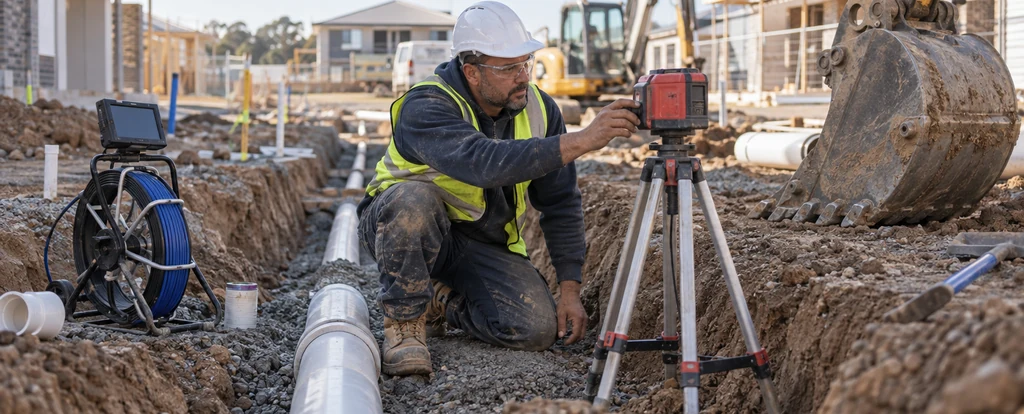
Drainers install and maintain the below-ground pipes that carry sewage, stormwater and wastewater away from buildings and public spaces.
- Median salary*
- $80,600
3.5%vs last year, before tax
- People employed
- 4,400
0.0%vs last year
- Projected growth*
- +6%
to 2035
- AI exposure*
- Low
- automation risk
- Average hours*
- 42/wk
+2h vs all jobs
- Shortage status*
- In shortage
national
Drainers work on new subdivisions, building sites, road projects and water authority jobs, laying pipe below ground before slabs, roads and landscaping go in on top. The trade sits close to plumbing, but the focus stays on drains, sewers and stormwater rather than the fittings and fixtures inside a building. Registration or licensing is required in most states and territories, and the usual way in is an apprenticeship.
How much do drainers earn?
The median full-time salary for a drainer is $80,600 per annum, before tax, up $17,100 since 2018.
Drainers are usually paid under the Plumbing and Fire Sprinklers Award or a project enterprise agreement, which sets the base rate for the qualification level held. Pay moves with the sector, since major civil and infrastructure projects generally pay more than residential drainage work, and overtime plus allowances for confined space or night work add to the total. Holding your registration and a current licence matters as well, because it opens up the jobs that require a qualified drainer on site.
What does a drainer do day to day?
The list below is what fills most weeks; the exact mix shifts with seniority and whatever stage the current work is at.
- Reading plans and setting out drainage runs with a pipe laser or laser level
- Excavating trenches and preparing the bedding that supports the pipes
- Laying, joining and sealing sewer and stormwater pipes to the required fall
- Connecting drains to mains and installing inspection points and pits
- Testing with water or a CCTV drain camera before the trench is backfilled
What skills do drainers need?
Employers look for reading plans and specifications, installation and maintenance, worksite safety management, backed by CCTV drain camera fluency and strong communication.
Specialist skills
- Reading plans and specifications
- Installation and maintenance
- Worksite safety management
- Building codes and standards
- Hand and power tool work
- Plant and equipment operation
Software and tools
- CCTV drain camera
- Laser level
- Pipe laser
- Excavator
- AutoCAD
General skills
Is the job growing?
About 4,400 people work as drainers in Australia, and employment is projected to grow 6% over the decade to 2035. That's modest growth: demand is steady rather than booming.
How do you become a drainer?
Here's the path most drainers take, step by step.
- 1Finish Year 10 or Year 12
Most employers want Year 10 maths and English as a minimum, and Year 12 helps when you are competing for an apprenticeship with a large civil contractor.
- 2Start a Certificate III in Plumbing (Drainage) apprenticeship
An apprenticeship runs about four years and is paid while you train, combining TAFE study with supervised work on site. You need an employer to take you on before you can enrol.
- 3Get registered or licensed in your state or territory
Drainage work is regulated everywhere but the rules differ, so check with your local regulator, such as NSW Fair Trading, the Victorian Building Authority or the QBCC in Queensland. Registration generally needs the qualification plus practical experience.
- 4Add the licences and qualifications your projects need
Confined space entry, excavator operation and high risk work licences come up often on drainage jobs, and employers usually put you through them once you are on the books.
- 5Train further for specialist or supervisory work
A Certificate IV or Diploma in plumbing and services supports estimating, site supervision or running your own drainage business, and it is the usual route off the tools.
Ready to apply as a drainer?
Whether you're working toward becoming a drainer or already are one and want a hand with the next step (sharpening your resume for ATS screening, tightening your cover letter, or knowing what you'll actually be asked at interview), here are examples grounded in this specific role, not generic templates.
What jobs can a drainer move to?
Moving into Plumber typically comes with the biggest pay rise, worth $22,900 a year more on average.
| Move to | Typical pay change | Overlap | Retraining |
|---|---|---|---|
| Plumber Drainers already lay below-ground pipework, so they carry drainage and excavation skills into general plumbing work with further training. | +$22,900 | 75% | reskill |
| Mechanical Services Plumber Drainers understand pipework, grades and water flow, which transfer to mechanical services plumbing for heating, cooling and ventilation systems. | +$15,600 | 90% | reskill |
| Roof Plumber Drainers know stormwater and pipework, so they can move into roof plumbing to install gutters, downpipes and roof drainage. | +$10,400 | 63% | reskill |
| Fire Protection Plumber Drainers' pipe installation and testing experience suits fire protection plumbing, where they add sprinkler and hydrant system skills. | +$5,200 | 65% | reskill |
| Gasfitter Drainers' plumbing and pipework background supports gasfitting, with extra training needed for gas appliance and line work. | +$5,200 | 52% | reskill |
Moves are chosen from Jobs and Skills Australia's Data on Occupation Mobility, which follows income tax records between 2011-12 and 2020-21, together with entry requirements and skill overlap. A known move is one people were seen making in that data. Pay change compares median full-time pay for the two roles.
Who works as a drainer?
The typical drainer is 33 years old; 99% are men, 87% work full-time, and full-timers average 42 hours a week.
- 33
- Median age
- 1%
- Female share
- 87%
- Full-time
- +2h
- vs all-jobs avg
What's it like being a drainer?
Drainage work follows the build: trenches open early, pipes go in before slabs and roads, and the schedule is set by the trades coming in behind you. Days are physical and mostly outdoors, mixing machine work with hand work down in the trench, and the pressure comes from ground conditions, weather and inspections that have to pass before anyone can backfill. It suits people who like finishing a job and closing it up, and who are comfortable working to tolerances where a few millimetres of fall matters.
What people like
- Work with a clear finish. You set out a drain, lay it, test it and backfill it, so most days end with something complete rather than a task that drags on for weeks.
- A mix of machine and hand work. One day is spent on the excavator, the next on the pipe laser and hand tools in the trench, which breaks up the physical load.
- Outdoor work with a small crew. Most drainage is done by a team of a few on site, and the job rarely ties you to a desk or one location.
- Skills that carry across sectors. The same pipework knowledge applies on housing estates, road projects and water authority work, so you can shift between sectors as project work moves around.
What people find hard
- Ground you can't control. Rock, groundwater or unmarked services can turn a straightforward dig into a slow, expensive day, and the answer is usually more machine time rather than more effort.
- Weather against a fixed schedule. Rain stops trench work, but the trades behind you still need the drain in, so lost time tends to be made up rather than forgiven.
- Confined and awkward spaces. Connection pits, trenches and inspections put you in tight spots, which is why confined space training and the safety rules around it are part of the job.
- Getting the test right the first time. A drain that fails has to be found and fixed before backfill, so there is little room for a rushed joint or a wrong fall.
Based on our synthesis of professional-body surveys and public accounts of the role, not first-person verified reviews.
Which industries employ drainers?
Construction employs the largest share of drainers, followed by Electricity, Gas, Water and Waste Services.
Top employing industries
- 1Construction
- 2Electricity, Gas, Water and Waste Services
- 3Public Administration and Safety
Ranked by employment share; the source doesn't publish an exact percentage per industry.
| Certificate III/IV | 34% | |
|---|---|---|
| Diploma / Advanced Diploma | 26% | |
| Bachelor degree | 20% | |
| Year 12 or below | 20% |
Will AI replace drainers?
This is a low exposure trade: the work happens in the ground, and most of it depends on a person reading conditions, setting fall and making joints that pass a test. Technology is already present and useful, with pipe lasers, laser levels, CCTV drain cameras and machine guidance on excavators doing more of the measuring and checking than they used to. What those tools do not change is the digging, the pipe handling and the judgement about what is actually under the trench.
Share of typical working time by exposure level
- Setting out and excavating trenchesMachine guidance helps the operator hold depth and alignment, but buried services and unstable ground still have to be read by the person in the seat.35%low
- Laying and joining pipe to gradeA pipe laser takes the guesswork out of fall, yet cutting, bedding and sealing the pipe remains hand work with a physical tolerance to hit.30%low
- Reading drawings and preparing as-constructed recordsDrawings, levels and as-constructed documentation move quickly into drafting and compliance software, which speeds up the paperwork side of a job.20%high
- Testing and inspecting completed drainsCCTV cameras and pressure testing record what is inside the pipe, but someone still has to watch the footage and work out what needs fixing.15%moderate
Common questions about becoming a drainer
Straight answers to the questions people ask most.
How much do drainers earn?
The median for a full-time drainer is $80,600 per year before tax. Pay is set by the award or the project agreement, so it rises with overtime, confined space and night work allowances, and with the sector you work in.
How do you become a drainer?
The usual route is a Certificate III in Plumbing (CPC32420) (Drainage) apprenticeship, which takes about four years and is paid while you train. You need an employer to take you on first, and the qualification is what lets you register or get licensed in your state or territory.
Are drainers in demand?
Drainers are currently in shortage nationally, and employment is projected to grow 6% over the decade to 2035 over the decade to 2035. Because the qualification works across housing, civil and water authority projects, you are not tied to one part of the construction cycle.
Will AI and automation replace drainers?
No. Machine guidance on excavators and drafting software speed up setting out and record keeping, but reading ground conditions, cutting pipe to grade and testing a drain still need someone on site. The work is rated low for AI exposure because most of it is physical and happens in ground nobody has mapped precisely.
Do you need a licence to work as a drainer?
Yes, drainage work is licensed or registered in every state and territory, though the requirements differ. You generally need the Certificate III plus a period of supervised experience before you can apply, and you keep the licence current with ongoing requirements set by your local regulator.
What can a drainer move into?
Mechanical services plumber is a common step, since drainage knowledge of pipework, grades and water flow transfers to heating, cooling and ventilation systems, and full-time pay there is about $15,600 more. Moving into general plumbing is another option at around $22,900 more, with further training for the fittings and fixtures side of the trade. Experienced drainers also often start their own drainage business, which is frequently where earnings grow.
Related roles
Not sure this is you? Take the career quiz and get a ranked shortlist of roles that fit how you like to work.