Rail Protection Officer
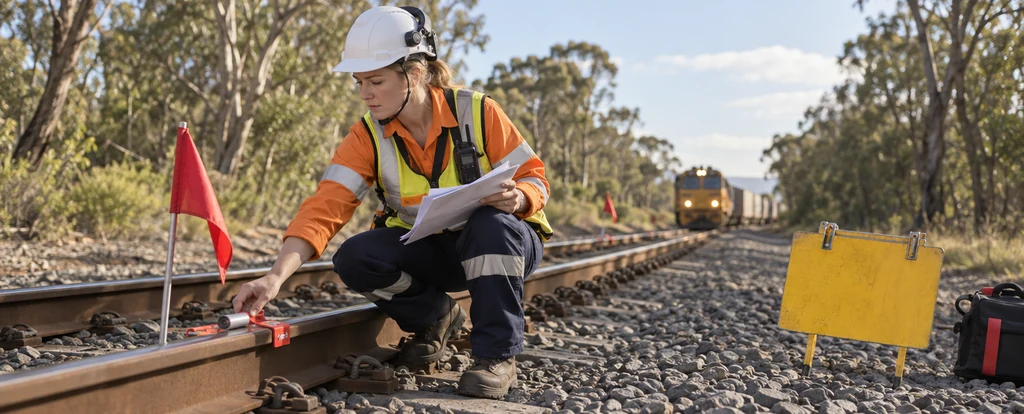
Rail protection officers control access to the track so maintenance and construction crews can work safely in a live rail corridor.
- Median salary*
- $96,200
3.8%vs last year, before tax
- People employed
- 1,000
0.0%vs last year
- Projected growth*
- +4%
to 2035
- AI exposure*
- Low
- automation risk
- Average hours*
- 42/wk
+2h vs all jobs
- Shortage status*
- In shortage
national
Rail protection officers work in the rail corridor, where they manage track possessions and protect maintenance, construction and inspection crews from moving trains. They are the link between the work crew and train control, setting protection limits, placing warning devices and holding radio contact until the site is handed back. The role is shift based and mostly outdoors, and unlike the track workers they protect, the job is about controlling access to the track rather than working on it.
How much do rail protection officers earn?
The median full-time salary for a rail protection officer is $96,200 per annum, before tax, up $19,900 since 2018.
Pay follows the enterprise agreement you work under, since the large network operators and their contractors each set their own rates, and shift penalties and allowances for night, weekend and public holiday work often make up a large share of a payslip. Remote project and camp-based construction jobs usually carry extra allowances, while labour hire work can pay a higher hourly rate with less security. Accreditation level matters too: holding protection for more complex worksites opens up better paid jobs.
What does a rail protection officer do day to day?
The list below is what fills most weeks; the exact mix shifts with seniority and whatever stage the current work is at.
- Taking track possessions and setting protection limits with train control
- Placing and checking flags, detonators, signage and marker boards
- Watching for rail traffic and calling clear warnings to the work crew
- Running pre-work safety briefings and checking the site for hazards
- Recording protection arrangements and reporting incidents or near misses
What skills do rail protection officers need?
Employers look for worksite safety management, regulatory compliance, backed by Two-way radio and train control communications fluency and strong safety and compliance awareness.
Specialist skills
- Worksite safety management
- Regulatory compliance
Software and tools
- Two-way radio and train control communications
- Worksite protection plans and track possession documentation
- Rail safety flags, detonators and warning signage
- Safeworking rule books and network access procedures
- Fatigue and shift management systems
General skills
- Safety and compliance awareness
- Written communication
- Attention to detail
- Problem solving
- Time and deadline management
Is the job growing?
About 1,000 people work as rail protection officers in Australia, and employment is projected to grow 4% over the decade to 2035. That's modest growth: demand is steady rather than booming.
How do you become a rail protection officer?
Here's the path most rail protection officers take, step by step.
- 1Start in the rail corridor or apply for a traineeship
Many protection officers come from track work, shunting or labouring on rail projects, while some networks and contractors take on trainees with no rail background in paid entry roles.
- 2Complete safeworking training
This is usually a Certificate III or IV in rail infrastructure, or a network run safeworking course covering track access, protection methods and the rule book for that network.
- 3Get accredited for the network
Protection accreditation is issued network by network, so as well as training you sit the operator's assessments and hold current rail industry identification and competencies.
- 4Pass the rail medical and safety checks
Rail medicals, hearing and vision tests and drug and alcohol screening are standard, and you keep them current along with refresher training each time the rules change.
Ready to apply as a rail protection officer?
Whether you're working toward becoming a rail protection officer or already are one and want a hand with the next step (sharpening your resume for ATS screening, tightening your cover letter, or knowing what you'll actually be asked at interview), here are examples grounded in this specific role, not generic templates.
What jobs can a rail protection officer move to?
Moving into Train Driver typically comes with the biggest pay rise, worth $59,900 a year more on average.
| Move to | Typical pay change | Overlap | Retraining |
|---|---|---|---|
| Train Driver Rail safety and track knowledge support a move into train driving, though training and a driver certificate are required. | +$59,900 | 20% | reskill |
| Railway Track Machine Operator Track access and protection experience carries into operating rail machines, with machine-specific training required. | +$10,400 | 35% | reskill |
| Train Controller Track protection experience and rail rules carry into train control, where corridor knowledge supports safe movement of trains. | +$5,200 | 47% | short course |
| Railway Signaller Safety-critical rail awareness and track knowledge transfer to signalling, with signalling training and certification required. | +$5,200 | 29% | reskill |
Moves are chosen from Jobs and Skills Australia's Data on Occupation Mobility, which follows income tax records between 2011-12 and 2020-21, together with entry requirements and skill overlap. A known move is one people were seen making in that data. Pay change compares median full-time pay for the two roles.
Who works as a rail protection officer?
The typical rail protection officer is 42 years old; 86% are men, 81% work full-time, and full-timers average 42 hours a week.
- 42
- Median age
- 14%
- Female share
- 81%
- Full-time
- +2h
- vs all-jobs avg
What's it like being a rail protection officer?
The shift is shaped by the timetable and the possession: you set up, hold the site while the crew works, then hand the track back before services resume. Long stretches of watching and waiting sit alongside short bursts of pressure when a train is due or a warning has to go out. It suits people who like working to a defined system, are comfortable with nights and weather, and do not mind carrying responsibility for other people's safety.
What people like
- The rules tell you what good looks like. Safeworking procedures set out exactly what protection a job needs, so you are applying a system rather than improvising under pressure.
- You get the crew home. The whole purpose of the job is keeping people safe around live trains, and the result of a good shift is visible: everyone finishes and leaves the corridor.
- Outside, on your feet. Most of the shift is spent in the corridor rather than an office, which suits people who prefer practical, physical work.
- The roster can fit the rest of your life. Nights, weekends and blocks of days off are part of the pattern, which works well if you would rather have whole days free during the week.
What people find hard
- Weather and night shifts. You are outside in rain, heat and cold, often in the small hours when the only track access is inside a possession window.
- Long quiet stretches. Between trains the job is watching and waiting, and staying alert with nothing happening is a discipline in itself.
- Rules differ by network. Rule books and accreditations belong to individual operators, so changing employer can mean fresh assessments and retraining.
- The weight of the responsibility. If protection fails, people are killed, and incidents and near misses are investigated in detail, which is a lot to carry on an ordinary shift.
Based on our synthesis of professional-body surveys and public accounts of the role, not first-person verified reviews.
Which industries employ rail protection officers?
Rail transport employs the largest share of rail protection officers, followed by Heavy and civil engineering construction.
Top employing industries
- 1Rail transport
- 2Heavy and civil engineering construction
- 3Rail infrastructure management
- 4Mining
- 5Freight logistics
Ranked by employment share; the source doesn't publish an exact percentage per industry.
| Certificate III/IV | 34% | |
|---|---|---|
| Diploma / Advanced Diploma | 26% | |
| Bachelor degree | 20% | |
| Year 12 or below | 20% |
Will AI replace rail protection officers?
Rail protection work is not very exposed to AI, because most of it happens in the corridor, in real time, with a person physically holding the protection limit and watching for trains. Software has taken over parts of rostering, protection records and access planning, and network control systems increasingly manage train movements, which changes the paperwork around the job without removing the safety role. Knowing when to stop the job still depends on someone being there, watching and calling it.
Share of typical working time by exposure level
- Briefing the crew and setting up the worksiteStanding in front of a crew to explain the protection limits, the walking route and what happens if a train appears is spoken and on-site work.35%low
- Placing and checking warning equipmentFlags, detonators and marker boards have to be walked out, set at the correct distance from the worksite and physically checked before work starts.30%low
- Holding the protection limit with train controlPossession records and radio logs are increasingly captured in software, but the call on whether it is safe to release the track is still made between people.25%moderate
- Protection paperwork and recordsEntering possession details, protection limits and near-miss reports into safety systems is screen work and the part most easily handled by software.10%high
Common questions about becoming a rail protection officer
Straight answers to the questions people ask most.
How much do rail protection officers earn?
Rail protection officers earn a median of $96,200 per year before tax, based on full-time workers. What you actually take home depends on the enterprise agreement you are hired under, how much penalty-rate shift work you do, and whether the job carries remote or project allowances. The figure is a snapshot of the occupation rather than a rate for any one employer.
How do you become a rail protection officer?
Most people get in through another rail job first and then add protection accreditation, though some networks and contractors run paid traineeships for people with no rail background. You complete safeworking training, usually a Certificate III or IV in rail infrastructure or a network course, then pass the operator's assessments, a rail medical and drug and alcohol screening. Accreditation is issued per network, so a qualification with one operator does not automatically let you work on another.
Are rail protection officers in demand?
Rail protection officers are currently in shortage nationally, and employment is projected to grow 4% over the decade to 2035 over the decade to 2035. The occupation is small, so openings in any one year come mostly from turnover and from project and maintenance work rather than from expansion. Current accreditation and a clean safety record are what employers look at when those openings appear.
Will AI or automation replace rail protection officers?
Exposure is low, because the core of the job is a person physically holding the protection limit in a live corridor and watching for trains. Rostering, protection records and access planning are increasingly handled in software, and train control systems take on more of the movement side of the network. The decision to stop work when a train appears still depends on someone standing there watching the track.
What can a rail protection officer move into?
Train control is a natural step, since your corridor knowledge and track protection experience carry across to moving trains safely, and train controllers are paid $5,200 more. Railway signalling uses the same safety-critical habits but needs its own certification, and signallers are paid $5,200 more. Some protection officers move the other way into track work or shunting, or use the rail access and rules knowledge in safety and assurance roles.
Do rail protection officers work shifts?
Yes, and the roster is built around the network rather than a standard week. Most track access happens at night, on weekends or during planned shutdowns, so nights and public holidays are regular rather than occasional. Average full-time hours sit at 42 a week, and the shift penalties that come with that pattern are part of the pay.
Related roles
- Train Controller
- Railway Signaller
- Railway Track Machine Operator
- Train Driver
- Railway Track Worker
- Railway Shunter
Not sure this is you? Take the career quiz and get a ranked shortlist of roles that fit how you like to work.