Home Manufacturing & Production
Saw Doctor
Saw doctors sharpen, tension and repair saw blades so mills and workshops cut timber and metal accurately and with less waste.
- Median salary*
- $75,400
4.0%vs last year, before tax
- People employed
- 290
3.3%vs last year
- Projected growth
- +8%
to 2035
- AI exposure*
- Moderate
- automation risk
- Average hours
- 42/wk
+2h vs all jobs
- Shortage status
- In shortage
national
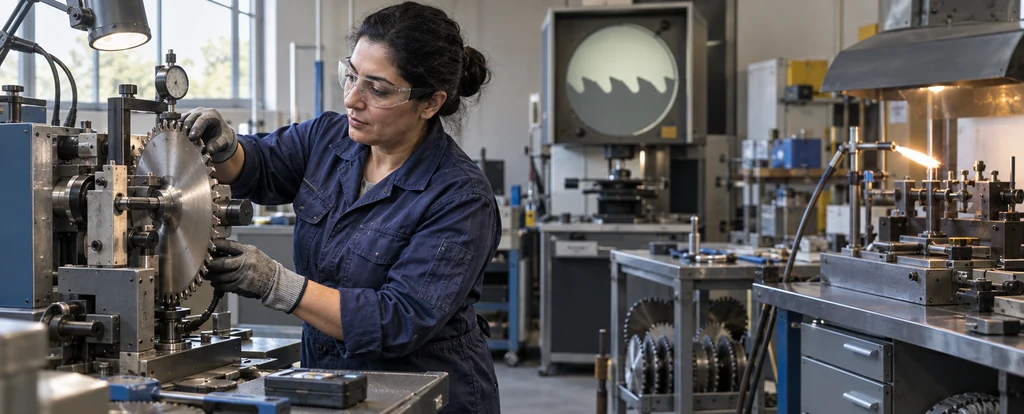
Saw doctors work in a workshop attached to a sawmill or in a specialist sharpening business, servicing the cutting tools used across timber processing and metal fabrication. They sharpen teeth, hammer and tension blades, replace carbide tips and work out why a blade is cracking, wandering or wearing early, which is a different job from running the saw itself. Most learn the trade through an apprenticeship.
How much do saw doctors earn?
The median full-time salary for a saw doctor is $75,400 per annum, before tax, up $15,700 since 2018.
Pay rises with the level of the trade qualification and with the range of blades you can work on, so a saw doctor who can tension large band saws or handle complex re-tipping usually earns more than one doing routine sharpening. The sector matters as well: mills, specialist sharpening businesses and mobile services set their own rates. Full-time hours average 42 a week, and overtime in busy periods or during a mill breakdown adds to the base rate in many workshops.
What does a saw doctor do day to day?
The list below is what fills most weeks; the exact mix shifts with seniority and whatever stage the current work is at.
- Sharpening and setting teeth on circular, band and gang saws
- Hammering and tensioning blades to the correct shape and run-out
- Re-tipping and brazing carbide or stellite teeth
- Diagnosing blade faults reported by mill operators, such as cracking or wandering cuts
- Maintaining and calibrating the grinders, tension gauges and measuring gear in the workshop
What skills do saw doctors need?
Employers look for fabrication and finishing, hand and power tool work, plant and equipment operation, backed by CNC saw grinding machines fluency and strong attention to detail.
Specialist skills
- Fabrication and finishing
- Hand and power tool work
- Plant and equipment operation
- Installation and maintenance
- Craft and handmade production
Software and tools
- CNC saw grinding machines
- Carbide tipping equipment
- Tension gauges
- Dial indicators
- Profile projectors
General skills
- Attention to detail
- Problem solving
- Safety and compliance awareness
Is the job growing?
About 290 people work as saw doctors in Australia, and employment is projected to grow 8% over the decade to 2035. That's modest growth: demand is steady rather than booming.
How do you become a saw doctor?
Here's the path most saw doctors take, step by step.
- 1Get an apprenticeship with a mill or saw service business
The trade is learned on the job, so the first step is an Australian Apprenticeship with a sawmill, a specialist sharpening business or a larger timber processor that has grinding, tensioning and carbide tipping equipment. Apprentices are paid while they train.
- 2Complete a certificate III in saw doctoring
The qualification runs alongside the apprenticeship and usually takes about three to four years. It covers tooth geometry, tensioning, carbide tipping and the safe use of grinding and measuring equipment.
- 3Build the measuring and diagnostic side
Employers value saw doctors who can read a tension gauge, use a profile projector and dial indicator, and trace a fault back to the blade, the machine or the way the saw is being fed. That diagnostic work is what separates a saw doctor from someone who only sharpens teeth.
- 4Add further study if you plan to move sideways
A certificate IV or diploma in engineering opens up toolmaking and mechanical engineering technician roles, which draw on the same precision grinding, measuring and fitting skills.
Ready to apply as a saw doctor?
Whether you're working toward becoming a saw doctor or already are one and want a hand with the next step (sharpening your resume for ATS screening, tightening your cover letter, or knowing what you'll actually be asked at interview), here are examples grounded in this specific role, not generic templates.
What jobs can a saw doctor move to?
Moving into Mechanical Engineering Technician typically comes with the biggest pay rise, worth $18,200 a year more on average.
| Move to | Typical pay change | Overlap | Retraining |
|---|---|---|---|
| Mechanical Engineering Technician Saw doctors bring blade alignment, tensioning and machine maintenance knowledge to mechanical engineering technician work, with further study. | +$18,200 | 17% | reskill |
| Sawmill Operator Saw doctors understand blade condition and cutting performance and can move into sawmill operation with additional sawmilling training.Known move | +$100 | 40% | reskill |
| Toolmaker Precision grinding, measuring and metal fitting skills carry into toolmaking, with further training to make and repair cutting tools and dies. | −$10,400 | 41% | reskill |
Moves are chosen from Jobs and Skills Australia's Data on Occupation Mobility, which follows income tax records between 2011-12 and 2020-21, together with entry requirements and skill overlap. A known move is one people were seen making in that data. Pay change compares median full-time pay for the two roles.
Who works as a saw doctor?
The typical saw doctor is 49 years old; 99% are men, 85% work full-time, and full-timers average 42 hours a week.
- 49
- Median age
- 1%
- Female share
- 85%
- Full-time
- +2h
- vs all-jobs avg
What's it like being a saw doctor?
The work is workshop based and steady rather than rushed: blades arrive in batches, and each one is stripped down, measured, ground, tensioned and checked before it goes back out. Much of the skill sits in the checking, because a blade that runs true on the bench can still misbehave in the cut, so saw doctors build up a working knowledge of how different timbers, feed rates and machines treat a blade. It suits someone who likes precision hand work and is comfortable with the result being judged by another operator's cutting.
What people like
- A fault you can trace and fix. When a mill reports a wandering cut, the cause is usually in tension, tooth geometry or run-out, and the operator knows within a shift whether the repair worked.
- Skilled hand work. Hammering and tensioning a band saw depends on judgement you can only build by doing it, and there is no shortcut to reading how a blade will sit under tension.
- Variety across blades and materials. Work moves between circular saws for a small mill, large band saws for a timber processor and blades for metal cutting, each with its own setup and limits.
- Indoor work on set hours. Most saw doctors work at benches and machines in a workshop on a predictable shift, rather than outdoors or on a moving production line.
What people find hard
- Repetition on large batches. Thirty identical blades from one mill means the same setup, the same grinding passes and the same checks, one after another.
- Pressure when a mill is down. A cracked band saw can stop a mill mid-shift, and the repair has to be right and quick because a crew is waiting on it.
- Work concentrated in timber regions. Saw doctoring jobs sit close to sawmills and timber processors, so opportunities are limited if you live away from those areas.
- Loud, dirty workshop conditions. Grinding throws sparks and swarf, brazing runs hot and the workshop is noisy, so hearing protection and care with your hands are part of every shift.
Based on our synthesis of professional-body surveys and public accounts of the role, not first-person verified reviews.
Which industries employ saw doctors?
Manufacturing employs the largest share of saw doctors, followed by Other Services.
Top employing industries
- 1Manufacturing
- 2Other Services
- 3Agriculture, Forestry and Fishing
Ranked by employment share; the source doesn't publish an exact percentage per industry.
| Certificate III/IV | 62.1% | |
|---|---|---|
| Year 12 or below | 31.7% | |
| Diploma / Advanced Diploma | 1.4% | |
| Postgraduate | 1% | |
| Bachelor degree | 0% |
Will AI replace saw doctors?
Saw doctoring sits in the middle: the grinding side is increasingly automated, while the tensioning and diagnostic side is not. CNC saw grinders cut teeth to a stored profile and profile projectors measure the result, which takes over much of the routine sharpening but still leaves someone to choose the profile, set the machine and judge the finish. Hammering and tensioning blades, tipping teeth and working out why a blade failed in the cut remain hand skills built up over years.
Share of typical working time by exposure level
- Sharpening and grinding saw teethCNC grinders follow a stored tooth profile automatically for common saws, so the work becomes setup, monitoring and checking the finished tooth against a profile projector.30%high
- Tensioning and hammering bladesTension is set by hammer and gauge across the body of a band saw, and no machine reads how that blade will behave once it is running under load.25%low
- Diagnosing blade faults and cutting problemsOperator reports and machine data point towards a cause, but deciding whether it is tension, tooth geometry or the saw itself comes from inspecting the blade and the machine.25%moderate
- Re-tipping and brazing carbide teethTip placement, brazing heat and the final finishing pass are done at the bench by hand, even where a tip welder handles part of the heating.20%low
Common questions about becoming a saw doctor
Straight answers to the questions people ask most.
How much does a saw doctor earn?
Saw doctors earn a median of $75,400 per year before tax, and that figure covers full-time workers only, so treat it as a guide to what the job pays rather than a fixed rate. Pay rises with the level of qualification and the range of blades you can work on, and it varies between mills, specialist sharpening businesses and mobile services.
How do you become a saw doctor?
Becoming a saw doctor usually means an apprenticeship with a sawmill, a saw service business or a larger timber processor, combined with a certificate III in saw doctoring over about three to four years. You are paid while you train, and the skills are learned on the same grinding, tensioning and tipping equipment you will use afterwards. About 62% of saw doctors have Certificate III/IV as their highest qualification.
Are saw doctors in demand?
Saw doctors are currently in shortage nationally, and employment is projected to grow 8% over the decade to 2035. The occupation is small and tied to the timber industry, so openings come mostly from retirements and from mills and sharpening businesses replacing workshop staff. Holding a completed apprenticeship and being able to move to a timber region widens your options.
Will AI or automation replace saw doctors?
Sharpenings is the most automated part of the trade, because CNC saw grinders and profile projectors already handle routine tooth grinding and measurement. Tensioning, hammering, carbide tipping and working out why a blade failed in the cut are still hand and judgement work, so the job is changing rather than disappearing.
Where can a saw doctor move to?
Saw doctors move into sawmill operating, where knowing how a blade behaves in the cut is directly useful, and pay is $100 more. With further training, the same precision grinding and fitting skills lead into toolmaking or mechanical engineering technician work, where pay moves $10,400 less and $18,200 more respectively. Experienced saw doctors also set up their own sharpening or mobile blade service, which is often where earnings grow.
Do saw doctors work full time?
Most do: 85% of saw doctors work full time, and full-time hours average 42 a week. Workshops generally run day shifts to match mill schedules, though some mills operate around the clock and call on saw doctors for urgent blade repairs.
Related roles
- Mechanical Engineering Technician
- Toolmaker
- Sawmill Operator
- Metal Trades Assistant
- Fibreglass Laminator
- Boat Builder
Not sure this is you? Take the career quiz and get a ranked shortlist of roles that fit how you like to work.