Security Monitoring Operator
Security monitoring operators watch alarms, cameras and access systems, and work out what needs a response.
- Median salary*
- $65,000
3.8%vs last year, before tax
- People employed
- 590
1.7%vs last year
- Projected growth*
- +3%
to 2035
- AI exposure*
- Moderate
- automation risk
- Average hours*
- 38/wk
−2h vs all jobs
- Shortage status*
- Not in shortage
national
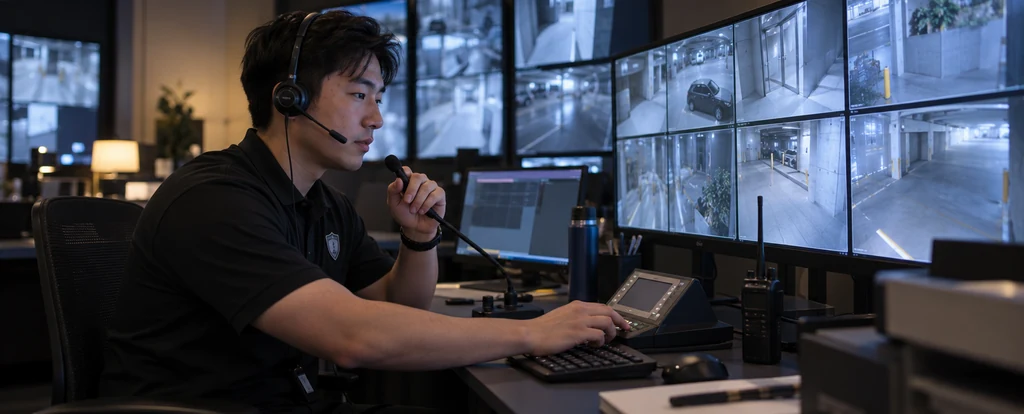
Security monitoring operators work in control rooms, usually for a monitoring centre that watches many sites on behalf of clients, though hospitals, shopping centres and government buildings also run their own. Unlike a security guard, they stay at the console: the job is to interpret what the technology reports and decide whether to send a patrol, call the police or simply log the event for the client. Most states require a security licence, and because control rooms are staffed around the clock, the work is rostered.
How much do security monitoring operators earn?
The median full-time salary for a security monitoring operator is $65,000 per annum, before tax, up $13,500 since 2018.
Pay in this job depends heavily on the roster, because control rooms run through the night and across weekends, and those shifts carry penalty rates that lift take-home pay above the base rate. Contract monitoring centres and in-house control rooms in hospitals, retail or government pay differently, and employers often pay more for experience with particular platforms. The class of security licence you hold also matters, since a monitoring endorsement or a higher licence class opens roles that pay better.
What does a security monitoring operator do day to day?
The list below is what fills most weeks; the exact mix shifts with seniority and whatever stage the current work is at.
- Watching live CCTV feeds and alarm panels across several client sites at once
- Answering alarm and duress calls and checking whether a signal is genuine
- Dispatching patrols or notifying police, fire and ambulance when an alarm needs a response
- Operating access control and intercom systems to let people in or keep them out
- Writing the incident logs and reports that clients and insurers rely on
What skills do security monitoring operators need?
Employers look for security operations, backed by Genetec Security Center fluency and strong attention to detail.
Specialist skills
- Security operations
Software and tools
- Genetec Security Center
- Milestone XProtect
- Gallagher Access Control
- Two-way radio systems
- Incident reporting software
General skills
- Attention to detail
- Written communication
- Problem solving
- Safety and compliance awareness
- Digital literacy
- Customer service
Is the job growing?
About 590 people work as security monitoring operators in Australia, and employment is projected to grow 3% over the decade to 2035. That's modest growth: demand is steady rather than booming.
How do you become a security monitoring operator?
Here's the path most security monitoring operators take, step by step.
- 1Get the security licence for your state
Monitoring work requires a security licence in most states, and the class you need differs between them. The usual starting point is a Certificate II in Security Operations (CPP20218), which covers the code of conduct, use of force and reporting requirements the licensing body expects.
- 2Add monitoring-specific training
A Certificate III in Security Operations (CPP31318) or an employer-run control room course teaches alarm handling, duress response and escalation procedures. Some monitoring centres will put you through this once you are hired, so ask before you pay for it yourself.
- 3Learn the systems employers use
Most control rooms run on platforms such as Genetec Security Center, Milestone XProtect or Gallagher access control. Short courses and vendor training in these systems make you useful from the first shift, since the console layout and alarm handling take time to learn.
- 4Start on the console in a monitoring centre
Entry level roles are paid, rostered and supervised for the first few weeks, with a probation period before you work a shift alone. Larger centres hire continuously because they hold contracts across many sites, which makes them the most common way into the job.
Ready to apply as a security monitoring operator?
Whether you're working toward becoming a security monitoring operator or already are one and want a hand with the next step (sharpening your resume for ATS screening, tightening your cover letter, or knowing what you'll actually be asked at interview), here are examples grounded in this specific role, not generic templates.
What jobs can a security monitoring operator move to?
Moving into Security Manager typically comes with the biggest pay rise, worth $48,400 a year more on average.
| Move to | Typical pay change | Overlap | Retraining |
|---|---|---|---|
| Security Manager Their operational security experience supports a move into managing security teams and contracts, though additional study in security management is needed. | +$48,400 | 17% | reskill |
| Sheriff's Officer Their security monitoring and incident reporting skills transfer to court security and prisoner escort duties, with sheriff training. | +$26,000 | 67% | short course |
| Security Consultant With further study, monitoring operators can advise clients on security risks, drawing on their practical knowledge of alarms and access systems. | +$20,800 | 44% | reskill |
| Security Technician Monitoring operators understand alarm and CCTV systems, so they can move into installing and servicing the same security technology. | +$15,600 | 53% | short course |
| Loss Prevention Officer Their surveillance and incident response experience carries into retail loss prevention, where watching for theft and reporting incidents is central. | +$10,400 | 47% | short course |
Moves are chosen from Jobs and Skills Australia's Data on Occupation Mobility, which follows income tax records between 2011-12 and 2020-21, together with entry requirements and skill overlap. A known move is one people were seen making in that data. Pay change compares median full-time pay for the two roles.
Who works as a security monitoring operator?
The typical security monitoring operator is 41 years old; 67% are men, 78% work full-time, and full-timers average 38 hours a week.
- 41
- Median age
- 33%
- Female share
- 78%
- Full-time
- −2h
- vs all-jobs avg
What's it like being a security monitoring operator?
The shape of the job is long stretches of attention broken by short bursts of decision making, all inside a room you cannot leave unattended. You are the person who turns a signal into a response, so the work suits someone who stays calm, follows procedure and does not mind night shifts. The trade-off is that quiet periods can be genuinely quiet, while a bad night can mean several incidents running at once.
What people like
- The shift ends when you hand over. Monitoring work is contained in time. You finish your log, brief the next operator and leave, rather than carrying a backlog of cases home.
- The procedures are clear. Alarm response, escalation and reporting all follow documented steps, so you rarely have to invent an approach mid-incident. That suits people who like knowing what the right action is.
- You see the result of your decisions. A patrol arrives, a break-in is interrupted or a false alarm is ruled out, and the outcome is recorded against the call you handled.
- Technology does the watching with you. Cameras, analytics and alarm filtering narrow the field, so the job is often about judging what appears on screen rather than staring at every feed at once.
What people find hard
- Long stretches on screen. Vigilance is the main demand, and quiet hours still require you to keep watching and listening rather than switch off.
- Nights, weekends and public holidays. Control rooms never close, so rosters rotate through unsociable hours, and the disruption to sleep and social life is real even with penalty rates.
- Calls from people in distress. Duress alarms, medical emergencies and frightened callers come through the console, and you have to keep the procedure going while someone is upset on the line.
- You cannot step away when you want to. The console must stay staffed, so breaks and shift changes are tightly scheduled and a late relief means you stay on.
Based on our synthesis of professional-body surveys and public accounts of the role, not first-person verified reviews.
Which industries employ security monitoring operators?
Security and Investigation Services employs the largest share of security monitoring operators, followed by Public Administration.
Top employing industries
- 1Security and Investigation Services
- 2Public Administration
- 3Health Care and Social Assistance
- 4Retail Trade
- 5Property Operators and Real Estate Services
Ranked by employment share; the source doesn't publish an exact percentage per industry.
| Certificate III/IV | 34% | |
|---|---|---|
| Diploma / Advanced Diploma | 26% | |
| Bachelor degree | 20% | |
| Year 12 or below | 20% |
Will AI replace security monitoring operators?
AI reaches a moderate way into this job. Video analytics, alarm filtering and automated video verification already handle much of the watching, cutting the number of signals an operator has to check, but someone holding a security licence still has to confirm the event, decide the response and make the calls. The judgement and the legal responsibility stay in the control room.
Share of typical working time by exposure level
- Watching alarm and camera feedsAnalytics now flag movement on a perimeter fence or a person in a restricted area and pull the clip forward, so operators review alerts instead of scanning every camera.35%moderate
- Answering alarm and duress callsA frightened caller or a site manager on the line needs a person who can ask the right questions and keep them talking while a patrol is on the way.25%low
- Dispatching patrols and calling emergency servicesDeciding whether a signal justifies a patrol, a police call or a log entry depends on the site, its history and what the client has authorised.20%low
- Writing incident logs and reportsTranscription and report drafting tools can turn an operator's spoken notes into a first draft of the incident record, which the operator then checks and corrects.20%high
Moves least exposed to AI
These career moves from security monitoring operator work are rated low for AI exposure:
- Security Technician
Solid skill overlap (53%), short course to get there, and a low automation-risk profile.
Common questions about becoming a security monitoring operator
Straight answers to the questions people ask most.
How much does a security monitoring operator earn?
Full-time security monitoring operators earn a median of $65,000 per year before tax. Shift penalties for nights, weekends and public holidays usually add to that, and in-house control rooms in hospitals or government often pay above contract monitoring centres.
How do you become a security monitoring operator?
You need a security licence from your state or territory, which normally starts with a Certificate II in Security Operations (CPP20218). Beyond that, employers look for monitoring training or experience with alarm and CCTV platforms, and most provide control room induction once you are hired.
Are security monitoring operators in demand?
Security monitoring operators are currently not in shortage, and employment is projected to grow 3% over the decade to 2035. The occupation is small, so openings tend to come from staff turnover and from monitoring centres picking up new contracts rather than from rapid expansion, which means a licence and platform experience matter more than timing.
Will AI replace security monitoring operators?
AI already filters alarm signals and flags movement on camera feeds, which cuts down the number of false alarms an operator has to work through. What it does not do is take responsibility for the response, since someone with a licence still has to confirm the event, dispatch a patrol and answer a duress call. The role shifts towards reviewing what analytics surfaces rather than watching every screen continuously.
What can a security monitoring operator move into?
The most direct move is into installing and servicing the systems you already know as a security technician, which pays $15,600 more. Surveillance and incident reporting experience also carries into loss prevention officer roles ($10,400 more), and with further training into a sheriff's officer role at $26,000 more.
What are the hours like?
Full-time monitoring operators average 38 hours a week, but the hours are spread across a rotating roster because control rooms are staffed 24 hours a day. New operators usually start on a mix of day, afternoon and night shifts.
Related roles
- Security Technician
- Sheriff's Officer
- Loss Prevention Officer
- Security Consultant
- Security Manager
- Security Guard
Not sure this is you? Take the career quiz and get a ranked shortlist of roles that fit how you like to work.