Special Needs Dentist
Special needs dentists provide dental care for people with disability, complex medical conditions or severe dental anxiety, adapting treatment so it can be delivered safely.
- Median salary*
- $143,000
3.5%vs last year, before tax
- People employed*
- 350
16.7%vs last year
- Projected growth
- +35.8%
to 2035
- AI exposure*
- Low
- automation risk
- Average hours*
- 40/wk
matches all-jobs average
- Shortage status
- In shortage
national
Special needs dentists work mainly in hospital dental units, community health clinics and specialist private practices, often alongside medical, nursing and allied health teams. What sets the role apart from general dentistry is that every treatment plan is built around a patient's medical history, communication needs and tolerance for care, which may mean sedation, general anaesthesia or a series of shorter appointments. It is one of the smallest registered dental specialties in Australia, and referrals often come from general dentists, hospitals or disability services when care in a standard chair has not worked.
How much do special needs dentists earn?
The median full-time salary for a special needs dentist is $143,000 per annum, before tax, up $30,400 since 2018.
Pay depends heavily on where you work, because public hospital and health service roles are set by enterprise agreements and pay scales while private practice earnings come from fees for treatment. Procedures under sedation or general anaesthesia take longer and need more staff in the room, so private earnings are not simply a matter of seeing more patients. Many special needs dentists work part time or split their week between a hospital appointment and private sessions, which affects total income.
What does a special needs dentist do day to day?
The list below is what fills most weeks; the exact mix shifts with seniority and whatever stage the current work is at.
- Assessing oral health in patients with intellectual disability, autism, dementia or complex medical conditions
- Planning behaviour support, sedation or general anaesthesia for patients who find routine treatment difficult
- Carrying out preventive, restorative and surgical treatment in hospital clinics, day surgery lists or community settings
- Working with medical, nursing and allied health teams on shared care plans and decisions about medication and anaesthesia
- Coaching carers, families and support workers on daily oral hygiene and diet, which is often where prevention actually happens
What skills do special needs dentists need?
Employers look for patient care and support, clinical assessment and treatment, care planning and coordination, backed by EXACT (Software of Excellence) fluency and strong written communication.
Specialist skills
- Patient care and support
- Clinical assessment and treatment
- Care planning and coordination
- Infection control and hygiene
Software and tools
- EXACT (Software of Excellence)
- Dentally
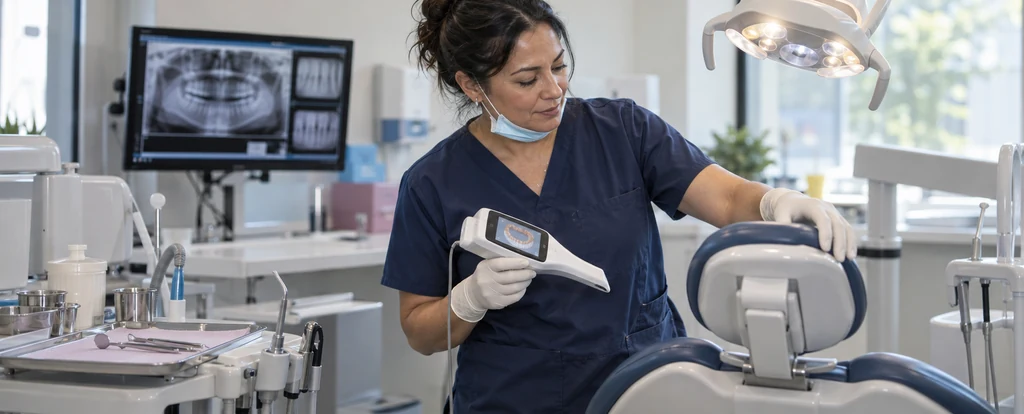
- 3Shape TRIOS intraoral scanner
- Planmeca Romexis
- Dental CBCT and OPG imaging software
General skills
- Written communication
- Empathy and interpersonal care
- Attention to detail
Is the job growing?
About 350 people work as special needs dentists in Australia, and employment is projected to grow 35.8% over the decade to 2035. That's very strong growth. Few roles in Australia are expanding this fast, and it points to solid demand for years to come.
How do you become a special needs dentist?
Here's the path most special needs dentists take, step by step.
- 1Complete a dentistry degree
An accredited Bachelor of Dental Surgery or Doctor of Dental Medicine takes five years full time, or four years as a graduate entry degree. You need it before you can register as a dentist in Australia.
- 2Register with the Dental Board of Australia
Registration through AHPRA is required to practise, and you need general registration before you can apply for specialist training. This is general dental registration, not the specialist endorsement you hold later.
- 3Work as a general dentist first
Specialist programs generally expect a few years of general practice, and that time shows you whether you want to work with patients who need this level of support. It also builds the clinical speed that specialist study assumes.
- 4Complete specialist training in special needs dentistry
A Doctor of Clinical Dentistry in special needs dentistry is the usual route, typically three years full time combining coursework, research and supervised clinical work in hospital and community clinics. It is offered at only a handful of universities.
- 5Apply for specialist registration
Once you finish training, you apply to the Dental Board of Australia for endorsement as a specialist in special needs dentistry. Only then can you use the specialist title and charge specialist fees.
Ready to apply as a special needs dentist?
Whether you're working toward becoming a special needs dentist or already are one and want a hand with the next step (sharpening your resume for ATS screening, tightening your cover letter, or knowing what you'll actually be asked at interview), here are examples grounded in this specific role, not generic templates.
What jobs can a special needs dentist move to?
Moving into Dentist typically comes with the biggest pay rise, worth $25,100 a year more on average.
| Move to | Typical pay change | Overlap | Retraining |
|---|---|---|---|
| Dentist Special needs dentists bring specialist skills in managing disability and complex medical conditions to general dental practice.Known move | +$25,100 | 50% | requalify |
Moves are chosen from Jobs and Skills Australia's Data on Occupation Mobility, which follows income tax records between 2011-12 and 2020-21, together with entry requirements and skill overlap. A known move is one people were seen making in that data. Pay change compares median full-time pay for the two roles.
Who works as a special needs dentist?
The typical special needs dentist is 47 years old; 58% are men, 72% work full-time, and full-timers average 40 hours a week.
- 47
- Median age
- 42%
- Female share
- 72%
- Full-time
- +0h
- vs all-jobs avg
What's it like being a special needs dentist?
Special needs dentists work at a slower pace than general practice, with long appointments and a lot of preparation, communication and coordination before treatment starts. Days mix clinic sessions, day surgery lists and case meetings with medical or disability teams, and progress is often measured in small gains rather than completed treatment plans. The work suits dentists who are patient with a process that cannot be rushed and who enjoy solving a problem other practitioners could not.
What people like
- Patients others could not treat. Referrals often come from dentists who have run out of options, so finishing a course of treatment can change how a patient eats, speaks or manages pain.
- Time built into appointments. Longer sessions mean you can prepare properly, explain without rushing and let a patient settle before anything begins.
- Working in teams. You rarely decide alone, since anaesthetists, nurses, speech pathologists and support coordinators all contribute to the plan.
- Prevention that shows up later. A change to a carer's brushing routine or a patient's diet prevents a great deal of pain, and you see the result at the next visit.
What people find hard
- Few specialist training places. Only a handful of universities run the program, so the years after general practice can pass while you wait for a place to open.
- Waiting lists and funding limits. The patients who need the most time are often queued for public clinic appointments or hospital theatre time, and part of the job is explaining why a case should move up.
- Sessions that are hard to read. Some patients cannot say where it hurts or why they are distressed, which slows diagnosis and can leave you second-guessing a treatment decision.
- Consent and funding paperwork. Guardianship, consent and funding documentation takes up a real share of the week, particularly when a patient has an appointed decision maker.
Based on our synthesis of professional-body surveys and public accounts of the role, not first-person verified reviews.
Which industries employ special needs dentists?
Hospitals (public and private) employs the largest share of special needs dentists, followed by Dental services (private practice).
Top employing industries
- 1Hospitals (public and private)
- 2Dental services (private practice)
- 3Community health services
- 4Residential aged care
- 5Disability support services
Ranked by employment share; the source doesn't publish an exact percentage per industry.
| Bachelor degree | 52% | |
|---|---|---|
| Postgraduate | 26% | |
| Diploma / Advanced Diploma | 13% | |
| Other | 9% |
Will AI replace special needs dentists?
Automation has limited reach into this job, which is why the rating is low. The work turns on assessing a patient who may not be able to describe pain, adapting treatment to their behaviour and medical risk, and coordinating with the people who support them. Imaging software, intraoral scanners and practice management systems have sped up records and referrals, but they have not changed the clinical judgement at the chair or the need for a trained person in the room.
Share of typical working time by exposure level
- Examination and treatment in the chair or under anaesthesiaDeciding how much treatment a patient can tolerate in one session, and adjusting mid-procedure when they become distressed, depends on being there.35%low
- Behaviour support and communication with patients and carersExplaining a procedure to a patient with an intellectual disability and to the support worker who knows their signals is built on trust and cannot be scripted.25%low
- Care planning with medical, nursing and allied health teamsShared plans draw on medical history, anaesthetic risk and disability support arrangements, and software can organise them but not weigh the trade-offs.20%moderate
- Clinical records, referrals and imaging reviewDigital notes, OPG and CBCT images and referral letters are increasingly drafted or auto-filled, which cuts administrative time without changing the diagnosis.20%high
Common questions about becoming a special needs dentist
Straight answers to the questions people ask most.
How much does a special needs dentist earn?
Special needs dentists earn a median of $143,000 per year before tax for full-time work. Public hospital and health service roles are paid under enterprise agreements, while private practice income depends on fees, the mix of procedures and how much of your week is clinical.
How do you become a special needs dentist?
You qualify and register as a dentist first, then complete specialist training in special needs dentistry and apply for specialist registration with the Dental Board of Australia. Training usually takes three years full time, after a few years of general practice.
Are special needs dentists in demand?
Special needs dentists are currently in shortage nationally, and employment is projected to grow 35.8% over the decade to 2035. The specialty is small, so the number of openings each year stays modest even where the need for care is clear, and hospital and community health services are the main employers to watch.
Will AI replace special needs dentists?
Automation has little reach into this job, because treatment depends on reading a patient's behaviour, comfort and medical history in the room. Imaging software, digital scanners and practice management systems already handle records and images, and they may take on more of the paperwork, but examinations and treatment still need a trained clinician present.
Where can a special needs dentist move next?
Some move into general dentistry, where pay is $25,100 more and about half the clinical skills carry over, while others stay in the specialty and take on leadership of a hospital unit or community service. Running your own practice is a common progression for dentists generally and is often where earnings grow, though for special needs dentists private work usually sits alongside general dentistry rather than replacing it.
Do special needs dentists work full time?
Around 72% work full time, averaging 40 hours a week, and part-time arrangements are common. Many combine a hospital appointment with private sessions, teaching or research, which is one reason the working week varies so much across the specialty.
Specialisation of
Related roles
Not sure this is you? Take the career quiz and get a ranked shortlist of roles that fit how you like to work.