Warehouse Administrator
Warehouse administrators keep the stock records, order paperwork and delivery schedules that a warehouse runs on.
- Median salary*
- $70,200
3.7%vs last year, before tax
- People employed
- 19,900
0.5%vs last year
- Projected growth
- +11.3%
to 2035
- AI exposure*
- Moderate
- automation risk
- Average hours
- 43/wk
+3h vs all jobs
- Shortage status
- Not in shortage
national
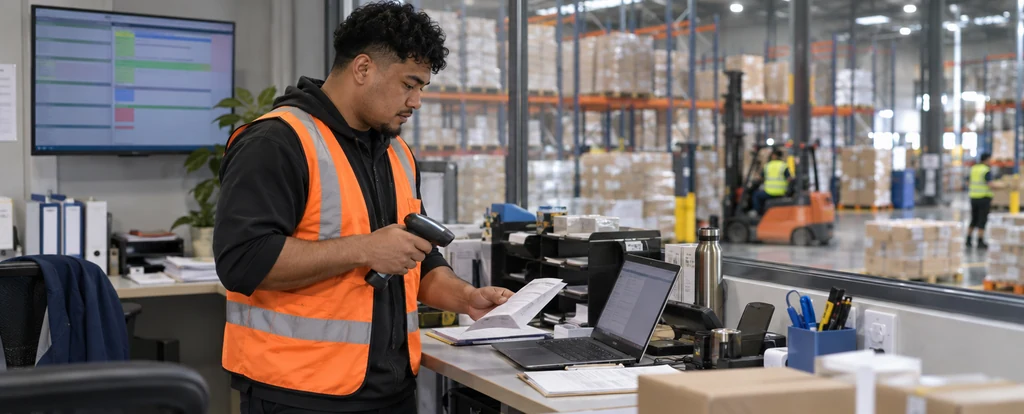
Warehouse administrators work on the office side of a warehouse or distribution centre, maintaining inventory records and processing the documentation that moves stock in and out. The role sits between the floor and the customer: storepersons pick and pack, while administrators keep the system records that direct that work and confirm it happened. Most are employed in wholesale trade, transport and logistics or retail distribution, and the day is spent on a warehouse management system with regular trips out to the dock.
How much do warehouse administrators earn?
The median full-time salary for a warehouse administrator is $70,200 per annum, before tax, up $14,500 since 2018.
Pay moves with the employer and the site: wholesale, transport and retail businesses set their own rates, often through an enterprise agreement, and large distribution centres generally pay above small warehouses. Shift rosters, weekend work and site allowances add to the base, and coordinator or team leader duties usually sit at a higher classification.
What does a warehouse administrator do day to day?
The list below is what fills most weeks; the exact mix shifts with seniority and whatever stage the current work is at.
- Maintaining inventory records in the warehouse management system, including receipts, transfers and stock adjustments
- Processing inbound and outbound paperwork such as picking slips, consignment notes and delivery dockets
- Reconciling stock counts against system data and tracing the cause of a discrepancy before it repeats
- Booking and rescheduling deliveries with carriers, suppliers and the sales team
- Running stock and despatch reports for supervisors, and flagging orders that will miss their cut-off
What skills do warehouse administrators need?
Employers look for inventory management, warehousing and despatch, backed by Warehouse management systems (WMS) fluency and strong attention to detail.
Specialist skills
- Inventory management
- Warehousing and despatch
Software and tools
- Warehouse management systems (WMS)
- Microsoft Excel
- SAP
- RF barcode scanners
- Transport management systems (TMS)
General skills
- Attention to detail
- Written communication
- Digital literacy
- Customer service
- Problem solving
- Time and deadline management
Is the job growing?
About 19,900 people work as warehouse administrators in Australia, and employment is projected to grow 11.3% over the decade to 2035. That's healthy, above-average growth, and the role should stay in solid demand.
How do you become a warehouse administrator?
Here's the path most warehouse administrators take, step by step.
- 1Finish Year 12 or an equivalent
Year 12 is the usual minimum, and the job leans on literacy and numeracy more than on any particular subject. About 47% of people working as warehouse administrators hold Year 12 or below as their highest qualification, so a degree is not the standard way in.
- 2Learn a warehouse management system
Employers hire on familiarity with a WMS, Excel and RF scanners, which you can pick up in an entry role or a short course. A Certificate III in Supply Chain Operations (TLI30325) at TAFE covers receiving, inventory and despatch alongside the systems themselves.
- 3Start on the floor or in a related admin job
Many administrators begin as storepersons, despatch clerks or customer service staff and move across when an office vacancy opens, because they already know the stock and the paperwork. Applying directly works too if you can show spreadsheet and system skills.
- 4Add a Certificate IV or diploma to specialise
A Certificate IV in Supply Chain Operations (TLI40324) or a logistics diploma opens inventory analyst, transport coordinator and team leader roles, which sit above administrator pay. Most people study part time while working.
Ready to apply as a warehouse administrator?
Whether you're working toward becoming a warehouse administrator or already are one and want a hand with the next step (sharpening your resume for ATS screening, tightening your cover letter, or knowing what you'll actually be asked at interview), here are examples grounded in this specific role, not generic templates.
What jobs can a warehouse administrator move to?
Moving into Warehouse Manager typically comes with the biggest pay rise, worth $77,200 a year more on average.
| Move to | Typical pay change | Overlap | Retraining |
|---|---|---|---|
| Warehouse Manager Inventory and warehouse process knowledge supports the step up to warehouse manager, with reskilling in leadership and budgeting.Known move | +$77,200 | 16% | reskill |
| Truck Driver Dispatch schedules and delivery paperwork knowledge transfers to truck driving, requiring reskilling for a heavy vehicle licence.Known move | +$31,700 | 44% | reskill |
| Shipping Clerk Order processing and freight documentation skills transfer to shipping clerk work, with a short course in customs or freight systems.Known move | +$18,600 | 50% | short course |
| Forklift Operator Stock flow and load schedule knowledge transfers to forklift operation, requiring reskilling in licensing and equipment handling.Known move | −$500 | 33% | reskill |
| Warehouse Storeperson Stock records and order coordination carry into storeperson work, with a short course covering safe handling and warehouse equipment.Known move | −$1,100 | 47% | short course |
Moves are chosen from Jobs and Skills Australia's Data on Occupation Mobility, which follows income tax records between 2011-12 and 2020-21, together with entry requirements and skill overlap. A known move is one people were seen making in that data. Pay change compares median full-time pay for the two roles.
Who works as a warehouse administrator?
The typical warehouse administrator is 43 years old; 82% are men, 86% work full-time, and full-timers average 43 hours a week.
- 43
- Median age
- 18%
- Female share
- 86%
- Full-time
- +3h
- vs all-jobs avg
What's it like being a warehouse administrator?
The job runs to the warehouse clock rather than your own: order cut-offs, carrier bookings and stock counts set the rhythm, and a late truck pushes everything after it. It suits someone who likes getting details right and can stay steady when three people want the same answer at once. Most of the work happens at a desk in the office, with the floor close enough to walk out and check.
What people like
- You see the result of your work the same day. The picking slips and consignment notes you prepare are used within the hour, so it becomes clear quickly whether the paperwork was right.
- The skills travel. Warehouse management systems, inventory practice and freight documentation work much the same in grocery, retail, wholesale and third-party logistics, so you can change industries without starting over.
- It is a way into logistics without a degree. You can begin in an entry role and build the systems knowledge that coordinator and planning jobs ask for.
- Regular indoor work. Most sites run weekday shifts with set start and finish times, and the work is under a roof rather than on the road or in the weather.
What people find hard
- Discrepancies arrive as problems to solve. When the system and the shelf disagree, you are the one tracing whether it was a mispick, a damaged pallet or a count that was never entered.
- Peak season compresses the day. In the lead-up to Christmas or a major sale, order volumes climb while carrier cut-offs stay the same, and the office absorbs the delay.
- Your work depends on other people's accuracy. Pickers, drivers and suppliers provide much of the information you process, and a docket that arrives late or wrong becomes your afternoon.
- It is screen-heavy. Most of the day is spent in the warehouse management system, email and spreadsheets, which frustrates people who want to be moving around.
Based on our synthesis of professional-body surveys and public accounts of the role, not first-person verified reviews.
Which industries employ warehouse administrators?
Wholesale Trade employs the largest share of warehouse administrators, followed by Transport, Postal and Warehousing.
Top employing industries
- 1Wholesale Trade
- 2Transport, Postal and Warehousing
- 3Retail Trade
Ranked by employment share; the source doesn't publish an exact percentage per industry.
| Year 12 or below | 46.8% | |
|---|---|---|
| Certificate III/IV | 20.3% | |
| Diploma / Advanced Diploma | 12.2% | |
| Bachelor degree | 11.6% | |
| Postgraduate | 4.7% |
Will AI replace warehouse administrators?
Warehouse administration sits in the moderately exposed middle: the record keeping and order entry that fill much of the day are the kind of work software already handles well, while the physical flow of stock and the conversations around it are not. Warehouse management systems increasingly capture supplier invoices and update stock records without anyone typing, but someone still has to check what the system says against what is on the dock. That leaves the job narrower than it was and more focused on the exceptions.
Share of typical working time by exposure level
- Producing stock and despatch reports and keeping freight documentationTransport management systems and spreadsheet templates draft the standard reports, but the numbers still need checking against what actually left the dock.30%moderate
- Entering orders and updating stock recordsInvoice scanning and automated receipting in a warehouse management system already read most supplier paperwork, so the typing that once filled a day keeps shrinking.25%high
- Coordinating with drivers, suppliers and the sales teamChasing a late delivery or agreeing a new collection time depends on reading the situation and the relationship, which a carrier portal does not do.25%low
- Reconciling stock counts against system dataSoftware flags the variance, but someone still has to work out whether it was a miscount, a mispick or stock written off without a record.20%moderate
Moves least exposed to AI
These career moves from warehouse administrator work are rated low for AI exposure:
- Forklift Operator
Some skill overlap (33%), reskill to get there, and a low automation-risk profile.
Common questions about becoming a warehouse administrator
Straight answers to the questions people ask most.
How much does a warehouse administrator earn?
Full-time warehouse administrators earn a median of $70,200 per year before tax, so half earn more than that figure and half earn less. Pay depends on the sector and the size of the site, with shift penalties and coordinator or team leader titles adding to the base rate.
How do you become a warehouse administrator?
Most people enter through an entry-level warehouse job or an administration role and learn the systems on the job, with a Certificate III in Supply Chain Operations (TLI30325) an option if you want formal training. Employers look for comfort with a warehouse management system, Excel and accurate record keeping more than for a particular qualification.
Are warehouse administrators in demand?
Warehouse administrators are currently not in shortage, and employment is projected to grow 11.3% over the decade to 2035. The openings are spread across wholesale, transport and retail distribution, so experience with a warehouse management system and freight paperwork is what makes an application stand out.
Will AI replace warehouse administrators?
It is changing the job more than removing it: invoice and order capture from supplier documents is already automated in many systems, which takes away typing but not the reconciliation behind it. What stays human is tracing a stock discrepancy, rescheduling a load when a truck is late and keeping carriers and customers informed.
What can a warehouse administrator move into?
Moving to a warehouse storeperson role is a close sideways step that pays $1,100 less, since both jobs work from the same stock records and order system. A shipping clerk role pays $18,600 more and uses the same freight documentation, while stepping up to warehouse manager pays $77,200 more and needs reskilling in leadership and budgeting.
What is the difference between a warehouse administrator and a warehouse storeperson?
A storeperson works on the floor, picking, packing and moving stock, while an administrator keeps the records and paperwork that direct that work and confirm what left the building. The two roles overlap closely, and people move in both directions between them.
Related roles
- Warehouse Storeperson
- Forklift Operator
- Truck Driver
- Warehouse Manager
- Shipping Clerk
- Warehouse Storeperson
Not sure this is you? Take the career quiz and get a ranked shortlist of roles that fit how you like to work.