Welding Inspector
Welding inspectors check finished and in-progress welds against codes and specifications, confirming that joints in pipelines, pressure vessels and structures are sound.
- Median salary*
- $104,000
4.0%vs last year, before tax
- People employed*
- 4,500
0.0%vs last year
- Projected growth*
- +2%
to 2035
- AI exposure*
- Moderate
- automation risk
- Average hours*
- 44/wk
+4h vs all jobs
- Shortage status*
- Not in shortage
national
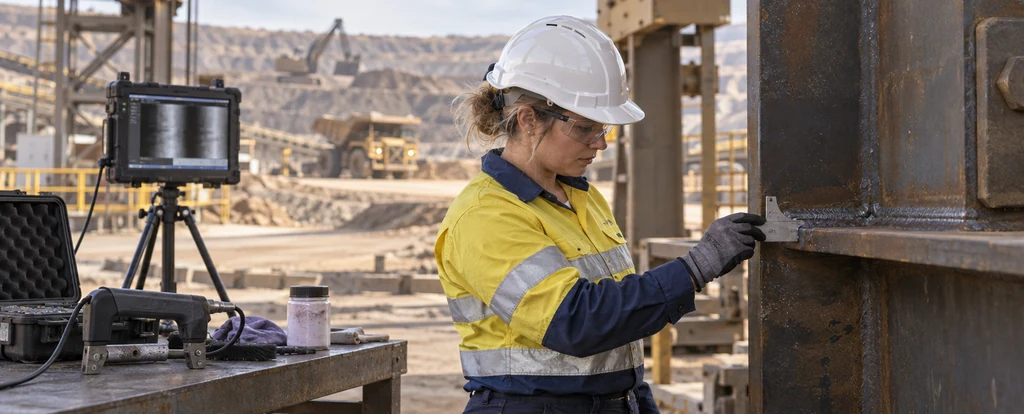
Welding inspectors work on mine sites, in fabrication workshops, on construction projects and in power stations, checking welds against drawings, welding procedures and standards such as AS/NZS 1554 and AS/NZS 3992. The role sits above the welder on the quality chain: an inspector can hold up a job or release it, and signs the records that go to the client. It is often confused with non-destructive testing technician work, but the inspector decides what the test results mean and whether a joint is acceptable, rather than running the tests.
How much do welding inspectors earn?
The median full-time salary for a welding inspector is $104,000 per annum, before tax, up $21,700 since 2018.
Pay moves with the certification you hold and the sector you work in, so inspectors certified to higher levels, or working in oil and gas, mining and pressure equipment, tend to earn more than those in general fabrication. Site work adds allowances and overtime, and fly-in fly-out rosters change what a week is worth. Contract and shutdown work can pay well for short periods, but leaves gaps between jobs.
What does a welding inspector do day to day?
The list below is what fills most weeks; the exact mix shifts with seniority and whatever stage the current work is at.
- Reading drawings, welding procedures and specifications to confirm what each joint has to meet
- Inspecting completed and in-progress welds visually and with gauges for size, profile, undercut and alignment
- Coordinating non-destructive testing such as ultrasonic, radiographic, magnetic particle and dye penetrant methods
- Checking welder qualifications, consumable storage and preheat or interpass temperatures before work proceeds
- Recording results and issuing inspection reports, test records and non-conformance notes
What skills do welding inspectors need?
Employers look for reading plans and specifications, field inspection and testing, regulatory compliance, backed by Weld gauges (fillet, undercut, hi-lo) fluency and strong safety and compliance awareness.
Specialist skills
- Reading plans and specifications
- Field inspection and testing
- Regulatory compliance
Software and tools
- Weld gauges (fillet, undercut, hi-lo)
- Ultrasonic flaw detectors
- Magnetic particle inspection kits
- Dye penetrant testing kits
- Digital radiographic viewing systems
General skills
- Safety and compliance awareness
- Attention to detail
- Problem solving
- Written communication
Is the job growing?
About 4,500 people work as welding inspectors in Australia, and employment is projected to grow 2% over the decade to 2035. That's modest growth: demand is steady rather than booming.
How do you become a welding inspector?
Here's the path most welding inspectors take, step by step.
- 1Complete a fabrication trade qualification
A Certificate III in Engineering (Fabrication Trade) or similar is the usual starting point, normally through a three to four year apprenticeship that pays you while you train.
- 2Work as a welder first
Most inspectors spend several years welding before they inspect anything. You need to know how a joint behaves under a torch before you can judge someone else's work, and employers expect a trade background.
- 3Add non-destructive testing qualifications
Certification in methods such as ultrasonic, magnetic particle, dye penetrant and radiographic testing is normally required, with training and examinations run through providers recognised by the Australian Institute for Non-Destructive Testing.
- 4Get certified as an inspector
Inspection certification against AS/NZS 3992 is issued by recognised certification bodies, and international credentials such as CSWIP or AWS CWI are accepted by many employers. All of them require documented inspection experience plus written and practical exams.
- 5Consider the engineering route
Welding engineers, metallurgists and materials technicians can move into inspection with existing code knowledge and a shorter certification pathway, though they still need practical experience on site.
Ready to apply as a welding inspector?
Whether you're working toward becoming a welding inspector or already are one and want a hand with the next step (sharpening your resume for ATS screening, tightening your cover letter, or knowing what you'll actually be asked at interview), here are examples grounded in this specific role, not generic templates.
What jobs can a welding inspector move to?
Moving into Building Inspector typically comes with the biggest pay rise, worth $14,600 a year more on average.
| Move to | Typical pay change | Overlap | Retraining |
|---|---|---|---|
| Building Inspector Welding inspectors bring code-based inspection and compliance skills to building inspection, though a diploma and building code knowledge are needed. | +$14,600 | 63% | reskill |
| Marine Surveyor Weld inspection experience transfers to marine surveyor roles, where structural and pressure vessel checks require similar code knowledge and a diploma. | +$10,400 | 63% | reskill |
| Electrical Asset Inspector Electrical asset inspection suits welding inspectors who can apply their inspection discipline to electrical equipment with a short course. | −$2,600 | 59% | short course |
| Non-destructive Testing Technician Non-destructive testing techniques used in weld inspection lead naturally to ndt technician work, with a short course to add method certifications. | −$2,600 | 53% | short course |
| Underground Services Locator Inspection of buried assets suits welding inspectors who can retrain quickly to locate and check underground services. | −$10,400 | 63% | short course |
Moves are chosen from Jobs and Skills Australia's Data on Occupation Mobility, which follows income tax records between 2011-12 and 2020-21, together with entry requirements and skill overlap. A known move is one people were seen making in that data. Pay change compares median full-time pay for the two roles.
Who works as a welding inspector?
The typical welding inspector is 45 years old; 93% are men, 90% work full-time, and full-timers average 44 hours a week.
- 45
- Median age
- 7%
- Female share
- 90%
- Full-time
- +4h
- vs all-jobs avg
What's it like being a welding inspector?
The work follows project schedules rather than a fixed desk. Inspectors spend most of the week on site, moving between fabrication yards, mine sites and shutdowns, with a laptop and paperwork waiting at the end of it. It suits people who like a definite answer, because a weld passes or it does not and the standard says which.
What people like
- Clear standards to work to. Acceptance criteria are written into the code and the welding procedure, so most decisions come back to a document rather than an opinion.
- Weight behind your sign-off. Inspectors can hold up a job or release it, and the records they sign follow the asset for decades. That responsibility is the reason the role exists.
- Variety of sites and industries. A week might take in a fabrication workshop, a mine site and a pressure vessel overhaul, which keeps the work from settling into one routine.
- Hands-on rather than desk-bound. You climb, crawl and measure as much as you type, and much of the judgement happens standing next to the joint.
What people find hard
- Being the person who says no. Production schedules and crews on completion bonuses do not welcome a failed weld, and the pressure to pass a marginal joint lands on the inspector rather than the welder.
- Long shifts and remote rosters. Full-time hours average around 44 a week, and shutdown and fly-in fly-out work can mean long days in heat, dust or confined spaces.
- Records and reporting. An inspection is not finished when the paperwork is, and reports, test records and non-conformance notes take a real share of the week.
- Weather and site conditions. Cold, heat and access problems decide when you can inspect as much as the project plan does.
Based on our synthesis of professional-body surveys and public accounts of the role, not first-person verified reviews.
Which industries employ welding inspectors?
Mining employs the largest share of welding inspectors, followed by Manufacturing.
Top employing industries
- 1Mining
- 2Manufacturing
- 3Heavy and Civil Engineering Construction
- 4Professional, Scientific and Technical Services
- 5Electricity, Gas, Water and Waste Services
Ranked by employment share; the source doesn't publish an exact percentage per industry.
| Certificate III/IV | 34% | |
|---|---|---|
| Diploma / Advanced Diploma | 26% | |
| Bachelor degree | 20% | |
| Year 12 or below | 20% |
Will AI replace welding inspectors?
Welding inspection sits in the middle: the analysis and documentation are increasingly assisted by software, while the physical, on-site judgement is not. Automated defect detection and digital radiography can flag indications and speed up reporting, but an inspector still has to reach the joint, set up the test and decide whether it complies. The certification that authorises the sign-off stays tied to a person's qualifications and documented experience.
Share of typical working time by exposure level
- Visual and dimensional weld inspectionGauges, good lighting and a trained eye still do most of this work, and getting to the joint on a mine site or inside a pressure vessel is beyond what software can do.35%low
- Interpreting drawings, codes and welding proceduresSoftware can retrieve the relevant clause or compare a joint against a standard, but deciding whether a specific weld complies depends on what was actually built.25%moderate
- Coordinating and reviewing non-destructive testingAutomated analysis tools flag indications in radiographic and phased array scans, while the inspector selects the method, controls the test and judges the result.20%moderate
- Reports, records and certification paperworkInspection reports, test records and non-conformance notes are largely template-driven and are already part-written by inspection software before the inspector reviews them.20%high
Moves least exposed to AI
These career moves from welding inspector work are rated low for AI exposure:
- Building Inspector
High skill overlap (63%), reskill to get there, and a low automation-risk profile.
Common questions about becoming a welding inspector
Straight answers to the questions people ask most.
How much do welding inspectors earn?
Welding inspectors earn a median of $104,000 per year before tax. Certification level and sector move that figure most, with pressure equipment, oil and gas and mining work paying above general fabrication, and site allowances and overtime adding to it. Contract and shutdown work can pay well for short periods, with gaps in between.
How do you become a welding inspector?
The usual path is a fabrication trade qualification, several years of welding, then non-destructive testing certification and inspection certification against AS/NZS 3992 or an equivalent international credential. Every route requires documented inspection experience, so the practical years come first. Engineers and metallurgists can enter with code knowledge but still need time on site.
Are welding inspectors in demand?
Welding inspectors are currently not in shortage, and employment is projected to grow 2% over the decade to 2035. Demand follows mining, construction and energy project cycles rather than steady year-round hiring, so work concentrates where large fabrication and shutdown projects are running. About 4,500 people work in the role nationally, which means the number of openings in any year is tied to how many major projects are under way.
Will AI replace welding inspectors?
AI and automation reach the documentation and analysis side of the job more than the inspection itself. Automated defect detection can flag indications in radiographic and phased array scans and speed up reporting, but someone still has to get to the joint, prepare the surface and decide whether an indication matters. The physical access, the site conditions and the certification the role depends on keep the work largely human.
What other jobs can a welding inspector move into?
Welding inspectors often move into adjacent inspection and compliance roles, including building inspector ($14,600 more) and electrical asset inspector ($2,600 less), which use the same code-based discipline but need extra study in their own standards and equipment. Moving to non-destructive testing technician work ($2,600 less) puts you on the testing side of the same job after a short course, while underground services locator and metallurgical technician are further options. Each of these moves leans on the inspection habits you build here rather than starting over.
Do welding inspectors work for themselves?
Many experienced inspectors work as independent contractors, and some build their own inspection businesses, which is often where earnings grow beyond the certified wage. Contracting suits the project-based nature of the work but means finding your own jobs, carrying insurance and managing the gaps between shutdowns.
Related roles
- Building Inspector
- Marine Surveyor
- Electrical Asset Inspector
- Non-destructive Testing Technician
- Underground Services Locator
- Non-destructive Testing Technician
Not sure this is you? Take the career quiz and get a ranked shortlist of roles that fit how you like to work.