Agricultural Technician
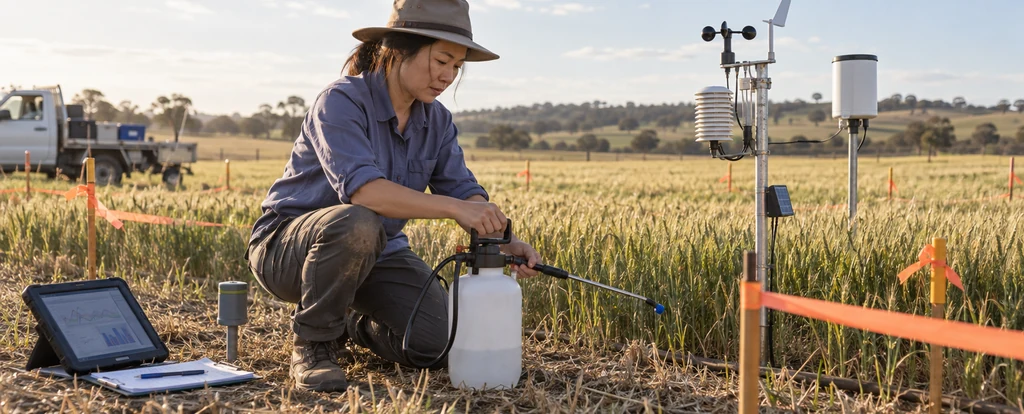
Agricultural technicians collect samples, monitor crops and livestock, and keep the field records that tell a grower how a paddock is performing.
- Median salary
- $94,000
3.5%vs last year, before tax
- People employed
- 2,800
0.0%vs last year
- Projected growth
- +8.7%
to 2035
- AI exposure*
- Moderate
- automation risk
- Average hours
- 41/wk
+1h vs all jobs
- Shortage status
- In shortage
national
Agricultural technicians work alongside farmers, agronomists and researchers, mostly outdoors and often across several properties in a region. They gather the measurements and samples that agronomists later interpret, so the technician is the person in the paddock doing the testing rather than the one recommending a treatment. Most work in agriculture, forestry and fishing, with smaller numbers in research organisations, agribusiness and agricultural education.
How much do agricultural technicians earn?
The median full-time salary for an agricultural technician is $94,000 per annum, before tax, up $20,000 since 2018.
Pay varies more by employer than by the job itself, with research organisations, government agencies and large agribusinesses typically paying above what a smaller family farm can offer. Remote and seasonal postings often come with a vehicle, accommodation or a loading, which can matter as much as the base rate. Technicians are usually on an annual salary, with overtime or time in lieu during sowing, harvest and shearing.
What does an agricultural technician do day to day?
The list below is what fills most weeks; the exact mix shifts with seniority and whatever stage the current work is at.
- Collecting soil, leaf, feed and water samples and preparing them for laboratory analysis
- Checking crop, pasture and livestock condition, from weed and pest counts to body condition scoring
- Running field trials, marking plots and applying treatments at the rate the trial protocol sets
- Entering field records into farm software such as AgriWebb, Trimble Ag or John Deere Operations Center
- Calibrating sampling and spraying equipment, and mixing and applying agricultural chemicals under supervision
What skills do agricultural technicians need?
Employers look for field inspection and testing, laboratory analysis, animal care and handling, backed by AgriWebb fluency and strong safety and compliance awareness.
Specialist skills
- Field inspection and testing
- Laboratory analysis
- Animal care and handling
- Field research and sampling
- Data analysis
- Plant and equipment operation
Software and tools
- AgriWebb
- Trimble Ag Software
- John Deere Operations Center
- Excel
- Soil moisture and weather station platforms
General skills
- Safety and compliance awareness
Is the job growing?
About 2,800 people work as agricultural technicians in Australia, and employment is projected to grow 8.7% over the decade to 2035. That's modest growth: demand is steady rather than booming.
How do you become an agricultural technician?
Here's the path most agricultural technicians take, step by step.
- 1Finish Year 12 or equivalent
There is no single prerequisite, but biology, chemistry and maths make the sampling, measuring and record keeping easier, and most certificate and diploma courses assume Year 12 or a trade equivalent.
- 2Start with a traineeship or a certificate III or IV in agriculture
A traineeship gets you paid field work while you study, which is the most common way in. Certificate courses in agriculture or horticulture cover soils, crop and pasture assessment, livestock handling and safe chemical use.
- 3Add a diploma or degree for the technical and research roles
A diploma or a bachelor degree in agricultural science opens the trial, research and agronomy support positions. Around 33% of people working as agricultural technicians hold a bachelor degree, though a certificate or diploma is enough for many technician jobs.
- 4Gather the licences and certificates employers ask for
A current driver licence is close to essential because the work moves between properties. Agricultural chemical user accreditation, first aid, and quad bike or forklift certificates are common requirements, and they are short courses you can do alongside study.
- 5Apply to the employers that hire technicians
Government agriculture departments, research organisations, agribusiness suppliers, large cropping and livestock operations and agricultural colleges are the main employers, and vacancies usually appear in farming regions rather than the capital cities.
Ready to apply as an agricultural technician?
Whether you're working toward becoming an agricultural technician or already are one and want a hand with the next step (sharpening your resume for ATS screening, tightening your cover letter, or knowing what you'll actually be asked at interview), here are examples grounded in this specific role, not generic templates.
What jobs can an agricultural technician move to?
Moving into Agronomist typically comes with the biggest pay rise, worth $13,800 a year more on average.
| Move to | Typical pay change | Overlap | Retraining |
|---|---|---|---|
| Agronomist Agricultural technicians step up into agronomy by completing a degree, applying their crop monitoring, sampling and field record experience to advise growers.Known move | +$13,800 | 36% | requalify |
| Geology Technician Field sampling and monitoring skills suit geology technician work, where a short course adds soil, rock and groundwater sampling techniques. | +$2,200 | 57% | short course |
| Laboratory Technician Sample collection, testing and record keeping transfer directly, with a diploma-level course bridging into crop, soil and feed analysis work.Known move | −$700 | 42% | reskill |
| Agricultural Consultant Crop and livestock monitoring knowledge carries into advisory work, helping producers plan plantings and treatments after further study.Known move | −$5,600 | 9% | requalify |
Moves are chosen from Jobs and Skills Australia's Data on Occupation Mobility, which follows income tax records between 2011-12 and 2020-21, together with entry requirements and skill overlap. A known move is one people were seen making in that data. Pay change compares median full-time pay for the two roles.
Who works as an agricultural technician?
The typical agricultural technician is 33 years old; 68% are men, 81% work full-time, and full-timers average 41 hours a week.
- 33
- Median age
- 32%
- Female share
- 81%
- Full-time
- +1h
- vs all-jobs avg
What's it like being an agricultural technician?
The work follows the season, moving from sowing and spraying through to harvest sampling and then to quieter record keeping over winter. Days mix paddock time with desk time and travel between properties, with early starts during busy periods. It suits someone who likes being outdoors and is content to gather accurate information rather than make the final call on what a grower should do.
What people like
- Outdoors and on the move. Most of the week is spent in paddocks, sheds and stockyards rather than at a desk, and the routine changes as the season does.
- Your records shape real decisions. A soil test, a pest count or a feed budget you collect can change when a grower sprays, fertilises or moves stock, so the work has a visible result.
- Variety across properties and enterprises. One day might be pasture sampling on a dairy farm and the next weighing cattle or scoring a wheat trial, which keeps the job from settling into one task.
- Practical technology in the paddock. Soil moisture probes, yield monitors and farm software are part of daily work, so there is room for people who like both machinery and data.
What people find hard
- The weather sets the schedule. Sampling, spraying and harvest work wait on conditions, so planned days get rearranged and some of the work happens in heat, cold, dust or rain.
- Travel and time away from home. Properties can be hours apart, so the job often means long drives and early starts, and many positions are based in regional or remote areas.
- Seasonal and project-based contracts. Some roles run for a season or the length of a funded trial, so contracts can end when the work does and you may need to move to where the next job is.
- Paperwork after the paddock. Field notes, trial records and chemical compliance paperwork have to be finished properly, and that desk time is a steady part of the week.
Based on our synthesis of professional-body surveys and public accounts of the role, not first-person verified reviews.
Which industries employ agricultural technicians?
Agriculture, Forestry and Fishing employs the largest share of agricultural technicians, followed by Professional, Scientific and Technical Services.
Top employing industries
- 1Agriculture, Forestry and Fishing
- 2Professional, Scientific and Technical Services
- 3Education and Training
Ranked by employment share; the source doesn't publish an exact percentage per industry.
| Bachelor degree | 32.5% | |
|---|---|---|
| Year 12 or below | 22.3% | |
| Certificate III/IV | 19.7% | |
| Postgraduate | 11.7% | |
| Diploma / Advanced Diploma | 11.1% |
Will AI replace agricultural technicians?
This is a moderately exposed job, because the measuring itself is being automated while the sampling and animal work that feeds it still happens in the paddock. Yield monitors, soil moisture probes, drone imagery and herd management software now handle much of the recording that technicians once did by hand, which changes how the week is spent rather than removing the role. What holds the exposure down is that equipment needs setting up, calibrating and checking, and a representative sample still depends on someone who knows where to dig.
Share of typical working time by exposure level
- Sample collection and field inspectionGetting a usable soil, leaf or feed sample depends on knowing where and how deep to dig, which is physical work that sensors cannot do on their own.30%low
- Interpreting crop, pasture and livestock dataSoftware flags patterns in the numbers, but deciding whether a drop in pasture growth comes from pests, moisture or grazing pressure still needs someone who has walked the paddock.25%moderate
- Trial work, machinery and livestock handlingMarking trial plots, calibrating sprayers and drafting cattle all need someone on site, and a machine can follow a plan but cannot set it up or notice that something has gone wrong.25%low
- Recording and reporting field dataYield monitors, weather stations and farm platforms log readings automatically, so less time goes into transcribing figures and more into checking that they are right.20%high
Common questions about becoming an agricultural technician
Straight answers to the questions people ask most.
How much do agricultural technicians earn?
Agricultural technicians earn a median of $94,000 per year before tax, as a guide. What you actually earn depends on the employer, with research organisations, government agencies and large agribusinesses generally paying more than smaller farms, and remote or seasonal postings often adding a vehicle, accommodation or a loading.
How do you become an agricultural technician?
Most people enter through a certificate III or IV in agriculture, often as a paid traineeship, or a diploma in agriculture or agricultural science. A driver licence and agricultural chemical user accreditation are usually expected before you start field work, and both are quick to obtain.
Are agricultural technicians in demand?
Agricultural technicians are currently in shortage nationally, and employment is projected to grow 8.7% over the decade to 2035. The occupation is small, so openings tend to come up with the large producers, agribusinesses and research organisations that operate in farming regions.
Will AI and automation replace agricultural technicians?
Automation already handles some of the measuring, with yield monitors, soil moisture probes and drone imagery collecting data that once took a person hours to gather by hand. The role shifts toward setting up and checking that equipment and making sense of what it records, while sampling, stock handling and trial work still need someone on site.
What can agricultural technicians move into?
Agronomy is a step up for technicians who complete a degree, paying $13,800 more and sharing around 36% of the skills you already use. Laboratory technician work sits closest to the sampling and testing side of the job, and geology technician roles suit field monitoring experience once you add a short course in soil, rock and groundwater sampling.
What is the difference between an agricultural technician and an agronomist?
Agronomists interpret the results and advise growers on what to do, while technicians collect the samples, run the trials and keep the records that advice rests on. Agronomists generally hold a degree, whereas technicians often come in through a certificate or diploma and build the technical knowledge on the job.
Related roles
- Agronomist
- Agricultural Consultant
- Laboratory Technician
- Geology Technician
- Agricultural Machinery Operator
- Laboratory Technician
Not sure this is you? Take the career quiz and get a ranked shortlist of roles that fit how you like to work.