Aircraft Refueller
Aircraft refuellers fill and defuel aircraft between flights, where accuracy and speed both feed straight into the airline's timetable.
- Median salary*
- $80,600
4.1%vs last year, before tax
- People employed
- 600
0.0%vs last year
- Projected growth*
- +4%
to 2035
- AI exposure*
- Low
- automation risk
- Average hours*
- 40/wk
matches all-jobs average
- Shortage status*
- Not in shortage
national
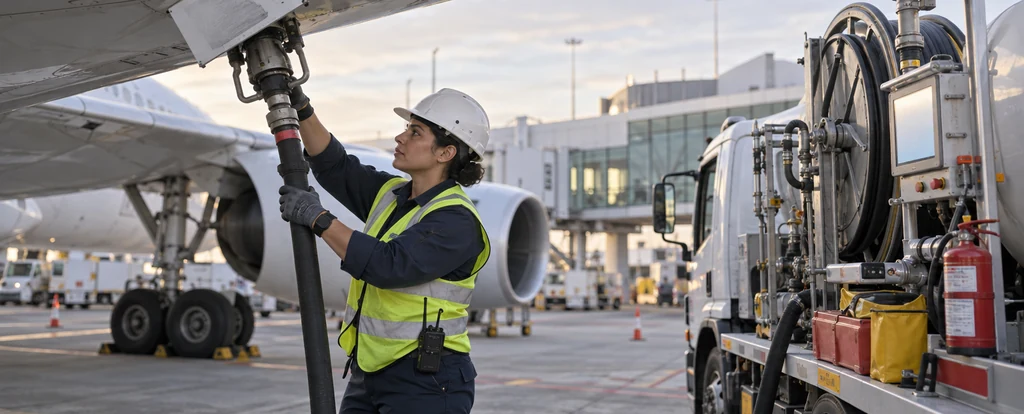
Aircraft refuellers work outdoors on the apron at airports, driving a refuelling truck or running a hydrant dispenser to load jet fuel into an aircraft. They are not ground crew: the role is fuel specific, covering grade and quality checks, volume measurement and the dangerous goods paperwork that goes with them. Most work shift rosters built around the flight schedule, so starts can be very early and finishes late at night.
How much do aircraft refuellers earn?
The median full-time salary for an aircraft refueller is $80,600 per annum, before tax, up $16,900 since 2018.
Pay varies a lot by employer, because refuelling sits under airport ground handling agreements or individual enterprise deals rather than one industry award. Shift loadings, night and weekend penalties and overtime make up a large share of the total, so the roster you work shapes your take-home pay as much as the base rate does.
What does an aircraft refueller do day to day?
The list below is what fills most weeks; the exact mix shifts with seniority and whatever stage the current work is at.
- Driving a refuelling vehicle to the stand and positioning it safely around the aircraft
- Connecting hoses and nozzles to underwing or overwing fuel points and controlling the flow
- Checking fuel grade and volume against the flight paperwork and taking samples when required
- Earthing the aircraft and vehicle and checking spill kits and fire equipment before fuelling begins
- Recording volumes delivered and reporting equipment faults, spills or contamination to a supervisor
What skills do aircraft refuellers need?
Employers look for plant and equipment operation, worksite safety management, operations management, backed by Refuelling bowser fluency and strong safety and compliance awareness.
Specialist skills
- Plant and equipment operation
- Worksite safety management
- Operations management
Software and tools
- Refuelling bowser
- Hydrant dispenser
- Aviation fuelling nozzle and hose reel
- Two-way radio
- Fuel volume and documentation software
General skills
- Safety and compliance awareness
- Attention to detail
- Time and deadline management
- Physical stamina and dexterity
Is the job growing?
About 600 people work as aircraft refuellers in Australia, and employment is projected to grow 4% over the decade to 2035. That's modest growth: demand is steady rather than booming.
How do you become an aircraft refueller?
Here's the path most aircraft refuellers take, step by step.
- 1Get your driver licence in order
A car licence is the minimum to start, and most employers want a medium rigid or heavy rigid licence to drive a refuelling truck, so it pays to build that up before applying.
- 2Sort out your airside credentials
You need an Aviation Security Identification Card to work airside, and some airports also require an airside driver authority. What else is required varies by state and by airport.
- 3Do a dangerous goods or fuel handling course
A short course in dangerous goods handling or aviation ground operations is not always mandatory, but it shows employers you understand flammable liquids and helps you get a first interview.
- 4Apply through ground handlers and fuel distributors
Entry level refuelling jobs are advertised by airport ground handling companies and fuel distributors. Training happens on the job under supervision, and you usually work alongside an experienced refueller before you take a stand on your own.
Ready to apply as an aircraft refueller?
Whether you're working toward becoming an aircraft refueller or already are one and want a hand with the next step (sharpening your resume for ATS screening, tightening your cover letter, or knowing what you'll actually be asked at interview), here are examples grounded in this specific role, not generic templates.
What jobs can an aircraft refueller move to?
Moving into Railway Track Machine Operator typically comes with the biggest pay rise, worth $26,000 a year more on average.
| Move to | Typical pay change | Overlap | Retraining |
|---|---|---|---|
| Railway Track Machine Operator Refuellers' heavy vehicle operation and safety focus transfer to rail track machinery, with a short course for track certification and machine-specific training. | +$26,000 | 71% | short course |
| Loader Operator Aircraft refuellers' experience with heavy vehicles, pumps and safe loading routines translates to plant loader operation, needing a short course for the ticket. | +$14,000 | 71% | short course |
| Railway Shunter Aircraft refuellers bring airside safety discipline, fuel handling precision and shift work experience to rail yard shunting, with a short course covering rail-specific rules. | +$12,500 | 86% | short course |
| Concrete Pump Operator Refuellers bring hose and pump handling, vehicle safety and worksite awareness to concrete pumping, with a short course for the plant ticket. | +$10,400 | 65% | short course |
Moves are chosen from Jobs and Skills Australia's Data on Occupation Mobility, which follows income tax records between 2011-12 and 2020-21, together with entry requirements and skill overlap. A known move is one people were seen making in that data. Pay change compares median full-time pay for the two roles.
Who works as an aircraft refueller?
The typical aircraft refueller is 47 years old; 93% are men, 78% work full-time, and full-timers average 40 hours a week.
- 47
- Median age
- 7%
- Female share
- 78%
- Full-time
- +0h
- vs all-jobs avg
What's it like being an aircraft refueller?
The job runs on the flight schedule, so the day is a series of aircraft turnarounds with tight windows between them. Much of the skill is working quickly without skipping the safety routine, in heat, cold, rain and constant engine noise. People who like a clear task with a visible finish tend to settle into it well.
What people like
- Every turnaround ends. You fuel the aircraft, sign it off and the plane leaves, so the job resets every hour or so rather than stretching across a long project.
- You spend the shift outdoors. Work happens on the apron moving between stands and vehicles, which suits people who would rather be on their feet than at a desk.
- The rules are clear. Airside safety, fuel grades and paperwork are tightly specified, so there is little ambiguity about what a correct job looks like.
- The skills travel. Fuel handling, dangerous goods knowledge and airside driving are recognised at other airports and in fuel distribution and rail work.
What people find hard
- Weather is not optional. Refuelling happens in driving rain, summer heat and winter cold, and there is no moving the aircraft undercover to get out of it.
- The schedule sets the pace. A late inbound flight pushes everything back, and you cannot leave a stand until the fuel record is complete, so delays eat into breaks.
- Nights and weekends are normal. Airports run around the clock, so rosters include early starts, night shifts and public holidays.
- The paperwork is constant. Every load needs grade checks, volume records and defect reporting, which some people find repetitive.
Based on our synthesis of professional-body surveys and public accounts of the role, not first-person verified reviews.
Which industries employ aircraft refuellers?
Airport operations and air transport support services employs the largest share of aircraft refuellers, followed by Fuel wholesaling and distribution.
Top employing industries
- 1Airport operations and air transport support services
- 2Fuel wholesaling and distribution
- 3Air and space transport
- 4Defence
- 5Freight forwarding and logistics services
Ranked by employment share; the source doesn't publish an exact percentage per industry.
| Certificate III/IV | 34% | |
|---|---|---|
| Diploma / Advanced Diploma | 26% | |
| Bachelor degree | 20% | |
| Year 12 or below | 20% |
Will AI replace aircraft refuellers?
Aircraft refuelling is a hands-on job with low exposure to AI and automation. The core of it, connecting hoses, monitoring flow and spotting leaks, happens at the aircraft in conditions that no current system handles, although dispatch, volume logging and fuel quality records increasingly run through fuelling software.
Share of typical working time by exposure level
- Connecting and disconnecting fuel hosesCoupling the nozzle, earthing the aircraft and feeling whether a connection is seated properly are all done by hand.35%low
- Driving and positioning the refuelling vehicleMoving a loaded truck around live aircraft, tugs and baggage equipment stays with the driver, and judgement about clearance is made in the moment.25%low
- Recording volumes and fuel gradeHydrant meters and fuelling software log deliveries and grade checks automatically, so the refueller mainly confirms the record.20%high
- Pre-fuelling safety checks and spill responseChecking earthing, spill kits and fire equipment and dealing with a leak or spill on the apron is physical work in changing conditions.20%low
Common questions about becoming an aircraft refueller
Straight answers to the questions people ask most.
How much do aircraft refuellers earn?
Aircraft refuellers earn $80,600 per year before tax. Shift loadings, night and weekend penalties and overtime make up a large part of that total, so the roster you work matters as much as the base rate.
How do you become an aircraft refueller?
You need an Aviation Security Identification Card to work airside, and most employers want a medium rigid or heavy rigid licence for the refuelling truck. Fuel handling and dangerous goods training is then done on the job under supervision. A short course in aviation ground operations or dangerous goods handling can help you get the first interview.
Are aircraft refuellers in demand?
About 600 people work as aircraft refuellers in Australia, and aircraft refuellers are currently not in shortage. Employment is projected to grow 4% over the decade to 2035, so openings come mainly from experienced people leaving and from ground handling companies staffing up as airports expand.
Will AI or automation replace aircraft refuellers?
This is a low exposure job, because the work happens at the aircraft and is done largely by hand. Fuelling software and hydrant meters now log volumes and quality readings automatically, but connecting hoses, earthing the aircraft and responding to a spill still need someone physically on the apron.
What can aircraft refuellers move on to?
Rail is a common route, with railway shunter roles drawing on the same fuel handling and shift discipline and paying $12,500 more. Airport ground crew move the other way, bringing airside driving and marshalling experience into refuelling after a short course in dangerous goods. Plant work is another option, as loader operators and concrete pump operators use similar hose, pump and heavy vehicle skills.
Is aircraft refuelling physically demanding?
It is more about stamina than raw strength. Refuellers spend the shift on their feet, lifting hoses and working in whatever weather the day delivers, and the roster and conditions tend to be harder than the loads themselves.
Related roles
- Railway Shunter
- Railway Track Machine Operator
- Loader Operator
- Concrete Pump Operator
- Airport Ground Crew
- Stevedore
Not sure this is you? Take the career quiz and get a ranked shortlist of roles that fit how you like to work.