Crane Operator
Crane operators control mobile and tower cranes to lift, move and position heavy loads on construction, demolition and industrial sites.
- Median salary
- $177,400
3.7%vs last year, before tax
- People employed
- 20,200
0.5%vs last year
- Projected growth
- +7.8%
to 2035
- AI exposure*
- Low
- automation risk
- Average hours
- 50/wk
+10h vs all jobs
- Shortage status
- In shortage
national
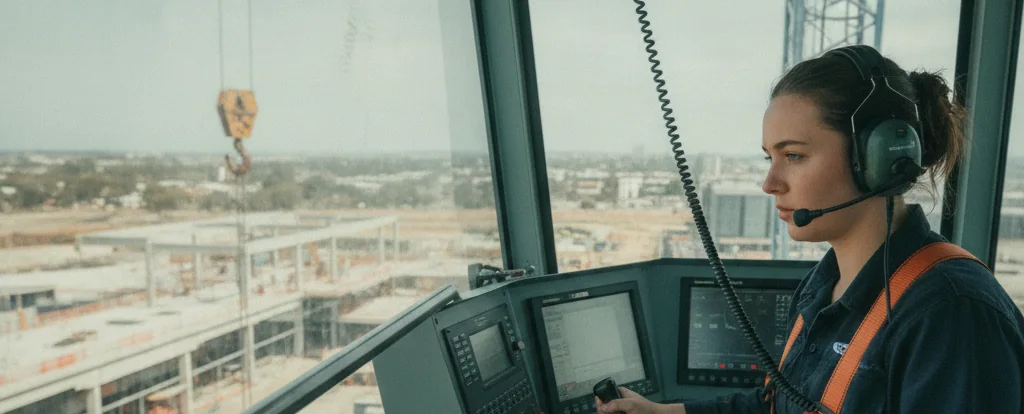
Crane operators work from a lift plan that a rigger and dogman have already talked through with them, then carry out the lift itself, often from a cab well above the site with the ground crew visible only through a window or on a screen. Each crane class needs its own high risk work licence, which is what separates the role from other heavy machinery jobs, and most operators work for crane hire firms, construction companies or mining contractors rather than owning their own gear. Construction, transport and mining account for most of the work.
How much do crane operators earn?
The median full-time salary for a crane operator is $177,400 per annum, before tax, up $36,600 since 2018.
What moves pay most is the project rather than the licence: large infrastructure and mining jobs under enterprise agreements sit well above small residential work, and penalty rates, overtime and site allowances make up a big share of a weekly wage. Owner-operators quote per job instead of earning a wage, so their earnings depend on how much work they can line up and what the crane costs to run.
What does a crane operator do day to day?
The list below is what fills most weeks; the exact mix shifts with seniority and whatever stage the current work is at.
- Running pre-start inspections on the crane, slings and lifting gear before the first lift of the shift
- Working from the cab or a ground remote, following the lift plan agreed with the rigger and dogman
- Guiding a load into position using radio calls and hand signals from the crew below
- Reading load charts against boom length, radius and wind to work out what the crane can safely take
- Setting up on outriggers, or climbing and jacking a tower crane higher as the building rises
What skills do crane operators need?
Employers look for plant and equipment operation, worksite safety management, hand and power tool work, backed by Mobile cranes fluency and strong written communication.
Specialist skills
- Plant and equipment operation
- Worksite safety management
- Hand and power tool work
Software and tools
- Mobile cranes
- Tower cranes
- Radio communication systems
- Load monitoring systems
- Rigging software
General skills
- Written communication
- Problem solving
- Attention to detail
- Time and deadline management
Is the job growing?
About 20,200 people work as crane operators in Australia, and employment is projected to grow 7.8% over the decade to 2035. That's modest growth: demand is steady rather than booming.
How do you become a crane operator?
Here's the path most crane operators take, step by step.
- 1Get a construction induction card (White Card)
You cannot set foot on a commercial site without one, which makes it the cheapest and quickest part of the process, usually a one-day course through a registered training organisation.
- 2Start on the ground with a dogging or rigging licence
Most operators spend time on the ground before they spend it in a cab. A dogging (DG) or basic rigging (RB) high risk work licence lets you sling loads and direct lifts, which is paid work, teaches you how loads behave, and is often how a crane company gets to know you.
- 3Complete the high risk work licence for the crane class you want
Mobile crane classes (C1, C2, C6, C0) and tower crane (CT) each have their own licence. Training runs through a registered training organisation and covers load charts, calculations, crane setup and a practical assessment, and you need to be 18 to sit the national assessment.
- 4Hold, renew and add classes
High risk work licences are issued by the work health and safety regulator in your state, generally need renewing every five years, and many employers also ask for a verification of competency. Adding a class, or moving from a smaller mobile crane to a larger one or a tower crane, is the usual way to keep earning more.
Ready to apply as a crane operator?
Whether you're working toward becoming a crane operator or already are one and want a hand with the next step (sharpening your resume for ATS screening, tightening your cover letter, or knowing what you'll actually be asked at interview), here are examples grounded in this specific role, not generic templates.
What jobs can a crane operator move to?
Moving into Construction Manager typically comes with the biggest pay rise, worth $17,700 a year more on average.
| Move to | Typical pay change | Overlap | Retraining |
|---|---|---|---|
| Construction Manager Crane operators bring load planning, site coordination and safety leadership to construction management, though a diploma and management retraining are needed.Known move | +$17,700 | 21% | reskill |
| Driller Crane operators bring heavy machinery control and safety awareness to drilling, with a short course covering rig-specific operations and procedures.Known move | −$26,200 | 53% | short course |
| Earthmoving Plant Operator Crane operators bring plant control, load charts and site safety to earthmoving, with retraining for different machinery and earthworks.Known move | −$74,400 | 44% | reskill |
| Truck Driver Crane operators bring load handling and vehicle safety to truck driving, though they need a heavy vehicle licence and reskilling.Known move | −$75,500 | 20% | reskill |
| Site Supervisor Crane operators bring crane and site knowledge to supervision, though they need retraining in planning, coordination and team management.Known move | −$91,600 | 21% | reskill |
Moves are chosen from Jobs and Skills Australia's Data on Occupation Mobility, which follows income tax records between 2011-12 and 2020-21, together with entry requirements and skill overlap. A known move is one people were seen making in that data. Pay change compares median full-time pay for the two roles.
Who works as a crane operator?
The typical crane operator is 46 years old; 92% are men, 95% work full-time, and full-timers average 50 hours a week.
- 46
- Median age
- 8%
- Female share
- 95%
- Full-time
- +10h
- vs all-jobs avg
What's it like being a crane operator?
Average full-time hours run to 50 a week, and a good share of that is spent waiting for the crew, the concrete pour or the wind to be right while the lifts themselves take minutes. The work has a patient rhythm, and the operators who stay with it tend to like working alone with a radio as their main contact to the ground, and taking responsibility for a load they often cannot see the far side of.
What people like
- The lift itself. Getting a load off the ground and setting it down exactly where it needs to go, sometimes without a clear view of the landing spot, is a skill you can feel improving year by year.
- A crew that knows its parts. On a well-run site the rigger, the dogman and the operator each know what the others are doing, and radio calls are short and precise. That teamwork is a big part of why people stay in the trade.
- Working above the noise. From a tower crane cab you see the whole site and the city around it, and you spend the shift alone rather than in a crowded crew.
- The range of work. One week it is a concrete pour on a high-rise, the next it is a generator module onto a mine site, so the loads and the sites change more than in most machinery jobs.
What people find hard
- Waiting on other trades. The crane is often the last step in someone else's job, so a delayed delivery or a late pour can leave you sitting in the cab for hours with nothing to lift.
- Weather. Wind limits what you can lift, and a hot cab or a tower crane with no shelter makes a long shift longer.
- The weight of the licence. A load travelling over a street or a crew leaves no room for a misread chart, and the high risk work licence is in your name if something goes wrong.
- Long shifts and time away. Weekends, night work and FIFO rosters are common in the industry, which is hard on family life and on anything you want to do at a set time each week.
Based on our synthesis of professional-body surveys and public accounts of the role, not first-person verified reviews.
Which industries employ crane operators?
Construction employs the largest share of crane operators, followed by Transport, Postal and Warehousing.
Top employing industries
- 1Construction
- 2Transport, Postal and Warehousing
- 3Mining
Ranked by employment share; the source doesn't publish an exact percentage per industry.
| Year 12 or below | 48.1% | |
|---|---|---|
| Certificate III/IV | 36.7% | |
| Diploma / Advanced Diploma | 3.9% | |
| Bachelor degree | 2.3% | |
| Postgraduate | 0.5% |
Will AI replace crane operators?
Crane operation is a low-exposure job. The crane is a machine, but the work is controlling it around people, structures and weather that change every shift, and no current system takes that on. Load monitoring, anti-collision and zoning systems, remote controls and semi-automated tower crane setups are already in use on some sites, and they mostly handle repeatable movements and feed the operator more information.
Share of typical working time by exposure level
- Operating the crane through the liftHolding a load steady on the levers while it travels over a crew or a street is feel and timing, and the swing changes with the wind and the weight by the minute.45%low
- Talking loads into place with riggers and dogmenRadio calls and hand signals carry the detail that no system sees, especially when the landing spot is hidden from the cab and the dogman is the only eyes on it.30%low
- Pre-start inspections and fault checksDigital checklists and onboard diagnostics have sped up the paperwork, but someone still walks around the machine checking ropes, hydraulics and the ground under the outriggers.15%moderate
- Reading load charts and planning each liftPlanning software can calculate capacities and model the lift, though the operator still checks the chart against the actual setup, ground conditions and nearby hazards before starting.10%moderate
Common questions about becoming a crane operator
Straight answers to the questions people ask most.
How much do crane operators earn?
The median for full-time crane operators is $177,400 per annum, before tax, which puts the trade among the better-paid jobs that start with a licence rather than a degree. Enterprise agreements on large projects, overtime and site allowances push the total above that figure, while small residential work sits below it, so treat the median as the middle of a wide range rather than a starting rate.
How do you become a crane operator?
You need a high risk work licence for the crane class you want, and most people reach that through dogging or rigging first. In practice that means a White Card, a course and assessment through a registered training organisation, and enough time on site that a crane company is willing to put you in a cab.
Are crane operators in demand?
Crane operators are currently in shortage nationally, and employment in the role is projected to grow 7.8% over the decade to 2035. Hiring in this trade follows the construction and mining pipeline, so the work available near you depends on which projects are starting in your state.
Will AI or automation replace crane operators?
Exposure is low, because the hard part of the job is reading a changing site and moving a load under control, not repeating a fixed sequence. Load monitoring, anti-collision and zoning systems, remote controls and semi-automated tower crane setups are already on some sites, and they mainly take on repeatable movements and give the operator better information rather than fewer decisions.
What jobs can crane operators move into?
Riggers move across most easily, because they already sling loads, read lift plans and direct cranes, so the change mostly means getting the crane licence itself. Moving into construction management pays $17,700 more, though it needs a diploma and retraining in planning and people management, while site supervision trades some of the pay for a shorter step off the tools. Some operators eventually buy their own small crane and work as owner-operators, which is often where earnings grow.
Is crane operating dangerous?
The work is high risk by definition, which is why the licensing, lift plans, pre-start checks and exclusion zones exist. Falls, dropped loads and contact with power lines are the main dangers, and the job depends on never treating a routine lift as routine.
Related roles
Not sure this is you? Take the career quiz and get a ranked shortlist of roles that fit how you like to work.