Loader Operator
Loader operators drive wheel loaders and front end loaders to move bulk materials, keeping quarries, mines and civil sites supplied and productive.
- Median salary*
- $94,600
3.5%vs last year, before tax
- People employed
- 5,100
0.0%vs last year
- Projected growth
- +4.3%
to 2035
- AI exposure*
- Low
- automation risk
- Average hours
- 50/wk
+10h vs all jobs
- Shortage status
- In shortage
national
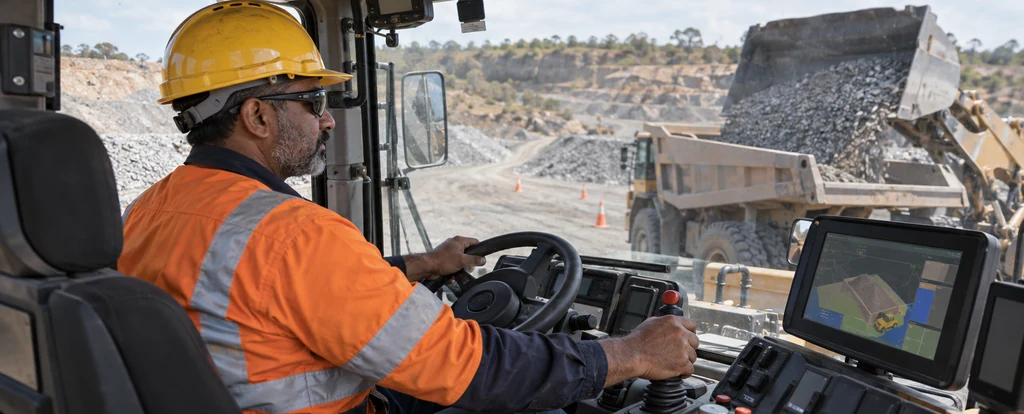
Loader operators work in quarries, mines, civil construction projects, timber yards, waste facilities and materials yards, moving sand, gravel, ore, soil and rubble with a wheel loader or front end loader. The role sits close to excavator and earthmoving plant operation, but a loader carries, lifts and stockpiles material rather than digging, and it feeds crushers, hoppers, bins and trucks. Most are employed by quarrying companies, civil contractors, mining operations and building materials suppliers, and much of the work happens outdoors in all weather.
How much do loader operators earn?
The median full-time salary for a loader operator is $94,600 per annum, before tax, up $20,200 since 2018.
Pay depends heavily on the sector, with mining and resources work usually ahead of quarrying, civil construction and yard work, and remote or fly-in fly-out rosters ahead again. Shift work, overtime and enterprise agreements lift earnings, while work on smaller machines in yards sits at the lower end. Experience on larger loaders and a second or third plant class is what opens the better-paid rosters.
What does a loader operator do day to day?
The list below is what fills most weeks; the exact mix shifts with seniority and whatever stage the current work is at.
- Operating a wheel loader or front end loader to move sand, gravel, ore and rubble around a site
- Loading trucks, hoppers and crusher feed points to a target weight, using the loader's onboard payload scales
- Building and turning stockpiles and blending materials to a specification
- Keeping the plant fed at a steady rate, because a stalled crusher or hopper stops the whole operation
- Carrying out pre-start checks and daily fuelling, greasing and fault reporting
What skills do loader operators need?
Employers look for plant and equipment operation, worksite safety management, inventory management, backed by Cat wheel loader fluency and strong safety and compliance awareness.
Specialist skills
- Plant and equipment operation
- Worksite safety management
- Inventory management
- Operations management
Software and tools
- Cat wheel loader
- Komatsu WA series loader
- Trimble Earthworks machine control
- Leica iCON excavator and loader guidance
- Cat Production Measurement payload system
General skills
- Safety and compliance awareness
- Physical stamina and dexterity
- Attention to detail
- Written communication
Is the job growing?
About 5,100 people work as loader operators in Australia, and employment is projected to grow 4.3% over the decade to 2035. That's modest growth: demand is steady rather than booming.
How do you become a loader operator?
Here's the path most loader operators take, step by step.
- 1Get your construction induction card
The White Card is required to set foot on a civil construction site in every state, and most employers ask for it before anything else. It usually takes a day or less through a registered training organisation, and you need it even if you already hold plant competencies.
- 2Complete a loader competency
A nationally recognised unit of competency for wheeled front end loader operations is the qualification employers check, delivered by registered training organisations with theory, supervised seat time and a practical assessment. Wheeled and tracked loaders are separate units, so choose the one that matches the work you are chasing.
- 3Get seat time on real sites
Labour hire firms, quarry contractors and civil companies are where new operators get started, and many begin as a labourer, yard hand or plant offsider before moving into the seat. Mine and quarry sites also require a site induction and often a verification of competency before you operate.
- 4Add plant classes and licences
Excavator, skid steer and dump truck competencies widen the work you can take on, which matters when one sector slows. A heavy vehicle licence is the usual next step if you want to combine loading with driving.
Ready to apply as a loader operator?
Whether you're working toward becoming a loader operator or already are one and want a hand with the next step (sharpening your resume for ATS screening, tightening your cover letter, or knowing what you'll actually be asked at interview), here are examples grounded in this specific role, not generic templates.
What jobs can a loader operator move to?
Moving into Bulk Materials Handling Operator typically comes with the biggest pay rise, worth $11,500 a year more on average.
| Move to | Typical pay change | Overlap | Retraining |
|---|---|---|---|
| Bulk Materials Handling Operator Loader operators already handle bulk materials, so the move to bulk materials handling needs little retraining and builds on existing plant skills.Known move | +$11,500 | 74% | minimal |
| Earthmoving Plant Operator Loader operators bring heavy plant control and bulk material handling to earthmoving work, with further plant tickets needed for larger machines.Known move | +$8,400 | 45% | reskill |
| Truck Driver Loader operation experience with site vehicles and load movement transfers to truck driving, though a heavy vehicle licence and road training are needed.Known move | +$7,300 | 29% | reskill |
| Excavator Operator Loader operators can transfer heavy plant control and site awareness to excavator operation, but a separate excavator ticket and training are required.Known move | +$4,200 | 27% | reskill |
| Machine Operator Loader operators bring machinery control and safety awareness to manufacturing machine operation, though production-specific training and tickets are usually required.Known move | −$13,800 | 35% | reskill |
Moves are chosen from Jobs and Skills Australia's Data on Occupation Mobility, which follows income tax records between 2011-12 and 2020-21, together with entry requirements and skill overlap. A known move is one people were seen making in that data. Pay change compares median full-time pay for the two roles.
Who works as a loader operator?
The typical loader operator is 48 years old; 96% are men, 85% work full-time, and full-timers average 50 hours a week.
- 48
- Median age
- 4%
- Female share
- 85%
- Full-time
- +10h
- vs all-jobs avg
What's it like being a loader operator?
The work has a steady rhythm of load, carry, tip and return, with the pace set by the trucks and the plant being fed rather than by deadlines in an office. Full-time hours average around 50 a week, and shift rosters, early starts and long days are common on mine sites and larger civil projects. It suits someone who likes being in the machine, reading the ground and the stockpile, and getting a repeatable job right rather than talking to people all day.
What people like
- The machine does the heavy lifting. Once you are in the seat, a loader shifts tonnes of material an hour without you leaving the cab, and the result of a good shift is sitting in a neat stockpile or a line of loaded trucks.
- The job has a clear finish. When the trucks are away and the stockpile is squared off, the day's work is visibly done, which is not true of every job on a construction site.
- Skills that travel between industries. The same machine control works in quarries, civil projects, mines and yards, so operators can follow the work between sectors and regions rather than starting again.
- A route to bigger machines. Extra plant classes and experience open up larger loaders and heavier equipment, and operators who want that progression can usually find a site willing to give them the hours.
What people find hard
- Weather, dust and noise. Loaders work outside in heat, cold and rain, and cab or no cab, there is dust, engine noise and vibration through a full shift.
- Long shifts and early starts. Mine rosters often mean long days in blocks away from home, and civil projects run overtime when a pour or a program is tight.
- Conditions change with the job. Mud, tight access and uneven ground slow the work down and put wear on the machine, and the loader takes the punishment along with you.
- Repetition. Loading the same trucks to the same weights for a whole shift suits some operators and grinds on others, particularly in yards where the material never changes.
Based on our synthesis of professional-body surveys and public accounts of the role, not first-person verified reviews.
Which industries employ loader operators?
Construction employs the largest share of loader operators, followed by Mining.
Top employing industries
- 1Construction
- 2Mining
- 3Manufacturing
Ranked by employment share; the source doesn't publish an exact percentage per industry.
| Year 12 or below | 62.8% | |
|---|---|---|
| Certificate III/IV | 28.5% | |
| Diploma / Advanced Diploma | 2.5% | |
| Bachelor degree | 1.5% | |
| Postgraduate | 0.3% |
Will AI replace loader operators?
Loader operation has low exposure to AI and automation, because the machine is driven from the seat and the judgement about ground conditions, safe loading and how the material will behave stays with the operator. Technology has changed the job in other ways, with machine control and grade guidance, onboard payload scales and fleet management software showing where to cut and how much weight has gone over the weighbridge. That guidance sharpens accuracy and record keeping rather than replacing the person on the machine.
Share of typical working time by exposure level
- Operating the loader on the face and stockpileReading the ground, the stockpile and the trucks moving around you, and keeping the machine stable with a full bucket, is hands-on work with no automation in the loop.35%low
- Pre-start checks, servicing and fault reportingDaily checks, greasing and defect reports are logged on a tablet on most sites, but an operator still walks the machine, spots the leak and decides whether it can keep working.30%low
- Loading trucks, hoppers and crusher feed points to weightOnboard payload scales and weighbridge records now tell the operator exactly what has gone onto each truck, so the loading target is measured rather than estimated, though the bucket work itself is unchanged.20%moderate
- Working to design levels and stockpile gradesMachine control and grade guidance systems show the cut and fill on a screen in the cab, which takes some of the guesswork out of trimming a pad or levelling a stockpile base.15%moderate
Common questions about becoming a loader operator
Straight answers to the questions people ask most.
How much does a loader operator earn?
Full-time loader operators earn a median of $94,600 per year before tax. Mining and resources work, remote rosters and shift penalties push that higher, while yard and smaller quarry work sits lower.
How do you become a loader operator?
The two things employers check are a construction induction card for civil sites and a current nationally recognised loader competency, both gained through short courses with a registered training organisation. About 63% of loader operators hold Year 12 or below as their highest qualification, so the machine competency matters more than a lengthy course.
Are loader operators in demand?
Loader operators are currently in shortage nationally, and employment is projected to grow 4.3% over the decade to 2035 over the decade to 2035. The practical step for someone looking for work is to have a current competency and the site inductions that go with it, because those are checked before experience.
Will AI or automation replace loader operators?
Not in the near term, because the job is controlled from the seat and the judgement about ground conditions, safe loading and what the material will do next stays with the operator. Machine control, onboard payload scales and fleet management software now guide the bucket and record every load, which improves accuracy and paperwork rather than removing the person. Automation has moved fastest on haul trucks and fixed plant, and even automated sites keep operators for clean-up, blending and breakdowns.
What are the hours like?
Full-time loader operators average about 50 hours a week, and many work shifts, weekends or fly-in fly-out rosters. Mining work tends to run long days in blocks, while quarry and yard work is closer to a standard week with overtime in busy periods.
What can loader operators move on to?
Bulk materials handling work pays $11,500 more and needs little retraining, since loader operators already handle bulk materials and site traffic. Earthmoving plant operation pays $8,400 more and uses similar machine control, though larger machines need their own competencies, and truck driving pays $7,300 more but needs a heavy vehicle licence. Some experienced operators buy their own loader and contract out to quarries and civil companies, which is often where earnings grow.
Specialisation of
Related roles
- Earthmoving Plant Operator
- Truck Driver
- Machine Operator
- Excavator Operator
- Bulk Materials Handling Operator
- Truck Driver
Not sure this is you? Take the career quiz and get a ranked shortlist of roles that fit how you like to work.