Car Park Attendant
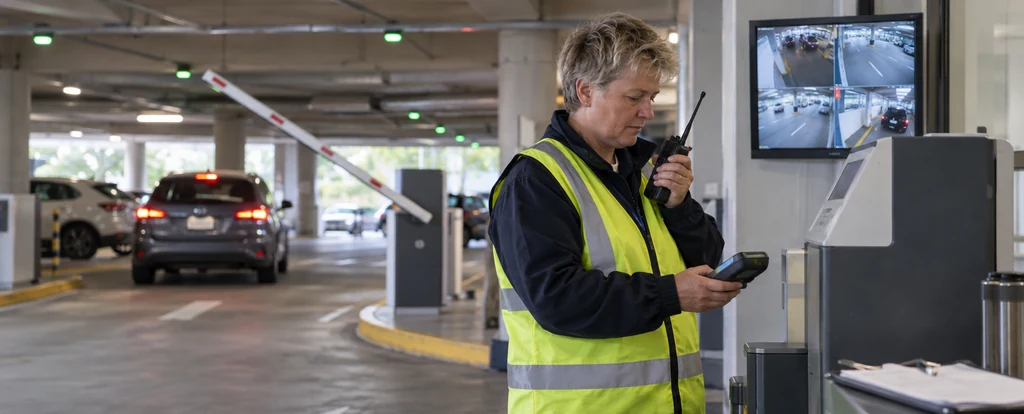
Car park attendants keep vehicles moving through a car park, handling entry, payment and whatever goes wrong in between.
- Median salary*
- $52,000
3.8%vs last year, before tax
- People employed
- 1,500
0.0%vs last year
- Projected growth
- +4.2%
to 2035
- AI exposure*
- High
- automation risk
- Average hours
- 41/wk
+1h vs all jobs
- Shortage status*
- Not in shortage
national
Most work in commercial, retail, hospital or council car parks, where they run the entry and exit points, collect payment and help drivers find a space. The job is often confused with parking inspection, which is about enforcing rules and issuing fines rather than keeping traffic flowing. Part-time and rotating rosters are common, with evenings, weekends and public holidays in the mix.
How much do car park attendants earn?
The median full-time salary for a car park attendant is $52,000 per annum, before tax, up $10,800 since 2018.
Pay depends on who runs the site and which award or enterprise agreement covers it, so rates vary between councils, hospitals, shopping centres and private operators. Penalty rates for nights, weekends and public holidays matter because so much of the roster falls outside standard hours. The rate moves slowly with experience, and a team leader or supervisor role at a large site is where it changes most.
What does a car park attendant do day to day?
The list below is what fills most weeks; the exact mix shifts with seniority and whatever stage the current work is at.
- Collecting parking fees, issuing payment slips and balancing the takings at the end of a shift
- Directing drivers into free spaces and keeping entry and exit lanes clear
- Watching barriers, payment machines and camera feeds, and calling a technician when something jams
- Patrolling the levels on foot to check lighting, clear hazards and note anything that looks like a security risk
- Helping drivers whose payment slip won't scan, who have lost it, or who can't find their car
What skills do car park attendants need?
Employers look for security operations, operations management, cleaning and grounds maintenance, backed by Skidata fluency and strong customer service.
Specialist skills
- Security operations
- Operations management
- Cleaning and grounds maintenance
Software and tools
- Skidata
- Amano
- PayStay
- Hikvision
- EFTPOS terminals
General skills
- Customer service
- Written communication
- Attention to detail
- Problem solving
Is the job growing?
About 1,500 people work as car park attendants in Australia, and employment is projected to grow 4.2% over the decade to 2035. That's modest growth: demand is steady rather than booming.
How do you become a car park attendant?
Here's the path most car park attendants take, step by step.
- 1Find out what the site expects
Car park operators, councils and hospitals rarely ask for a qualification, so a driver licence, a police check and the right to work are usually the only requirements. Some employers also ask for a first aid certificate, since an attendant is often first on the scene when a driver is unwell or a car is damaged.
- 2Apply directly to the operator or the venue
Vacancies are advertised by the companies that run car parks, by councils for their own facilities, and by shopping centres and hospitals. Applications usually go through an online form and an interview with a site supervisor, and casual or part-time start dates come up more often than full-time ones.
- 3Learn the payment and access systems on the job
Training covers the entry and exit equipment, the payment app and the cash-handling procedure, and most sites pair a new attendant with an experienced one for the first shifts. The most common qualification in the current workforce is Year 12 or below, held by 47% of people in the job, but no employer requires it to start.
- 4Add short courses that widen your options
A first aid certificate or a customer service short course can help you move to a busier site or a supervisory shift. Where the job involves directing vehicles on a public road rather than within a car park, traffic controller accreditation is required, and the rules differ by state.
Ready to apply as a car park attendant?
Whether you're working toward becoming a car park attendant or already are one and want a hand with the next step (sharpening your resume for ATS screening, tightening your cover letter, or knowing what you'll actually be asked at interview), here are examples grounded in this specific role, not generic templates.
What jobs can a car park attendant move to?
Moving into Security Guard typically comes with the biggest pay rise, worth $42,500 a year more on average.
| Move to | Typical pay change | Overlap | Retraining |
|---|---|---|---|
| Security Guard Both roles monitor premises and deal with people, but security work adds licensing and patrol duties, so the move requires retraining.Known move | +$42,500 | 21% | reskill |
| Parking Inspector Car park attendants know parking rules and payment systems, so moving into parking inspection adds enforcement powers and fine handling, requiring retraining.Known move | +$13,000 | 22% | reskill |
| Car Detailer Car park attendants bring vehicle awareness and customer service, while car detailing adds cleaning and inspection skills that need retraining.Known move | +$12,500 | 44% | reskill |
| Service Station Attendant Serving customers and handling payments are shared tasks, so moving into a service station adds fuel and convenience retail duties with a short course. | +$12,100 | 53% | short course |
Moves are chosen from Jobs and Skills Australia's Data on Occupation Mobility, which follows income tax records between 2011-12 and 2020-21, together with entry requirements and skill overlap. A known move is one people were seen making in that data. Pay change compares median full-time pay for the two roles.
Who works as a car park attendant?
The typical car park attendant is 44 years old; 80% are men, 46% work full-time, and full-timers average 41 hours a week.
- 44
- Median age
- 20%
- Female share
- 46%
- Full-time
- +1h
- vs all-jobs avg
What's it like being a car park attendant?
The shift has a steady rhythm: busy starts and finishes around commuter peaks, quieter stretches between them, and the weather on the way through. Attendants spend most of the time on their feet, moving between the booth, the lanes and the levels. It suits people who like a clear set of tasks, don't mind working alone for part of a shift and can stay calm with a driver who is already frustrated.
What people like
- You leave the work at the door. At the end of a shift you hand over the takings and the log, and nothing follows you home the way a caseload or a project would.
- Time outdoors rather than at a desk. Shifts mix the booth with walking the levels and checking equipment, which suits people who would rather be moving than sitting in front of a screen.
- Short, straightforward conversations. Most contact is brief: pointing out a free space, explaining how a payment machine works, or helping someone who has parked in the wrong bay.
- Rosters that fit around something else. Evening, weekend and part-time shifts are easy to find, which works well for students, carers and people easing back into work.
What people find hard
- Weather is part of the job. On open-air sites you are out in rain, heat and cold, and the busiest periods often come with the least comfortable conditions.
- Frustrated drivers take it out on you. People arrive annoyed about a full car park, a card reader that won't work or a fine they think is unfair, and you are the person standing in front of them.
- Long quiet stretches. At a small or low-traffic site a shift can be mostly waiting, which some people find harder than being busy.
- The job is changing under your feet. More of the payment and access work moves to machines and apps each year, so on newer sites the role sits closer to supervision, cleaning and troubleshooting than to collecting fees.
Based on our synthesis of professional-body surveys and public accounts of the role, not first-person verified reviews.
Which industries employ car park attendants?
Other Services employs the largest share of car park attendants, followed by Rental, Hiring and Real Estate Services.
Top employing industries
- 1Other Services
- 2Rental, Hiring and Real Estate Services
- 3Public Administration and Safety
Ranked by employment share; the source doesn't publish an exact percentage per industry.
| Year 12 or below | 47% | |
|---|---|---|
| Bachelor degree | 17.5% | |
| Certificate III/IV | 13.8% | |
| Diploma / Advanced Diploma | 11.6% | |
| Postgraduate | 6.1% |
Will AI replace car park attendants?
Car park attendance is one of the more exposed jobs in transport, because payment and access have already moved largely to machines, apps and number plate recognition. What keeps people on site is the physical and human side: cars that won't clear a barrier, blocked lanes, damaged equipment and drivers who need directions. Newer sites often run with fewer attendants and a remote monitoring centre, so the role is shifting towards supervision and maintenance rather than fee collection.
Share of typical working time by exposure level
- Collecting and reconciling paymentMachines, tap cards and apps such as PayStay take most fees, so the reconciliation is increasingly a report to check rather than cash to count.30%high
- Monitoring barriers, payment machines and camerasNumber plate recognition and off-site monitoring now watch the entry and exit, so an attendant often responds to an alert instead of watching the screen for a whole shift.25%high
- Helping drivers at the barrier or with a paymentApps and intercoms answer the simple questions, but a driver stuck in a lane with traffic behind them still needs someone on the ground quickly.25%moderate
- Patrolling levels and clearing hazardsChecking for spills, broken lights and trolleys left in bays is physical work in a specific space, and a camera does not clear a lane for you.20%low
Moves least exposed to AI
These career moves from car park attendant work are rated low for AI exposure:
- Car Detailer
Solid skill overlap (44%), reskill to get there, and a low automation-risk profile.
Common questions about becoming a car park attendant
Straight answers to the questions people ask most.
How much do car park attendants earn?
Car park attendants earn a median of $52,000 per year before tax. The award or enterprise agreement covering the site sets the base rate, and penalty rates for nights, weekends and public holidays add to it on most rosters.
How do I become a car park attendant?
Apply directly to the company or organisation that runs the car park, because most sites ask for no qualification or licence. A driver licence and a police check are commonly requested, and training on the payment and access systems happens on the job.
Are car park attendants in demand?
Car park attendants are currently not in shortage, and employment is projected to grow 4.2% over the decade to 2035 over the decade to 2035. Most openings come from staff turnover rather than new sites opening, so applying to several operators in your area gives you the best chance of a start.
Will automation replace car park attendants?
A large part of the payment and access work has already moved to machines, apps and number plate recognition, which is why the role rates as highly exposed to automation. What keeps attendants on site is everything the equipment handles badly: a car stuck at a barrier, a blocked lane, damaged equipment, and a driver who needs directions.
What can car park attendants move into?
Moving into parking inspection pays $13,000 more, and attendants already know the parking rules and payment systems that enforcement builds on. Security guarding pays $42,500 more but needs a security licence and patrol duties, while car detailing uses the same vehicle awareness with cleaning and inspection skills to learn.
Do car park attendants work shifts?
Many do, because car parks stay open into the evening and on weekends, and some sites run around the clock. Average full-time hours are 41 a week, though part-time and casual rosters are common and public holidays are usually shared across the team.
Related roles
Not sure this is you? Take the career quiz and get a ranked shortlist of roles that fit how you like to work.