Cardiac Technician
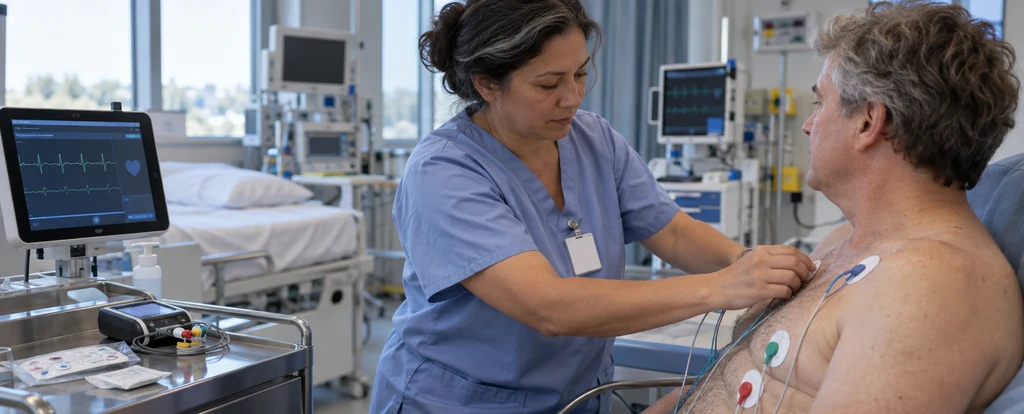
Cardiac technicians record the heart's electrical activity and run the tests cardiologists use to diagnose and monitor heart conditions.
- Median salary*
- $87,400
4.3%vs last year, before tax
- People employed
- 1,000
0.0%vs last year
- Projected growth
- +17.4%
to 2035
- AI exposure*
- Moderate
- automation risk
- Average hours
- 40/wk
matches all-jobs average
- Shortage status
- Not in shortage
national
Cardiac technicians work in hospital cardiology departments, private clinics and catheter laboratories, recording heart rhythms and helping run tests such as stress tests and Holter monitoring. They are usually the person who attaches the leads, explains what will happen and keeps the recording clean enough for a cardiologist to read. Cardiac sonography is the closest role, but it needs a postgraduate qualification and accreditation, so technicians who want to scan usually study again.
How much do cardiac technicians earn?
The median full-time salary for a cardiac technician is $87,400 per annum, before tax, up $18,400 since 2018.
Where you work shapes pay most: public hospital technicians are covered by state health awards that set shift, weekend and on-call loadings, while private practices tend to offer a straight salary with fewer penalties. Specialising matters too, since echocardiography and electrophysiology sit at higher grades of the same awards than routine ECG testing. On-call and overtime in catheter laboratories can add to a base salary.
What does a cardiac technician do day to day?
The list below is what fills most weeks; the exact mix shifts with seniority and whatever stage the current work is at.
- Fitting ECG leads and explaining the test to patients, from a routine resting trace to a pre-surgery check
- Recording resting and exercise ECGs and checking each trace for artefact before it goes to the cardiologist
- Fitting and downloading Holter and event monitors, then working through days of rhythm data for anything that needs a closer look
- Assisting the cardiology team during stress tests and in the catheter laboratory, watching the patient as closely as the screen
- Cleaning, checking and calibrating the recording equipment, and chasing the fault when a trace does not look right
What skills do cardiac technicians need?
Employers look for patient care and support, clinical assessment and treatment, infection control and hygiene, backed by GE MUSE fluency and strong written communication.
Specialist skills
- Patient care and support
- Clinical assessment and treatment
- Infection control and hygiene
- Plant and equipment operation
Software and tools
- GE MUSE
- Philips IntelliSpace ECG
- CardioSoft
- Epic
General skills
- Written communication
- Attention to detail
- Problem solving
Is the job growing?
About 1,000 people work as cardiac technicians in Australia, and employment is projected to grow 17.4% over the decade to 2035. That's healthy, above-average growth, and the role should stay in solid demand.
How do you become a cardiac technician?
Here's the path most cardiac technicians take, step by step.
- 1Finish Year 12 with English and a science subject
Biology, chemistry or physics all help, and maths is useful for understanding how the recording equipment works. Entry to the degrees below is based on your ATAR, with some universities offering pathway programs for people who left school early.
- 2Complete a bachelor degree in health science, medical science or a related field
These degrees cover anatomy, physiology and patient care, and some include placements in hospitals. A bachelor degree is what 55% of the current workforce holds, and it is what many hospital employers look for before they train you on the equipment.
- 3Apply for a trainee or assistant position in a hospital cardiology department
This is paid work, and the training happens on the job: recording resting ECGs, fitting Holter monitors, running stress tests and learning to spot a trace that is not clean enough to report. Larger teaching hospitals run the most structured programs.
- 4Add a specialist qualification in the area you want to work in
Echocardiography requires a postgraduate qualification such as a Graduate Diploma of Cardiac Ultrasound, plus accreditation through the Australian Sonographer Accreditation Registry. Electrophysiology and catheter laboratory roles usually train in-house, with industry courses to build on that.
Ready to apply as a cardiac technician?
Whether you're working toward becoming a cardiac technician or already are one and want a hand with the next step (sharpening your resume for ATS screening, tightening your cover letter, or knowing what you'll actually be asked at interview), here are examples grounded in this specific role, not generic templates.
What jobs can a cardiac technician move to?
Moving into Sonographer typically comes with the biggest pay rise, worth $35,300 a year more on average.
| Move to | Typical pay change | Overlap | Retraining |
|---|---|---|---|
| Sonographer Cardiac technicians bring cardiac diagnostic and patient monitoring skills, with further accredited sonography study needed to qualify as a sonographer.Known move | +$35,300 | 67% | requalify |
| Anaesthetic Technician Shared hospital technical skills and patient monitoring experience transfer, with minimal training to support anaesthetic procedures. | −$6,800 | 75% | minimal |
| Respiratory and Sleep Technician The hospital technical and patient monitoring background carries over, needing only minimal training for respiratory and sleep testing. | −$7,300 | 78% | minimal |
Moves are chosen from Jobs and Skills Australia's Data on Occupation Mobility, which follows income tax records between 2011-12 and 2020-21, together with entry requirements and skill overlap. A known move is one people were seen making in that data. Pay change compares median full-time pay for the two roles.
Who works as a cardiac technician?
The typical cardiac technician is 36 years old; 68% are women, 59% work full-time, and full-timers average 40 hours a week.
- 36
- Median age
- 68%
- Female share
- 59%
- Full-time
- +0h
- vs all-jobs avg
What's it like being a cardiac technician?
Cardiac technicians work to a hospital rhythm: scheduled test lists through the day, urgent ECGs squeezed in between, and an on-call roster in some catheter laboratories. The job suits someone who likes technical work with a visible result and is comfortable reassuring a nervous patient while attaching leads. Much of the testing is routine and precise, which appeals to people who prefer steady work to unpredictable days, though the pace lifts when a ward calls for an urgent trace.
What people like
- The result appears on the screen. An ECG or stress test gives you a tracing within minutes, so you know whether the recording is usable before the patient leaves the room.
- Short, focused patient contact. You meet people for twenty minutes at a time, explain what the test involves and help them settle, without carrying a long caseload.
- Equipment you get to know well. Setting up, troubleshooting and calibrating the same machines day after day builds a depth of familiarity that makes faults quick to pick.
- You see how cardiac care fits together. Working alongside cardiologists and nurses shows you how rhythms, symptoms and treatments connect, which can point towards further study later on.
What people find hard
- On-call and out-of-hours work. Catheter laboratories and emergency departments need technicians outside business hours, so some roles come with nights, weekends and call-backs.
- Routine fills most of the week. Resting ECGs and monitor fittings make up the bulk of the work, and the complex procedures go to technicians with extra qualifications.
- The diagnosis is not yours to make. You record, check and pass on the data, while the cardiologist interprets it, so the clinical call sits one step away from your desk.
- Testing people who are frightened or unwell. You will attach leads to patients in pain or distress, and occasionally record a trace that leads straight to an urgent conversation.
Based on our synthesis of professional-body surveys and public accounts of the role, not first-person verified reviews.
Which industries employ cardiac technicians?
Health Care and Social Assistance employs the largest share of cardiac technicians, followed by Wholesale Trade.
Top employing industries
- 1Health Care and Social Assistance
- 2Wholesale Trade
Ranked by employment share; the source doesn't publish an exact percentage per industry.
| Bachelor degree | 54.8% | |
|---|---|---|
| Postgraduate | 24.9% | |
| Year 12 or below | 8% | |
| Diploma / Advanced Diploma | 7.4% | |
| Certificate III/IV | 2.2% |
Will AI replace cardiac technicians?
Exposure to AI here is moderate rather than dramatic. ECG interpretation software and Holter analysis tools already draft readings that a technician once worked through by hand, and they are good at flagging abnormal rhythms and measuring intervals. What they cannot do is decide whether a trace is technically valid, keep a patient safe on a treadmill or in a catheter laboratory, or handle leads that will not sit still, so the job leans further towards setting up good recordings and acting on what the software flags.
Share of typical working time by exposure level
- Assisting during stress tests and catheter laboratory proceduresRunning a treadmill protocol, watching the patient and helping a cardiologist who has their hands inside the equipment needs a person in the room throughout.30%low
- Applying leads and preparing patients for testingSkin preparation, electrode placement and keeping a patient calm during a 12-lead ECG remain hands-on work that no algorithm does.25%low
- Recording and checking resting ECGsSoftware such as GE MUSE and Philips IntelliSpace ECG can measure and draft an interpretation, but the technician still decides whether the recording is clean enough to send on.25%moderate
- Analysing Holter and event monitor dataBeat classification and arrhythmia detection are largely automated, so the task is increasingly reviewing what the system has flagged rather than scanning every beat.20%high
Moves least exposed to AI
These career moves from cardiac technician work are rated low for AI exposure:
- Sonographer
High skill overlap (67%), requalify to get there, and a low automation-risk profile.
Common questions about becoming a cardiac technician
Straight answers to the questions people ask most.
How much does a cardiac technician earn?
$87,400 per year before tax, as a median across full-time roles. Where you work moves that figure most, because public hospital technicians are paid under state health awards with shift, weekend and on-call loadings, while private practice salaries usually sit flat. Moving into echocardiography or electrophysiology also means a higher grade of work and pay.
How do I become a cardiac technician in Australia?
There is no single registration pathway, so most technicians enter with a bachelor degree in health science, medical science or a similar field and learn the testing on the job. Hospital cardiology departments train new staff in ECG recording, Holter fitting and stress testing, and some people move across from another hospital technical role rather than studying first. Specialising in echocardiography or electrophysiology takes further postgraduate study.
Are cardiac technicians in demand?
Cardiac technicians are currently not in shortage, and employment is projected to grow 17.4% over the decade to 2035. About 1,000 people work in the role, so the openings add up to a small number each year in most cities, and many appear when someone retires or moves into a specialist area. It pays to watch hospital and private practice listings rather than expecting a steady stream of vacancies.
Could AI take over cardiac technician work?
Some of it, but not the whole job. ECG interpretation software and Holter analysis tools already flag abnormal rhythms and draft readings, which cuts the time spent measuring tracings by hand. Positioning patients, judging whether a recording is good enough to report and supporting someone through an exercise or catheter laboratory test still need a person in the room.
Do cardiac technicians work shifts?
It depends on the department. Outpatient and private practice work is mostly weekday hours, while catheter laboratories and hospital wards roster early starts, some weekends and an on-call rota, and a full-time week averages about 40 hours. Ask about the roster at interview, because it varies a lot between employers.
What can a cardiac technician move on to?
Cardiac sonography is the main step up and needs further accredited study, and it comes with median pay $35,300 more a year. Respiratory and sleep technician and anaesthetic technician roles need only minimal retraining because the hospital technical and patient monitoring skills carry over, with medians $7,300 less and $6,800 less respectively. Technicians also move sideways into cardiac scientist and electrophysiology positions inside the same department.
Related roles
- Sonographer
- Respiratory and Sleep Technician
- Anaesthetic Technician
- Respiratory and Sleep Technician
- Anaesthetic Technician
- Radiographer
Not sure this is you? Take the career quiz and get a ranked shortlist of roles that fit how you like to work.