Respiratory and Sleep Technician
Respiratory and sleep technicians run the breathing and sleep tests that help doctors diagnose and manage asthma, sleep apnoea and other respiratory conditions.
- Median salary*
- $80,100
4.6%vs last year, before tax
- People employed
- 440
10.0%vs last year
- Projected growth*
- +12%
to 2035
- AI exposure*
- Moderate
- automation risk
- Average hours*
- 38/wk
−2h vs all jobs
- Shortage status*
- In shortage (regional)
national
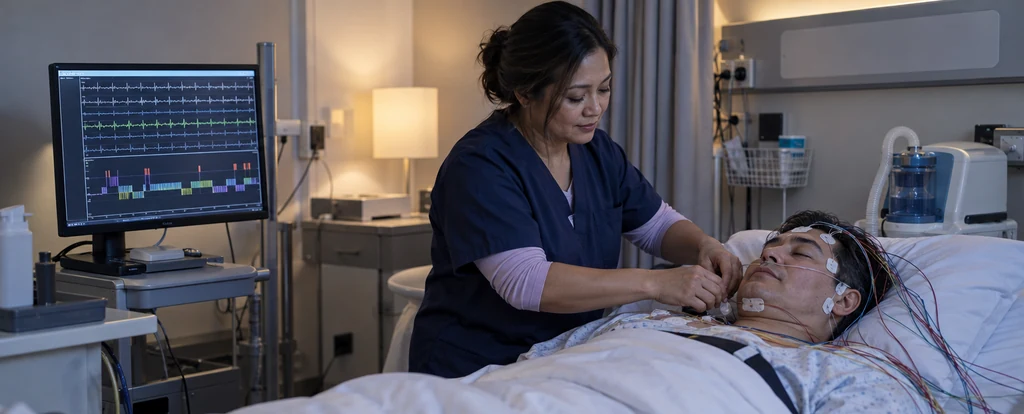
Respiratory and sleep technicians operate the diagnostic equipment that measures how well a person breathes and how well they sleep. They prepare patients, run spirometry and overnight sleep studies, score the recordings and pass the results to respiratory physicians and sleep specialists. Most work in hospital lung function laboratories, sleep units and specialist respiratory clinics, and because sleep studies run overnight, shift work is common.
How much do respiratory and sleep technicians earn?
The median full-time salary for a respiratory and sleep technician is $80,100 per annum, before tax, up $17,000 since 2018.
Public hospital technicians are usually paid under the Health Professionals and Support Services Award or a state health enterprise agreement, which sets the base rate by classification level. Penalty rates move take-home pay more than anything else here, because overnight sleep studies attract evening, night and weekend loadings. Private sleep clinics may pay on a different scale from a hospital lung function laboratory, and extra training in scoring or advanced lung function testing can move you up a classification.
What does a respiratory and sleep technician do day to day?
The list below is what fills most weeks; the exact mix shifts with seniority and whatever stage the current work is at.
- Preparing patients for lung function and overnight sleep studies, including applying sensors and electrodes and explaining what each test involves
- Performing spirometry, lung volume and gas transfer tests to set protocols, and coaching patients through the breathing manoeuvres
- Monitoring overnight polysomnography recordings, noting artefacts, arousals and clinical events as they happen
- Scoring sleep stages, respiratory events and oximetry data so the specialist has a report to interpret
- Calibrating, cleaning and troubleshooting the spirometers, oximeters, CPAP devices and sleep diagnostic systems
What skills do respiratory and sleep technicians need?
Employers look for patient care and support, clinical assessment and treatment, infection control and hygiene, backed by Compumedics polysomnography systems fluency and strong attention to detail.
Specialist skills
- Patient care and support
- Clinical assessment and treatment
- Infection control and hygiene
- Plant and equipment operation
- Medical administration and records
Software and tools
- Compumedics polysomnography systems
- Nox Medical sleep diagnostic software
- Diagnostic spirometers
- Pulse oximeters
- CPAP and bilevel titration devices
General skills
- Attention to detail
- Written communication
Is the job growing?
About 440 people work as respiratory and sleep technicians in Australia, and employment is projected to grow 12% over the decade to 2035. That's healthy, above-average growth, and the role should stay in solid demand.
How do you become a respiratory and sleep technician?
Here's the path most respiratory and sleep technicians take, step by step.
- 1Build the science and patient care base
A Certificate IV or diploma in health science, or a bachelor degree in health science, science or a related field, covers the anatomy, physiology and patient care the work assumes. Employers differ in what they ask for, and hospital departments often take on trainees who hold a diploma and learn the rest on the job.
- 2Learn the tests in a laboratory or sleep unit
Trainee and assistant positions are where the practical skill develops: running spirometry and gas transfer tests, fitting sensors, and monitoring overnight sleep studies under supervision. This stage is paid work, and it usually takes a year or more before you are running a clinic list independently.
- 3Train in sleep scoring and analysis
Scoring polysomnography recordings takes months of supervised practice to do consistently, because the rules for staging sleep and marking respiratory events are detailed. Many laboratories run in-house training, and short courses and workshops in sleep technology are offered through professional bodies.
- 4Consider credentialing with a professional body
Sleep technologists can credential through the Australasian Sleep Association, and respiratory scientists often join the Australian and New Zealand Society of Respiratory Science. Credentialing is not always required to work, but it gives employers a way to judge competence and supports promotion into senior technical roles.
- 5Specialise in an area of testing
Further training opens paediatric testing, home oxygen assessment, advanced lung function testing and CPAP or bilevel titration. Specialising is how technicians move into senior positions or take on training and quality roles within a department.
Ready to apply as a respiratory and sleep technician?
Whether you're working toward becoming a respiratory and sleep technician or already are one and want a hand with the next step (sharpening your resume for ATS screening, tightening your cover letter, or knowing what you'll actually be asked at interview), here are examples grounded in this specific role, not generic templates.
What jobs can a respiratory and sleep technician move to?
Moving into Cardiac Technician typically comes with the biggest pay rise, worth $7,300 a year more on average.
| Move to | Typical pay change | Overlap | Retraining |
|---|---|---|---|
| Cardiac Technician Respiratory technicians bring lung function testing skills that transfer to cardiac diagnostics with minimal retraining. | +$7,300 | 78% | minimal |
| Anaesthetic Technician Respiratory technicians bring airway assessment and monitoring skills that suit anaesthetic support with a short course. | +$500 | 58% | short course |
| Operating Theatre Technician Respiratory technicians bring patient monitoring and equipment skills that apply to operating theatre support with a short course. | +$500 | 58% | short course |
Moves are chosen from Jobs and Skills Australia's Data on Occupation Mobility, which follows income tax records between 2011-12 and 2020-21, together with entry requirements and skill overlap. A known move is one people were seen making in that data. Pay change compares median full-time pay for the two roles.
Who works as a respiratory and sleep technician?
The typical respiratory and sleep technician is 41 years old; 64% are women, 67% work full-time, and full-timers average 38 hours a week.
- 41
- Median age
- 64%
- Female share
- 67%
- Full-time
- −2h
- vs all-jobs avg
What's it like being a respiratory and sleep technician?
The job runs on a schedule of clinics and studies, so the day is a sequence of patients, each needing sensors fitted, a test done properly and the recording checked before they leave. Quality depends on technique, because a spirometry result is only as good as the effort the patient gives, and the technician is the one coaxing that effort. Sleep work adds overnight shifts and long quiet stretches watching a screen, which suits people who like technical detail and are comfortable with an irregular week.
What people like
- Hands on with patients and machines. Fitting sensors, running the equipment and talking a nervous patient through a breathing test fills the day, so the work sits between patient care and technical work rather than being one or the other.
- Results you can see straight away. A tracing either meets the acceptability criteria or it does not, and a well-scored overnight study gives the specialist what they need to make a diagnosis, so the feedback on your own technique comes quickly.
- Small teams and clear protocols. Lung function laboratories and sleep units are usually small, and the testing protocols are well defined, which suits people who like knowing exactly what a good result looks like.
- Two fields in one role. Technicians who work across both respiratory testing and sleep studies keep a broader skill set, which helps when applying for senior or specialised positions.
What people find hard
- Nights and disrupted weeks. Overnight sleep studies mean evening, night and weekend shifts, and many technicians rotate between day and night work, which takes a toll on sleep and on anything planned in advance.
- Scoring backlogs. Recordings pile up, and scoring happens in long blocks at a computer, sometimes hours at a time, which is the least social part of the job.
- Tests depend on the patient. A spirometry result is only as good as the effort the patient gives, and children, people who are breathless or patients in pain can make a test difficult to complete no matter how well you coach them.
- Equipment faults and full clinics. A sensor fails or a calibration drifts mid-list, and appointment books rarely leave room to catch up, so a small problem can push the rest of the day behind.
Based on our synthesis of professional-body surveys and public accounts of the role, not first-person verified reviews.
Which industries employ respiratory and sleep technicians?
Hospitals employs the largest share of respiratory and sleep technicians, followed by Specialist medical services.
Top employing industries
- 1Hospitals
- 2Specialist medical services
- 3Medical and diagnostic laboratories
- 4Community health services
Ranked by employment share; the source doesn't publish an exact percentage per industry.
| Bachelor degree | 38% | |
|---|---|---|
| Diploma / Advanced Diploma | 24% | |
| Certificate III/IV | 20% | |
| Postgraduate | 10% | |
| Other | 8% |
Will AI replace respiratory and sleep technicians?
This is a moderately exposed job, and the exposure sits mainly in the analysis. Scoring software drafts sleep stages and marks suspected apnoeas, and spirometry systems calculate predicted values and flag tests that fall outside acceptability criteria, so the reporting side of the work is increasingly assisted. What has not shifted is the physical and interpersonal part: sensors have to be fitted well, patients coaxed through breathing manoeuvres, and doubtful recordings spotted and repeated, which is where a technician's judgement still decides the result.
Share of typical working time by exposure level
- Scoring and reporting overnight studiesAuto-scoring algorithms draft sleep stages, arousals and apnoea events, and the technician reviews, corrects and edits the output before it reaches the sleep physician.35%high
- Preparing patients and fitting sensorsElectrodes, nasal cannulas and effort belts have to sit correctly on someone who is often anxious or breathless, and a poor contact only shows up hours into the recording.25%low
- Running spirometry and lung function testsSoftware calculates predicted values and flags unacceptable effort, but the technician still coaches the patient's breathing and decides whether a test needs repeating.25%moderate
- Calibrating and maintaining equipmentSpirometers, oximeters and CPAP titration devices need daily calibration checks and cleaning, and faults have to be traced physically before a clinic list can start.15%low
Moves least exposed to AI
These career moves from respiratory and sleep technician work are rated low for AI exposure:
- Operating Theatre Technician
Solid skill overlap (58%), short course to get there, and a low automation-risk profile.
Common questions about becoming a respiratory and sleep technician
Straight answers to the questions people ask most.
How much do respiratory and sleep technicians earn?
Respiratory and sleep technicians earn a median $80,100 per year before tax. Pay is set mainly by the health award or enterprise agreement you are employed under, and penalty rates for overnight sleep studies make a noticeable difference to what you take home.
How do you become a respiratory and sleep technician?
Most people enter with a health science or science qualification and then learn the testing on the job in a hospital lung function laboratory or sleep unit. Certificate IV and diploma courses exist and a bachelor degree in health science or science is common, but employers vary in what they ask for, so it is worth checking the requirements of the departments you want to work in.
Are respiratory and sleep technicians in demand?
Respiratory and sleep technicians are currently in shortage in regional areas, and employment is projected to grow 12% over the decade to 2035. This is a small occupation, so openings in a given area depend on whether local hospital laboratories and sleep units are hiring, and it pays to check vacancies in the networks you would actually work in.
Will AI replace respiratory and sleep technicians?
Parts of the analysis are already automated: scoring software drafts sleep stages and marks respiratory events, and spirometry systems flag results that fall outside acceptability criteria. The work stays hands-on because sensors have to be fitted correctly, patients coached through the breathing manoeuvres, and poor recordings recognised and repeated, and none of that is reliable without a technician.
What other jobs can a respiratory and sleep technician move into?
Cardiac technician is a straightforward move, since lung function testing skills carry across to cardiac diagnostics with minimal retraining, and the pay gap is $7,300 more. Anaesthetic technician is another, where airway and ventilation experience suits anaesthetic support after a short course.
Do respiratory and sleep technicians work overnight?
Many do. Sleep units run studies overnight, so technicians in those roles work evening and night shifts, while lung function laboratories generally keep to weekday clinic hours.
Related roles
- Cardiac Technician
- Anaesthetic Technician
- Operating Theatre Technician
- Anaesthetic Technician
- Operating Theatre Technician
- Dialysis Technician
Not sure this is you? Take the career quiz and get a ranked shortlist of roles that fit how you like to work.