Cash in Transit Officer
Cash in transit officers move cash and valuables between banks, retailers and ATMs, and their visible presence is part of what deters robbery.
- Median salary*
- $62,400
4.5%vs last year, before tax
- People employed
- 490
2.0%vs last year
- Projected growth*
- −3%
to 2035
- AI exposure*
- Moderate
- automation risk
- Average hours*
- 40/wk
matches all-jobs average
- Shortage status*
- Not in shortage
national
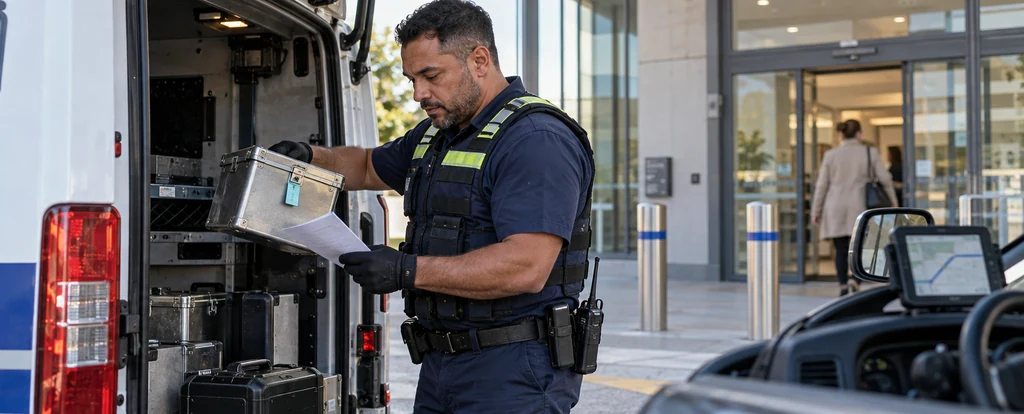
Most work for armoured vehicle companies that hold the contracts with banks, retailers and ATM operators, running between branches, shopping centres and cash depots on set routes. It is a licensed security role rather than general guarding: the crew's job is protecting a consignment while it is in transit, not a building or a crowd. Crews usually work in twos, one driving and one handling the consignment, and shifts start early so deliveries land before businesses open.
How much do cash in transit officers earn?
The median full-time salary for a cash in transit officer is $62,400 per annum, before tax, up $13,200 since 2018.
Pay is set by the security industry award or a company enterprise agreement, so two officers doing similar runs can earn different amounts depending on who holds the contract. Early starts, nights, weekends and public holidays attract shift loadings, which is often where a weekly wage is made. Extra responsibilities, such as taking the driving seat or leading a crew, sometimes sit at a higher classification under the award.
What does a cash in transit officer do day to day?
The list below is what fills most weeks; the exact mix shifts with seniority and whatever stage the current work is at.
- Collecting and delivering cash and valuables between bank branches, retail outlets and ATMs
- Driving the armoured vehicle on a scheduled run, varying the route when procedures call for it
- Loading and unloading sealed cash tins and secured containers, checking seals against the manifest before signing them over
- Keeping watch over the vehicle and consignment whenever the crew is out of the cab
- Recording each handover on a handheld scanner and reconciling the consignment back at the depot
What skills do cash in transit officers need?
Employers look for security operations, driving and transport operations, backed by Armoured cash vehicle fluency and strong safety and compliance awareness.
Specialist skills
- Security operations
- Driving and transport operations
Software and tools
- Armoured cash vehicle
- Two-way radio
- GPS vehicle tracking system
- Banknote counting and sorting machine
- Electronic handheld consignment scanner
General skills
- Safety and compliance awareness
- Attention to detail
- Customer service
- Physical stamina and dexterity
- Time and deadline management
Is the job growing?
About 490 people work as cash in transit officers in Australia, and employment is projected to decline 3% over the decade to 2035. That's a real decline, worth weighing carefully before training into the role.
How do you become a cash in transit officer?
Here's the path most cash in transit officers take, step by step.
- 1Get a security licence in your state or territory
Cash in transit work is licensed security work, and each state and territory runs its own scheme through its police or fair trading authority. A national police check is part of the application, and the licence has to be current before an employer can put you on a run.
- 2Complete the security operations training the licence requires
Most entrants hold a Certificate II or III in Security Operations, which takes a few weeks and covers the legal powers, conflict management and first aid the job assumes. Some employers run the training for new crew members once you already hold a licence.
- 3Hold a full driver licence with a clean record
Driving the armoured vehicle is part of the role, and employers and their insurers look closely at your driving history. A full licence rather than a probationary one is usually asked for.
- 4Apply to an armoured vehicle or cash logistics company
The bank, ATM and retail contracts are held by a handful of national firms plus smaller state operators, so applications go to them rather than to the banks. Entry is normally as a crew member on a run, with in-house training in consignment procedures and, in some states and on some contracts, extra certification for armed runs.
Ready to apply as a cash in transit officer?
Whether you're working toward becoming a cash in transit officer or already are one and want a hand with the next step (sharpening your resume for ATS screening, tightening your cover letter, or knowing what you'll actually be asked at interview), here are examples grounded in this specific role, not generic templates.
What jobs can a cash in transit officer move to?
Moving into Loss Prevention Officer typically comes with the biggest pay rise, worth $13,000 a year more on average.
| Move to | Typical pay change | Overlap | Retraining |
|---|---|---|---|
| Loss Prevention Officer The cash in transit officer brings theft deterrence and cash handling to retail loss prevention, with further investigation training. | +$13,000 | 26% | reskill |
| Court Orderly The cash in transit officer brings security awareness and orderly conduct to supporting court operations and public safety. | +$7,800 | 47% | short course |
| Security Monitoring Operator The cash in transit officer brings security licensing, alertness and incident reporting to monitoring alarms, cameras and access systems. | +$2,600 | 43% | reskill |
| Crowd Controller The cash in transit officer brings security certification and calm conflict management to controlling crowds and access at events. | +$2,600 | 38% | reskill |
| Security Screening Officer The cash in transit officer brings security licensing and procedures for handling valuables to screening people and baggage. | +$2,600 | 33% | reskill |
Moves are chosen from Jobs and Skills Australia's Data on Occupation Mobility, which follows income tax records between 2011-12 and 2020-21, together with entry requirements and skill overlap. A known move is one people were seen making in that data. Pay change compares median full-time pay for the two roles.
Who works as a cash in transit officer?
The typical cash in transit officer is 43 years old; 91% are men, 84% work full-time, and full-timers average 40 hours a week.
- 43
- Median age
- 9%
- Female share
- 84%
- Full-time
- +0h
- vs all-jobs avg
What's it like being a cash in transit officer?
The day is built around a run sheet: an early start, a fixed sequence of stops and a pace that leaves little room for delay. The pressure comes from the fact that a lapse at a stop or a mistake with a consignment is a security incident, so the work suits people who are comfortable with routine and can stay alert through repetitive tasks. Much of the shift happens in a vehicle with the same small crew, which makes patience with close company part of the job.
What people like
- Working in a small crew. Most runs are two-person, so you learn your partner's habits and rely on the person watching the door while you carry the tins.
- A run that starts and finishes on time. The day has a shape: sign out the vehicle and consignment, work the stops, sign back in. That predictability suits people who like knowing where the shift ends.
- Time out of an office. You are driving, on your feet at stops and out in the weather rather than sitting at a desk all day.
- Procedures that are written down. Security work runs on clear rules, and following them is the job itself rather than something you fit in around it.
What people find hard
- Early starts and long spells in the vehicle. Deliveries need to land before shops open, so shifts often begin well before dawn, and much of the middle of the day is spent in the cab between stops.
- Repetition at every stop. The same sequence plays out at dozens of locations a day, and staying sharp through it is the tiring part.
- Carrying a visible target. Crews wear uniforms and drive marked vehicles, so the cash is never anonymous, and the rare robbery attempt is something you train for from day one.
- Lifting and loading in all weather. Cash tins and secured containers are heavy enough to notice, and they come off the vehicle whether it is raining or 38 degrees.
Based on our synthesis of professional-body surveys and public accounts of the role, not first-person verified reviews.
Which industries employ cash in transit officers?
Security and investigation services employs the largest share of cash in transit officers, followed by Banking and financial services.
Top employing industries
- 1Security and investigation services
- 2Banking and financial services
- 3Retail trade
- 4Transport, postal and warehousing
Ranked by employment share; the source doesn't publish an exact percentage per industry.
| Certificate III/IV | 34% | |
|---|---|---|
| Diploma / Advanced Diploma | 26% | |
| Bachelor degree | 20% | |
| Year 12 or below | 20% |
Will AI replace cash in transit officers?
Automation reaches parts of this job, though not the part that matters most. Counting and sorting machines already process bulk cash, and dispatch software plans the runs, which is where the moderate exposure comes from. Moving a sealed consignment between a depot, a branch and an ATM still takes people in an armoured vehicle, and that custody is the core of the role.
Share of typical working time by exposure level
- Driving the armoured vehicle and working the runDispatch software sets the order of stops, but reading each location, parking and getting the vehicle out safely stay with the crew.30%low
- Loading and unloading consignments at each stopCash tins still come off the vehicle by hand and are checked against the manifest by the officer carrying them.25%low
- Keeping consignment records and incident reportsHandheld scanners capture each handover automatically, while the written account of a delay or an attempted robbery is still put together by the officer.25%moderate
- Counting, sorting and reconciling cashNotes go through counting and sorting machines at the depot, and the officer's role is more about verifying the batch and its seals.20%high
Moves least exposed to AI
These career moves from cash in transit officer work are rated low for AI exposure:
- Court Orderly
Solid skill overlap (47%), short course to get there, and a low automation-risk profile.
Common questions about becoming a cash in transit officer
Straight answers to the questions people ask most.
How much does a cash in transit officer earn?
$62,400 per year before tax is the median for full-time cash in transit officers. Shift loadings and the enterprise agreement your employer holds are what move that figure up or down, so it is worth asking which award or agreement applies to the job before you accept an offer.
How do you become a cash in transit officer?
You need a current security licence from your state or territory regulator plus the Certificate II or III in Security Operations that the licence requires, and a full driver licence with a clean record. From there you apply to an armoured vehicle or cash logistics company, since they hold the bank and ATM contracts. Entry is usually as a crew member on a run, with the employer providing further training in consignment procedures.
Are cash in transit officers in demand?
Cash in transit officers are currently not in shortage, and employment is projected to decline 3% over the decade to 2035. It is a small occupation tied to how much cash banks, retailers and ATM operators still move, so most openings come from people leaving rather than from new positions. A current licence and a clean driving record put you in a fairly small pool of people employers can hire from.
Will AI replace cash in transit officers?
Parts of the job are already automated, which is where the moderate exposure sits: counting and sorting machines handle bulk cash, and dispatch software orders the runs. What remains is physical custody, moving a sealed consignment between a depot, a branch and an ATM with two people in an armoured vehicle. That part is unlikely to be handled remotely in the near term.
What other jobs can a cash in transit officer move into?
The security licence carries across to security monitoring operator, which pays $2,600 more, and to court orderly work at $7,800 more, both of which use the same alertness and incident reporting without the consignment risk. Retail loss prevention pays $13,000 more and usually asks for some investigation training. All three keep you inside the licensed security sector, so your experience counts rather than starting over.
Is cash in transit work dangerous?
Crews are a visible target for robbery, though hold-ups are rare and the large majority of runs pass without incident. The risk is managed through procedure: varied routes, two-person crews, sealed containers and a company policy of handing over the consignment rather than resisting, followed by a report and debrief.
Related roles
- Security Monitoring Operator
- Crowd Controller
- Security Screening Officer
- Loss Prevention Officer
- Court Orderly
- Security Guard
Not sure this is you? Take the career quiz and get a ranked shortlist of roles that fit how you like to work.