Dento-Maxillofacial Radiologist
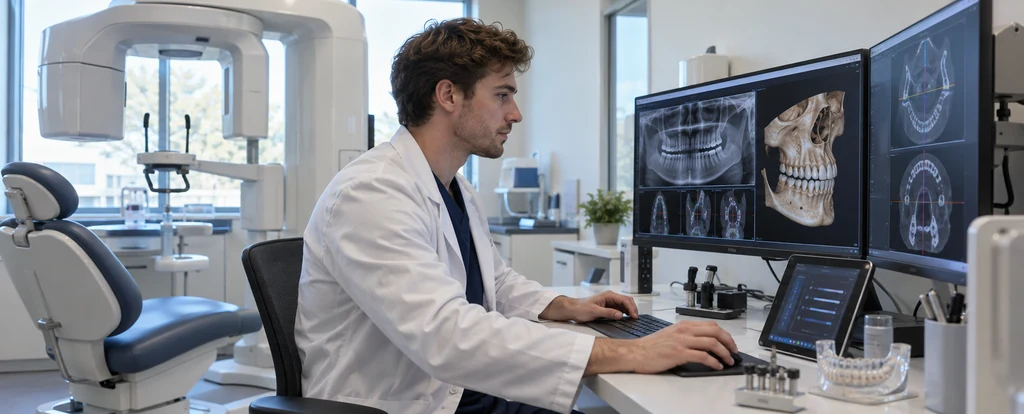
Dento-maxillofacial radiologists read and report on the cone beam CT and panoramic scans that guide dental diagnosis, implant planning and surgery of the jaws and face.
- Median salary*
- $135,200
4.1%vs last year, before tax
- People employed*
- 60
40.0%vs last year
- Projected growth
- +35.8%
to 2035
- AI exposure*
- Moderate
- automation risk
- Average hours*
- 40/wk
matches all-jobs average
- Shortage status
- In shortage
national
This is a small specialty within dentistry: dento-maxillofacial radiologists are dentists who have trained further in imaging of the mouth, jaws and face, and they are registered as specialists with the Dental Board of Australia through AHPRA. Unlike a general dentist or an oral surgeon, they rarely treat the patient in front of them, because their work is the scan, the report and the advice to the clinician who ordered it. Most work in specialist dental or radiology practices, with others in hospitals, universities and research.
How much do dento-maxillofacial radiologists earn?
The median full-time salary for a dento-maxillofacial radiologist is $135,200 per annum, before tax, up $28,300 since 2018.
How you are paid shapes the figure more than the work itself: salaried hospital and university posts sit in a set range, while private reporting is usually fee for service or a share of the practice's imaging income, so earnings track the volume of scans you read and whether the practice owns its own CBCT scanner. Part-time and sessional arrangements are common, and plenty of specialists hold a teaching or hospital post alongside private reporting.
What does a dento-maxillofacial radiologist do day to day?
The list below is what fills most weeks; the exact mix shifts with seniority and whatever stage the current work is at.
- Reading cone beam CT and panoramic scans of teeth, jaws and facial bones
- Writing the report for the dentist, orthodontist or oral surgeon who ordered the scan
- Advising referrers on which scan will answer their question and how to keep the radiation dose as low as possible
- Supervising the imaging itself, including patient positioning and the exposure settings the practice uses
- Keeping the machine calibrated and the image quality and radiation records in order
What skills do dento-maxillofacial radiologists need?
Employers look for clinical assessment and treatment, patient care and support, regulatory compliance, backed by Cone beam CT (CBCT) scanners fluency and strong attention to detail.
Specialist skills
- Clinical assessment and treatment
- Patient care and support
- Regulatory compliance
Software and tools
- Cone beam CT (CBCT) scanners
- DICOM viewing software
- Planmeca Romexis
- Carestream Dental imaging software
- 3D Slicer
General skills
- Attention to detail
- Written communication
- Problem solving
- Digital literacy
Is the job growing?
About 60 people work as dento-maxillofacial radiologists in Australia, and employment is projected to grow 35.8% over the decade to 2035. That's very strong growth. Few roles in Australia are expanding this fast, and it points to solid demand for years to come.
How do you become a dento-maxillofacial radiologist?
Here's the path most dento-maxillofacial radiologists take, step by step.
- 1Complete a dentistry degree
An accredited Bachelor of Dental Surgery or Doctor of Dental Medicine, usually five years, is the base qualification, and it is accredited by the Australian Dental Council.
- 2Register and work as a dentist
Registration with the Dental Board of Australia through AHPRA lets you practise, and a few years in general dentistry is where most future specialists get comfortable reading their own radiographs and deciding when to refer for a scan.
- 3Enter a specialist program in dento-maxillofacial radiology
This is usually a three-year Doctor of Clinical Dentistry combining coursework in radiology and radiation safety with supervised reporting and a research project. Only a small number of Australian universities run it, and entry generally follows some time in practice.
- 4Apply for specialist registration
Finishing the program lets you apply to the Dental Board of Australia for registration as a specialist, which is what allows you to practise and advertise as a dento-maxillofacial radiologist. Specialists trained overseas go through the board's assessment pathway instead.
- 5Build a referral base
Work arrives from dentists, orthodontists and oral surgeons who need a scan interpreted, so most specialists join an established imaging or specialist practice, or set up reporting that serves several clinics.
Ready to apply as a dento-maxillofacial radiologist?
Whether you're working toward becoming a dento-maxillofacial radiologist or already are one and want a hand with the next step (sharpening your resume for ATS screening, tightening your cover letter, or knowing what you'll actually be asked at interview), here are examples grounded in this specific role, not generic templates.
What jobs can a dento-maxillofacial radiologist move to?
We don't list lateral moves for dento-maxillofacial radiologists: leaving means a full new qualification rather than a career move, and the realistic routes in are covered under how to become one.
Who works as a dento-maxillofacial radiologist?
The typical dento-maxillofacial radiologist is 46 years old; 58% are men, 75% work full-time, and full-timers average 40 hours a week.
- 46
- Median age
- 42%
- Female share
- 75%
- Full-time
- +0h
- vs all-jobs avg
What's it like being a dento-maxillofacial radiologist?
The work is mostly reading: scans arrive from referring practices, and the day is a queue of images to interpret and reports to write, usually at a workstation with reporting software and a couple of screens. Because the specialty is small, many radiologists cover several practices and some report remotely, so the days are quiet and focused and much of the communication with clinicians happens in writing. It suits people who like pattern recognition and careful written work more than the hands-on side of dentistry.
What people like
- Your report changes what happens next. A line about bone height or the path of the inferior alveolar nerve can decide whether an implant goes ahead, so the work carries real consequences without you being the one holding the drill.
- One problem, studied deeply. You spend the day on imaging rather than moving between fillings, crowns and anxious patients, which suits anyone who would rather build expertise in a single area.
- Predictable hours. Reporting happens in normal clinic hours, because the after-hours emergencies of dentistry belong to the clinician treating the patient.
- Teaching and research fit alongside it. With a field this small, sessional teaching, examining and research posts form part of many careers and vary the week.
What people find hard
- Long days at a screen. Reading scan after scan is sedentary and hard on the eyes, neck and wrists, and the reporting queue does not clear itself.
- You describe, you do not resolve. Imaging shows what it shows, and referring clinicians sometimes want a certainty the scan cannot give them.
- A long road in. The specialty sits on top of a dental degree and years of further specialist training, so a lot of time passes before you are paid to report scans.
- Solitary work. You may be the only radiologist in the practice, and much of the day is spent alone with images and software rather than with colleagues or patients.
Based on our synthesis of professional-body surveys and public accounts of the role, not first-person verified reviews.
Which industries employ dento-maxillofacial radiologists?
Dental services employs the largest share of dento-maxillofacial radiologists, followed by Hospitals.
Top employing industries
- 1Dental services
- 2Hospitals
- 3Medical and diagnostic imaging services
- 4Tertiary education and research
- 5Specialist medical practices
Ranked by employment share; the source doesn't publish an exact percentage per industry.
| Bachelor degree | 52% | |
|---|---|---|
| Postgraduate | 26% | |
| Diploma / Advanced Diploma | 13% | |
| Other | 9% |
Will AI replace dento-maxillofacial radiologists?
This is a moderately exposed job, because spotting patterns in images is exactly what diagnostic AI does well and tools that flag caries, measure cephalometric landmarks and outline the mandibular canal are already built into dental imaging software. What holds the exposure down is that the report is a clinical opinion about a particular patient, and someone still has to decide what the finding means for the treatment plan. The parts of the role that involve dose decisions, protocol advice and quality assurance are largely untouched.
Share of typical working time by exposure level
- Reading scans and finding what mattersSoftware can highlight a possible carious lesion or trace a nerve canal through a CBCT volume, but deciding which of the flagged findings changes the patient's treatment is still your call.40%moderate
- Writing the reportSpeech recognition and drafting tools can turn your dictated findings into a structured report, though the impression and the recommendation the referring dentist acts on are yours.25%high
- Quality assurance and radiation recordsImaging software logs exposures and flags repeat scans, but calibration tests, equipment checks and the practice's radiation records are still paperwork someone has to schedule and complete.20%low
- Advising referrers on imaging protocols and doseWhich scan answers a particular clinical question, and how to keep the dose as low as reasonably achievable for that patient, depends on judgement and the guidelines the practice works to.15%low
Common questions about becoming a dento-maxillofacial radiologist
Straight answers to the questions people ask most.
How much does a dento-maxillofacial radiologist earn?
Full-time dento-maxillofacial radiologists earn a median of $135,200 per year before tax. Private reporting paid by scan volume tends to sit above salaried hospital and university posts, and part-time or sessional work is common in this specialty.
How do you become a dento-maxillofacial radiologist?
Start with an accredited dentistry degree and registration as a dentist, then apply for a specialist program in dento-maxillofacial radiology, usually a three-year Doctor of Clinical Dentistry that combines coursework, supervised reporting and a research project. Finishing it lets you apply to the Dental Board of Australia for specialist registration, which you need before you can practise or advertise as a specialist.
Are dento-maxillofacial radiologists in demand in Australia?
Dento-maxillofacial radiologists are currently in shortage nationally, and employment in the occupation is projected to grow 35.8% over the decade to 2035. The field is very small in absolute terms, so the change amounts to a handful of positions rather than a large job market, and openings tend to appear where practices add CBCT reporting capacity.
Will AI replace dento-maxillofacial radiologists?
Parts of the work are already automated: dental imaging software can flag a possible carious lesion, trace cephalometric landmarks and outline the mandibular canal on a CBCT volume, and drafting tools can turn dictated findings into a structured report. What the software does not do is weigh up the dose against the image quality, judge what a finding means for this patient's treatment, or stand behind the report a surgeon acts on. That keeps the exposure moderate rather than high.
Do dento-maxillofacial radiologists see patients?
Mostly not, since the patient is usually at the referring practice and the radiologist works from the images they send. Some specialists supervise the imaging in person, checking positioning and answering a referrer's question at the chair, and those in hospitals or universities also teach and run research.
Can a dentist become a dento-maxillofacial radiologist?
It is the usual route in, because a dentist already holds the degree, the registration and much of the clinical grounding the specialty builds on. Dentists earn $32,900 less than dento-maxillofacial radiologists, so the specialty generally pays better once you get there, though the training adds years. Some specialists later take on teaching or research, or run their own reporting practice serving several clinics, which is often where earnings grow.
Specialisation of
Related roles
Not sure this is you? Take the career quiz and get a ranked shortlist of roles that fit how you like to work.