Roof Plumber
Roof plumbers cut, fit and seal the metal roofing, gutters, downpipes and flashings that keep water out of a building.
- Median salary*
- $91,000
3.8%vs last year, before tax
- People employed
- 10,000
0.0%vs last year
- Projected growth*
- +4%
to 2035
- AI exposure*
- Low
- automation risk
- Average hours*
- 42/wk
+2h vs all jobs
- Shortage status*
- In shortage
national
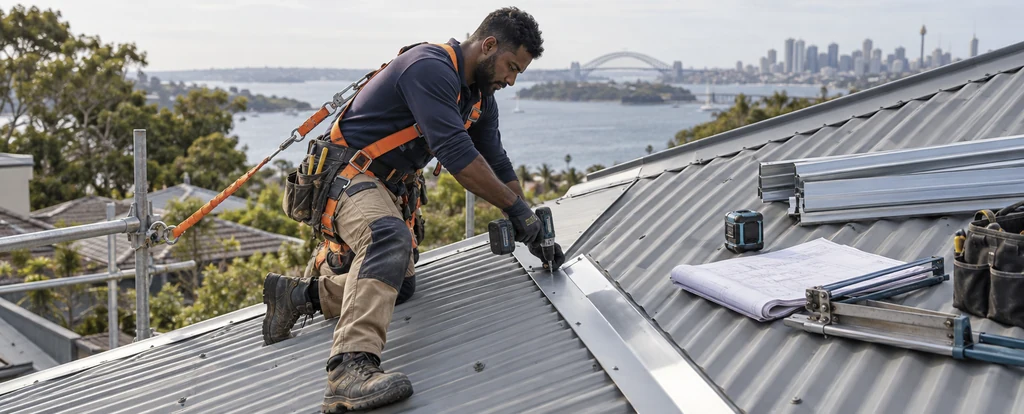
Roof plumbers fabricate and install metal roofing, wall cladding, gutters, downpipes and flashings on houses, commercial buildings and industrial sheds, working at height and usually in small crews. The trade is really about water: keeping it out of the building and moving it away once it lands on the roof. Roof plumbing is registered or licensed separately from general plumbing in most states and territories, so it is worth checking your local rules before you commit to a pathway.
How much do roof plumbers earn?
The median full-time salary for a roof plumber is $91,000 per annum, before tax, up $18,800 since 2018.
What a roof plumber takes home depends on the licence they hold and the sector they work in: commercial and industrial projects often sit under enterprise agreements with site allowances, while a small residential crew pays closer to the award. Running your own business changes the picture again, because you set the quote and carry the risk. Hourly work also means wet weather and lost days show up in the next pay.
What does a roof plumber do day to day?
The list below is what fills most weeks; the exact mix shifts with seniority and whatever stage the current work is at.
- Measuring, cutting and fixing metal roofing sheets, capping and flashings to suit the roof pitch and layout
- Installing gutters, downpipes and stormwater connections so rainwater is carried clear of the building
- Sealing joints, valleys and penetrations where pipes, vents and roof sheets meet
- Chasing down leaks and storm damage, often the day after wild weather, and repairing or replacing the sheets and flashings involved
- Reading plans and working out material quantities before any sheets go up
What skills do roof plumbers need?
Employers look for installation and maintenance, building codes and standards, reading plans and specifications, backed by Sheet metal folder fluency and strong communication.
Specialist skills
- Installation and maintenance
- Building codes and standards
- Reading plans and specifications
- Worksite safety management
- Hand and power tool work
- Fabrication and finishing
- Quoting and estimating
Software and tools
- Sheet metal folder
- Cordless drill
- Roof safety harness
- Laser level
- Roofing estimating software
General skills
Is the job growing?
About 10,000 people work as roof plumbers in Australia, and employment is projected to grow 4% over the decade to 2035. That's modest growth: demand is steady rather than booming.
How do you become a roof plumber?
Here's the path most roof plumbers take, step by step.
- 1Get a White Card
General construction induction training is required before you set foot on a building site in any state or territory, and it takes about a day.
- 2Start a roof plumbing apprenticeship
Most people enter through a four-year apprenticeship that combines paid work with training towards a Certificate III in Roof Plumbing (CPC32620) at TAFE or another registered training provider. You need an employer willing to take you on, and the qualification is the same whether you start at 16 or after another career.
- 3Finish the certificate and apply for registration
When the apprenticeship is done, apply to your state or territory plumbing regulator for registration or licensing as a roof plumber. The name of the licence and the requirements vary by state, and you generally need it to contract work on your own.
- 4Consider broadening the trade
Some roof plumbers go on to general plumbing, mechanical services or fire protection work. Each of those covers different systems and licensing, so it means further study rather than a straight swap.
Ready to apply as a roof plumber?
Whether you're working toward becoming a roof plumber or already are one and want a hand with the next step (sharpening your resume for ATS screening, tightening your cover letter, or knowing what you'll actually be asked at interview), here are examples grounded in this specific role, not generic templates.
What jobs can a roof plumber move to?
Moving into Plumber typically comes with the biggest pay rise, worth $12,500 a year more on average.
| Move to | Typical pay change | Overlap | Retraining |
|---|---|---|---|
| Plumber Roof plumbers can broaden their trade to general plumbing, using existing skills in pipework and fixtures with further training in sanitary and water systems. | +$12,500 | 65% | reskill |
| Mechanical Services Plumber Roof plumbers bring pipework and drainage skills to mechanical services plumbing, though further training is needed for heating, cooling and ventilation systems. | +$5,200 | 58% | reskill |
| Fire Protection Plumber Roof plumbers can apply their pipefitting and water management knowledge to fire protection systems with additional training in sprinklers and hydrants. | −$5,200 | 58% | reskill |
| Gasfitter Roof plumbers bring plumbing expertise to gasfitting, but must complete further training to handle gas appliances and pipework safely. | −$5,200 | 46% | reskill |
| Drainer Roof plumbers understand drainage and pipework, making a move into drainer work possible with additional study in underground drainage. | −$10,400 | 63% | reskill |
Moves are chosen from Jobs and Skills Australia's Data on Occupation Mobility, which follows income tax records between 2011-12 and 2020-21, together with entry requirements and skill overlap. A known move is one people were seen making in that data. Pay change compares median full-time pay for the two roles.
Who works as a roof plumber?
The typical roof plumber is 32 years old; 99% are men, 84% work full-time, and full-timers average 42 hours a week.
- 32
- Median age
- 1%
- Female share
- 84%
- Full-time
- +2h
- vs all-jobs avg
What's it like being a roof plumber?
Roof plumbing is outdoor work in small crews, with early starts, a run of jobs across the week and weather that regularly rearranges the plan. Much of the satisfaction is concrete: a roof that now sheds water properly, or a leak that finally makes sense once you trace it back to its source. It suits people who like working with their hands at height and are comfortable with heat, cold and travel between sites.
What people like
- You can see what you finished. By the end of the day there is a roof, a run of gutter or a repaired flashing that you can point to, which is not true of every trade.
- Every site is a bit different. A tiled cottage, a warehouse and an apartment block all ask for different pitches, materials and access arrangements, so the work rarely goes stale.
- Leaks are detective work. Water travels, so the stain on a ceiling is often nowhere near the entry point. Working out where it actually gets in takes patience and a bit of logic.
- Outdoors and on the move. Days are spent on roofs, in utes and on site rather than in one building, which appeals to people who dislike being still.
What people find hard
- Wet and windy days stop work. Roofs are dangerous when they are slick or the sheets catch the wind, so jobs get pushed back and hourly workers lose the hours.
- Falls are the main risk. Harnesses, anchor points, edge protection and ladder discipline are part of every day because a slip at height has serious consequences.
- It is hard on the body. Carrying sheets, kneeling in gutters and long days in the sun add up, and the trade is easier at 25 than at 55.
- Storm damage does not wait. After a big blow, the phone runs hot and repairs need to happen before water gets further into the building, which can mean weekend work and long days.
Based on our synthesis of professional-body surveys and public accounts of the role, not first-person verified reviews.
Which industries employ roof plumbers?
Construction employs the largest share of roof plumbers.
Top employing industries
- 1Construction
Ranked by employment share; the source doesn't publish an exact percentage per industry.
| Certificate III/IV | 34% | |
|---|---|---|
| Diploma / Advanced Diploma | 26% | |
| Bachelor degree | 20% | |
| Year 12 or below | 20% |
Will AI replace roof plumbers?
Roof plumbing is hands-on work at height, which keeps its exposure to AI and automation low. Measuring, cutting, lifting and fixing sheets happens on the roof itself, and estimating software has mainly changed how quotes and material lists are put together. Nothing on the market fits a flashing to an awkward pitch or works out where water is getting in.
Share of typical working time by exposure level
- Installing and fixing metal roofing, capping and flashingsSheets are cut on site to fit, then lifted, aligned and fixed by hand, and the fit changes with every roof.30%low
- Fitting gutters, downpipes and stormwater connectionsGutter runs have to fall the right way and join neatly around corners and outlets, which is done with a level and hand tools.30%low
- Finding leaks, repairing storm damage and working safely at heightTracing water back to its entry point and setting up harnesses and edge protection depends on judgement on the day.25%low
- Reading plans, quoting and working out materialsEstimating software and digital take-off tools now speed up measuring from plans, but someone still has to check the numbers against the actual roof.15%moderate
Common questions about becoming a roof plumber
Straight answers to the questions people ask most.
How much does a roof plumber earn in Australia?
The median is $91,000 per year before tax for full-time roof plumbers. Pay moves with your licence, the sector you work in and whether you run your own business, since commercial projects under enterprise agreements and own-account work generally pay better than award rates on small residential jobs.
How do you become a roof plumber?
The usual route is a four-year apprenticeship combining paid work with a Certificate III in Roof Plumbing (CPC32620) at TAFE or another registered provider. You need a White Card before starting on site, and once the apprenticeship is finished you apply to your state or territory plumbing regulator for registration or a licence.
Are roof plumbers in demand?
Roof plumbers are currently in shortage nationally, and employment is projected to grow 4% over the decade to 2035. Because the trade is licensed, employers are mostly looking for people who already hold registration or are partway through an apprenticeship, so finishing the qualification matters more than applying widely.
Will AI replace roof plumbers?
No, and the exposure is low. The work happens at height with sheet metal, sealant and hand tools, and no technology currently fits a gutter to a fascia or finds the entry point of a leak. Estimating packages have sped up quoting and material lists, which mainly takes paperwork off the kitchen table rather than work off the roof.
What can a roof plumber move into?
General plumbing is a common step, using the same pipework and drainage knowledge and paying $12,500 more, though you will need further training in sanitary and water systems. Mechanical services plumbing is another option at $5,200 more, with retraining in heating, cooling and ventilation. Many experienced roof plumbers stay in the trade and start their own business, which is often where earnings grow.
What is the difference between a roof plumber and a roofer?
A roofer lays the roof covering, such as tiles, shingles or sheeting, while a roof plumber handles the sheet metal work and the drainage that takes water away, including gutters, downpipes, flashings and rainwater tanks. The two trades overlap on metal roofs, which is why some roofers cross over through an apprenticeship.
Related roles
Not sure this is you? Take the career quiz and get a ranked shortlist of roles that fit how you like to work.