Driller's Offsider
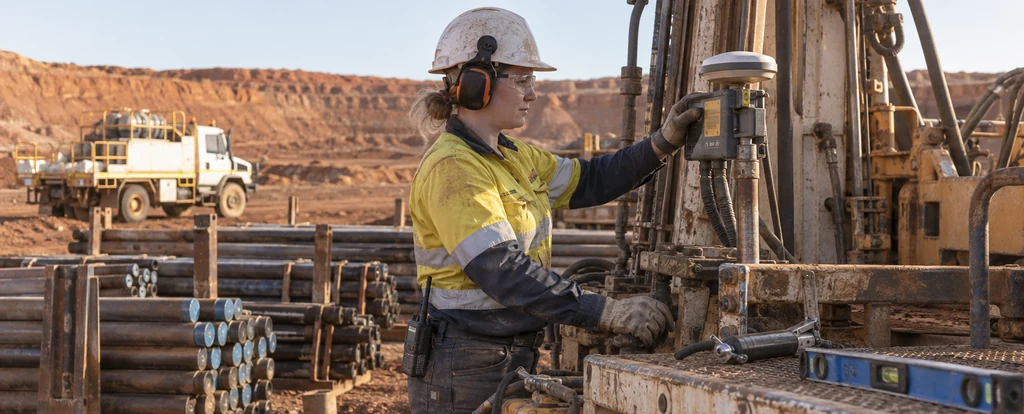
A driller's offsider works the floor of a drill rig, handling rods, mixing fluids and keeping the site safe so the driller can keep the hole advancing.
- Median salary*
- $96,200
4.5%vs last year, before tax
- People employed
- 2,300
0.0%vs last year
- Projected growth
- +1%
to 2035
- AI exposure*
- Low
- automation risk
- Average hours
- 70/wk
+30h vs all jobs
- Shortage status
- Not in shortage
national
Driller's offsiders work beside the driller on exploration, blast-hole and water-bore sites, often on fly-in fly-out rosters across mining and construction. The driller runs the controls and reads the ground; the offsider does the physical work around the rig that keeps each hole going down. Most people start with no drilling qualification and pick up their certificates on the job.
How much do driller's offsiders earn?
The median full-time salary for a driller's offsider is $96,200 per annum, before tax, up $20,400 since 2018.
Pay in this job tracks the roster and the site more than the job title. Remote mining and exploration swings, night shift and site allowances lift what a swing is worth, while local water-bore or civil work pays less for the same hours. Full-time offsiders average 70 hours a week, and that long week is part of why the annual figure sits where it does.
What does a driller's offsider do day to day?
The list below is what fills most weeks; the exact mix shifts with seniority and whatever stage the current work is at.
- Positioning and levelling the rig over each new hole using GPS marks and a spirit level
- Handling, stacking and greasing drill rods and casing as they come out of the hole
- Mixing and pumping drilling fluids and additives to the driller's instructions
- Rigging up gear at the start of a shift and servicing the rig between holes
- Keeping the site tidy and checking safety controls before work starts
What skills do driller's offsiders need?
Employers look for hand and power tool work, plant and equipment operation, worksite safety management, backed by MyPass fluency and strong physical stamina and dexterity.
Specialist skills
- Hand and power tool work
- Plant and equipment operation
- Worksite safety management
- Installation and maintenance
- Driving and transport operations
Software and tools
- MyPass
- Damstra
- Two-way radios
- Rig positioning GPS
- Hand and power tools
General skills
- Physical stamina and dexterity
- Safety and compliance awareness
Is the job growing?
About 2,300 people work as driller's offsiders in Australia, and employment is projected to grow 1% over the decade to 2035. That's modest growth: demand is steady rather than booming.
How do you become a driller's offsider?
Here's the path most driller's offsiders take, step by step.
- 1Get the basic safety cards
A construction induction card (White Card) and a first aid certificate are quick and inexpensive to obtain, and many drilling contractors ask for both before your first swing.
- 2Apply directly to drilling contractors
No qualification is needed to start as an offsider. Employers look for physical fitness, a manual driver's licence and a clean medical and drug and alcohol screen, which are standard for remote sites.
- 3Complete site inductions and verification
Before you can start on a mine or civil site you complete site inductions and upload your competencies to systems such as MyPass or Damstra, which contractors use to confirm who holds the right clearances.
- 4Add drilling certificates while you work
Most offsiders build up a Certificate II or III in drilling operations through a registered training organisation, often arranged or funded by their employer, and an HR or HC truck licence if they want to drive the support truck.
- 5Train up to driller
With a Certificate III and enough hours on the rig, an offsider can move into the driller's seat, which needs further training and certification in rig operation and carries more responsibility for the hole.
Ready to apply as a driller's offsider?
Whether you're working toward becoming a driller's offsider or already are one and want a hand with the next step (sharpening your resume for ATS screening, tightening your cover letter, or knowing what you'll actually be asked at interview), here are examples grounded in this specific role, not generic templates.
What jobs can a driller's offsider move to?
Moving into Crane Operator typically comes with the biggest pay rise, worth $81,200 a year more on average.
| Move to | Typical pay change | Overlap | Retraining |
|---|---|---|---|
| Crane Operator Rig hands used to heavy loads, lifting gear and site signals can retrain for crane operation, where their plant skills carry across.Known move | +$81,200 | 43% | reskill |
| Driller Offsiders already run rods, set up rigs and keep sites safe, so stepping up to driller builds directly on that work with further training.Known move | +$55,000 | 30% | reskill |
| Miner Offsiders wanting a broader production role on site carry their drilling, plant and safety experience into mining work with extra training.Known move | +$55,000 | 36% | reskill |
| Shot Firer Blast-hole drilling gives offsiders the site knowledge and safe handling habits needed to move into shot firing work.Known move | +$23,400 | 40% | reskill |
| Truck Driver Offsiders already move equipment and loads around site, so hauling work draws on the same driving and load handling habits.Known move | +$5,700 | 17% | reskill |
Moves are chosen from Jobs and Skills Australia's Data on Occupation Mobility, which follows income tax records between 2011-12 and 2020-21, together with entry requirements and skill overlap. A known move is one people were seen making in that data. Pay change compares median full-time pay for the two roles.
Who works as a driller's offsider?
The typical driller's offsider is 29 years old; 97% are men, 92% work full-time, and full-timers average 70 hours a week.
- 29
- Median age
- 3%
- Female share
- 92%
- Full-time
- +30h
- vs all-jobs avg
What's it like being a driller's offsider?
The job runs on the roster: long shifts on a remote site, then a block of days off at home. Offsiders spend those shifts on their feet, handling steel, mud and dust in heat or cold, and the work stops when the rig breaks down or the weather turns. It suits people who like physical work outdoors and accept camp life in exchange for whole weeks off.
What people like
- You can see the metres add up. Each shift ends with a hole finished and a depth on the board, so the work gives you a clear sense of what you got done.
- The crew is small. You work closely with one driller and a couple of other hands, so you know what everyone is doing and where you fit.
- Whole weeks off at a time. Rosters such as two weeks on and two weeks off give you time at home in blocks rather than a weekend here and there.
- Skills that carry to other site jobs. Plant handling, rigging and safe work habits transfer to mining, shot firing and crane work later on.
What people find hard
- Long swings away from home. Two to four weeks in camp means missing birthdays, sport and ordinary evenings at home.
- Heavy, repetitive handling. Rod changes are done by hand or with lifting gear, and the same sequence repeats hole after hole in heat, dust and mud.
- Waiting when the rig stops. Breakdowns, bad weather and gaps between holes leave you standing around on site with little to do.
- You start at the bottom of the crew. Cleaning, greasing and carrying sit with the offsider, and the more technical rig work goes to the driller until you train up.
Based on our synthesis of professional-body surveys and public accounts of the role, not first-person verified reviews.
Which industries employ driller's offsiders?
Mining employs the largest share of driller's offsiders, followed by Construction.
Top employing industries
- 1Mining
- 2Construction
Ranked by employment share; the source doesn't publish an exact percentage per industry.
| Year 12 or below | 45.3% | |
|---|---|---|
| Certificate III/IV | 42.3% | |
| Diploma / Advanced Diploma | 4.6% | |
| Bachelor degree | 3.1% | |
| Postgraduate | 0.9% |
Will AI replace driller's offsiders?
This job rates low for AI exposure, because the work is physical and happens around a rig in conditions that are hard to automate: moving steel, mixing fluids and setting up on uneven ground. Rig controls, rod handling and positioning have become more mechanised, and site systems now track competencies and drilling data digitally, but the hands-on tasks at the hole remain. What advances a career here is time on the rig and drilling certification, not software.
Share of typical working time by exposure level
- Handling and stacking drill rodsAutomated rod handlers are fitted to some rigs and take out part of the lifting, but on most blast-hole and water-bore rigs offsiders still break out, grease and stack rods by hand.35%low
- Rig servicing, housekeeping and safety checksPre-start checklists and maintenance logs can be completed on a tablet, but the greasing, inspection and site clean-up are hands-on work.30%low
- Mixing drilling fluids and additivesThe driller or a mud program may set the additive ratios, but the mixing, hoses and pump checks are done on the floor of the rig.20%low
- Setting up and levelling the rigGPS positioning and digital hole plans have taken some of the survey work out of setup, while shimming and levelling the rig on uneven ground still relies on the offsider.15%moderate
Common questions about becoming a driller's offsider
Straight answers to the questions people ask most.
How much does a driller's offsider earn?
A driller's offsider earns a median of $96,200 per year before tax, based on full-time workers. The figure moves with the roster and the site: remote swings, night shift and site allowances lift a swing's earnings, while local water-bore or civil work pays less for the same hours. Because it is a median, experienced offsiders on remote mining rosters sit above it and new starters below.
How do you become a driller's offsider?
You can start with no drilling qualification at all, because contractors hire on fitness, a manual licence and a clean medical, then train you on the rig. A White Card and first aid certificate strengthen an application, and most people add a Certificate II or III in drilling operations once they are working. Site inductions and verification through systems such as MyPass are completed before your first swing.
Are driller's offsiders in demand?
Driller's offsiders are currently not in shortage, and employment in the occupation is projected to grow 1% over the decade to 2035. Work follows mining and construction activity, so hiring rises and falls with the projects running in your state. It is a small occupation, and keeping your inductions and medical current makes it easier to pick up a swing when contractors are recruiting.
Will AI or automation replace driller's offsiders?
Exposure to AI is low, because most of the job is physically setting up, handling and servicing equipment in rough conditions. Rigs increasingly use automated rod handlers, GPS positioning and remote monitoring, which remove some lifting and record keeping from the work, but someone still has to be at the hole to make the change.
What can a driller's offsider move on to?
The most direct move is up to driller, which builds on the same work and pays $55,000 more. Others move into mining, shot firing or crane operation, where their plant handling and site safety habits carry across. Further along, experienced drillers sometimes buy their own rig and contract it back to mining and exploration companies, which is often where earnings grow.
Is the job hard physically?
It is a physical job: rod handling, greasing and hose work are done on your feet in heat, dust and mud, usually across 12-hour shifts. Fitness helps you get hired, and the work itself builds the stamina for a swing. The heavier lifting is shared with lifting gear where the rig has it.
Related roles
Not sure this is you? Take the career quiz and get a ranked shortlist of roles that fit how you like to work.