Bulk Materials Handling Operator
Bulk materials handling operators run the conveyors, stackers and load out systems that shift coal, ore and grain, keeping mine, port and processing supply chains moving.
- Median salary*
- $106,100
4.0%vs last year, before tax
- People employed
- 2,800
0.0%vs last year
- Projected growth
- +6.9%
to 2035
- AI exposure*
- Moderate
- automation risk
- Average hours
- 51/wk
+11h vs all jobs
- Shortage status
- Not in shortage
national
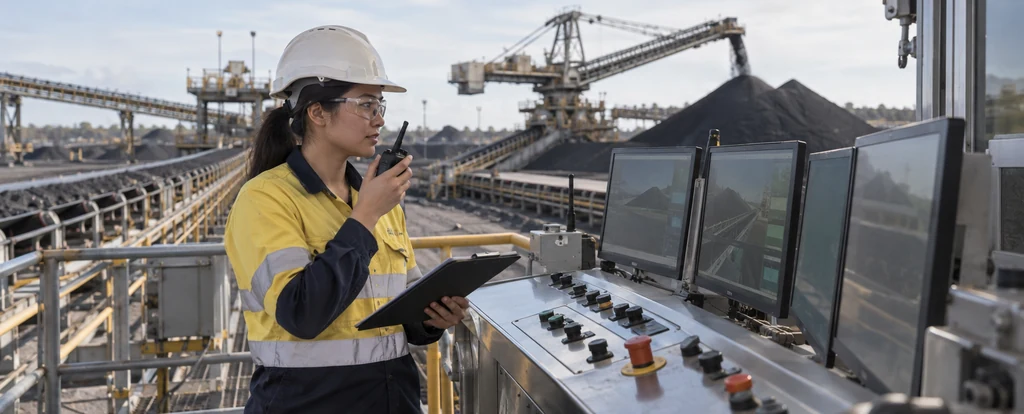
Bulk materials handling operators control the fixed plant that moves large volumes of loose material: conveyors, stackers, reclaimers, reclaim tunnels and shiploaders. They watch flow rates, manage stockpiles, inspect equipment and isolate plant for maintenance, usually on a shift roster at a mine, port or processing plant. The role is often confused with mobile plant operating, but the machinery stays in one place and the work sits closer to process control than to driving.
How much do bulk materials handling operators earn?
The median full-time salary for a bulk materials handling operator is $106,100 per annum, before tax, up $22,100 since 2018.
Pay here is set mainly by the enterprise agreement covering the site, so a mine, a port terminal and a grain handling facility can pay quite different rates for similar work. Shift loadings, night work and roster patterns such as even time or fly in fly out lift total earnings, and extra plant qualifications generally move you to a higher classification.
What does a bulk materials handling operator do day to day?
The list below is what fills most weeks; the exact mix shifts with seniority and whatever stage the current work is at.
- Running conveyors, stackers, reclaimers and shiploaders to move coal, ore or grain through the plant
- Watching flow rates and stockpile levels on the control screens and adjusting feed to keep the belt loaded evenly
- Walking the belts and transfer points to check rollers, chutes and skirting for wear, spillage and blockages
- Recording tonnage, moisture and quality figures and handing over the shift to the incoming operator
- Isolating equipment and issuing permits so maintenance crews can work on the plant safely
What skills do bulk materials handling operators need?
Employers look for plant and equipment operation, worksite safety management, operations management, backed by SCADA control systems fluency and strong safety and compliance awareness.
Specialist skills
- Plant and equipment operation
- Worksite safety management
- Operations management
- Inventory management
- Supply chain planning
Software and tools
- SCADA control systems
- PLC and HMI control panels
- Weighbridge management software
- SAP materials management
- Two way radio dispatch systems
General skills
- Safety and compliance awareness
- Physical stamina and dexterity
Is the job growing?
About 2,800 people work as bulk materials handling operators in Australia, and employment is projected to grow 6.9% over the decade to 2035. That's modest growth: demand is steady rather than booming.
How do you become a bulk materials handling operator?
Here's the path most bulk materials handling operators take, step by step.
- 1Finish school or a pre-vocational course
A degree is not the usual way in. Around 58% of people in the job hold Year 12 or below as their highest qualification, and a Certificate II in Surface Extraction Operations or a similar pre-employment course can help you get a first start.
- 2Get the licences and site clearances
You will need a White Card for construction sites and a current driver's licence, plus a high risk work licence for some plant such as non-slewing mobile cranes. Sites also put you through inductions for working at heights, confined spaces and hot work.
- 3Start in a trainee or entry level role
Many operators begin as a production trainee or plant assistant and complete a Certificate III in Resource Processing (RII30420) on the job. Training is paid and the certificate usually takes 12 to 24 months while you work a roster.
- 4Build competence across the plant
Learning the control room, the weighbridge and the shiploader or train loader is what makes an operator useful across a whole shift. It is also the usual route into leading hand and shift supervisor roles.
Ready to apply as a bulk materials handling operator?
Whether you're working toward becoming a bulk materials handling operator or already are one and want a hand with the next step (sharpening your resume for ATS screening, tightening your cover letter, or knowing what you'll actually be asked at interview), here are examples grounded in this specific role, not generic templates.
What jobs can a bulk materials handling operator move to?
Moving into Refinery Operator typically comes with the biggest pay rise, worth $77,600 a year more on average.
| Move to | Typical pay change | Overlap | Retraining |
|---|---|---|---|
| Refinery Operator Refinery operators require process plant skills, and bulk handling operators can move with additional process training.Known move | +$77,600 | 21% | reskill |
| Miner Bulk handling experience transfers to mine operations, with further site-specific training for underground or open cut work.Known move | +$45,100 | 21% | reskill |
| Earthmoving Plant Operator Bulk materials handling operators bring conveyor and plant control experience to earthmoving roles, with additional tickets required.Known move | −$3,100 | 36% | reskill |
| Truck Driver Bulk handling operators move into truck driving, using load out and dispatch knowledge, with licence upgrades.Known move | −$4,200 | 17% | reskill |
| Machine Operator Bulk materials handling operators bring fixed plant and conveyor skills to machine operator roles, needing some retraining.Known move | −$25,300 | 28% | reskill |
Moves are chosen from Jobs and Skills Australia's Data on Occupation Mobility, which follows income tax records between 2011-12 and 2020-21, together with entry requirements and skill overlap. A known move is one people were seen making in that data. Pay change compares median full-time pay for the two roles.
Who works as a bulk materials handling operator?
The typical bulk materials handling operator is 44 years old; 88% are men, 88% work full-time, and full-timers average 51 hours a week.
- 44
- Median age
- 12%
- Female share
- 88%
- Full-time
- +11h
- vs all-jobs avg
What's it like being a bulk materials handling operator?
The work has a clear rhythm: a shift starts with handover, plant checks and a look at the stockpile and shipping schedule, then hours of watching flow rates and responding when something changes. The pressure comes from keeping the belt moving, because a blocked chute or a stopped shiploader is expensive for a site, and from doing that safely in dust, heat and noise. It tends to suit people who are comfortable with long shifts, steady attention and machinery rather than a fast-changing day.
What people like
- Plant that answers to what you do. Flow rates, belt loading and stockpile levels respond to the adjustments you make, so a shift that runs to plan shows up in the tonnage figures.
- A clear start and finish. Handover, checks, then the shift. The work is defined, and by the end you usually know whether it went well.
- Small crews and direct lines. You deal mostly with the control room, maintenance and your supervisor, so decisions do not travel far before something happens.
- Variety in what you run. Operators who train across load out, weighbridge and control room rarely spend a whole shift on the one task.
What people find hard
- Long shifts on a rotating roster. Twelve-hour days and nights are common, often on fly in fly out arrangements, and the working week runs longer than in most industries.
- Dust, heat and noise on the walk-down. Checking belts and chutes means being out on the plant in whatever the weather is doing, not watching it from a control room.
- Blockages that stop the shift. A choked chute or a slipped belt halts production, and clearing it can be dirty, physical work under time pressure.
- Weather and shipping schedules you do not control. Wet weather slows load out and port queues build, so a shift can swing between waiting and rushing.
Based on our synthesis of professional-body surveys and public accounts of the role, not first-person verified reviews.
Which industries employ bulk materials handling operators?
Transport, Postal and Warehousing employs the largest share of bulk materials handling operators, followed by Mining.
Top employing industries
- 1Transport, Postal and Warehousing
- 2Mining
- 3Wholesale Trade
Ranked by employment share; the source doesn't publish an exact percentage per industry.
| Year 12 or below | 57.7% | |
|---|---|---|
| Certificate III/IV | 29% | |
| Diploma / Advanced Diploma | 4.2% | |
| Bachelor degree | 3.8% | |
| Postgraduate | 1% |
Will AI replace bulk materials handling operators?
Bulk materials handling sits in the middle. Much of the plant is already automated, with conveyor sequencing, weighbridges and stockpile tracking run from a control room, and that reach keeps growing. What holds the exposure at moderate is the physical side of the job: walking belts, clearing chutes and isolating equipment before maintenance, which needs someone on site with the right licences.
Share of typical working time by exposure level
- Operating conveyors, stackers and shiploadersStart sequences and interlocks are largely automated, yet the operator watches for belt tracking, spillage and loading rates that the system cannot correct on its own.30%moderate
- Monitoring the plant from the control roomSCADA screens and alarms pick up flow changes and belt faults quickly, but the operator still decides whether to slow the feed, stop the belt or send someone out to look.25%high
- Inspecting belts, chutes and rollersA walk-down still needs a person to hear a failing roller, spot a worn skirt rubber or feel heat in a gearbox.25%low
- Isolating plant and issuing permitsTagging, locking and testing for dead are done by hand and witnessed, because a conveyor that starts during maintenance is a fatal risk.20%low
Common questions about becoming a bulk materials handling operator
Straight answers to the questions people ask most.
How much do bulk materials handling operators earn?
Full-time bulk materials handling operators earn a median of $106,100 per year before tax. Site agreements, shift loadings and roster patterns move that figure up or down, so treat it as a guide rather than a fixed rate.
How do you become a bulk materials handling operator?
Most people enter without a degree, usually through a paid traineeship or entry level role on a mine, port or processing site after finishing school. From there you add a White Card, a driver's licence and site inductions, and often a Certificate III in Resource Processing (RII30420) while you work.
Are bulk materials handling operators in demand?
Bulk materials handling operators are currently not in shortage, and employment in the role is projected to grow 6.9% over the decade to 2035. Openings tend to come from turnover on existing sites and from new port and mine projects, so plant experience and the right licences matter more than the timing of your application.
Will AI and automation replace bulk materials handling operators?
Automation already runs much of the plant and the exposure here is real but partial. Conveyor start sequences, weighing and stockpile tracking are handled by control systems, and SCADA alarms flag problems before an operator sees them, but walk-down inspections, clearing blockages and isolating plant for maintenance still need someone on site.
What can bulk materials handling operators move into?
Bulk handling experience transfers to other fixed plant and heavy machinery work. Earthmoving plant operator is a close match because plant control and conveyor skills carry over, with pay around $3,100 less. Moving into mining as a miner pays around $45,100 more and needs site specific training for underground or open cut work.
What hours do bulk materials handling operators work?
Full-time operators average 51 hours a week, and 88% of people in the role work full time. Rosters are usually built around 12-hour shifts on a rotating days and nights pattern, which means longer weeks but blocks of days off.
Related roles
- Earthmoving Plant Operator
- Miner
- Machine Operator
- Truck Driver
- Refinery Operator
- Earthmoving Plant Operator
Not sure this is you? Take the career quiz and get a ranked shortlist of roles that fit how you like to work.