Perfusionist
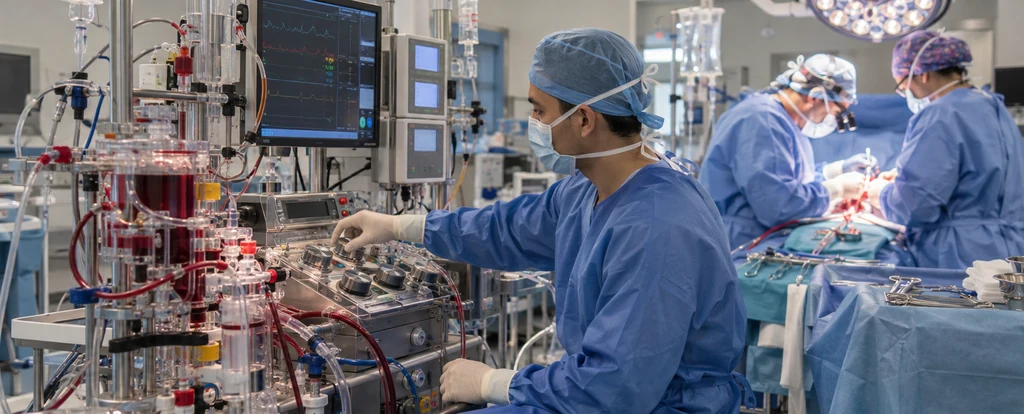
Perfusionists run the heart-lung machine, keeping a patient's blood circulating and oxygenated while the heart is stopped for surgery.
- Median salary*
- $137,800
4.5%vs last year, before tax
- People employed*
- 450
12.5%vs last year
- Projected growth*
- +7%
to 2035
- AI exposure*
- Low
- automation risk
- Average hours*
- 40/wk
matches all-jobs average
- Shortage status*
- In shortage
national
Perfusionists work in the operating theatre alongside cardiac surgeons and anaesthetists, running the bypass circuit that takes over a patient's circulation during heart and lung surgery. They also manage mechanical circulatory support such as ECMO and ventricular assist devices for patients whose heart or lungs need help outside theatre. Most work in public and private hospitals with cardiac surgery programs, and the occupation is small, at about 450 people nationally, so the work is concentrated in the units that run these cases.
How much do perfusionists earn?
The median full-time salary for a perfusionist is $137,800 per annum, before tax, up $29,300 since 2018.
Public hospital perfusionists are usually paid under state health enterprise agreements, so pay moves with your classification and years on bypass rather than with caseload. On-call and after-hours work adds loadings, and private hospitals and transplant units may set their own arrangements. Certification and experience with ECMO or ventricular assist devices also affect what you are paid, particularly in senior and specialist posts.
What does a perfusionist do day to day?
The list below is what fills most weeks; the exact mix shifts with seniority and whatever stage the current work is at.
- Running the heart-lung machine through a bypass case, adjusting flow and pressure as the surgeon works
- Setting up, priming and testing the sterile bypass circuit before the patient is connected
- Monitoring blood gases, electrolytes and coagulation throughout the bypass period
- Managing anticoagulation and delivering cardioplegia to stop and protect the heart
- Providing mechanical circulatory support such as ECMO and responding when a circuit alarms or fails
What skills do perfusionists need?
Employers look for clinical assessment and treatment, plant and equipment operation, emergency response, backed by Terumo System 1 fluency and strong attention to detail.
Specialist skills
- Clinical assessment and treatment
- Plant and equipment operation
- Emergency response
- Infection control and hygiene
- Laboratory analysis
Software and tools
- Terumo System 1
- LivaNova S5
- Haemonetics Cell Saver
- Getinge Cardiohelp
- ROTEM
General skills
- Attention to detail
- Problem solving
- Written communication
Is the job growing?
About 450 people work as perfusionists in Australia, and employment is projected to grow 7% over the decade to 2035. That's modest growth: demand is steady rather than booming.
How do you become a perfusionist?
Here's the path most perfusionists take, step by step.
- 1Complete a bachelor degree in health or science
Nursing, medical science, biomedical science and laboratory science all give you the anatomy, physiology and pharmacology that perfusion training builds on. It takes three to four years, and hospital placements are where most people first watch a bypass case.
- 2Work in a relevant clinical role
Registered nurses in intensive care or perioperative settings, medical laboratory scientists and neurophysiology scientists all bring the patient monitoring and blood science background that training programs look for. A few years in one of these roles also lets you test whether theatre work suits you.
- 3Complete an accredited postgraduate perfusion program
Training is a graduate diploma or master's delivered with a hospital cardiac surgical unit, accredited by the Australian and New Zealand College of Perfusionists. You study bypass physiology and circuit management while logging supervised cases under a certified perfusionist, and places depend on the cardiac units able to supervise them.
- 4Certify with the college and keep your case log current
Perfusionists are not registered with AHPRA, so certification comes through the Australian and New Zealand College of Perfusionists, which reviews your clinical experience. Continuing education and recertification apply throughout your career, and most working perfusionists add ECMO or ventricular assist device training.
Ready to apply as a perfusionist?
Whether you're working toward becoming a perfusionist or already are one and want a hand with the next step (sharpening your resume for ATS screening, tightening your cover letter, or knowing what you'll actually be asked at interview), here are examples grounded in this specific role, not generic templates.
What jobs can a perfusionist move to?
We don't list lateral moves for perfusionists: leaving means a full new qualification rather than a career move, and the realistic routes in are covered under how to become one.
Who works as a perfusionist?
The typical perfusionist is 42 years old; 58% are men, 86% work full-time, and full-timers average 40 hours a week.
- 42
- Median age
- 42%
- Female share
- 86%
- Full-time
- +0h
- vs all-jobs avg
What's it like being a perfusionist?
Perfusion is a theatre-based job with a clear script: you set up before the case, run the circuit for its length, and hand the patient back to the team once the heart takes over. The rhythm comes from the operating list, with on-call layered on top for transplants and emergency cases, so it suits someone who likes precision, a defined procedure and a small team. Most people arrive at it after a first career in nursing or laboratory science rather than straight from university.
What people like
- You see the result of your work within the hour. When the heart restarts and comes off bypass, the circuit you managed has done its job, and the surgeon can close.
- A small profession where you know your colleagues. There are only a handful of cardiac units in the country, so you work with the same surgeons, anaesthetists and nurses case after case, and reputation travels.
- The cases vary from routine to urgent. A planned coronary bypass on Monday, a dissection or a transplant on Thursday, and different equipment and priorities for each.
- The technology is yours to master. You learn one machine, one circuit and one set of monitors in real depth, and you are the person in the room who understands them best.
What people find hard
- On-call is part of the job. Transplants and emergency surgery arrive at any hour, so nights, weekends and interrupted sleep are on the roster.
- Long cases demand sustained concentration. You stand at the console for hours with your attention fixed on flows, pressures and the surgical field, and the finish time is rarely predictable.
- The stakes are on the surface. A circuit problem or a wrong call on coagulation is immediately dangerous for a patient who cannot survive without the machine, and that weight does not lift.
- The employer list is short. Cardiac surgery runs in a limited number of hospitals, so there are fewer places to move between than in nursing or laboratory work.
Based on our synthesis of professional-body surveys and public accounts of the role, not first-person verified reviews.
Which industries employ perfusionists?
Public hospitals employs the largest share of perfusionists, followed by Private hospitals.
Top employing industries
- 1Public hospitals
- 2Private hospitals
- 3Specialist medical services
- 4Tertiary education and research
Ranked by employment share; the source doesn't publish an exact percentage per industry.
| Bachelor degree | 52% | |
|---|---|---|
| Postgraduate | 26% | |
| Diploma / Advanced Diploma | 13% | |
| Other | 9% |
Will AI replace perfusionists?
Perfusionist work has low exposure to AI and automation. Bypass machines log data, hold a set flow and raise alarms, and blood gas and coagulation analysers return results within minutes, but the perfusionist still decides what those results mean for this patient and adjusts the circuit in real time alongside the surgeon. The work happens on someone who depends on that circuit minute by minute, which keeps the technology in a supporting role.
Share of typical working time by exposure level
- Running cardiopulmonary bypassA modern heart-lung machine will hold a set flow and flag pressure or reservoir changes, but the perfusionist reads the venous return, the surgical field and the surgeon's next move and adjusts the circuit by hand.35%low
- Setting up and priming bypass circuitsChecklists and machine setup screens standardise much of the preparation, though the circuit still has to be assembled, primed and pressure-tested by hand before the patient is connected.30%moderate
- Monitoring blood gases, coagulation and haemodynamicsROTEM and blood gas analysers return results quickly, yet interpreting them and choosing between blood products, fluid and drugs during a bleeding case is the perfusionist's call.25%low
- Writing up the perfusion recordMachine data logging and voice-to-text can capture flows, pressures and timings automatically, which removes much of the transcription from the case record.10%high
Common questions about becoming a perfusionist
Straight answers to the questions people ask most.
How much do perfusionists earn in Australia?
Perfusionists earn a median of $137,800 per year before tax. That is a median, so experienced perfusionists in senior or ECMO roles sit above it, and pay is set mainly by state health enterprise agreements rather than by individual negotiation.
How do you become a perfusionist?
You start with a health or science degree, spend time in a clinical role such as intensive care nursing or medical laboratory science, then complete an accredited postgraduate perfusion program. Training is hospital-based and takes a further two years or so of coursework and supervised cases before you can work independently.
Are perfusionists in demand in Australia?
Perfusionists are currently in shortage nationally, and employment is projected to grow 7% over the decade to 2035. The practical read is that trained perfusionists are hard to find, so the bottleneck is getting through an accredited training program rather than finding work at the end of it.
Will AI replace perfusionists?
No, and the exposure here is low. Heart-lung machines now log data, hold set flows and raise safety alarms, and analysers return blood gas and coagulation results in minutes, but deciding what those numbers mean for this patient, and adjusting the circuit in response, stays with the perfusionist.
What jobs can perfusionists move into?
Most perfusionists arrive from another health role rather than moving out of one. Medical laboratory scientists, neurophysiology scientists and registered nurses all cross over after further study, and the pay step reflects the extra responsibility: a move from medical laboratory science is worth $30,900 more, and from nursing $23,800 more.
Do perfusionists work long hours?
Most work full time, averaging 40 hours a week, but theatre lists start early and cases can run well past their scheduled finish. On-call covers transplants, emergencies and night cases, so expect nights and weekends on a roster.
Related roles
- Medical Laboratory Scientist
- Neurophysiology Scientist
- Registered Nurse
- Cardiac Technician
- Paramedic
- Respiratory and Sleep Technician
Not sure this is you? Take the career quiz and get a ranked shortlist of roles that fit how you like to work.