Piano Tuner
Piano tuners adjust the strings and mechanical parts of acoustic pianos so the instrument sounds in tune and responds evenly for the people who play it.
- Median salary*
- $59,800
4.4%vs last year, before tax
- People employed*
- 600
0.0%vs last year
- Projected growth*
- −2%
to 2035
- AI exposure*
- Moderate
- automation risk
- Average hours*
- 38/wk
−2h vs all jobs
- Shortage status*
- Not in shortage
national
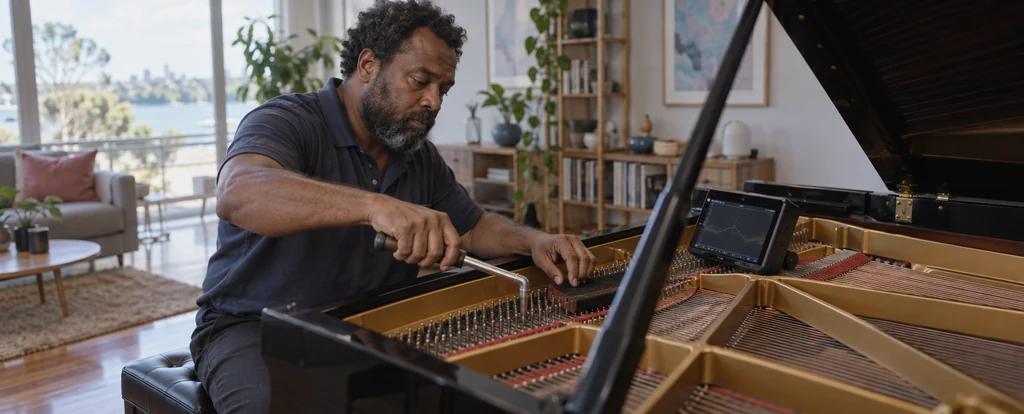
Piano tuners work on acoustic pianos, tuning strings and adjusting action parts so the instrument sounds right and feels even under the fingers. Most are self-employed, visiting homes, schools, churches, halls and retail showrooms on a regular servicing round rather than working from a fixed workshop. The job is often confused with restoration, but tuning and regulation fill most of the week, while full rebuilding is a specialist trade of its own.
How much do piano tuners earn?
The median full-time salary for a piano tuner is $59,800 per annum, before tax, up $12,600 since 2018.
Most tuners charge a fee per instrument, so weekly income depends on how many pianos they can service and how far they travel between them. Concert, recording and teaching studio work usually pays more per booking, while a round of regular domestic clients provides the steady base underneath it. Tuners employed directly by a retailer, school or university are usually on a salary or day rate instead.
What does a piano tuner do day to day?
The list below is what fills most weeks; the exact mix shifts with seniority and whatever stage the current work is at.
- Tuning each string to pitch with a tuning lever, working against an electronic device or by ear
- Setting the tuning pins firmly so the instrument holds pitch once the visit is finished
- Regulating the action and voicing hammers to even out touch and tone across the keyboard
- Replacing broken strings and repairing sticking keys, pedals and damaged action parts
- Advising owners on humidity, placement and servicing intervals, and booking the next visit
What skills do piano tuners need?
Employers look for craft and handmade production, selling and negotiation, operations management, backed by TuneLab fluency and strong attention to detail.
Specialist skills
- Craft and handmade production
- Selling and negotiation
- Operations management
Software and tools
- TuneLab
- Verituner
- Reyburn CyberTuner
- PianoMeter
- tuning lever
General skills
- Attention to detail
- Customer service
- Problem solving
- Time and deadline management
Is the job growing?
About 600 people work as piano tuners in Australia, and employment is projected to decline 2% over the decade to 2035. That's a real decline, worth weighing carefully before training into the role.
How do you become a piano tuner?
Here's the path most piano tuners take, step by step.
- 1Learn an instrument and train your ear
Playing piano, some music theory and ear training give you the groundwork, because tuning depends on hearing beats between strings and judging when a unison is clean. Electronic tuning devices support that aural work rather than replacing it.
- 2Take on an apprenticeship or traineeship with a working tuner
This is how most people enter the trade, learning on real instruments over roughly two to three years with an experienced tuner checking the work. It is usually paid, at least in part, and it is where pin setting and stability are learned properly.
- 3Complete a recognised piano technology course
Certificate and diploma level courses cover tuning, regulation, voicing and repair, and a small number of providers offer them, some by distance. The most common qualification among working piano tuners is Certificate III/IV, held by about 34% of them, though the trade itself is learned largely on the job.
- 4Join a professional association and sit its technical examinations
The Australasian Piano Tuners and Technicians Association offers membership and technical examinations for working tuners, along with conferences and ongoing training. Membership gives clients a way to judge competence and gives you a referral network.
- 5Build a servicing round
No licence is required to tune pianos in Australia, so work comes through reputation, referrals and repeat visits rather than registration. Many tuners start part time alongside another job while the client list grows.
Ready to apply as a piano tuner?
Whether you're working toward becoming a piano tuner or already are one and want a hand with the next step (sharpening your resume for ATS screening, tightening your cover letter, or knowing what you'll actually be asked at interview), here are examples grounded in this specific role, not generic templates.
What jobs can a piano tuner move to?
Moving into Musical Instrument Maker typically comes with the biggest pay rise, worth $5,200 a year more on average.
| Move to | Typical pay change | Overlap | Retraining |
|---|---|---|---|
| Musical Instrument Maker Piano tuners bring fine woodwork, acoustic judgement and repair skills to instrument making, though they need broader making and finishing training. | +$5,200 | 21% | reskill |
Moves are chosen from Jobs and Skills Australia's Data on Occupation Mobility, which follows income tax records between 2011-12 and 2020-21, together with entry requirements and skill overlap. A known move is one people were seen making in that data. Pay change compares median full-time pay for the two roles.
Who works as a piano tuner?
The typical piano tuner is 48 years old; 85% are men, 60% work full-time, and full-timers average 38 hours a week.
- 48
- Median age
- 15%
- Female share
- 60%
- Full-time
- −2h
- vs all-jobs avg
What's it like being a piano tuner?
The job runs on a servicing round: most tuners visit a set of regular clients every six or twelve months, fitting concert, school and showroom bookings around them. The pace is calm and self-directed, but earnings depend on the hours you can bill, and a piano that has drifted badly takes far longer than a routine tuning. It suits someone who likes working alone, listens closely, and is content to do the same careful job over and over.
What people like
- The result is audible straight away. You hear the instrument come into tune as you work, and the client notices within the first few notes.
- You set your own hours. Most tuners run their own round, deciding how many pianos to book in a day and which suburbs or towns to cover.
- Return visits build familiar clients. Servicing the same instruments every six or twelve months means you know both the people and their pianos, which is what steady work depends on.
- No two pianos behave the same. Grands, uprights, school pianos and concert instruments each have their own habits of tuning stability, action and tone.
What people find hard
- Travel takes a large bite out of the day. Driving between appointments, parking and unloading tools can take as long as the tuning itself, and a country round adds long distances.
- Most of the work is routine maintenance. A servicing round is largely tuning, regulation and small repairs, so the craft is repetitive and full restoration is a different trade.
- Income follows your bookings. As a contractor you carry cancellations, unpaid travel time and no paid leave, so a financial buffer makes the quiet stretches easier.
- Some pianos are awkward, physical work. Old uprights in dusty rooms, tight corners and seized tuning pins mean crouching, lifting and repetitive hand work.
Based on our synthesis of professional-body surveys and public accounts of the role, not first-person verified reviews.
Which industries employ piano tuners?
Repair and maintenance employs the largest share of piano tuners, followed by Education and training.
Top employing industries
- 1Repair and maintenance
- 2Education and training
- 3Performing arts
- 4Retail trade
- 5Accommodation and food services
Ranked by employment share; the source doesn't publish an exact percentage per industry.
| Certificate III/IV | 34% | |
|---|---|---|
| Diploma / Advanced Diploma | 26% | |
| Bachelor degree | 20% | |
| Year 12 or below | 20% |
Will AI replace piano tuners?
Piano tuning sits in the middle. Electronic tuning devices already measure pitch and work out a stretch tuning for each instrument, which removes much of the arithmetic of aural tuning, and scheduling and invoicing are increasingly handled by software. Setting the pin so a string holds, voicing hammers and regulating an action remain physical work guided by judgement, and the client relationship still belongs to the tuner.
Share of typical working time by exposure level
- Tuning each string to pitchApps such as TuneLab and Verituner listen to the string and calculate the tuning, so the tuner sets the pin and checks the reading rather than counting beats.30%moderate
- Refining unisons and tuning stability by earSetting a pin so the string holds against the pull of its neighbours is a feel built over years, and no device can tell you whether a piano will drift again within weeks.25%low
- Regulation, voicing and repairsNeedling a hammer, adjusting let-off or fitting a new bass string is bench work with tools and judgement that automation does not reach.25%low
- Booking clients, invoicing and service recordsScheduling software and automatic reminders handle much of the administration, which frees time for more pianos but also makes it easier for a client to rebook elsewhere.20%moderate
Moves least exposed to AI
These career moves from piano tuner work are rated low for AI exposure:
- Musical Instrument Maker
Some skill overlap (21%), reskill to get there, and a low automation-risk profile.
Common questions about becoming a piano tuner
Straight answers to the questions people ask most.
How much does a piano tuner earn in Australia?
Full-time piano tuners earn a median of $59,800 per year before tax. Actual pay depends heavily on how many pianos you service each week, how far you travel between them, and whether you are self-employed or on a salary from a retailer, school or university.
How do you become a piano tuner?
Most people learn through an apprenticeship or traineeship with an experienced tuner, which runs for roughly two to three years and often combines paid work with study. Certificate and diploma level piano technology courses cover tuning, regulation, voicing and repair, and the Australasian Piano Tuners and Technicians Association runs membership and technical examinations. No licence is required to work as a tuner in Australia.
Do you need perfect pitch to be a piano tuner?
No. Tuning depends on hearing beats between strings and judging when a unison is clean, which is a trained skill rather than a natural gift. A device can set the pitch for the first pass, and the final refinement is done by ear.
Are piano tuners in demand?
Piano tuners are currently not in shortage, and employment is projected to decline 2% over the decade to 2035, from a small base of about 600 people. The work comes mainly from owners keeping existing instruments serviced rather than from new pianos being sold, so a tuner's diary depends on how many instruments a region supports.
Will AI replace piano tuners?
The measuring side is already partly automated: apps such as TuneLab and Verituner listen to the string and calculate the stretch tuning for each instrument. What they cannot do is set the pin so the string holds, voice a hammer or regulate an action, and clients still want a person they trust with an expensive instrument.
What can a piano tuner move into?
Musical instrument makers earn $5,200 more than piano tuners, and the two trades share fine woodwork, materials knowledge and repair skills, though instrument making needs broader making and finishing training. For many tuners the bigger step is running their own round or a small workshop, which is often where earnings grow, since a contractor keeps the full fee and can add regulation, repair and restoration work.
Related roles
Not sure this is you? Take the career quiz and get a ranked shortlist of roles that fit how you like to work.