Police Officer
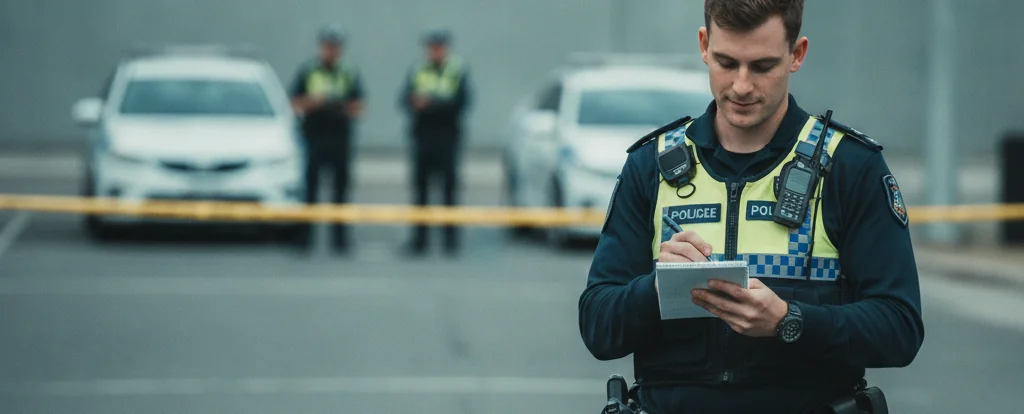
Police officers respond to emergencies, investigate incidents and enforce the law to keep their community safe and hold offenders to account.
- Median salary
- $133,100
3.8%vs last year, before tax
- People employed
- 55,400
0.7%vs last year
- Projected growth
- +11.1%
to 2035
- AI exposure*
- Moderate
- automation risk
- Average hours
- 43/wk
+3h vs all jobs
- Shortage status
- Not in shortage
national
Police officers work for a state or territory police force, patrolling an assigned area, responding to calls and preparing the evidence that ends up in court. The job is different from a corrections officer's, which is based inside a custodial facility rather than out in the community, and from a security guard's, which carries no power to arrest or charge anyone. Most officers start in general duties before moving into a specialist area such as traffic, criminal investigation or community policing.
How much do police officers earn?
The median full-time salary for a police officer is $133,100 per annum, before tax, up $27,600 since 2018.
What you take home depends mostly on the enterprise agreement covering your state or territory force, which sets the salary bands by rank and classification. Shift penalties and overtime add a meaningful amount for general duties officers, because much of the roster falls on nights, weekends and public holidays. Specialist areas and promoted ranks pay more again, and allowances apply for some roles.
What does a police officer do day to day?
The list below is what fills most weeks; the exact mix shifts with seniority and whatever stage the current work is at.
- Responding to whatever call comes in next, from a car crash to a domestic disturbance
- Writing statements and reports detailed enough to hold up months later in court
- Making quick decisions in situations that can turn dangerous without warning
- Working a rotating roster that puts you on the road through nights, weekends and public holidays
- Building relationships with the community you patrol, not just turning up at its worst moments
What skills do police officers need?
Employers look for emergency response, backed by Police radio fluency and strong problem solving.
Specialist skills
- Emergency response
Software and tools
- Police radio
- Incident reporting software
- Body-worn camera
- Breath analysers
- Custody management systems
General skills
- Problem solving
- Written communication
- Attention to detail
- Stakeholder management
- Safety and compliance awareness
- Customer service
Is the job growing?
About 55,400 people work as police officers in Australia, and employment is projected to grow 11.1% over the decade to 2035. That's healthy, above-average growth, and the role should stay in solid demand.
How do you become a police officer?
Here's the path most police officers take, step by step.
- 1Check the entry requirements for the force you're applying to
Every state and territory force has its own list, but most expect Australian citizenship or permanent residency, Year 12 or equivalent, a current driver's licence and a clean enough background to pass police checks. Fitness and medical standards apply before you start, and they are worth testing early because they take time to meet.
- 2Pass the selection process
Expect written aptitude and literacy testing, a physical fitness assessment, psychological and medical checks, and a panel interview. Forces run information sessions and practice tests, which are a sensible way to find out what the assessments actually ask of you.
- 3Complete recruit training at the police academy
Training runs for roughly six to twelve months depending on the jurisdiction and is usually paid, because you are employed from day one. You come out with a nationally recognised qualification and a constable's appointment, and the study covers law, powers of arrest, evidence handling, driving and defensive tactics.
- 4Work through probation in general duties
New constables spend about a year on supervised shifts, often with an experienced partner, before probation is confirmed. This is where the courtroom paperwork, the radio protocol and the decision-making under pressure become routine rather than theory.
- 5Move into a specialist area once you have experience
Criminal investigation, traffic, the dog squad, forensics and community policing all recruit from general duties, usually after a few years. Some of these need further study or an internal selection course, and the timing varies between forces.
Ready to apply as a police officer?
Whether you're working toward becoming a police officer or already are one and want a hand with the next step (sharpening your resume for ATS screening, tightening your cover letter, or knowing what you'll actually be asked at interview), here are examples grounded in this specific role, not generic templates.
What jobs can a police officer move to?
None of the roles police officers typically move into pay more than the role itself. Firefighter is the closest match. If a bigger salary is the goal, moving up into a senior or principal position within the role is usually the faster route than moving sideways.
| Move to | Typical pay change | Overlap | Retraining |
|---|---|---|---|
| Firefighter Emergency response and public safety skills transfer to firefighting, but separate firefighting qualifications and training are required.Known move | −$4,500 | 54% | requalify |
| Intelligence Analyst Investigative and security clearance experience carries into intelligence analysis, but formal analytical qualifications and reskilling are required.Known move | −$20,100 | 19% | reskill |
| Policy Officer Operational policing experience informs policy development, but a new degree and policy training are needed.Known move | −$20,100 | 19% | requalify |
| Detective Policing experience and investigative skills carry into detective work, with additional investigative training and registration.Known move | −$21,300 | 25% | reskill |
| Corrections Officer Law enforcement and public safety experience suit custodial work, though a short course in correctional practice is needed.Known move | −$24,900 | 50% | short course |
Moves are chosen from Jobs and Skills Australia's Data on Occupation Mobility, which follows income tax records between 2011-12 and 2020-21, together with entry requirements and skill overlap. A known move is one people were seen making in that data. Pay change compares median full-time pay for the two roles.
Who works as a police officer?
The typical police officer is 41 years old; 71% are men, 92% work full-time, and full-timers average 43 hours a week.
- 41
- Median age
- 29%
- Female share
- 92%
- Full-time
- +3h
- vs all-jobs avg
What's it like being a police officer?
The job runs on a 24-hour clock, so it is mostly routine patrol, paperwork and waiting, broken up by short stretches where everything happens at once. Most of the working week goes into reports, court files and follow-up, which is a surprise to people who picture the job as continuous action. Officers who stick with it tend to like the crew they work with and the fact that no two shifts look the same.
What people like
- No two shifts look the same. One shift might be a traffic crash, a mental health welfare check and a break-in report, which suits people who dislike doing the same task all day.
- A tight crew. You work in a team that relies on each other in situations where that matters, and the relationships formed on the road tend to last.
- Results you can see in your own patch. Arresting someone who has been breaking into houses across a suburb, or getting a family out of a violent situation, produces a visible result in a place you know.
- The roster gives back some weekdays. Shift work is hard on sleep, but days off midweek are useful for appointments, study and anything else that is impossible on a Saturday.
What people find hard
- Shift work wears you down. Rotating rosters mean nights, weekends and public holidays, and the disruption to sleep and family life is the part most officers find hardest to manage over years.
- The paperwork is relentless. Every incident, arrest and use of force generates statements and reports, and court files can be recalled months later for details nobody remembers without them.
- You carry what you see. Road fatalities, domestic violence and child protection work are regular parts of the job, and the cumulative effect is real even for people who handle individual incidents calmly.
- Your decisions are reviewed publicly. Body-worn camera footage, complaints processes and court cross-examination mean the way you handled a situation can be scrutinised long afterwards.
Based on our synthesis of professional-body surveys and public accounts of the role, not first-person verified reviews.
Which industries employ police officers?
Public Administration and Safety employs the largest share of police officers.
Top employing industries
- 1Public Administration and Safety
Ranked by employment share; the source doesn't publish an exact percentage per industry.
| Diploma / Advanced Diploma | 42.6% | |
|---|---|---|
| Bachelor degree | 23.9% | |
| Year 12 or below | 14.9% | |
| Certificate III/IV | 8.3% | |
| Postgraduate | 6.5% |
Will AI replace police officers?
Policing is moderately exposed to automation, and the exposure sits almost entirely in the administrative half of the job. Software now transcribes body-worn camera audio, drafts initial incident reports and flags patterns in CCTV and number plate data, which cuts hours of typing. The physical response, the face-to-face contact and the decisions made at a scene are largely untouched.
Share of typical working time by exposure level
- Responding to emergency callsDeciding what is actually happening at a scene, calming people down and using powers of arrest and restraint are physical and interpersonal, and dispatch software changes only how the job is assigned.35%low
- Writing statements and court filesTranscription from body-worn camera footage and templates that assemble the basic facts already reduce the typing on routine matters, though the officer still signs off on what goes in.25%high
- Reviewing evidence and footageAnalytics can search hours of CCTV or number plate data far faster than a person, which narrows the field, but deciding what the footage proves and whether it is admissible remains an officer's call.25%moderate
- Community contact and local problem-solvingMeeting traders about a run of break-ins or sitting with a family after a sudden death depends on trust and conversation, which is not something a system can do on your behalf.15%low
Moves least exposed to AI
These career moves from police officer work are rated low for AI exposure:
- Detective
Some skill overlap (25%), reskill to get there, and a low automation-risk profile.
- Corrections Officer
Solid skill overlap (50%), short course to get there, and a low automation-risk profile.
- Firefighter
Solid skill overlap (54%), requalify to get there, and a low automation-risk profile.
Common questions about becoming a police officer
Straight answers to the questions people ask most.
How much do police officers earn?
Police officers earn a median of $133,100 per year before tax. That figure covers full-time officers across ranks and forces, so a first-year constable sits below it and a senior sergeant above. Shift penalties, overtime and the enterprise agreement in your state or territory move the actual amount.
How do you become a police officer?
Apply directly to a state or territory police force, pass its selection process and complete paid recruit training at the academy before working through a probation year in general duties. There is no degree requirement, though a bachelor degree helps for some specialist and promotion pathways. Requirements around citizenship, driving and fitness differ slightly between forces.
Are police officers in demand?
Police officers are currently not in shortage, and employment is projected to grow 11.1% over the decade to 2035. Forces recruit in intakes rather than continuously, so it pays to check when your state or territory force is next taking applications and to start on fitness early.
Will AI change policing?
Automation is already part of the job in the form of number plate recognition, CCTV analytics and software that drafts routine reports from body-worn camera footage, which trims the paperwork load rather than the street work. What stays with the officer is deciding what a situation actually is, how to handle a person in front of them and whether a use of force was justified. Expect moderate change to the administrative side of the role and very little to the physical and interpersonal side.
What can police officers move into?
Detective work draws on the same investigative experience and needs additional investigative training, and detective pay is $21,300 less compared with general duties. Firefighting pay is $4,500 less compared with policing, and emergency response and public safety skills carry over, though separate firefighting qualifications are required. People also come the other way: corrections officers and defence force members move into policing, and they must meet the same entry standards and complete the same training.
Do police officers have to work nights and weekends?
Yes, in general duties. Policing runs around the clock, so rosters rotate through nights, weekends and public holidays, usually with penalty rates attached. Some specialist and administrative roles work closer to business hours, but they generally come after a few years on shift.
Related roles
Not sure this is you? Take the career quiz and get a ranked shortlist of roles that fit how you like to work.