Pool Technician
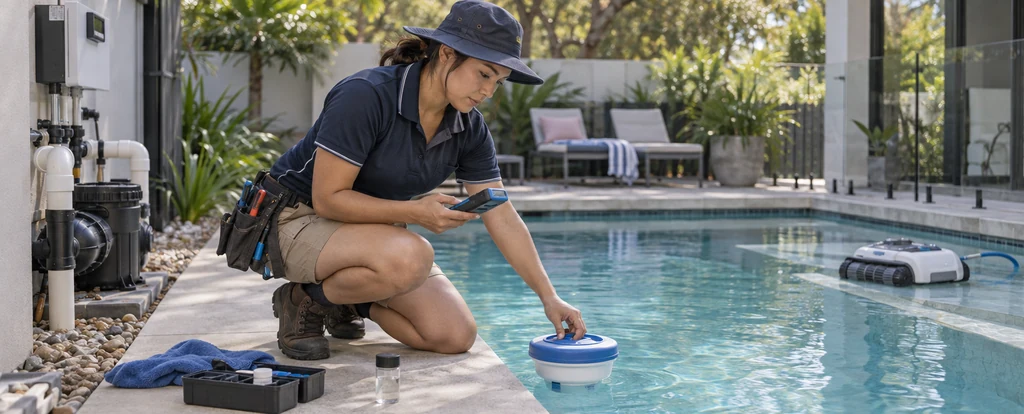
Pool technicians look after swimming pools and spas, keeping the water balanced and the pumps, filters and heaters working.
- Median salary*
- $65,000
3.7%vs last year, before tax
- People employed
- 3,700
0.0%vs last year
- Projected growth*
- +6.5%
to 2035
- AI exposure*
- Moderate
- automation risk
- Average hours*
- 40/wk
matches all-jobs average
- Shortage status*
- Not in shortage
national
Pool technicians service residential backyard pools, hotel and strata pools, and public aquatic centres, usually alone in a van with a run of regular customers. Their work is part water chemistry and part trade: testing and dosing, then repairing the equipment that keeps the water moving. They are different from pool builders, who construct and renovate the shell and surrounds rather than maintain the pool once it is running.
How much do pool technicians earn?
The median full-time salary for a pool technician is $65,000 per annum, before tax, up $13,400 since 2018.
Pay depends on whether you work for a franchise, a pool shop or an independent operator, and on how many jobs you complete in a day. Technicians who hold additional licences for electrical or gas work, or who take on commercial and aquatic centre contracts, generally earn more. Some employers pay a base wage plus a bonus on repairs quoted and won, so the mix matters as much as the headline rate.
What does a pool technician do day to day?
The list below is what fills most weeks; the exact mix shifts with seniority and whatever stage the current work is at.
- Testing water with a photometer and adjusting chlorine, pH and alkalinity
- Skimming, brushing and vacuuming pool surfaces and cleaning the filter
- Servicing pumps, chlorinators, heaters and robotic cleaners
- Tracing leaks and electrical or plumbing faults, then quoting the repair
- Explaining water balance and equipment care to the customer on site
What skills do pool technicians need?
Employers look for installation and maintenance, plant and equipment operation, hand and power tool work, backed by simPRO fluency and strong customer service.
Specialist skills
- Installation and maintenance
- Plant and equipment operation
- Hand and power tool work
Software and tools
- simPRO
- ServiceM8
- Palintest photometers
- Robotic pool cleaners
- Variable speed pump controllers
General skills
- Customer service
- Attention to detail
- Problem solving
- Safety and compliance awareness
Is the job growing?
About 3,700 people work as pool technicians in Australia, and employment is projected to grow 6.5% over the decade to 2035. That's modest growth: demand is steady rather than booming.
How do you become a pool technician?
Here's the path most pool technicians take, step by step.
- 1Finish Year 10 or Year 12
There is no formal prerequisite, but basic maths and science help with water chemistry and dosing calculations.
- 2Complete a Certificate III in Swimming Pool and Spa Service
This is the main qualification, covering water testing, chemical dosing, equipment servicing and safety. Many people do it as a traineeship, which means paid work with study over roughly one to two years.
- 3Get your driver's licence
Almost all of the work happens at customer sites, so a licence and a clean driving record are effectively part of the job.
- 4Build experience in the field
Most technicians start on a servicing run and pick up fault-finding and installation work over time, learning equipment brands and systems on real jobs.
- 5Add specialist licences or training
Electrical work on pumps and gas work on heaters must be done by licensed tradespeople, and the rules differ by state. Technicians who want to run their own round often add business or Certificate IV study later.
Ready to apply as a pool technician?
Whether you're working toward becoming a pool technician or already are one and want a hand with the next step (sharpening your resume for ATS screening, tightening your cover letter, or knowing what you'll actually be asked at interview), here are examples grounded in this specific role, not generic templates.
What jobs can a pool technician move to?
Moving into Pool Builder typically comes with the biggest pay rise, worth $18,200 a year more on average.
| Move to | Typical pay change | Overlap | Retraining |
|---|---|---|---|
| Pool Builder Pool technicians know water systems and equipment, so moving into pool construction builds on that base with substantial retraining. | +$18,200 | 28% | reskill |
| Pipelayer Pipelaying shares trenching and pipework skills used in pool plumbing, so a pool technician can move across after a short course. | +$13,000 | 50% | short course |
| Garage Door Technician A pool technician's mechanical fault-finding and home service skills suit garage door installation and repair, needing only minimal extra training. | +$8,800 | 63% | minimal |
| Home Improvement Installer Home improvement installation uses similar tools and fittings, letting a pool technician move into varied household projects after a short course. | +$2,600 | 47% | short course |
| Sign Installer Sign installation draws on the same exterior site work and tools, so a pool technician can transfer with a short course. | +$1,600 | 58% | short course |
Moves are chosen from Jobs and Skills Australia's Data on Occupation Mobility, which follows income tax records between 2011-12 and 2020-21, together with entry requirements and skill overlap. A known move is one people were seen making in that data. Pay change compares median full-time pay for the two roles.
Who works as a pool technician?
The typical pool technician is 43 years old; 94% are men, 62% work full-time, and full-timers average 40 hours a week.
- 43
- Median age
- 6%
- Female share
- 62%
- Full-time
- +0h
- vs all-jobs avg
What's it like being a pool technician?
The rhythm is set by a daily run of scheduled stops, busy in the warmer months and quieter in winter when pools need less attention. The work is physical and often solitary, with plenty of driving and a steady stream of small problems to solve. People who enjoy being outside, fixing things with their hands and dealing with regular customers tend to settle into it well.
What people like
- You can see the result of your work. A green pool that comes back clear over a couple of visits is visible proof the chemistry and equipment are right.
- Fault-finding keeps it interesting. Diagnosing why a pump is losing pressure or a chlorinator is reading wrong uses the same mechanical thinking across different brands and setups.
- Regular customers. Many runs follow the same pools week after week, so you get to know the owners and notice problems early.
- A trade you can take with you. The skills and equipment knowledge transfer to any suburb or region, and some technicians go on to run their own servicing round.
What people find hard
- The weather sets the schedule. Summer is the busy season and often means working through heat, and heavy rain can wash out a day of bookings.
- Chemical handling. Chlorine and acid need careful storage, dosing and protective gear, and a spill or a misread test can set a pool back.
- Time in the van. A run might mean ten or fifteen short stops a day, so traffic and tight schedules are part of the job.
- Quiet winters. Servicing slows when pools are used less, and some employers cut hours or move staff to other work over the cooler months.
Based on our synthesis of professional-body surveys and public accounts of the role, not first-person verified reviews.
Which industries employ pool technicians?
Administrative and Support Services employs the largest share of pool technicians, followed by Retail Trade.
Top employing industries
- 1Administrative and Support Services
- 2Retail Trade
- 3Construction
- 4Arts and Recreation Services
- 5Other Services
Ranked by employment share; the source doesn't publish an exact percentage per industry.
| Certificate III/IV | 34% | |
|---|---|---|
| Diploma / Advanced Diploma | 26% | |
| Bachelor degree | 20% | |
| Year 12 or below | 20% |
Will AI replace pool technicians?
Pool servicing has moderate exposure overall, because the job splits neatly into a hands-on half and a paperwork half. Testing, cleaning and repairing happen at the pool and still need a person on site, while scheduling, quoting, invoicing and reporting are increasingly handled by service apps such as simPRO and ServiceM8. Tools like photometers, robotic cleaners and variable speed pump controllers change how the work is measured and done, but not who does it.
Share of typical working time by exposure level
- Cleaning and equipment servicingRobotic cleaners handle some vacuuming, but skimming, brushing, backwashing filters and swapping pump parts are still manual work at the pool.35%low
- Diagnosing faults and quoting repairsSoftware can prompt likely causes from a fault code, but confirming a leak or a failing heater means inspecting and testing the equipment itself.25%moderate
- Water testing and chemical dosingDigital photometers and dosing apps work out the exact amount of chlorine or acid, so the technician confirms and applies rather than calculating by hand.20%moderate
- Scheduling, customer updates and invoicingRun sheets, job notes and invoices are largely generated by service software, which reduces the time spent on admin between jobs.20%high
Moves least exposed to AI
These career moves from pool technician work are rated low for AI exposure:
- Pool Builder
Some skill overlap (28%), reskill to get there, and a low automation-risk profile.
- Garage Door Technician
High skill overlap (63%), little retraining to get there, and a low automation-risk profile.
- Sign Installer
Solid skill overlap (58%), short course to get there, and a low automation-risk profile.
- Pipelayer
Solid skill overlap (50%), short course to get there, and a low automation-risk profile.
Common questions about becoming a pool technician
Straight answers to the questions people ask most.
How much does a pool technician earn in Australia?
The median full-time pay is $65,000 per annum, before tax. What you take home depends on your employer, whether you are paid a bonus on repairs, and any additional licences you hold.
How do you become a pool technician?
The usual route is a Certificate III in Swimming Pool and Spa Service (CPP31218), often completed as a traineeship while you work. A driver's licence is effectively essential, since the job is mobile. Electrical and gas work on pool equipment must be carried out by licensed tradespeople, and the licensing rules vary by state.
Are pool technicians in demand?
Pool technicians are currently not in shortage, and employment is projected to grow 6.5% over the decade to 2035. Most demand comes from maintaining the pools already installed rather than new construction, so work tends to be steady across established suburbs and holiday areas.
Will AI replace pool technicians?
Not the site work. Automated test readers, dosing calculators and robotic cleaners already handle some of the measuring and cleaning, and service software sorts scheduling and invoicing, but someone still has to visit the pool, judge what is wrong and repair it. The administrative side of the job is where automation has the most reach.
What can a pool technician move into?
Home improvement installation draws on the same tools and fittings, so a pool technician can move into varied household projects after a short course, for $2,600 more. Pipelaying shares the trenching and pipework used in pool plumbing, giving another route after a short course, for $13,000 more. Many experienced technicians also go on to run their own servicing round, which is often where earnings grow.
Do you need a licence to service pools?
Servicing pools and balancing water does not require a trade licence, but connecting or repairing electrical components and gas heaters does, and those rules differ between states. Check the requirements in your state before taking on that part of the work.
Related roles
- Pool Builder
- Garage Door Technician
- Home Improvement Installer
- Sign Installer
- Pipelayer
- Small Engine Mechanic
Not sure this is you? Take the career quiz and get a ranked shortlist of roles that fit how you like to work.