Roller Operator
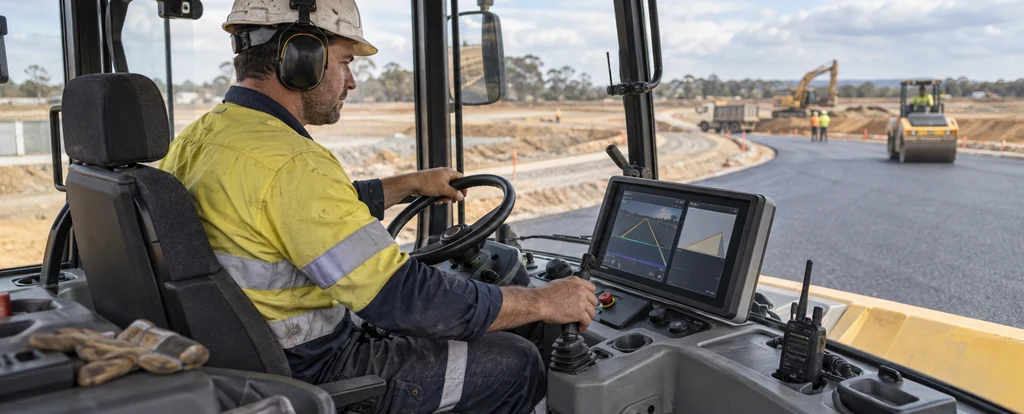
Roller operators drive and control heavy rollers that compact earth, gravel and asphalt, giving roads, subdivisions and building sites a stable, level base.
- Median salary*
- $96,200
3.7%vs last year, before tax
- People employed
- 640
6.7%vs last year
- Projected growth
- +3.7%
to 2035
- AI exposure*
- Moderate
- automation risk
- Average hours
- 44/wk
+4h vs all jobs
- Shortage status
- Not in shortage
national
Most roller operators work on civil construction sites: road upgrades, subdivisions, car parks and larger infrastructure projects run by construction companies and councils. The job sits close to earthmoving plant operation, but where an excavator or dozer moves material, a roller compacts and finishes it to a specified density. A roller is often the last machine over a section before the next layer goes down, so the operator works to grade checks and compaction tests rather than setting the pace of the site.
How much do roller operators earn?
The median full-time salary for a roller operator is $96,200 per annum, before tax, up $19,800 since 2018.
Pay varies more with the project than with the machine. Roller operators on large civil and infrastructure jobs are usually covered by enterprise agreements that set base rates, overtime and site allowances, while residential and landscaping contractors pay closer to award rates. Shift work, night paving and remote or fly-in fly-out projects add loadings, and operators who hold extra plant competencies have more room to negotiate.
What does a roller operator do day to day?
The list below is what fills most weeks; the exact mix shifts with seniority and whatever stage the current work is at.
- Operating smooth drum, padfoot and multi-tyre rollers to compact earth, gravel and asphalt
- Working to survey pegs, plans and machine control screens to hold the right level and crossfall
- Adjusting the number of passes and the vibration settings as compaction test results come back
- Running daily pre-start checks and basic maintenance, such as checking fluids, drums and scrapers
- Staying in radio contact with truck drivers, graders and supervisors so material is compacted before it dries or cools
What skills do roller operators need?
Employers look for plant and equipment operation, worksite safety management, reading plans and specifications, backed by Caterpillar roller fluency and strong attention to detail.
Specialist skills
- Plant and equipment operation
- Worksite safety management
- Reading plans and specifications
- Operations management
Software and tools
- Caterpillar roller
- Bomag roller
- Dynapac roller
- Trimble Earthworks
- Topcon 3D-MC
General skills
- Attention to detail
- Problem solving
- Written communication
Is the job growing?
About 640 people work as roller operators in Australia, and employment is projected to grow 3.7% over the decade to 2035. That's modest growth: demand is steady rather than booming.
How do you become a roller operator?
Here's the path most roller operators take, step by step.
- 1Get a White Card
A White Card is the general construction induction training required before you can work on most Australian construction sites. It takes about a day through a registered training organisation and is the first thing employers check.
- 2Complete a roller operations competency
The nationally recognised unit RIIMPO317F Conduct roller operations (RIIMPO317) is delivered by registered training organisations over one to three days, usually with practical assessment on a machine. Some employers put new workers through it, while others expect you to arrive with it already done.
- 3Build hours on smaller sites
Road and subdivision contractors often start new operators on padfoot work or lighter rollers before moving them onto asphalt and final trim. Time on the machine, not the certificate alone, is what employers look at when hiring.
- 4Add machine control and other plant units
Training in GPS machine control (Trimble Earthworks, Topcon 3D-MC) and extra units such as excavator or grader operation widen what you can be rostered on, which matters on projects running a small plant fleet.
- 5Move into leading hand or plant supervision
Experienced operators can take on leading hand or plant supervisor roles coordinating crews and compaction programs, or move into site supervision and estimating with further study.
Ready to apply as a roller operator?
Whether you're working toward becoming a roller operator or already are one and want a hand with the next step (sharpening your resume for ATS screening, tightening your cover letter, or knowing what you'll actually be asked at interview), here are examples grounded in this specific role, not generic templates.
What jobs can a roller operator move to?
Moving into Bulldozer Operator typically comes with the biggest pay rise, worth $10,400 a year more on average.
| Move to | Typical pay change | Overlap | Retraining |
|---|---|---|---|
| Bulldozer Operator Roller operators can train as bulldozer operators, building on their earthmoving experience to push and level large volumes of material. | +$10,400 | 58% | short course |
| Earthmoving Plant Operator Roller operators bring compaction and surface finishing skills to earthmoving plant operation, which uses similar machinery on broader earthworks.Known move | +$6,800 | 65% | minimal |
| Grader Operator Roller operators can advance to grader operation, using their feel for level and grade to create precise surfaces. | +$5,200 | 69% | minimal |
| Backhoe Operator Roller operators can take up backhoe operation, applying their machine control and site safety knowledge to digging and trenching work. | +$2,600 | 78% | minimal |
Moves are chosen from Jobs and Skills Australia's Data on Occupation Mobility, which follows income tax records between 2011-12 and 2020-21, together with entry requirements and skill overlap. A known move is one people were seen making in that data. Pay change compares median full-time pay for the two roles.
Who works as a roller operator?
The typical roller operator is 49 years old; 88% are men, 85% work full-time, and full-timers average 44 hours a week.
- 49
- Median age
- 12%
- Female share
- 85%
- Full-time
- +4h
- vs all-jobs avg
What's it like being a roller operator?
The job has a steady, repetitive rhythm: long stretches in the cab working a set pattern of passes, broken up by waiting for trucks, level checks or compaction tests. Roller operators tend to be people who like working alone with a machine and take pride in a surface that comes up flat and even. Reading how a material is behaving under the drum is a feel that takes seasons on different ground to develop.
What people like
- A result you can see. The finished work is visible and immediate: a run of asphalt or a pad that comes up level and holds, confirmed by test results rather than opinion.
- Working largely on your own. Most of the day is spent operating, with radio contact instead of a crew around you, which suits people who prefer to get on with the job.
- Different ground and different projects. Subdivisions, highway widening, car parks and trench backfill all behave differently under the drum, so the work does not become identical from one site to the next.
- Modern machine control. GPS grade guidance and compaction mapping have taken much of the guesswork out of levels, and operators who learn the screens are the ones trusted with final trim.
What people find hard
- Weather and the cab. Rollers are hot in summer and cold and dusty in winter, and vibration over a full shift works on your back and hands.
- Waiting. Compaction tests, truck deliveries and the layer behind you all set the pace, so there can be long spells sitting idle with the machine running.
- Repetition. A large pavement job is pass after pass over the same strip, and that pattern can run for weeks.
- Early starts and travel. Civil projects begin before dawn, often with overtime and Saturday work, and remote or fly-in fly-out jobs mean time away from home.
Based on our synthesis of professional-body surveys and public accounts of the role, not first-person verified reviews.
Which industries employ roller operators?
Construction employs the largest share of roller operators, followed by Public Administration and Safety.
Top employing industries
- 1Construction
- 2Public Administration and Safety
Ranked by employment share; the source doesn't publish an exact percentage per industry.
| Year 12 or below | 68.5% | |
|---|---|---|
| Certificate III/IV | 24.3% | |
| Diploma / Advanced Diploma | 2.5% | |
| Bachelor degree | 0.5% | |
| Postgraduate | 0% |
Will AI replace roller operators?
Roller operation is moderately exposed to AI and automation: the machine still needs someone in the cab, but grade control and compaction monitoring have taken over much of the measurement and record keeping. GPS machine control and intelligent compaction systems now guide levels, count passes and log results on many civil projects, which changes how the operator works rather than removing the role. What stays with the operator is the feel for how a material is behaving under the drum and the finishing work around kerbs, trenches and edges.
Share of typical working time by exposure level
- Operating the roller through the required pattern of passesMachine control can show the line and count coverage, but the operator still drives each pass and feels how the material is responding.45%low
- Working to grade, level and crossfallTrimble Earthworks and Topcon 3D-MC screens display the design surface in the cab, so on many civil projects the operator follows a screen rather than survey pegs on the ground.20%moderate
- Compaction monitoring and test resultsIntelligent compaction systems log pass counts and roller position, and some projects use that record to target where density testing is needed.20%moderate
- Pre-start checks, cleaning and basic maintenanceChecking fluids, drums and scrapers each morning is hands-on work that automation does not cover.15%low
Moves least exposed to AI
These career moves from roller operator work are rated low for AI exposure:
- Backhoe Operator
High skill overlap (78%), little retraining to get there, and a low automation-risk profile.
- Bulldozer Operator
Solid skill overlap (58%), short course to get there, and a low automation-risk profile.
Common questions about becoming a roller operator
Straight answers to the questions people ask most.
How much does a roller operator earn?
Roller operators earn a median of $96,200 per year before tax when working full time. That figure reflects people already in the job rather than a starting rate, and enterprise agreements, overtime and project allowances usually move it most.
How do I become a roller operator?
Most people start with a White Card, then complete the roller operations unit RIIMPO317F through a registered training organisation. Many enter from labouring or other plant work and pick up the roller when a site needs one, because employers weigh machine hours alongside the qualification.
Are roller operators in demand?
Roller operators are currently not in shortage, and employment is projected to grow 3.7% over the decade to 2035. It is a small occupation, at about 640 people, so openings follow the civil construction pipeline rather than steady year-on-year replacement, and keeping extra plant competencies current helps when a project winds down.
Will AI or automation replace roller operators?
Not the machine itself. GPS machine control and compaction mapping already guide grades and record passes, which removes some of the surveying and guesswork, but the operator still runs each pass and finishes around kerbs, trenches and edges where automated systems struggle. The technology changes how the job is done rather than whether someone sits in the cab.
What can a roller operator move into?
The usual moves are to other plant: earthmoving plant operation, grader operation and bulldozer operation all use the same feel for level and grade, and moving across to earthmoving plant operation pays $6,800 more. Experienced operators also end up running their own machine through a plant hire or subcontracting business, which is often where earnings grow. People come into the role from civil construction labouring and machine operation with a short course.
What are the hours like?
Full-time roller operators average 44 hours a week, and civil work starts early, commonly before 7am, with overtime and Saturday shifts during busy project phases. Around 85% of roller operators work full time, with the rest mostly on contract or project-based arrangements.
Related roles
- Earthmoving Plant Operator
- Backhoe Operator
- Grader Operator
- Bulldozer Operator
- Civil Construction Labourer
- Earthmoving Plant Operator
Not sure this is you? Take the career quiz and get a ranked shortlist of roles that fit how you like to work.