Home Manufacturing & Production
Shipwright
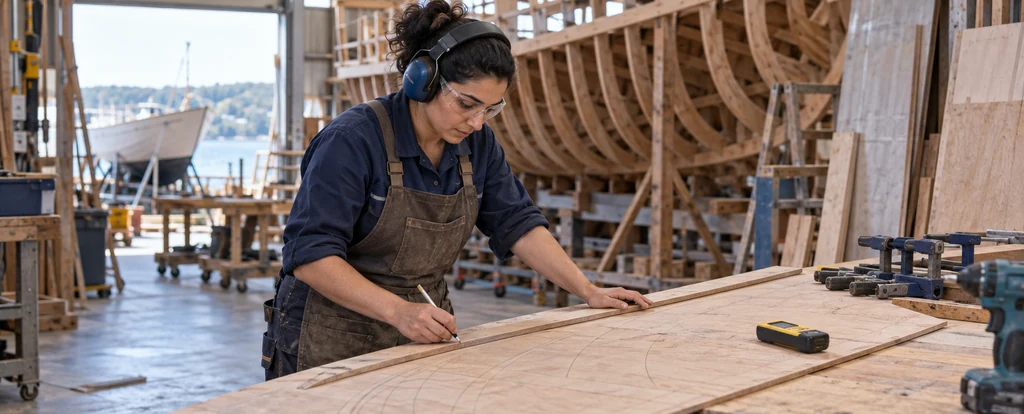
Shipwrights build, repair and refit boats, ships and marine structures in timber, composite, steel and aluminium.
- Median salary*
- $80,600
3.6%vs last year, before tax
- People employed
- 830
3.8%vs last year
- Projected growth
- +3.6%
to 2035
- AI exposure*
- Moderate
- automation risk
- Average hours
- 41/wk
+1h vs all jobs
- Shortage status
- In shortage
national
Most shipwrights work in shipyards, boatyards, marinas and slipways, moving between new builds, refits and repairs as contracts come and go. The trade overlaps with boat builder work, but shipwrights generally take on larger vessels and structural work, while boat builders focus on smaller craft and fitout. It is a small trade, with about 830 people in it nationally, and jobs often come through yards and word of mouth.
How much do shipwrights earn?
The median full-time salary for a shipwright is $80,600 per annum, before tax, up $17,200 since 2018.
Pay for shipwrights usually follows the Manufacturing and Associated Industries Award or a yard enterprise agreement, so overtime, shiftwork and project allowances often make up a fair share of what you take home. Commercial shipyard and refit work generally sits higher than smaller yards, and specialist composite or marine systems skills add to that. Where you live matters as well, because the work is concentrated in a handful of ports and river yards.
What does a shipwright do day to day?
The list below is what fills most weeks; the exact mix shifts with seniority and whatever stage the current work is at.
- Reading plans and lofting hull lines, which means transferring a scaled drawing to full size on the workshop floor
- Cutting, shaping and assembling hull frames, planking and structural members in timber, steel, aluminium or composite
- Installing decks, bulkheads, cabins and the systems that run through them
- Hauling vessels onto the slipway to inspect and replace damaged hull sections and keels
- Applying sealants, finishes and anti-fouling coatings before a vessel goes back in the water
What skills do shipwrights need?
Employers look for hand and power tool work, reading plans and specifications, fabrication and finishing, backed by Rhino 3D fluency and strong attention to detail.
Specialist skills
- Hand and power tool work
- Reading plans and specifications
- Fabrication and finishing
- Installation and maintenance
- Craft and handmade production
- Worksite safety management
Software and tools
- Rhino 3D
- AutoCAD
- CNC routers
- Moisture meters
General skills
- Attention to detail
- Problem solving
Is the job growing?
About 830 people work as shipwrights in Australia, and employment is projected to grow 3.6% over the decade to 2035. That's modest growth: demand is steady rather than booming.
How do you become a shipwright?
Here's the path most shipwrights take, step by step.
- 1Get an apprenticeship in marine craft construction
The standard entry is a four-year apprenticeship that combines paid work in a yard with the Certificate III in Marine Craft Construction (MEM30719), delivered through TAFE or another registered training organisation. You need an employer to take you on first, so approach boatyards, shipyards and marine contractors directly or through an Australian Apprenticeship Network provider.
- 2Learn the trade on the tools
Apprentices spend most of their time in the workshop and on the slipway under a qualified tradesperson, starting with basic marking out, cutting and finishing before moving onto structural work. The wage is a training rate that rises each year, and the hours count towards your qualification.
- 3Add the licences yards expect
Many employers want a forklift licence or a high risk work licence for rigging and crane work, and some jobs need confined space or working at heights training. These are short courses you can complete once you are working, and they widen the roles you can be put on.
- 4Specialise in a material or a sector
Qualified shipwrights usually narrow into timber work, composite construction, aluminium fabrication or commercial vessel refit, because the materials, standards and repair methods differ enough that depth pays. Naval architecture and marine engineering study is an option for those who want to move into design.
- 5If you already work in a marine trade, have your experience recognised
Boat builders, carpenters, welders and cabinetmakers can apply for recognition of prior learning towards the Certificate III, which shortens the apprenticeship or removes the need for one. Yards also take on mature-age apprentices, and prior trade experience usually shortens the time to full productivity.
Ready to apply as a shipwright?
Whether you're working toward becoming a shipwright or already are one and want a hand with the next step (sharpening your resume for ATS screening, tightening your cover letter, or knowing what you'll actually be asked at interview), here are examples grounded in this specific role, not generic templates.
What jobs can a shipwright move to?
None of the roles shipwrights typically move into pay more than the role itself. Boat Builder is the closest match. If a bigger salary is the goal, moving up into a senior or principal position within the role is usually the faster route than moving sideways.
| Move to | Typical pay change | Overlap | Retraining |
|---|---|---|---|
| Boat Builder Shipwrights bring vessel construction, repair and refit skills to the boat builder role, with reskilling for yard-specific methods and materials.Known move | −$7,800 | 85% | reskill |
Moves are chosen from Jobs and Skills Australia's Data on Occupation Mobility, which follows income tax records between 2011-12 and 2020-21, together with entry requirements and skill overlap. A known move is one people were seen making in that data. Pay change compares median full-time pay for the two roles.
Who works as a shipwright?
The typical shipwright is 40 years old; 98% are men, 84% work full-time, and full-timers average 41 hours a week.
- 40
- Median age
- 2%
- Female share
- 84%
- Full-time
- +1h
- vs all-jobs avg
What's it like being a shipwright?
The work runs to the rhythm of the slipway: a vessel comes out of the water, gets stripped, repaired or rebuilt, then goes back in. Shipwrights spend long stretches on their feet among dust, noise and resin fumes, and the trade suits people who like ending the week with something physical to show for it. Yards are small and the deadlines belong to owners and surveyors, so the pressure arrives in bursts rather than as a steady hum.
What people like
- You can see what you built. A hull arrives damaged and leaves watertight, and after a refit you can point to the frames, decks and fittings you made yourself.
- Every vessel is a different problem. A timber yacht, an aluminium workboat and a steel barge each bring their own materials, methods and quirks, so the trade rarely settles into one repeated task.
- Small crews and real responsibility. Yard teams are usually a handful of people, which means apprentices get close attention and are trusted with actual work early.
- Skills that take years to build. Lofting a set of lines or scarfing a plank in timber is genuinely skilled work, and there are not many people left who can do it well.
What people find hard
- Hard conditions most days. Confined spaces, dust, resin fumes and anti-fouling coatings are part of the job, and much of the work happens outside or in sheds that are hot in summer and cold in winter.
- Weather and delays. Rain stops coating work, launch dates move, and a late crane or a missing part can idle a crew for a day.
- Work comes and goes. The industry is small and orders are lumpy, so a yard can be flat out for a year and quiet the next, and security depends on the order book.
- A long run before you qualify. An apprenticeship is a four-year commitment on a training wage, so the trade asks for patience before the skills and the pay catch up.
Based on our synthesis of professional-body surveys and public accounts of the role, not first-person verified reviews.
Which industries employ shipwrights?
Manufacturing employs the largest share of shipwrights, followed by Transport, Postal and Warehousing.
Top employing industries
- 1Manufacturing
- 2Transport, Postal and Warehousing
Ranked by employment share; the source doesn't publish an exact percentage per industry.
| Certificate III/IV | 61.7% | |
|---|---|---|
| Year 12 or below | 21.4% | |
| Bachelor degree | 5.7% | |
| Diploma / Advanced Diploma | 4.8% | |
| Postgraduate | 0.7% |
Will AI replace shipwrights?
Shipwrights sit in the middle: the design and cutting side of the trade has been reshaped by CAD, CNC routers and 3D modelling, while fitting, fastening and finishing a hull on the slipway is still done by hand. The work is often one-off and the trade is small, which limits how much of it can be standardised or moved off the tools.
Share of typical working time by exposure level
- Fitting and fastening hull structurePlanking, welding and riveting happen inside hulls where access is awkward and tolerances shift with the vessel, which keeps this part of the job manual.40%low
- Repairs, refits and finishingJudging a damaged keel or matching a finish on an older timber hull depends on seeing and feeling the boat, so survey reports and the shipwright's own assessment still do most of the work.25%low
- Cutting and shaping componentsCNC routers and plasma cutters turn out repetitive plywood, aluminium and steel parts quickly, but curved or one-off pieces still get shaped by hand and eye.20%moderate
- Lofting, modelling and marking outHull lines and component shapes are increasingly drawn in CAD and cut from digital files, so marking out that once happened on the workshop floor now largely happens on screen.15%high
Moves least exposed to AI
These career moves from shipwright work are rated low for AI exposure:
- Boat Builder
High skill overlap (85%), reskill to get there, and a low automation-risk profile.
Common questions about becoming a shipwright
Straight answers to the questions people ask most.
How much do shipwrights earn?
Shipwrights earn a median of $80,600 per annum, before tax. What you actually take home depends on the award or enterprise agreement covering your yard, your years since qualifying, and how much overtime or shiftwork you pick up.
How do you become a shipwright?
The usual route is a four-year apprenticeship in marine craft construction, which combines paid work in a yard with the Certificate III. You need an employer to sign you up first, so approaching boatyards and shipyards directly is often the quickest way in.
Are shipwrights in demand?
Shipwrights are currently in shortage nationally. Employment is projected to grow 3.6% over the decade to 2035, and because the trade is small, a vacancy in one port can be hard to fill even when the national figures point the other way. If you are considering it, check the yards and slipways within travelling distance of where you want to live.
Will AI replace shipwrights?
Not the hands-on side of the trade, though design and marking out are changing. Hull lines and components are increasingly modelled in CAD and cut by CNC routers, which speeds up the early stages, while fitting, fastening and finishing a hull still happen by hand on the boat. Being able to work from a digital model as well as a set of drawings is increasingly useful.
What can shipwrights move into?
Work as a boat builder uses the same hull construction, repair and marine finishing skills, and yards there are usually small. Experienced shipwrights also open their own repair yard or take on private refit work, which is often where earnings grow.
Can you become a shipwright later in life?
Yes, yards take on mature-age apprentices, and experience in carpentry, welding, cabinetmaking or marine trimming is directly useful. Recognition of prior learning can shorten the apprenticeship or, for people with substantial marine trade experience, replace it.
Related roles
Not sure this is you? Take the career quiz and get a ranked shortlist of roles that fit how you like to work.