Sports Turf Manager
Sports turf managers plan and run the upkeep of grass playing surfaces, keeping golf greens, cricket ovals and stadium pitches safe and playable.
- Median salary*
- $85,800
3.6%vs last year, before tax
- People employed
- 1,200
0.0%vs last year
- Projected growth*
- +4%
to 2035
- AI exposure*
- Low
- automation risk
- Average hours*
- 42/wk
+2h vs all jobs
- Shortage status*
- Not in shortage
national
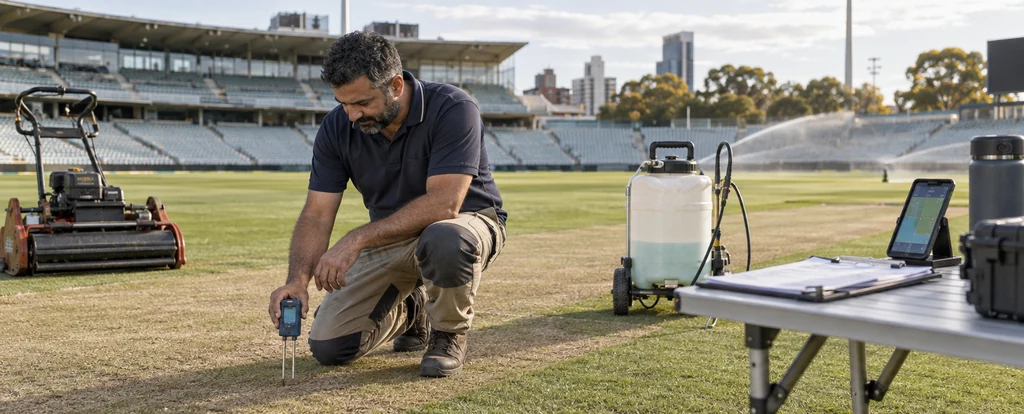
Sports turf managers look after the grass surfaces at golf courses, racecourses, stadiums, council ovals and schools, splitting their time between the grounds, the maintenance shed and the office. They set the maintenance program, manage irrigation and soil health, and lead the crew that mows, marks and repairs each surface. What separates the role from a greenkeeper's is the planning: budgets, rosters and reporting to the club, council or venue that owns the ground.
How much do sports turf managers earn?
The median full-time salary for a sports turf manager is $85,800 per annum, before tax, up $18,300 since 2018.
Pay depends heavily on who runs the ground, because local government roles follow enterprise agreements with set bands while private clubs, racecourses and stadiums set their own rates. Managers on call for match days, race meets and weekend play often earn more through penalty rates or a loading. Responsibility for staff and a large program usually moves you up the range faster than years of service alone.
What does a sports turf manager do day to day?
The list below is what fills most weeks; the exact mix shifts with seniority and whatever stage the current work is at.
- Setting the mowing, fertilising and renovation schedule for each surface across the season
- Adjusting irrigation and drainage after rain, heat or a soil moisture reading
- Preparing and marking pitches, greens or the track in the days before play
- Rostering and supervising greenkeeping staff and apprentices, including weekend event cover
- Costing fertiliser, machinery and contractor work against the grounds budget
What skills do sports turf managers need?
Employers look for operations management, budgeting and forecasting, worksite safety management, backed by Toro Lynx fluency and strong people leadership.
Specialist skills
- Operations management
- Budgeting and forecasting
- Worksite safety management
- Plant and equipment operation
Software and tools
- Toro Lynx
- Rain Bird IQ
- TurfKeeper
- soil moisture meters
- reel mowers
General skills
- People leadership
- Problem solving
- Attention to detail
Is the job growing?
About 1,200 people work as sports turf managers in Australia, and employment is projected to grow 4% over the decade to 2035. That's modest growth: demand is steady rather than booming.
How do you become a sports turf manager?
Here's the path most sports turf managers take, step by step.
- 1Get a start on a grounds crew
Most sports turf managers begin as greenkeeping or grounds apprentices, often through a traineeship with a council, golf club or stadium, where you earn while you learn and complete your qualification on the job.
- 2Complete a Certificate III in Sports Turf Management
The certificate covers turf culture, irrigation, machinery and pest and disease control, and it is the qualification employers in the field expect. It is usually finished over a few years part time alongside paid work.
- 3Add a Certificate IV or diploma for management
Supervisory and manager roles ask for the next level up, which covers budgeting, staff leadership, project planning and reporting to a club committee or council.
- 4Sort out the licences you need
Applying pesticides generally requires chemical user accreditation, and the requirement varies by state, so check with your state regulator. A driver's licence is essential, and a White Card helps if the work involves construction or renovation projects.
- 5Build a record of running a program
Before applying for a manager's job, aim to have planned a season, led a crew and reported on a budget, because employers hire on evidence of running a program rather than hands-on skill alone.
Study routes we have checked
Qualifications that are a recognised way into this role, and what else you need.
- Diploma of Sports Turf Management
A recognised route into this role
Complete the qualification and its stated entry and workplace requirements; check employer-specific requirements. Entry requirements: To commence this qualification an individual must have: completed a Certificate III in Sports Turf Management or an equivalent turf management trade level qualification or a certificate III level qualification in amenity horticulture combined with two years current work experience in a trade level role at a sports turf facility.
Ready to apply as a sports turf manager?
Whether you're working toward becoming a sports turf manager or already are one and want a hand with the next step (sharpening your resume for ATS screening, tightening your cover letter, or knowing what you'll actually be asked at interview), here are examples grounded in this specific role, not generic templates.
What jobs can a sports turf manager move to?
Moving into Irrigation Designer typically comes with the biggest pay rise, worth $5,200 a year more on average.
| Move to | Typical pay change | Overlap | Retraining |
|---|---|---|---|
| Irrigation Designer Sports turf managers understand playing surface watering and drainage needs, which supports a move into irrigation design with further study. | +$5,200 | 3% | reskill |
Moves are chosen from Jobs and Skills Australia's Data on Occupation Mobility, which follows income tax records between 2011-12 and 2020-21, together with entry requirements and skill overlap. A known move is one people were seen making in that data. Pay change compares median full-time pay for the two roles.
Who works as a sports turf manager?
The typical sports turf manager is 41 years old; 98% are men, 89% work full-time, and full-timers average 42 hours a week.
- 41
- Median age
- 2%
- Female share
- 89%
- Full-time
- +2h
- vs all-jobs avg
What's it like being a sports turf manager?
The job runs to the calendar of the ground: growing season, finals, race meets and the off-season renovation, with weather and event deadlines setting the pace. Managers spend part of each day outdoors and part of it on rosters, budgets and reporting, so it suits someone who likes the mix of a trade and a management role. The pressure is concentrated around play, when a surface has to be right on a fixed date.
What people like
- You see the result of your work. A worn pitch or a patchy green recovers because of decisions you made weeks earlier, and the improvement is there for everyone to see on match day.
- Outdoors with a mix of skills. The week moves between turf agronomy, irrigation, machinery and leading a crew, so it rarely settles into one task.
- The calendar gives the job a shape. Growing seasons, finals, race meets and renovation periods each bring their own work, which suits people who like planning well ahead.
- You run your own program. Managers decide how a ground is prepared and maintained, with room to try a different approach if you can argue it through the budget.
What people find hard
- Weather and events override the plan. Frost, heat, heavy rain or a disease outbreak can undo a week of work, and the schedule has to be rebuilt around what the surface needs.
- Weekends and early starts. Play happens when it happens, so match days, race meets and tournament weeks mean early mornings, weekend cover and being on call.
- Budgets are tighter than the wish list. Machinery, fertiliser and water all cost money, and managers spend part of the year explaining to a club or council why a renovation cannot wait.
- The surface is judged in public. Players, coaches and members comment on the state of the ground, and the criticism lands on the manager when a surface cuts up.
Based on our synthesis of professional-body surveys and public accounts of the role, not first-person verified reviews.
Which industries employ sports turf managers?
Sports and recreation facilities employs the largest share of sports turf managers, followed by Local government administration.
Top employing industries
- 1Sports and recreation facilities
- 2Local government administration
- 3Landscaping and horticultural services
- 4Horse racing
- 5Education and training
Ranked by employment share; the source doesn't publish an exact percentage per industry.
| Certificate III/IV | 34% | |
|---|---|---|
| Diploma / Advanced Diploma | 26% | |
| Bachelor degree | 20% | |
| Year 12 or below | 20% |
Will AI replace sports turf managers?
This is a hands-on job with low exposure to AI and automation, because the decisions rest on what you can see and feel in the grass, the soil and the weather. Irrigation control software and soil moisture sensors change how watering is scheduled and how records are kept, but someone still walks the surface and judges it before a match. Mowing and line marking machinery keeps getting more automated without removing the need to plan a season around the ground.
Share of typical working time by exposure level
- Preparing and marking surfaces for playMowing heights, rolling, topdressing and line marking on the morning of a match are physical jobs done on site, and a machine cannot read whether a pitch is fit to play on.30%low
- Leading staff, budgets and contractor recordsRostering, purchase records and reporting to a council or committee are increasingly handled in software, which saves paperwork but not the conversations about next year's budget.30%moderate
- Planning the season's maintenance programSoftware can hold the schedule and flag when a renovation is due, but the timing still depends on how the surface came through winter and what the club has booked.20%moderate
- Irrigation and soil moisture managementCentral control systems such as Rain Bird IQ adjust watering from sensor readings, though drainage problems, salinity and a dry patch under a grandstand still get sorted by hand.20%moderate
Common questions about becoming a sports turf manager
Straight answers to the questions people ask most.
How much does a sports turf manager earn?
Sports turf managers earn a median of $85,800 per annum, before tax. What you actually earn depends on the employer, with local government roles typically following enterprise agreements while private clubs and racecourses set their own rates, plus loadings for weekend and event work.
How do you become a sports turf manager?
The usual route is a Certificate III in Sports Turf Management (AHC31324) through a traineeship or apprenticeship, then a Certificate IV or diploma and a few years running a crew. Employers look for a season or two of planning and budgeting experience before handing over a whole program.
Are sports turf managers in demand?
Sports turf managers are currently not in shortage, and employment is projected to grow 4% over the decade to 2035. About 1,200 people work in the field, so movement in and out of a small workforce creates most of the openings, and a qualification plus local experience counts for more than the number of vacancies.
Will AI or automation replace sports turf managers?
Automation has limited reach here because the work depends on reading the surface, the weather and the soil. Irrigation software such as Toro Lynx and Rain Bird IQ can schedule watering and soil moisture meters feed it data, but someone still has to judge what a dry patch or a disease outbreak means for play at the weekend. Record keeping, reporting and budget tracking are the parts most easily automated.
What is the difference between a greenkeeper and a sports turf manager?
Greenkeepers do the hands-on mowing, marking and repairs, while a sports turf manager plans the program, sets the budget and leads the crew. On smaller courses one person often does both, and the two roles sit on the same career path.
Where can a sports turf manager move next?
Greenkeepers and irrigation technicians often step up into sports turf management with further study, since they already work with turf surfaces or irrigation systems. Moving sideways, sports turf managers can go into irrigation design, and some start their own turf or grounds maintenance contracting business, which is often where earnings grow.
Related roles
Not sure this is you? Take the career quiz and get a ranked shortlist of roles that fit how you like to work.