Sterilisation Technician
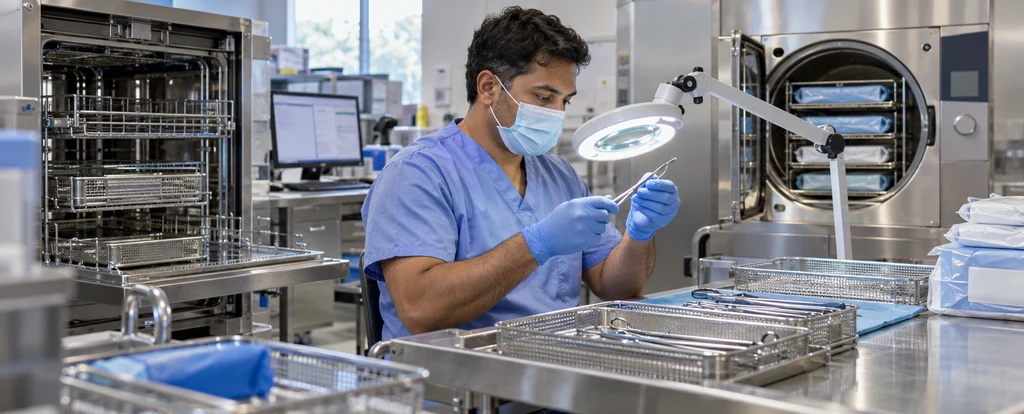
Sterilisation technicians clean, inspect and sterilise the surgical instruments hospitals reuse, recording each load so every tray can be traced back to a patient.
- Median salary*
- $62,400
4.2%vs last year, before tax
- People employed
- 4,900
0.0%vs last year
- Projected growth*
- +7%
to 2035
- AI exposure*
- Moderate
- automation risk
- Average hours*
- 38/wk
−2h vs all jobs
- Shortage status*
- Not in shortage
national
Sterilisation technicians work in a hospital or clinic central sterilising department, where instruments come back from theatre to be decontaminated, checked, packed and sterilised for the next procedure. The department runs to a documented, audited process, and every load is recorded so a tray can be traced to the patient if something goes wrong. Unlike operating theatre technicians, they rarely meet the people whose surgery they support; the work happens behind closed doors and to a strict standard.
How much do sterilisation technicians earn?
The median full-time salary for a sterilisation technician is $62,400 per annum, before tax, up $13,100 since 2018.
Pay generally follows a hospital or health service enterprise agreement, so rates differ between public hospitals and private clinics doing the same work. Penalty rates matter here, because sterilising departments run early, evening and weekend shifts around operating lists, which lifts take-home pay above the base rate. Senior technician, team leader and quality roles are the main way the figure moves up.
What does a sterilisation technician do day to day?
The list below is what fills most weeks; the exact mix shifts with seniority and whatever stage the current work is at.
- Collecting used instruments from theatres and clinics and sorting them for reprocessing
- Loading and running washer-disinfectors and ultrasonic cleaners to strip blood and tissue
- Inspecting each instrument by hand for damage, wear and cleanliness, because a cracked ratchet or a missed spot of debris has to be caught before the tray goes out
- Assembling instruments into trays against a count sheet and wrapping them for sterilisation
- Running steam autoclaves, reading the cycle records and scanning trays into the tracking system
What skills do sterilisation technicians need?
Employers look for infection control and hygiene, plant and equipment operation, inventory management, backed by Washer-disinfector fluency and strong attention to detail.
Specialist skills
- Infection control and hygiene
- Plant and equipment operation
- Inventory management
- Process improvement
- Regulatory compliance
Software and tools
- Washer-disinfector
- Steam autoclave
- Ultrasonic cleaner
- Instrument tracking system (T-DOC)
- Biological indicator incubator
General skills
- Attention to detail
- Safety and compliance awareness
- Written communication
Is the job growing?
About 4,900 people work as sterilisation technicians in Australia, and employment is projected to grow 7% over the decade to 2035. That's modest growth: demand is steady rather than booming.
How do you become a sterilisation technician?
Here's the path most sterilisation technicians take, step by step.
- 1Complete a Certificate III in Sterilisation Services
This is the standard qualification for the job, covering decontamination, instrument inspection, packaging, sterilisation methods and the standards that govern them. It takes about a year through TAFE or a private registered training organisation, and many people study while working in a sterilising department.
- 2Get a start in a central sterilising department
Hospitals often hire sterilising services assistants and train them on the job, which makes this one of the more accessible ways into hospital work. Traineeships combine paid shifts with the certificate, so you learn the instruments and the record keeping at the same time. Some people arrive from a hospital orderly role.
- 3Learn the standard the department is audited against
Reprocessing in Australian hospitals follows AS/NZS 4187, which sets out how instruments are cleaned, checked, sterilised and traced. Knowing it well is what separates a technician who follows a procedure from one who can explain why it exists, and it is usually covered in the certificate.
- 4Take on senior or team leader duties
Experienced technicians move into quality, rostering, training and supervising the department, sometimes with a Certificate IV in sterilisation services or a leadership qualification where it is offered. Larger hospitals also have roles in instrument tracking and compliance, which suit technicians who like the systems side of the work.
Study routes we have checked
Qualifications that are a recognised way into this role, and what else you need.
- Certificate III in Sterilisation Services
A recognised route into this role
Instrument sterilisation and reprocessing duties within the qualification and employer infection-control procedures.
Ready to apply as a sterilisation technician?
Whether you're working toward becoming a sterilisation technician or already are one and want a hand with the next step (sharpening your resume for ATS screening, tightening your cover letter, or knowing what you'll actually be asked at interview), here are examples grounded in this specific role, not generic templates.
What jobs can a sterilisation technician move to?
Moving into Operating Theatre Technician typically comes with the biggest pay rise, worth $18,200 a year more on average.
| Move to | Typical pay change | Overlap | Retraining |
|---|---|---|---|
| Operating Theatre Technician Sterilisation technicians bring instrument handling and sterile technique to theatre work, needing further study to assist in surgery. | +$18,200 | 41% | reskill |
| Anaesthetic Technician Sterilisation technicians move into anaesthetic support, using their sterile knowledge but requiring extra study in anaesthetic equipment and monitoring. | +$18,200 | 41% | reskill |
| Mortuary Technician Sterilisation technicians bring infection control and instrument care to mortuary work, with a short course covering body preparation. | +$8,300 | 50% | short course |
| Dialysis Technician Sterilisation technicians bring sterile technique to dialysis, needing further training in machine operation and patient care. | +$7,800 | 41% | reskill |
Moves are chosen from Jobs and Skills Australia's Data on Occupation Mobility, which follows income tax records between 2011-12 and 2020-21, together with entry requirements and skill overlap. A known move is one people were seen making in that data. Pay change compares median full-time pay for the two roles.
Who works as a sterilisation technician?
The typical sterilisation technician is 50 years old; 67% are women, 58% work full-time, and full-timers average 38 hours a week.
- 50
- Median age
- 67%
- Female share
- 58%
- Full-time
- −2h
- vs all-jobs avg
What's it like being a sterilisation technician?
The day has a rhythm set by the operating lists: instruments arrive in batches, and the trays have to be back, sterile and traceable before the next session. It is physical, repetitive work in a hot, wet room, with little patient contact and no room for a skipped step. People who settle into it tend to like a clear procedure, a tidy finish and the knowledge that a surgeon is relying on what they packed.
What people like
- Your work goes straight into patient safety. Every tray you release is used in surgery, and a missed crack or a failed cycle is the kind of thing that reaches a patient. The line between what you do and what happens in theatre is short.
- The procedure is defined and written down. You are not guessing at the right way to do something. The standards specify how each stage runs, and you can tell when a load has been done properly.
- A calm, behind-the-scenes environment. There are no wards, no visitors and no bedside conversation. It suits people who prefer to concentrate on a task and finish it before moving on.
- You can train while you earn. Traineeships and hospital-based entry mean you can be working paid shifts while you complete the certificate, which keeps the cost of getting in lower than many health roles.
What people find hard
- Repetition is the work. Every instrument goes through the same sequence, shift after shift. Errors come from lapses in that routine, so the job asks for consistency rather than variety.
- Heat, steam and time on your feet. Washer-disinfectors and autoclaves put out heat and moisture, and you spend most of the shift standing in PPE moving loaded trays and racks.
- Shift and weekend rosters. Departments that serve emergency theatres run early starts, evenings and weekends, and some hospitals also roster on-call. It is not a Monday to Friday job everywhere.
- Instruments arrive contaminated. Used surgical instruments carry blood and tissue, and handling them safely means following the decontamination process exactly, every time, without shortcuts.
Based on our synthesis of professional-body surveys and public accounts of the role, not first-person verified reviews.
Which industries employ sterilisation technicians?
Health Care and Social Assistance employs the largest share of sterilisation technicians, followed by Manufacturing.
Top employing industries
- 1Health Care and Social Assistance
- 2Manufacturing
Ranked by employment share; the source doesn't publish an exact percentage per industry.
| Certificate III/IV | 34% | |
|---|---|---|
| Diploma / Advanced Diploma | 26% | |
| Bachelor degree | 20% | |
| Year 12 or below | 20% |
Will AI replace sterilisation technicians?
This job sits at a moderate level of exposure. Much of the machinery in a sterilising department is already automated, and instrument tracking software has replaced the traceability records that used to be written by hand. What keeps a person in the role is the manual work either side of the machines: sorting contaminated instruments, then inspecting and assembling them to a count sheet.
Share of typical working time by exposure level
- Running washer-disinfectors and autoclavesValidated programs do the cleaning, but a technician still loads the machine correctly, reads the cycle printout and decides whether a failed cycle means reprocessing the whole load.30%moderate
- Inspecting and assembling instrument traysChecking that a ratchet holds, a scissor cuts or a cannulated instrument is clear is still done by eye and hand against a count sheet, and it is the step that most often stops a tray going out.30%low
- Sorting and decontaminating used instrumentsInstruments arrive from theatre in mixed, contaminated batches, so they have to be checked against the count sheet, sorted and loaded by hand before anything can be cleaned.20%low
- Recording loads and tracing instrumentsScanning trays into the tracking system and keeping the sterilisation records is largely software work already, and barcodes and automated logging have taken over most of it.20%high
Moves least exposed to AI
These career moves from sterilisation technician work are rated low for AI exposure:
- Operating Theatre Technician
Solid skill overlap (41%), reskill to get there, and a low automation-risk profile.
- Dialysis Technician
Solid skill overlap (41%), reskill to get there, and a low automation-risk profile.
Common questions about becoming a sterilisation technician
Straight answers to the questions people ask most.
How much do sterilisation technicians earn?
Full-time sterilisation technicians earn a median of $62,400 per year before tax. Pay is set by the hospital or health service enterprise agreement rather than one national rate, so your employer, your seniority and how much penalty-rate shift work you take on all change the figure.
How do you become a sterilisation technician?
The usual route is a Certificate III in Sterilisation Services (HLT37015), which takes about a year and can be done while working in a hospital sterilising department. Many technicians start as assistants and study on the job, because hospitals prefer to train people they already employ.
Are sterilisation technicians in demand?
Sterilisation technicians are currently not in shortage, and employment is projected to grow 7% over the decade to 2035. Every hospital and day surgery that reuses instruments needs a reprocessing service, so openings come up across both the public and private systems.
Will AI replace sterilisation technicians?
The machines are already automated and instrument tracking software has taken over most of the records, but the handling and the visual inspection still need a person. What is changing is the paperwork side, which has become a scanning task rather than a written one.
What can a sterilisation technician move into?
The moves that make sense from here go sideways into other hospital technical roles, since you already hold the sterile technique and instrument knowledge they need. Operating theatre technicians handle the same instruments on the sterile field and earn $18,200 more, though getting there takes further study in surgical assistance. Mortuary technician work uses the same infection control discipline and pays $8,300 more, with a short course covering body preparation.
Do sterilisation technicians need to be registered?
No. Sterilisation technicians are not registered with AHPRA and there is no licence to hold, so your qualification and your employer's training are what count. Some hospitals ask for the Certificate III before you work unsupervised in the packing and sterilisation areas.
Related roles
- Operating Theatre Technician
- Anaesthetic Technician
- Mortuary Technician
- Dialysis Technician
- Hospital Orderly
- Biomedical Technician
Not sure this is you? Take the career quiz and get a ranked shortlist of roles that fit how you like to work.