Tunneller
Tunnellers excavate and support the underground passages that carry roads, rail, water and services beneath cities and hills.
- Median salary*
- $111,800
3.7%vs last year, before tax
- People employed
- 520
4.0%vs last year
- Projected growth*
- +7%
to 2035
- AI exposure*
- Low
- automation risk
- Average hours*
- 46/wk
+6h vs all jobs
- Shortage status*
- In shortage
national
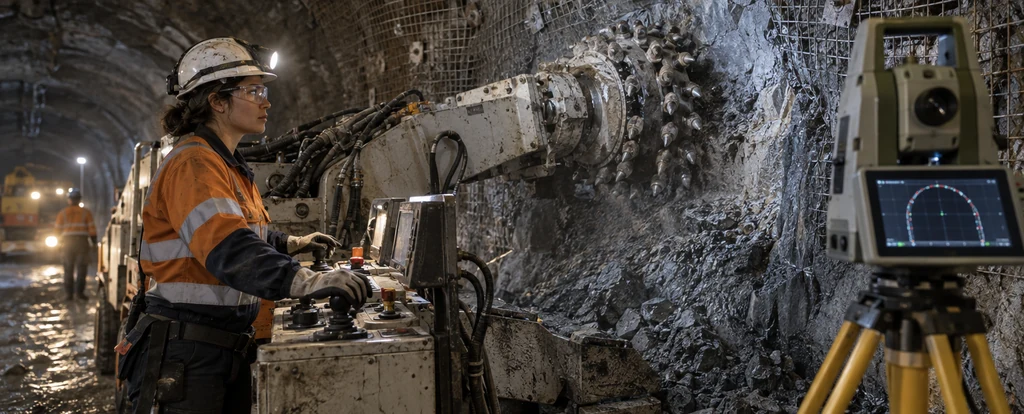
Tunnellers build and line underground openings for transport, water, utility and mining projects, working from the face of the excavation back to the finished structure. Much of the job happens in a confined heading where ground conditions, ventilation and alignment all need watching at once, and crews often work shifts on remote or drive-in drive-out projects. It is different from general civil construction because the work is under rock, and it is usually done for specialist contractors rather than the main builder on site.
How much do tunnellers earn?
The median full-time salary for a tunneller is $111,800 per annum, before tax, up $23,100 since 2018.
Underground conditions and project rosters are what move tunnelling pay rather than the trade itself. Shift penalties, confined space and remote allowances, and enterprise agreements on major projects all add to the base rate, and mining work pays on a different scale from urban transport jobs. Experience on roadheaders or boring machines, and a leading hand or supervisory role, pushes it further again.
What does a tunneller do day to day?
The list below is what fills most weeks; the exact mix shifts with seniority and whatever stage the current work is at.
- Drilling and blasting rock at the tunnel face to advance the heading
- Operating roadheaders and tunnel boring machines
- Installing rock bolts, mesh and shotcrete to support the ground
- Setting up and maintaining ventilation, lighting and dewatering systems
- Working from survey setouts and engineering drawings to hold the tunnel line and level
What skills do tunnellers need?
Employers look for worksite safety management, hand and power tool work, plant and equipment operation, backed by Total station fluency and strong physical stamina and dexterity.
Specialist skills
- Worksite safety management
- Hand and power tool work
- Plant and equipment operation
- Reading plans and specifications
- Installation and maintenance
Software and tools
- Total station
- Leica geosystems software
- Roadheader control systems
- Rock bolting rigs
- Shotcrete equipment
General skills
- Physical stamina and dexterity
- Attention to detail
Is the job growing?
About 520 people work as tunnellers in Australia, and employment is projected to grow 7% over the decade to 2035. That's modest growth: demand is steady rather than booming.
How do you become a tunneller?
Here's the path most tunnellers take, step by step.
- 1Finish Year 10 or Year 12 with reasonable maths and English
Employers look for solid school results and a general construction induction card (White Card) before you set foot on a site, since every tunnelling project starts with site induction and safety training.
- 2Get site experience as a civil construction or mining labourer
Tunnelling crews recruit mostly from people who already know how a construction or mine site runs. This step is paid work and typically takes a few months to a couple of years, and it is how most people get their first underground start.
- 3Complete a Certificate III in civil construction with a tunnelling or plant specialisation
This is often done as a traineeship through your employer and takes around 12 to 24 months. It covers ground support, plant operation and the underground competencies that site work alone will not teach you.
- 4Add the site-specific licences and qualifications
Confined space entry, working at heights, gas testing and plant operator licences are standard requirements, and underground coal or metalliferous mining competencies apply if you move into mining projects. Which ones you need depends on the state and the site.
- 5Build toward leading hand or shift supervisor
With several years underground, the usual progression is running a crew or a shift, which brings responsibility for the face, the ground support program and the people working under it.
Ready to apply as a tunneller?
Whether you're working toward becoming a tunneller or already are one and want a hand with the next step (sharpening your resume for ATS screening, tightening your cover letter, or knowing what you'll actually be asked at interview), here are examples grounded in this specific role, not generic templates.
What jobs can a tunneller move to?
Moving into Miner typically comes with the biggest pay rise, worth $39,400 a year more on average.
| Move to | Typical pay change | Overlap | Retraining |
|---|---|---|---|
| Miner A tunneller brings ground support and underground excavation skills to mining, though mining competencies require substantial retraining. | +$39,400 | 42% | reskill |
| Driller A tunneller brings experience operating drilling equipment underground, moving into drilling roles with additional tickets. | +$39,400 | 36% | reskill |
| Shot Firer A tunneller brings drill and blast experience and underground safety awareness to shot firing, needing a blasting ticket. | +$7,800 | 46% | short course |
| Conveyor Belt Splicer A tunneller understands underground conveyor systems and maintenance, moving into belt splicing with minimal extra training. | +$7,800 | 78% | minimal |
Moves are chosen from Jobs and Skills Australia's Data on Occupation Mobility, which follows income tax records between 2011-12 and 2020-21, together with entry requirements and skill overlap. A known move is one people were seen making in that data. Pay change compares median full-time pay for the two roles.
Who works as a tunneller?
The typical tunneller is 37 years old; 98% are men, 89% work full-time, and full-timers average 46 hours a week.
- 37
- Median age
- 2%
- Female share
- 89%
- Full-time
- +6h
- vs all-jobs avg
What's it like being a tunneller?
Tunnelling runs on shifts, and the job is physical from start to finish: you are working with heavy plant in a confined, noisy and often wet space. The rhythm is set by how fast the face can be advanced safely, so a good day is a productive one with no ground movement surprises. People who stay in the job tend to like the crew culture and the fact that the finished tunnel is something permanent and visible.
What people like
- The scale of what you build. A completed tunnel is a piece of infrastructure that carries traffic or water for decades, and the crew that drove it knows exactly which metres they did.
- Crews are tight. Working underground in small teams on long shifts builds familiarity quickly, and most tunnellers describe the people as the main reason they stay.
- Skills that carry across industries. Ground support, drilling, plant operation and underground safety habits are wanted in mining and civil projects, so the experience travels.
- Something changes every shift. Rock conditions vary along the drive, so the method and the support plan get adjusted as the face moves, which keeps the work from feeling repetitive.
What people find hard
- Ground conditions do not wait. A weak zone or an unexpected inflow of water has to be dealt with before the face can advance, which can mean long, uncomfortable shifts and changed plans.
- Confined, noisy and wet. Ventilation, dust suppression and dewatering keep the air breathable and the floor passable, but the environment is still cramped and loud for the whole shift.
- Rosters and travel. Many tunnelling jobs are on major projects that run shifts around the clock, sometimes away from home on a drive-in drive-out or fly-in fly-out arrangement.
- Weather and program pressure. Surface works stop in heavy rain and program dates rarely move, so delays get made up later, often in overtime.
Based on our synthesis of professional-body surveys and public accounts of the role, not first-person verified reviews.
Which industries employ tunnellers?
Heavy and civil engineering construction employs the largest share of tunnellers, followed by Mining.
Top employing industries
- 1Heavy and civil engineering construction
- 2Mining
- 3Building construction
- 4Water supply, sewerage and drainage services
Ranked by employment share; the source doesn't publish an exact percentage per industry.
| Certificate III/IV | 34% | |
|---|---|---|
| Diploma / Advanced Diploma | 26% | |
| Bachelor degree | 20% | |
| Year 12 or below | 20% |
Will AI replace tunnellers?
This is a low-exposure job. The work happens at a rock face where conditions change as you advance, and the operator driving a roadheader or placing rock bolts is reading the ground and adjusting in real time. Automation has reshaped parts of the job already, with machine guidance, total stations and remote monitoring taking over survey setout and machine alignment, but it has not replaced the people at the face.
Share of typical working time by exposure level
- Drilling and blasting to advance the faceDrill rigs are increasingly computer controlled, but the pattern, the charge and the decision to fire still depend on someone reading the rock.30%low
- Installing ground supportRock bolting rigs speed up the drilling, though placing mesh and shotcrete and judging how much support a zone needs remains manual work.30%low
- Survey setout and alignment controlTotal stations and machine guidance systems with Leica software now calculate the tunnel line, so tunnellers read and act on the setout rather than setting it out by hand.20%moderate
- Ventilation, dewatering and servicesMonitoring systems flag gas levels and pump performance, but running and maintaining the ventilation and dewatering setup through a shift is still hands-on.20%low
Common questions about becoming a tunneller
Straight answers to the questions people ask most.
How much do tunnellers earn?
Tunnellers earn a median of $111,800 per annum, before tax. Underground allowances, shift penalties and remote project agreements are what lift pay above the base rate, and machine operators and supervisors sit at the higher end.
How do you become a tunneller?
Most tunnellers start as a civil construction or mining labourer and move underground once they have a safety record and site experience. From there, a Certificate III in civil construction (RII30926) with a tunnelling or plant specialisation, plus confined space and gas testing qualifications, opens up the face work.
Are tunnellers in demand?
Tunnellers are currently in shortage nationally, and employment is projected to grow 7% over the decade to 2035 over the decade to 2035. That growth comes off a small base of about 520 people, so openings appear project by project rather than steadily, and being willing to travel to a major project helps.
Will AI or automation replace tunnellers?
Exposure is low, because the job happens at a rock face where the ground changes metre by metre and someone has to read it and respond. Machine guidance, total stations and remote monitoring already handle survey setout and machine alignment more precisely than a person can, and tunnel boring machines have long automated the cutting on soft ground. Ground support, plant handling and the decisions about how to get through a bad zone still need people underground.
What can tunnellers move into?
Shot firing is a common move, using the same drill and blast experience with a blasting licence, and pays around $7,800 more. Conveyor belt splicing is the closest fit, since tunnellers already maintain underground conveyors, and pays around $7,800 more. Moving into mining uses the ground support skills but needs substantial retraining in mining competencies.
What hours do tunnellers work?
Full-time tunnellers average about 46 hours a week, and that figure reflects the shift rosters on major projects rather than a standard day. Shifts are usually eight to twelve hours, day and night, often on a rotation that includes weekend work.
Related roles
Not sure this is you? Take the career quiz and get a ranked shortlist of roles that fit how you like to work.