Van Salesperson
Van salespersons sell and deliver stock straight from a light commercial van, calling on the same retail, hospitality and foodservice customers each week.
- Median salary*
- $65,000
4.2%vs last year, before tax
- People employed
- 1,400
0.0%vs last year
- Projected growth
- +7.8%
to 2035
- AI exposure*
- Moderate
- automation risk
- Average hours
- 46/wk
+6h vs all jobs
- Shortage status*
- Not in shortage
national
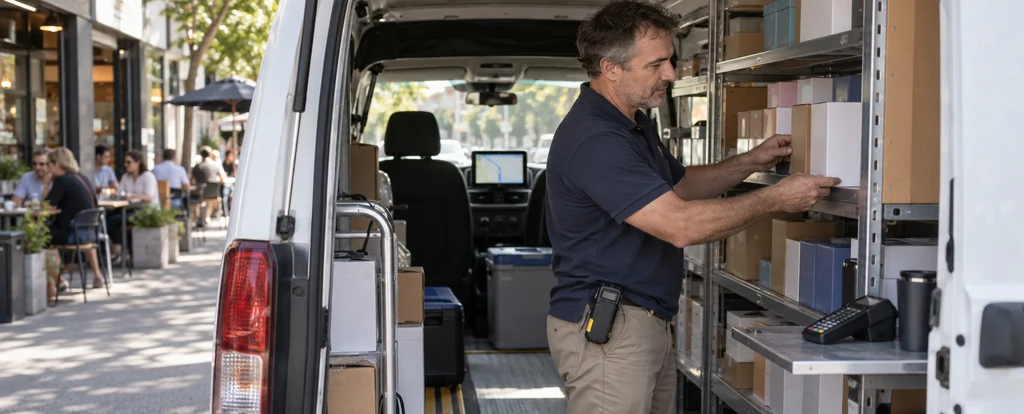
Van salespersons load a van with stock, run a fixed route of shops and foodservice customers, and sell extra lines on the spot as they go. What separates the job from delivery driving is that the stock has not been ordered in advance: they carry it, present it and write the order at the counter. Most work in wholesale food, beverage and bakery supply, where the same run is repeated each week.
How much do van salespersons earn?
The median full-time salary for a van salesperson is $65,000 per annum, before tax, up $13,700 since 2018.
Pay depends heavily on the run: a larger route with more accounts carries more commission or bonus on sales targets, and some employers pay above the award for early starts and weekend work. Enterprise agreements in wholesale and food manufacturing set the base rate for many of these jobs, and roles that add a heavier vehicle licence sit at the higher end.
What does a van salesperson do day to day?
The list below is what fills most weeks; the exact mix shifts with seniority and whatever stage the current work is at.
- Loading and checking stock in the van before the first call
- Driving a set route through retail and hospitality customers
- Selling and upselling products face to face during each visit
- Taking orders and processing payments, invoices and credits on the spot
- Restocking customer shelves and rotating stock to keep it fresh
What skills do van salespersons need?
Employers look for selling and negotiation, driving and transport operations, inventory management, backed by Mobile sales app fluency and strong customer service.
Specialist skills
- Selling and negotiation
- Driving and transport operations
- Inventory management
- Merchandising and stock presentation
- Operations management
- Account and relationship management
Software and tools
- Mobile sales app
- Handheld barcode scanner
- EFTPOS terminal
- GPS navigation system
- Inventory management software
General skills
- Customer service
Is the job growing?
About 1,400 people work as van salespersons in Australia, and employment is projected to grow 7.8% over the decade to 2035. That's modest growth: demand is steady rather than booming.
How do you become a van salesperson?
Here's the path most van salespersons take, step by step.
- 1Get a full car licence
You will be driving a light commercial van for most of the day, so a full Australian car licence and a clean driving record are the first things employers check.
- 2Build customer-facing experience
Retail, hospitality or foodservice work teaches the stock handling and customer conversation the job runs on. About 52% of the people currently in the role hold a Year 12 qualification or below, so a certificate is not the usual entry point, though a Certificate III in Retail or Business can help you stand out.
- 3Start on a relief or offsider run
Many people enter as a driver's offsider, merchandiser or relief driver, which lets them learn the route, the customers and the product range before carrying a sales target of their own.
- 4Apply for your own run
Wholesale food, beverage and bakery distributors recruit for specific routes. They usually train new starters on their ordering app and payment systems, and a police check is common.
Ready to apply as a van salesperson?
Whether you're working toward becoming a van salesperson or already are one and want a hand with the next step (sharpening your resume for ATS screening, tightening your cover letter, or knowing what you'll actually be asked at interview), here are examples grounded in this specific role, not generic templates.
What jobs can a van salesperson move to?
Moving into Truck Driver typically comes with the biggest pay rise, worth $36,900 a year more on average.
| Move to | Typical pay change | Overlap | Retraining |
|---|---|---|---|
| Truck Driver A van salesperson brings delivery experience and customer knowledge to truck driving, with retraining for a heavier vehicle licence.Known move | +$36,900 | 25% | reskill |
| Sales Representative A van salesperson brings direct selling and account relationships to a sales representative role, with retraining in broader business sales. | +$23,000 | 30% | reskill |
| Delivery Driver A van salesperson brings route knowledge, customer contact and stock handling to delivery driving, with retraining for the role.Known move | +$3,000 | 30% | reskill |
Moves are chosen from Jobs and Skills Australia's Data on Occupation Mobility, which follows income tax records between 2011-12 and 2020-21, together with entry requirements and skill overlap. A known move is one people were seen making in that data. Pay change compares median full-time pay for the two roles.
Who works as a van salesperson?
The typical van salesperson is 48 years old; 68% are men, 58% work full-time, and full-timers average 46 hours a week.
- 48
- Median age
- 32%
- Female share
- 58%
- Full-time
- +6h
- vs all-jobs avg
What's it like being a van salesperson?
The day starts early, often before dawn, because the run has to be finished while customers are open and receiving stock. It is largely solo work: driving, unloading, a short conversation at each stop and moving on, which suits people who like autonomy and a visible set of tasks. Full-time weeks average 46 hours, and the physical side, cartons in and out of the van and returns picked up, never really stops.
What people like
- You run your own day. Once the route is set, you decide the order of stops, when to take a break and how long to spend with each customer, as long as the run is done.
- Regular customers you get to know. Calling on the same stores each week builds relationships, and a shop owner who trusts you is easier to sell to and quicker to deal with.
- A clear result by the afternoon. Orders taken and stock delivered are visible by the end of the run, so you know how the day went without waiting for a monthly report.
- Variety between driving, selling and lifting. The work changes shape through the day, from loading in the dark to a sales conversation at the counter to sorting returns at the last stop.
What people find hard
- Early starts and long days. Loading before dawn and finishing after the last delivery makes for a long day, and traffic or a late delivery can push the finish time back further.
- Weather and blocked loading docks. Cartons come out of the van in heat, rain or a delivery bay that is already full, and the lifting does not stop because the forecast is bad.
- Returns and credits. Damaged or short-dated stock comes back, and sorting out credits and swaps with each customer adds time to a run that is already tight.
- Sales targets. A large part of the pay can sit on hitting targets, and a quiet week or a customer who stops ordering eats straight into it.
Based on our synthesis of professional-body surveys and public accounts of the role, not first-person verified reviews.
Which industries employ van salespersons?
Accommodation and Food Services employs the largest share of van salespersons, followed by Wholesale Trade.
Top employing industries
- 1Accommodation and Food Services
- 2Wholesale Trade
- 3Retail Trade
Ranked by employment share; the source doesn't publish an exact percentage per industry.
| Year 12 or below | 52.4% | |
|---|---|---|
| Certificate III/IV | 22.5% | |
| Diploma / Advanced Diploma | 8.8% | |
| Bachelor degree | 8.6% | |
| Postgraduate | 2.5% |
Will AI replace van salespersons?
AI reaches the paperwork and route planning in this job more than the job itself. Sales apps, route optimisation and inventory software now handle order entry, suggested stock levels and the most efficient run order, which takes admin time out of the day. The selling at the counter and the physical delivery depend on being there in person, so the exposure is moderate rather than high.
Share of typical working time by exposure level
- Selling and upselling at each stopReading a shop's shelf, suggesting a new line and handling a face-to-face no is done in person, and software can only prompt what to offer.30%low
- Planning the run and ordering stock for the vanRoute software suggests the stop order and stock levels for each customer, but you still adjust for roadworks, school hours and a shop that needs its delivery before opening.25%moderate
- Processing payments, invoices and creditsEFTPOS terminals, handheld scanners and mobile sales apps already capture the order and raise the invoice on the spot, with credits for returns often approved online.25%high
- Loading, unloading and merchandising stockCartons still come off the van by hand, and rotating stock on a customer's shelf is physical work that automation has barely touched in this role.20%low
Common questions about becoming a van salesperson
Straight answers to the questions people ask most.
How much does a van salesperson earn?
Van salespersons earn a median of $65,000 per annum, before tax, and that figure should be treated as a guide. Route size, commission and overtime move it considerably, so two people doing similar work at different employers can take home quite different amounts.
How do you become a van salesperson?
You need a full car licence and a clean driving record first, then customer-facing experience in retail, hospitality or foodservice helps you get a start. Most people learn the role on a relief or offsider run before taking responsibility for their own customer list.
Are van salespersons in demand?
Van salespersons are currently not in shortage, and employment is projected to grow 7.8% over the decade to 2035. With about 1,400 people in the role nationally, openings tend to be local, so approaching wholesalers, foodservice distributors and bakeries in your area is more useful than watching a national figure.
Will AI replace van salespersons?
Not the whole job. Sales apps, route planning and inventory software already handle much of the order entry, stock suggestion and admin, while the driving, unloading and selling at the customer's door still need someone there in person.
What can a van salesperson move into?
Delivery driving uses the same routes and customer knowledge, with pay around $3,000 more and no sales target to carry. Truck driving adds a heavier licence and pays around $36,900 more, while a sales representative role keeps the account relationships and pays around $23,000 more.
What is the difference between a van salesperson and a delivery driver?
A delivery driver drops off goods that have already been ordered, while a van salesperson carries stock on the van, presents it and sells on the spot. That is why the pay usually includes a sales component and the day holds more customer conversation.
Related roles
Not sure this is you? Take the career quiz and get a ranked shortlist of roles that fit how you like to work.