Window Tinter
Window tinters apply film to vehicle and building glass to cut heat and glare and protect what's inside.
- Median salary*
- $65,000
4.3%vs last year, before tax
- People employed*
- 4,200
0.0%vs last year
- Projected growth*
- +3%
to 2035
- AI exposure*
- Low
- automation risk
- Average hours*
- 40/wk
matches all-jobs average
- Shortage status*
- Not in shortage
national
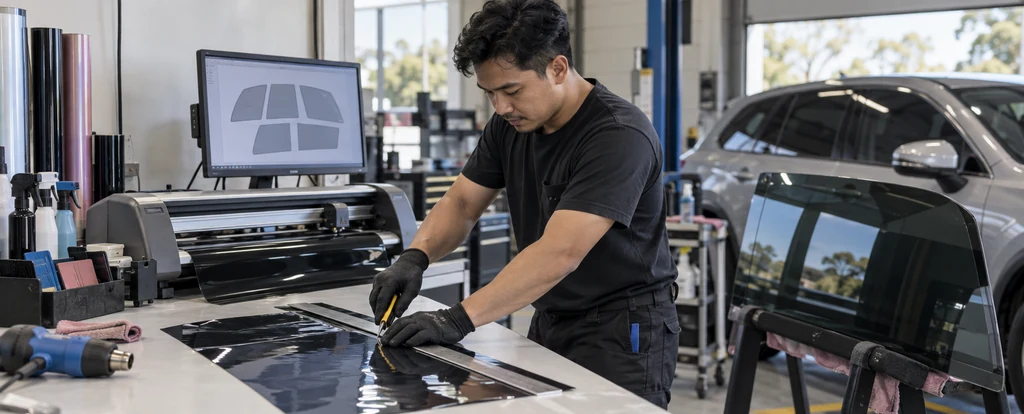
Most tinting work is automotive, done in a workshop bay, at a dealership or from a mobile van that goes to the customer. Architectural tinters do the same job on homes, offices and shopfronts, where measuring, access and the film's heat or safety rating matter more than the shape of the glass. No specific qualification is required to start, and much of the skill is picked up on the job.
How much do window tinters earn?
The median full-time salary for a window tinter is $65,000 per annum, before tax, up $13,700 since 2018.
Pay depends on whether you're an employee or working for yourself, and on how much of the work is repeat dealership and builder contracts rather than one-off retail jobs. Employees are often paid an hourly rate or a set rate per car, with more for mobile call-outs and premium film. Working for yourself means covering film, tools, insurance and the van, but keeping more of each job when bookings are steady.
What does a window tinter do day to day?
The list below is what fills most weeks; the exact mix shifts with seniority and whatever stage the current work is at.
- Measuring glass and cutting film to size for a vehicle or a window
- Cleaning and preparing the glass so no dust ends up under the film
- Applying film with a squeegee and heat gun to work out bubbles and creases
- Stripping old or damaged film and scraping off the adhesive
- Talking customers through film options and the legal tint limits in their state
What skills do window tinters need?
Employers look for hand and power tool work, craft and handmade production, worksite safety management, backed by Heat gun fluency and strong attention to detail.
Specialist skills
- Hand and power tool work
- Craft and handmade production
- Worksite safety management
- Installation and maintenance
- Quoting and estimating
Software and tools
- Heat gun
- Squeegee and applicator kit
- Film cutting plotter
- Computer film-cutting software
- Automotive and architectural window film
General skills
- Attention to detail
- Customer service
Is the job growing?
About 4,200 people work as window tinters in Australia, and employment is projected to grow 3% over the decade to 2035. That's modest growth: demand is steady rather than booming.
How do you become a window tinter?
Here's the path most window tinters take, step by step.
- 1Get a start as an offsider in a tinting or accessories workshop
This is paid work with no entry qualification, and it's where most tinters learn glass preparation, film handling and how a job is priced. Expect to watch for a while before you work on a customer's car.
- 2Learn the technique through a short course or supplier training
Film manufacturers and some training providers run courses of a few days covering film application and heat shrinking, and some TAFE automotive glazing subjects cover related glass work. These are much shorter than a trade apprenticeship and are usually self-funded.
- 3Get accredited with a film brand
Brand accreditation and a portfolio of finished jobs are what dealerships, builders and fleet customers ask about, and they often separate retail walk-in work from steadier contract jobs.
- 4Add the architectural side or site work
Architectural film comes in wider rolls and goes onto glass you reach with ladders or scaffolding, so access and safety matter more, and construction sites generally require a White Card. Tint limits on vehicle glass also vary by state, so learn the rules where you work.
- 5Build a client base and consider a mobile setup
Many experienced tinters go out on their own, from a fixed workshop or a van, and that is often where earnings grow. It means buying film in bulk, insuring the work and finding your own bookings.
Ready to apply as a window tinter?
Whether you're working toward becoming a window tinter or already are one and want a hand with the next step (sharpening your resume for ATS screening, tightening your cover letter, or knowing what you'll actually be asked at interview), here are examples grounded in this specific role, not generic templates.
What jobs can a window tinter move to?
None of the roles window tinters typically move into pay more than the role itself. Vehicle Accessories Fitter is the closest match. If a bigger salary is the goal, moving up into a senior or principal position within the role is usually the faster route than moving sideways.
| Move to | Typical pay change | Overlap | Retraining |
|---|---|---|---|
| Vehicle Accessories Fitter Uses trim removal and precise fitting skills to install vehicle accessories, needing further training in electrical and accessory systems. | +$0 | 40% | reskill |
| Auto Glazier Uses glass handling and vehicle interior knowledge to replace and repair windscreens, needing training in auto glazing. | +$0 | 36% | reskill |
| Fencer Uses measuring, cutting and fixing skills to install fencing, needing short course training in fencing materials and methods. | −$100 | 50% | short course |
Moves are chosen from Jobs and Skills Australia's Data on Occupation Mobility, which follows income tax records between 2011-12 and 2020-21, together with entry requirements and skill overlap. A known move is one people were seen making in that data. Pay change compares median full-time pay for the two roles.
Who works as a window tinter?
The typical window tinter is 34 years old; 94% are men, 79% work full-time, and full-timers average 40 hours a week.
- 34
- Median age
- 6%
- Female share
- 79%
- Full-time
- +0h
- vs all-jobs avg
What's it like being a window tinter?
The day runs on bookings: a car in the bay in the morning, another after lunch, and the job is finished when the glass is clean and the customer can drive away. It's physical work, leaning over bonnets and into footwells, with full-time hours averaging around 40 a week. It suits people who like a visible finished result and don't mind repeating the same careful movements until they get quick.
What people like
- The finished job is obvious. A clean install with no dust or bubbles is something you and the customer can see straight away, so the feedback on your work comes fast.
- Every job is a different shape. A flat shopfront pane, a curved rear windscreen and a car door glass each need a different approach to shrinking and trimming.
- Quiet, hands-on days. Most of the time you're working on the glass rather than sitting in meetings, and small operators quote, install and follow up themselves.
- Room to specialise. Tinters can lean towards dealership work, high-end architectural film with heat and security ratings, or mobile work that comes to the customer.
What people find hard
- Mistakes show immediately. Dust under the film or a crease in a corner means pulling it off and starting again, which costs film and time you may not be paid for.
- Hard on the body. Reaching into footwells, bending over bonnets and working overhead on large windows adds up across a week.
- Work follows car sales and the weather. Automotive tinting rises and falls with how many new cars dealerships move, and mobile work stalls on wet days.
- Explaining tint laws. Legal limits on how dark front side windows can be differ by state, and customers regularly ask for darker than the rules allow.
Based on our synthesis of professional-body surveys and public accounts of the role, not first-person verified reviews.
Which industries employ window tinters?
Automotive repair and maintenance employs the largest share of window tinters, followed by Building installation services.
Top employing industries
- 1Automotive repair and maintenance
- 2Building installation services
- 3Motor vehicle retailing
- 4Residential building construction
Ranked by employment share; the source doesn't publish an exact percentage per industry.
| Certificate III/IV | 34% | |
|---|---|---|
| Diploma / Advanced Diploma | 26% | |
| Bachelor degree | 20% | |
| Year 12 or below | 20% |
Will AI replace window tinters?
Window tinting rates low for AI exposure because the job is hands and eyes on glass. Cut plotters and pattern libraries handle the shape of the film, but positioning it, squeegeeing out the slip solution and shrinking it around a curved rear screen are done by hand. What automation mostly changes is how quickly the film arrives ready to fit.
Share of typical working time by exposure level
- Applying film to the glassSetting the film, squeegeeing out the solution and heat shrinking it around a curved screen is hand skill that changes with the glass in front of you.45%low
- Prepping glass and stripping old filmScraping adhesive, cleaning the edges and getting a dust-free surface is what stops bubbles appearing, and it's done by hand with a blade and squeegee.30%low
- Cutting film to patternPattern libraries and plotters cut most vehicle shapes in seconds, but you still check the orientation, adjust for a particular model year and trim the last few millimetres on the glass.15%moderate
- Quoting jobs and advising on filmSoftware can template a quote and schedule bookings, but judging the job in person, recommending a film and explaining state tint limits is a conversation.10%moderate
Common questions about becoming a window tinter
Straight answers to the questions people ask most.
How much do window tinters earn?
$65,000 per year before tax is the median for full-time window tinters, but how you're paid matters as much as the rate. Employees on a set rate per car can earn more in a busy dealership workshop, while those working for themselves carry their own costs.
How do you become a window tinter?
Most tinters start as an offsider in a workshop or a mobile business, learning glass preparation and film handling while watching installs, and there's no entry qualification needed for that first job. Short courses and film supplier accreditation programs teach the technique faster, and a few days of training is enough to begin on straightforward flat glass.
Are window tinters in demand?
Window tinters are currently not in shortage, and employment is projected to grow 3% over the decade to 2035. Because the trade is small, work tends to come through workshops, dealerships and builders rather than advertised vacancies, so approaching them directly is worth doing.
Will AI replace window tinters?
Film plotters and pattern software have already taken over much of the job of cutting film to shape, but the installation itself is still done by hand. Positioning the film, squeegeeing out the solution and shrinking it around curved glass are the parts that keep the role hands-on.
What can a window tinter move into?
The closest moves are into related vehicle work, such as an auto glazier replacing windscreens with the same glass handling skills, or a vehicle accessories fitter using the same trim removal and precise fitting. Fencers are a further step across, since measuring, cutting and fixing materials are shared but the short course training is in fencing methods rather than film. Many experienced tinters also go out on their own with a mobile van or a workshop, and that is often where earnings grow.
What's the difference between automotive and architectural tinting?
Automotive tinting is the larger side of the trade: cars, utes and vans, in a workshop bay or a mobile van. Architectural work covers homes, offices and shopfronts, uses wider rolls of film with heat, privacy and safety ratings, and often involves ladders, scaffolding and site access. Tinters commonly do one for years before adding the other, because the measuring and handling differ quite a bit.
Related roles
Not sure this is you? Take the career quiz and get a ranked shortlist of roles that fit how you like to work.