Aerodrome Reporting Officer
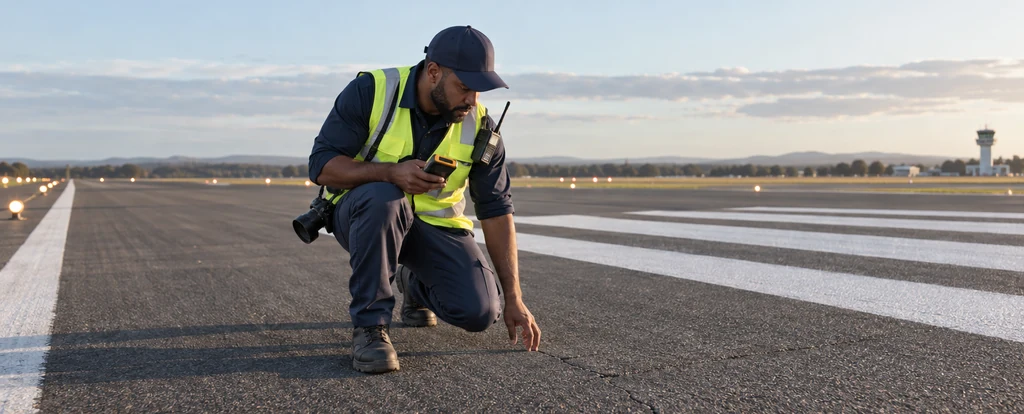
Aerodrome reporting officers inspect runways, taxiways and aprons and report the conditions that pilots and airport managers need to know about.
- Median salary*
- $91,000
3.9%vs last year, before tax
- People employed
- 1,200
0.0%vs last year
- Projected growth*
- +3%
to 2035
- AI exposure*
- Moderate
- automation risk
- Average hours*
- 38/wk
−2h vs all jobs
- Shortage status*
- Not in shortage
national
The work happens airside, at airports ranging from capital city hubs to remote airstrips, and most reporting officers are part of a small operations or safety team. Unlike air traffic control, the job is about the condition of the ground and its lights and markings rather than directing aircraft, and it sits close to the works safety role that oversees contractors airside. Inspections follow a set schedule, so the day has a rhythm: walk the surfaces, record what has changed, and issue the notice that tells pilots about it.
How much do aerodrome reporting officers earn?
The median full-time salary for an aerodrome reporting officer is $91,000 per annum, before tax, up $18,900 since 2018.
Pay is set by the employer rather than by one rate that applies across the industry, so a large airport operator, a Defence base and a remote shire council can offer quite different figures for similar work. Shift rosters, on-call arrangements and penalty rates for nights and public holidays are usually where the base rate grows. Extra credentials, such as taking on works safety officer duties or a broader aviation safety role, can move you into a higher band.
What does an aerodrome reporting officer do day to day?
The list below is what fills most weeks; the exact mix shifts with seniority and whatever stage the current work is at.
- Walking the runway, taxiway and apron on a set inspection schedule, checking for debris, cracking, ponding and faded markings
- Testing surface friction and checking that lights, markers and signs are working
- Raising and cancelling NOTAMs when a surface, light or service is out of action
- Logging defects and inspection records, then tracking them through to repair
- Briefing contractors and ground staff on airside rules, and escorting them while they work near movement areas
What skills do aerodrome reporting officers need?
Employers look for regulatory compliance, field inspection and testing, operations management, backed by CASA NOTAM system fluency and strong attention to detail.
Specialist skills
- Regulatory compliance
- Field inspection and testing
- Operations management
Software and tools
- CASA NOTAM system
- Aerodrome inspection software
- Two-way radio
- GPS
- Digital camera
General skills
- Attention to detail
- Safety and compliance awareness
- Written communication
- Problem solving
Is the job growing?
About 1,200 people work as aerodrome reporting officers in Australia, and employment is projected to grow 3% over the decade to 2035. That's modest growth: demand is steady rather than booming.
How do you become an aerodrome reporting officer?
Here's the path most aerodrome reporting officers take, step by step.
- 1Start with an aviation qualification
Around 34% of people in the job hold a certificate III or IV, and a course in aviation aerodrome operations covers the regulatory basics, inspection methods and reporting duties you will use daily.
- 2Complete aerodrome reporting officer training
A short industry course covers aerodrome inspection, defect reporting, NOTAM procedures and works safety, and most employers list it as a requirement before you work airside without supervision.
- 3Get your airside credentials
You need an Aviation Security Identification Card after a background check, an airside driving authority for the airport you work at, and in most cases an Aeronautical Radio Operator Certificate from CASA to use airband radio.
- 4Build experience on the airside
Many reporting officers come from ground crew, refuelling, baggage handling or local government works, because knowing how an airport operates makes the inspection and reporting duties quicker to learn.
- 5Keep your training and knowledge current
Reporting officer training is refreshed periodically and the civil aviation safety regulations are updated regularly, so staying current is part of holding the role rather than a one-off step.
Ready to apply as an aerodrome reporting officer?
Whether you're working toward becoming an aerodrome reporting officer or already are one and want a hand with the next step (sharpening your resume for ATS screening, tightening your cover letter, or knowing what you'll actually be asked at interview), here are examples grounded in this specific role, not generic templates.
What jobs can an aerodrome reporting officer move to?
Moving into Marine Surveyor typically comes with the biggest pay rise, worth $23,400 a year more on average.
| Move to | Typical pay change | Overlap | Retraining |
|---|---|---|---|
| Marine Surveyor Builds on inspection experience to survey vessels, requiring a diploma and reskilling in maritime regulations and survey methods. | +$23,400 | 63% | reskill |
| Biosecurity Officer Applies inspection and reporting skills to biosecurity compliance, with a short course covering quarantine and environmental regulations. | +$0 | 53% | short course |
| Transport Operations Inspector Brings inspection and compliance skills to transport operations, with a short course adapting aerodrome reporting knowledge to broader transport oversight. | −$2,600 | 93% | short course |
Moves are chosen from Jobs and Skills Australia's Data on Occupation Mobility, which follows income tax records between 2011-12 and 2020-21, together with entry requirements and skill overlap. A known move is one people were seen making in that data. Pay change compares median full-time pay for the two roles.
Who works as an aerodrome reporting officer?
The typical aerodrome reporting officer is 44 years old; 50% are women, 83% work full-time, and full-timers average 38 hours a week.
- 44
- Median age
- 50%
- Female share
- 83%
- Full-time
- −2h
- vs all-jobs avg
What's it like being an aerodrome reporting officer?
The job has a steady, scheduled rhythm: an inspection round in the morning, records and notices through the day, and a response to whatever the weather or a contractor turns up. It suits people who are careful by habit and comfortable working outdoors in a confined, highly regulated environment where small details matter to aircraft. Much of the pressure comes from being the person who decides whether a surface is fit to use.
What people like
- You spend the day outside. The inspection round is walked in the open air rather than sat at a desk, and what you see changes with the weather, the season and the traffic.
- The purpose is easy to see. A piece of debris or a failed light found on the morning round is a hazard removed before the next movement, which makes the reporting feel worth doing.
- Small teams carry real responsibility. At a regional or remote aerodrome, one or two people cover the whole reporting function, so you make the call on when to restrict or close a surface.
- It can include several airfields. Some reporting officers look after a handful of small aerodromes, which adds travel and a change of scene to the week.
What people find hard
- Weather is part of the job. Inspections happen in heat, wind and rain, and a runway check after a storm or a bird strike is not something you can postpone to a finer day.
- The routine is deliberately repetitive. The same route is walked and logged the same way, because the point of an inspection is to notice anything that has changed since yesterday.
- Closing a surface is unpopular. A defect that takes a runway or taxiway out of service costs operators money and disrupts flights, so the report can put you in a difficult conversation with people who would rather wait.
- Some rosters include on-call. Storms, wildlife and damage can require an inspection outside ordinary hours, particularly at airports with very early or very late movements.
Based on our synthesis of professional-body surveys and public accounts of the role, not first-person verified reviews.
Which industries employ aerodrome reporting officers?
Airport Operations employs the largest share of aerodrome reporting officers, followed by Air Transport.
Top employing industries
- 1Airport Operations
- 2Air Transport
- 3Defence
- 4Local Government
- 5Aviation Support Services
Ranked by employment share; the source doesn't publish an exact percentage per industry.
| Certificate III/IV | 34% | |
|---|---|---|
| Diploma / Advanced Diploma | 26% | |
| Bachelor degree | 20% | |
| Year 12 or below | 20% |
Will AI replace aerodrome reporting officers?
Automation reaches parts of this job but not the whole of it. Cameras and drone surveys now sweep the runway for debris and surface damage that officers once walked the full length to check, and mobile inspection apps pull the standard NOTAM wording together from a defect record. What the software can't do is stand at a cracked shoulder joint after heavy rain and decide whether the taxiway stays open, or work the radio with air traffic control while a contractor waits to move onto the apron.
Share of typical working time by exposure level
- Walking inspections of runways and taxiwaysThe walking, looking and feeling for surface damage, ponding or debris is done on foot or from a vehicle, and a camera cannot yet confirm whether a crack or a soft patch is a hazard.35%low
- Coordinating with air traffic control, contractors and ground staffRadio calls, permits and face to face briefings depend on reading a situation and the people in it, and a two way radio conversation has not been automated.30%low
- Writing and issuing NOTAMsAirport management systems can draft the standard wording from a defect record, though the officer still checks the details and sets the time the notice takes effect.20%high
- Inspection logs and defect reportsMobile forms and photo tagging have removed most of the paperwork, and the software now compiles the monthly compliance report from the records the officer enters.15%high
Common questions about becoming an aerodrome reporting officer
Straight answers to the questions people ask most.
How much does an aerodrome reporting officer earn?
Aerodrome reporting officers earn a median of $91,000 per year before tax. Pay varies with the employer, since capital city airport operators, Defence bases and remote councils set their own rates, and shift work, on-call rosters and public holiday coverage usually add allowances on top.
How do you become an aerodrome reporting officer?
Most people get in through a certificate III or IV in aviation aerodrome operations, a short aerodrome reporting officer course, an airside security card and an aeronautical radio certificate. Experience on the airside, from ground crew, refuelling or council works, is a common starting point because the regulations are easier to learn once you know how an airport runs.
Are aerodrome reporting officers in demand?
Aerodrome reporting officers are currently not in shortage, and employment is projected to grow 3% over the decade to 2035. The occupation is small, at about 1,200 people nationally, so it pays to watch the job listings of airport operators, councils and Defence directly rather than expecting a steady flow of advertised vacancies.
Will AI replace aerodrome reporting officers?
Partly, but the physical side of the job is hard to automate. Camera and drone based runway inspection, automated foreign object detection and mobile reporting tools already handle some of the scanning and record keeping, while deciding whether a damaged surface stays open is still made on the ground.
What can aerodrome reporting officers move into?
Some move into transport operations inspection, where the same compliance and field inspection skills carry across and pay is $2,600 less. Others take a short course and shift into biosecurity work, a move that pays about the same and leans on the same inspection and reporting duties.
Do aerodrome reporting officers work shifts?
Often, and it depends on the airport. Larger airports run early and late shifts to cover the first and last movements of the day, while at a small regional aerodrome the work may be a standard week with an on-call roster for storms, wildlife or damage.
Related roles
- Transport Operations Inspector
- Marine Surveyor
- Biosecurity Officer
- Airport Ground Crew
- Aircraft Refueller
- Airline Customer Service Agent
Not sure this is you? Take the career quiz and get a ranked shortlist of roles that fit how you like to work.