Demolition Worker
Demolition workers take buildings and structures apart, clearing sites for new work and recovering steel, concrete and timber along the way.
- Median salary*
- $78,000
4.3%vs last year, before tax
- People employed
- 2,400
0.0%vs last year
- Projected growth*
- +3%
to 2035
- AI exposure*
- Low
- automation risk
- Average hours*
- 42/wk
+2h vs all jobs
- Shortage status*
- Not in shortage
national
Demolition workers pull a building down before something else goes up, working on houses, offices, factories and industrial plant. The job is different from general labouring because so much of it is controlled removal: working out what is load-bearing, what contains asbestos and what can be salvaged. Most work for specialist demolition contractors, usually as part of a small crew with an excavator operator and a leading hand.
How much do demolition workers earn?
The median full-time salary for a demolition worker is $78,000 per annum, before tax, up $16,400 since 2018.
Pay is set by the award or enterprise agreement covering the site, and demolition work commonly attracts allowances for dust, height work, asbestos handling or night shifts. Licences for plant, and the responsibility that comes with running a crew, push rates up. Large contractors on long projects usually pay better than small strip-out firms.
What does a demolition worker do day to day?
The list below is what fills most weeks; the exact mix shifts with seniority and whatever stage the current work is at.
- Stripping internal fixtures, fittings and hazardous materials before structural work starts
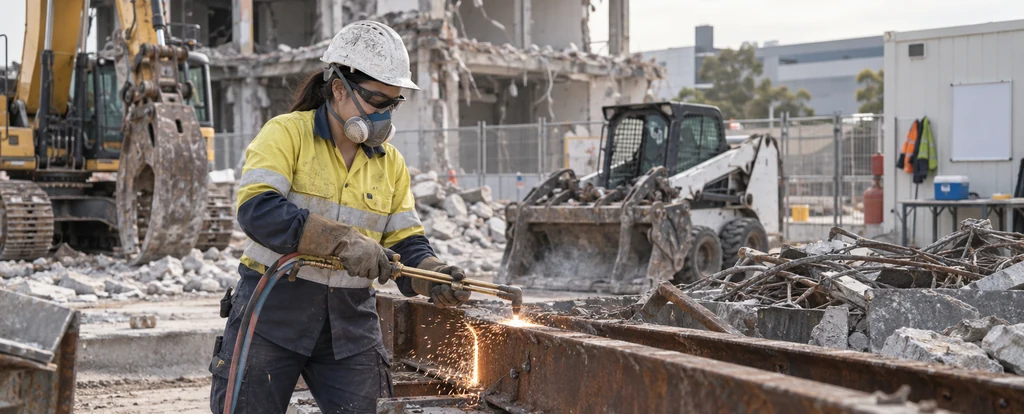
- Using hand tools, power tools and mobile plant to break down walls, slabs and frames
- Sorting demolition waste so concrete, steel and timber can be recycled
- Erecting hoardings, fencing and warning signs to keep the public and other trades clear
- Following demolition plans and safety procedures, including dust and asbestos controls
What skills do demolition workers need?
Employers look for worksite safety management, hand and power tool work, plant and equipment operation, backed by Excavator fluency and strong physical stamina and dexterity.
Specialist skills
- Worksite safety management
- Hand and power tool work
- Plant and equipment operation
Software and tools
- Excavator
- Skid steer loader
- Jackhammer
- Concrete saw
- Oxy-acetylene cutting torch
General skills
- Physical stamina and dexterity
- Attention to detail
- Problem solving
- Written communication
Is the job growing?
About 2,400 people work as demolition workers in Australia, and employment is projected to grow 3% over the decade to 2035. That's modest growth: demand is steady rather than booming.
How do you become a demolition worker?
Here's the path most demolition workers take, step by step.
- 1Get your White Card
General construction induction training is required before you can work on a construction site in any state or territory. It is a short course, often a single day, and some trainers run it online with a practical assessment.
- 2Start as a labourer or offsider
Most demolition workers learn on the job, beginning with strip-out, waste sorting and site cleaning under an experienced crew. It is paid work and the quickest way to find out whether you like the environment.
- 3Add the licences the job needs
High risk work licences cover plant such as excavators and skid steers, and asbestos removal requires nationally recognised training. Requirements vary by state, so check with your local work health and safety regulator before you book anything.
- 4Consider a Certificate III in Demolition
A Certificate III in Demolition covers structural dismantling, planning and safety, and is usually done while you are working. Certificate III/IV is the most common qualification among people already in the job, held by about 34% of them, but you can enter without one.
- 5Specialise or step up
With site experience and the right licences you can move into rigging, crane operation or hazardous material removal, or take on leading hand work running a crew.
Ready to apply as a demolition worker?
Whether you're working toward becoming a demolition worker or already are one and want a hand with the next step (sharpening your resume for ATS screening, tightening your cover letter, or knowing what you'll actually be asked at interview), here are examples grounded in this specific role, not generic templates.
What jobs can a demolition worker move to?
Moving into Crane Operator typically comes with the biggest pay rise, worth $99,400 a year more on average.
| Move to | Typical pay change | Overlap | Retraining |
|---|---|---|---|
| Crane Operator Demolition workers with rigging and load handling experience can train as crane operators through a short licensing course. | +$99,400 | 86% | short course |
| Concreter Demolition workers who break up concrete can move into placing and finishing concrete with minimal retraining. | +$36,900 | 63% | minimal |
| Rigger Demolition workers already handle rigging, lifting and structural dismantling, so they can move into rigging with a short ticket. | +$15,600 | 75% | short course |
| Asbestos Removalist Demolition workers understand hazardous material removal and site safety, moving into asbestos removal with a short course. | −$2,600 | 58% | short course |
Moves are chosen from Jobs and Skills Australia's Data on Occupation Mobility, which follows income tax records between 2011-12 and 2020-21, together with entry requirements and skill overlap. A known move is one people were seen making in that data. Pay change compares median full-time pay for the two roles.
Who works as a demolition worker?
The typical demolition worker is 34 years old; 98% are men, 68% work full-time, and full-timers average 42 hours a week.
- 34
- Median age
- 2%
- Female share
- 68%
- Full-time
- +2h
- vs all-jobs avg
What's it like being a demolition worker?
The rhythm is set by the project rather than the calendar: a strip-out inside a building, then heavy structural work, then clearing the site before the next trade moves in. Days are physical and often start early, and the crew works close together in a space that is constantly changing shape. People who like seeing a job finished and do not mind noise, dust and heavy gear tend to settle into it.
What people like
- The site changes week to week. A building that stood on Monday is a cleared slab by Friday, so the work never looks the same two weeks running.
- You can see what you did. The result is visible and immediate, which suits people who prefer finishing something physical to sitting in meetings.
- A close crew. Demolition teams are small and work in tight spaces, so you get to know the people around you and rely on them directly.
- You can start without a degree. A White Card and a labouring job are enough to get onto a site, with further licences earned as you go.
What people find hard
- Dust, noise and vibration. Cutting concrete and pulling down masonry is loud and messy, and masks, monitoring and rotation are part of every shift.
- Weather and early starts. Much of the work is outdoors or in unheated shells, and crews are usually on site well before the first concrete truck arrives.
- Hazardous surprises. Older buildings hide asbestos, fragile services and undocumented alterations, so a job can stop while the find is assessed and made safe.
- Work is project by project. Contracts end and you move to the next site, which means gaps between jobs and travel across town are normal.
Based on our synthesis of professional-body surveys and public accounts of the role, not first-person verified reviews.
Which industries employ demolition workers?
Construction employs the largest share of demolition workers, followed by Electricity, Gas, Water and Waste Services.
Top employing industries
- 1Construction
- 2Electricity, Gas, Water and Waste Services
- 3Administrative and Support Services
Ranked by employment share; the source doesn't publish an exact percentage per industry.
| Certificate III/IV | 34% | |
|---|---|---|
| Diploma / Advanced Diploma | 26% | |
| Bachelor degree | 20% | |
| Year 12 or below | 20% |
Will AI replace demolition workers?
Demolition work rates as low exposure to AI and automation, because the job happens inside a structure that changes as it comes down and no two sites are the same. Technology does reach parts of it: excavators use machine guidance and tilt sensors, and software handles quoting, waste tracking and recycling records. What stays with the crew is judging how a beam, slab or wall will fall and doing the cutting and pulling by hand.
Share of typical working time by exposure level
- Cutting, breaking and pulling structures down by handSaws, jacks and oxy torches are manual tools, and deciding which cut lets a section fall safely is a judgement made on the spot.35%low
- Operating excavators and skid steersMachine guidance helps with depth and levelling, yet the operator still judges what to pull and where the load will land on a crowded site.30%low
- Sorting waste and checking materials for salvageWaste-tracking apps record what leaves the site, but someone still has to look at a load of timber and steel and decide what can be reused.20%moderate
- Planning a strip-out and reading drawingsTake-off software and digital site plans speed up measuring and quoting, but the plan you start from rarely matches what is behind the plaster.15%moderate
Common questions about becoming a demolition worker
Straight answers to the questions people ask most.
How much does a demolition worker earn?
Median pay for demolition workers is $78,000 per year before tax, and what you take home depends on the site agreement, the allowances attached to the job and the licences you hold. Plant operators and workers on hazardous removal generally earn more than general strip-out labourers.
How do you become a demolition worker?
Start with a White Card, which is required before you can work on a construction site in any state, then look for labouring work with a demolition contractor. Most skills are learned on the job, and plant or asbestos licences come next.
Are demolition workers in demand?
Demolition workers are currently not in shortage, and employment is projected to grow 3% over the decade to 2035. The occupation is small, so vacancies tend to follow construction activity in your region rather than a steady flow of new jobs.
Will AI replace demolition workers?
The work has low exposure to AI and automation, because it happens inside a structure that changes shape as it comes down and no two sites are alike. Machine guidance on excavators and software for quoting and waste tracking make the job faster and better documented, but the cutting, pulling and rigging are still done by people.
What can demolition workers move into?
The closest moves are into crane operation ($99,400 more in median pay), rigging and concreting, all of which build on the load handling and structural work demolition crews already do. Some experienced workers go on to run their own demolition or strip-out business, which is often where earnings grow.
How physically demanding is demolition work?
It is heavy, physical work, with lifting, carrying and long stretches on your feet in dust and noise; full-time workers average about 42 hours a week. Employers have to manage dust, noise and asbestos exposure, so a good crew takes masks, monitoring and rotation seriously.
Related roles
Not sure this is you? Take the career quiz and get a ranked shortlist of roles that fit how you like to work.