Home Manufacturing & Production
Seafood Process Worker
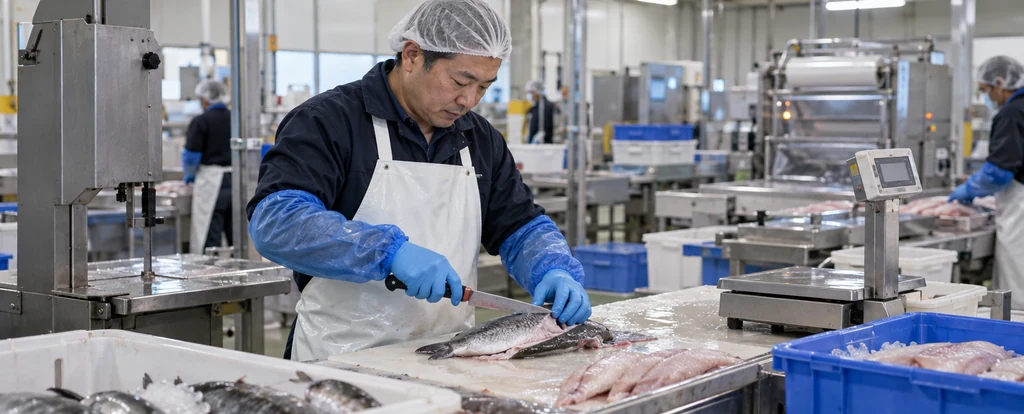
Seafood process workers fillet, prepare and pack fish and shellfish so a highly perishable product reaches shops and restaurants in good condition.
- Median salary*
- $59,800
3.8%vs last year, before tax
- People employed
- 2,200
0.0%vs last year
- Projected growth*
- −3.5%
to 2035
- AI exposure*
- Moderate
- automation risk
- Average hours*
- 40/wk
matches all-jobs average
- Shortage status*
- In shortage (regional)
national
Seafood process workers prepare fish, prawns, oysters and other seafood for wholesale and retail supply. Most work on chilled lines in sheds near ports, aquaculture farms or wholesale markets, where product arrives and has to be handled quickly before it spoils. The role sits close to meat processing and general food factory work, but the raw material is more fragile and the cold chain matters at every step.
How much do seafood process workers earn?
The median full-time salary for a seafood process worker is $59,800 per annum, before tax, up $12,300 since 2018.
Pay usually follows the food processing award or an enterprise agreement covering the site, so shift and weekend penalties and how the roster falls across a season do a lot of the work. Employers pay more for speed and clean knife work, which means an experienced filleter can earn above the entry rate on the same line. Rates also vary with the local agreement, since processing happens in regional ports and aquaculture centres as well as in the cities.
What does a seafood process worker do day to day?
The list below is what fills most weeks; the exact mix shifts with seniority and whatever stage the current work is at.
- Filleting, skinning and trimming fish and shellfish by hand
- Feeding product through gutting, scaling and portioning machinery, and cleaning it down between runs
- Checking each piece for freshness, bones, shell fragments and defects before it moves on
- Packing, weighing and labelling seafood to order, then moving it into the blast chiller or cold store
- Washing down benches, knives and equipment to food safety and hygiene standards
What skills do seafood process workers need?
Employers look for food safety and hygiene, food preparation and cooking, plant and equipment operation, backed by Filleting knives and boning knives fluency and strong safety and compliance awareness.
Specialist skills
- Food safety and hygiene
- Food preparation and cooking
- Plant and equipment operation
- Cleaning and grounds maintenance
Software and tools
- Filleting knives and boning knives
- Band saw
- Vacuum packing machine
- Platform scales
- Blast chiller
General skills
- Safety and compliance awareness
- Physical stamina and dexterity
- Attention to detail
Is the job growing?
About 2,200 people work as seafood process workers in Australia, and employment is projected to decline 3.5% over the decade to 2035. That's a real decline, worth weighing carefully before training into the role.
How do you become a seafood process worker?
Here's the path most seafood process workers take, step by step.
- 1Apply for an entry-level line job
Most people start with no formal qualification. Employers are looking for reliability, a willingness to work in the cold and comfort standing for a full shift, and they train new starters in hygiene and safe handling on site.
- 2Learn food safety and the cold chain
Food handler training and seafood hygiene are usually covered in the first weeks. Knowing how temperature, cross-contamination and shelf life work is what lets you take responsibility for product rather than just carrying it.
- 3Build speed on the knife
Filleting and trimming is the skill employers pay for, and it comes with repetition. A Certificate III in seafood industry (processing), delivered by TAFE and registered training organisations, covers knife work, product handling and machinery if you want structured training alongside the job.
- 4Add a licence or qualification for the work around you
A forklift licence helps with cold store and despatch duties, and maritime qualifications support deck work if you move into commercial fishing. Larger sites also value certificates in quality assurance or food safety for leading hand roles.
Ready to apply as a seafood process worker?
Whether you're working toward becoming a seafood process worker or already are one and want a hand with the next step (sharpening your resume for ATS screening, tightening your cover letter, or knowing what you'll actually be asked at interview), here are examples grounded in this specific role, not generic templates.
What jobs can a seafood process worker move to?
Moving into Fishing Hand typically comes with the biggest pay rise, worth $6,800 a year more on average.
| Move to | Typical pay change | Overlap | Retraining |
|---|---|---|---|
| Fishing Hand Seafood handling and cold chain knowledge support deck work, with a maritime ticket needed for fishing. | +$6,800 | 58% | short course |
| Meat Process Worker Knife handling, hygiene and fast-paced protein processing carry across to meat processing with minimal extra training. | +$4,900 | 67% | minimal |
| Slaughterer Knife skills and safe animal product handling transfer to slaughtering, though abattoir routines and carcass work are new. | +$2,600 | 67% | minimal |
| Meat Boner and Slicer Filleting and portioning skills transfer to meat boning and slicing, with a certificate covering meat hygiene. | +$0 | 50% | short course |
| Food Factory Worker General food production, packing and hygiene skills transfer directly to factory food work. | −$2,600 | 100% | minimal |
Moves are chosen from Jobs and Skills Australia's Data on Occupation Mobility, which follows income tax records between 2011-12 and 2020-21, together with entry requirements and skill overlap. A known move is one people were seen making in that data. Pay change compares median full-time pay for the two roles.
Who works as a seafood process worker?
The typical seafood process worker is 40 years old; 67% are men, 54% work full-time, and full-timers average 40 hours a week.
- 40
- Median age
- 33%
- Female share
- 54%
- Full-time
- +0h
- vs all-jobs avg
What's it like being a seafood process worker?
The work runs to the season and the boat: when a catch lands or a consignment arrives, the line fills up and the day is fast and repetitive, and between peaks shifts thin out. It suits people who like finishing something visible, don't mind cold hands and would rather leave the job at the door than take it home.
What people like
- You can see what you have done. A pallet of fillets weighed, labelled and wheeled into the chiller is a finished product, and the count at the end of a shift is the day's work.
- Knife skills improve quickly. Filleting has an obvious learning curve. New starters are slow for a few weeks and then fast, and the skill travels with you into meat processing and other protein work.
- Small teams and no take-home work. Lines are usually run by a handful of people working close together, and once the shift ends the job is finished for the day.
- Work that keeps regional towns going. Sheds sit at ports and aquaculture centres, so the jobs are often in places where processing is one of the main local employers.
What people find hard
- Cold, wet hands for hours. Chilled rooms, ice and washdown water mean gloves and waterproofs for most of the day, and the cold is usually the first thing a new starter notices.
- Repetition at whatever pace the line runs. A filleter may work through hundreds of fish with the same movements, and the speed is set by how fast product is coming down the bench.
- Hours follow the catch. Peak landings bring long days and weekend work, then quieter weeks when shifts are cut back or a whole day is dropped.
- Strain on hands, wrists and shoulders. Knife work on a hard floor all shift adds up, and cuts and repetitive strain injuries are part of why the training focuses on technique and rotation.
Based on our synthesis of professional-body surveys and public accounts of the role, not first-person verified reviews.
Which industries employ seafood process workers?
Manufacturing employs the largest share of seafood process workers, followed by Agriculture, Forestry and Fishing.
Top employing industries
- 1Manufacturing
- 2Agriculture, Forestry and Fishing
- 3Wholesale Trade
- 4Retail Trade
- 5Accommodation and Food Services
Ranked by employment share; the source doesn't publish an exact percentage per industry.
| Certificate III/IV | 34% | |
|---|---|---|
| Diploma / Advanced Diploma | 26% | |
| Bachelor degree | 20% | |
| Year 12 or below | 20% |
Will AI replace seafood process workers?
Seafood processing sits at a moderate level of exposure: machines already gut, scale, portion, weigh and pack much of the product, and vision and X-ray systems are taking over some sorting and bone detection. What holds the rating down is the hand work, since every fish has a different shape and premium product still needs a person with a knife to trim it properly. The machinery end of the job is likely to keep changing, while skilled filleting and handling of fragile shellfish stay with people.
Share of typical working time by exposure level
- Hand filleting, skinning and trimmingEach fish is a different shape, so reading where the bones sit and getting a clean fillet is still a hand skill, even on lines with automated portioning.40%low
- Running processing machineryGutting, scaling and band saw work is partly automated already, and the operator's job is setting up, feeding and clearing blockages rather than making the cut.25%moderate
- Grading and quality checksCameras and X-ray units can size-grade fillets and spot bones, but someone still checks product by eye and hand for smell, texture and defects.20%moderate
- Packing, weighing and labelling into the cold storeAutomated weighers, labellers and palletisers are common in larger plants, which makes this the part of the job most likely to be done by a machine.15%high
Moves least exposed to AI
These career moves from seafood process worker work are rated low for AI exposure:
- Fishing Hand
Solid skill overlap (58%), short course to get there, and a low automation-risk profile.
Common questions about becoming a seafood process worker
Straight answers to the questions people ask most.
How much do seafood process workers earn?
Seafood process workers earn $59,800 per annum, before tax, on the full-time median. Shift and weekend penalties, the enterprise agreement covering your site and your speed on the knife all move that figure, so an experienced filleter on a night shift can sit above it. The median is a national snapshot of full-time workers rather than a rate for any single shed.
How do you become a seafood process worker?
Most people move straight into it from school or another food job, and there is no qualification required to start. Employers provide food safety and hygiene training, then teach filleting and machinery on the line. A Certificate III in seafood industry (processing) is worth considering if you want formal training for quality assurance or leading hand roles.
Are seafood process workers in demand?
Seafood process workers are currently in shortage in regional areas, and employment is projected to decline 3.5% over the decade to 2035. Because work follows the season and the catch rather than a steady queue of vacancies, most openings come from workers leaving the industry rather than new positions being created. Asking local sheds and labour hire firms directly about upcoming peaks is usually more useful than watching job boards.
Will automation replace seafood process workers?
Partly, and mostly at the repetitive end of the job. Machines already scale, gut, portion, weigh and pack product, and vision systems are taking over some sorting and inspection, but irregular fish and fragile shellfish still need a person with a knife to read the shape and trim it cleanly. Hand filleting and careful handling of live or delicate product are the parts least exposed.
What can seafood process workers move into?
Meat processing is one move where knife and hygiene skills carry across, and pay there is $4,900 more. Food factory work uses nearly the same skill set on a different product, at $2,600 less. Deck work as a fishing hand is a bigger change that pays $6,800 more and needs maritime qualifications, which is why retraining for it takes a short course rather than a few days.
What are the hours like?
Full-time seafood process workers average about 40 hours a week, and shifts usually start early so product can be packed and dispatched the same day. Many sites run two or three shifts, and weekend work is common during peak season. Outside peak periods, hours can be reduced, so it is worth checking how the roster works before you take a job.
Related roles
- Meat Process Worker
- Food Factory Worker
- Meat Boner and Slicer
- Slaughterer
- Fishing Hand
- Food Factory Worker
Not sure this is you? Take the career quiz and get a ranked shortlist of roles that fit how you like to work.