Meter Reader
Meter readers visit homes and businesses to record gas, electricity and water use so customers are billed for what they actually consume.
- Median salary*
- $65,000
4.0%vs last year, before tax
- People employed
- 1,900
0.0%vs last year
- Projected growth
- −1.5%
to 2035
- AI exposure*
- High
- automation risk
- Average hours
- 39/wk
−1h vs all jobs
- Shortage status*
- Not in shortage
national
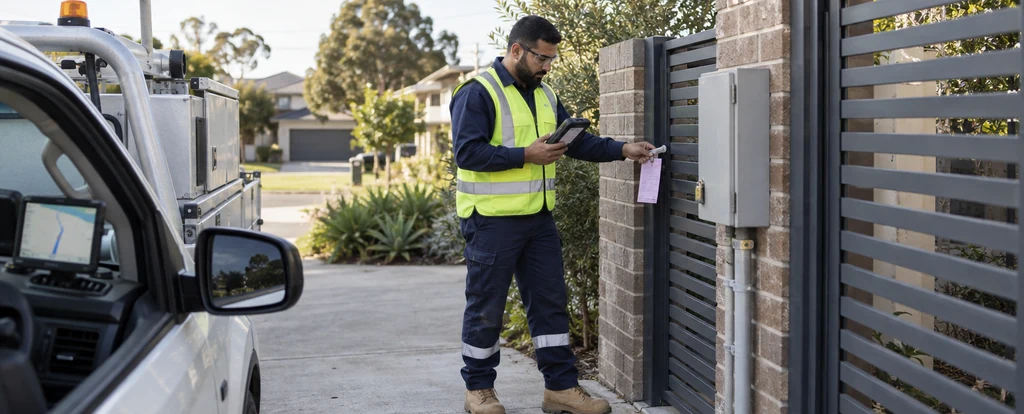
Meter readers work alone in a vehicle, following a route of properties and logging consumption on a handheld terminal. The job shares its rhythms with delivery driving, but the output is data rather than goods, and a reading has to be right because it goes straight onto a customer's bill. Most readers are employed by specialist meter reading contractors that utilities engage rather than by the utility itself.
How much do meter readers earn?
The median full-time salary for a meter reader is $65,000 per annum, before tax, up $13,600 since 2018.
Who employs you and which penalty rates apply to your roster move meter reading pay more than anything else. Utility employees covered by an enterprise agreement generally earn more than contract readers paid by the route, and early starts, weekend rounds and travel allowances add to the total. A good deal of the work is part time or contract based, so weekly earnings follow how many routes you are allocated.
What does a meter reader do day to day?
The list below is what fills most weeks; the exact mix shifts with seniority and whatever stage the current work is at.
- Driving a set route between properties and working through a daily list of reads
- Locating meters on site and recording consumption figures on a handheld terminal
- Reporting faulty, tampered or inaccessible meters back to the contractor or utility
- Leaving access cards or notices when a meter sits behind a locked gate or a dog is loose in the yard
- Answering the occasional customer question about a reading, a bill or a meter upgrade
What skills do meter readers need?
Employers look for driving and transport operations, backed by Itron meter reading systems fluency and strong attention to detail.
Specialist skills
- Driving and transport operations
Software and tools
- Itron meter reading systems
- Landis+Gyr Gridstream
- GPS navigation apps
- handheld data terminals
General skills
- Attention to detail
- Customer service
- Digital literacy
- Safety and compliance awareness
- Physical stamina and dexterity
Is the job growing?
About 1,900 people work as meter readers in Australia, and employment is projected to decline 1.5% over the decade to 2035. That's a real decline, worth weighing carefully before training into the role.
How do you become a meter reader?
Here's the path most meter readers take, step by step.
- 1Finish secondary school
There is no formal qualification for the job and most people working as meter readers left school at Year 12 or earlier, which makes this an entry point you walk into rather than a career you study towards.
- 2Hold a full driver's licence
You spend the day moving between properties, so a current licence and a clean driving record are the main things an employer checks before anything else.
- 3Apply to meter reading contractors and utility field teams
Most vacancies sit with the contractors that utilities engage, advertised as casual, part time or contract roles and usually covering the suburbs or region where you live.
- 4Complete the employer's induction and systems training
Training covers your handheld terminal and route software, safety around traffic, gates and dogs, and the utility's procedures for faults and access problems. It generally runs over a few days to a couple of weeks and is paid.
Ready to apply as a meter reader?
Whether you're working toward becoming a meter reader or already are one and want a hand with the next step (sharpening your resume for ATS screening, tightening your cover letter, or knowing what you'll actually be asked at interview), here are examples grounded in this specific role, not generic templates.
What jobs can a meter reader move to?
Moving into Bus Driver typically comes with the biggest pay rise, worth $28,300 a year more on average.
| Move to | Typical pay change | Overlap | Retraining |
|---|---|---|---|
| Bus Driver Meter readers bring route knowledge and safe driving habits, and with a heavy vehicle licence can move into bus driving. | +$28,300 | 54% | short course |
| Accounts Officer Meter readers bring accuracy and numerical recording, which transfers to accounts work, though reskilling in accounting practices is required. | +$10,000 | 6% | reskill |
| Warehouse Storeperson Meter readers bring handheld device use and route planning, but moving to warehouse work needs reskilling in inventory and forklift operations.Known move | +$4,100 | 17% | reskill |
| Delivery Driver Meter readers already drive routes and manage schedules, so moving to delivery driving requires only a short course for heavier vehicles.Known move | +$3,000 | 46% | short course |
Moves are chosen from Jobs and Skills Australia's Data on Occupation Mobility, which follows income tax records between 2011-12 and 2020-21, together with entry requirements and skill overlap. A known move is one people were seen making in that data. Pay change compares median full-time pay for the two roles.
Who works as a meter reader?
The typical meter reader is 44 years old; 86% are men, 57% work full-time, and full-timers average 39 hours a week.
- 44
- Median age
- 14%
- Female share
- 57%
- Full-time
- −1h
- vs all-jobs avg
What's it like being a meter reader?
The day has a fixed shape: an early start, a route list on a handheld terminal and a target number of reads to work through, mostly on your own. The pace is steady rather than pressured, but you are outdoors in every season and how quickly you finish depends on how easy the meters are to reach. People who like working alone, being outside and seeing a clear end point each day settle into it well, while those who want colleagues nearby or a job that changes shape tend to find it repetitive.
What people like
- Working outdoors and on your own. There is no shared office and little supervision once you know the route, so the day is yours to organise around the list.
- A job with a visible finish line. You can see progress as the reads tick down, and once the route is done the working day is usually over.
- A short path in. No degree or trade qualification is needed, and a few days of paid induction can be enough to start earning.
- Brief contact with people all day. Most properties are quick visits, but you still get small conversations with customers that break up the routine.
What people find hard
- Weather and awkward access. Meters sit behind overgrown shrubs, in long driveways, under houses and behind locked gates, and you deal with all of it in heat, rain and cold.
- Repetition and the daily target. The same task is repeated at hundreds of properties, and when you are paid by the route there is pressure to keep moving.
- Traffic and roadside risk. Parking on busy streets and reading meters on verges or near driveways means watching for cars constantly.
- Hours that follow the contract. Rounds can be thin in quiet periods, so casual and contract readers may find their weeks vary more than they would like.
Based on our synthesis of professional-body surveys and public accounts of the role, not first-person verified reviews.
Which industries employ meter readers?
Administrative and Support Services employs the largest share of meter readers, followed by Electricity, Gas, Water and Waste Services.
Top employing industries
- 1Administrative and Support Services
- 2Electricity, Gas, Water and Waste Services
- 3Construction
Ranked by employment share; the source doesn't publish an exact percentage per industry.
| Year 12 or below | 48.7% | |
|---|---|---|
| Certificate III/IV | 24.6% | |
| Bachelor degree | 11.1% | |
| Diploma / Advanced Diploma | 9.3% | |
| Postgraduate | 2.7% |
Will AI replace meter readers?
Meter reading is highly exposed to automation, because the part being automated is the reading itself: smart meters and advanced metering infrastructure send consumption data straight to the utility without anyone visiting the property. What is left is fieldwork around the edges of that system, such as older or hard-to-access meters, safety and tampering checks, and the customer conversation when a reading looks wrong.
Share of typical working time by exposure level
- Driving between properties on a set routeRoute software already orders the list, but someone still has to get to each address, park safely and walk to the meter.30%low
- Reading meters by sightOn newer connections the meter reports its own consumption, so the manual read that defines the job disappears entirely.25%high
- Logging readings on a handheld terminalData capture that once needed a person with a device now happens automatically at the meter and flows into the billing system.25%high
- Reporting faults, access problems and customer questionsSoftware flags odd readings, but a reader at the gate is the one who notices a damaged box or a locked yard and explains it to the customer.20%moderate
Common questions about becoming a meter reader
Straight answers to the questions people ask most.
How much do meter readers earn?
Meter readers earn a median of $65,000 per year before tax. Because a lot of the work is paid by the route or carries penalty loadings, contract readers and utility employees on an enterprise agreement can land either side of that figure.
How do you become a meter reader?
You need a driver's licence and little else, because employers train you on their handheld terminals, routes and safety procedures. Applying directly to the contractors that utilities engage is the usual way in, and a background in delivery, courier or field service work helps your application.
Are meter readers in demand?
Meter readers are currently not in shortage, and employment is projected to decline 1.5% over the decade to 2035 over the decade to 2035. Manual reads are falling as smart meters spread, so most openings come from turnover rather than new positions, and utilities still need someone to visit older meters and sites that cannot be read remotely.
Will AI or smart meters replace meter readers?
The reading itself is the part being automated, and on newer connections it is already gone: smart meters and network reading systems send consumption data straight to the utility. What remains is the work around the edges, such as visiting hard-to-access meters, checking for tampering and damaged equipment, and talking to customers when something looks wrong. That keeps some fieldwork going, but the volume of manual reads continues to shrink.
What can meter readers move into?
Delivery driving pays $3,000 more and suits readers who already plan routes and work alone, with only a short course needed for heavier vehicles. Bus driving pays $28,300 more and uses the same route knowledge and safe driving habits, though it needs a heavy vehicle licence. Warehouse work and accounts roles are also options, but both need retraining in areas like inventory systems or accounting practice.
Do meter readers work full time?
Full-time meter readers work about 39 hours a week, and 57% of people in the role work full time. The remainder are part time or casual, often fitting routes around school hours or study.
Related roles
Not sure this is you? Take the career quiz and get a ranked shortlist of roles that fit how you like to work.