Linemarker
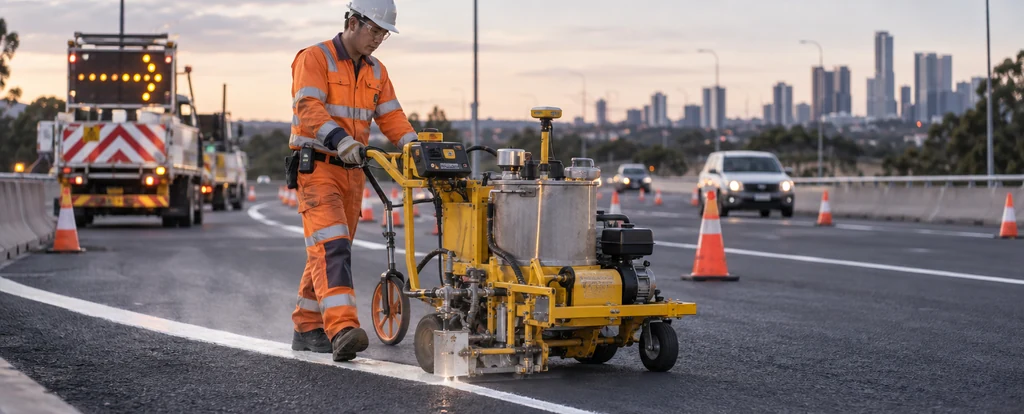
Linemarkers paint the lines, arrows and symbols that direct traffic on roads, car parks and airfields.
- Median salary*
- $67,600
4.5%vs last year, before tax
- People employed
- 980
2.0%vs last year
- Projected growth
- +3.7%
to 2035
- AI exposure*
- Moderate
- automation risk
- Average hours
- 44/wk
+4h vs all jobs
- Shortage status
- Not in shortage
national
Linemarkers work outdoors on roads, car parks, airfields and depot yards, mostly for civil construction contractors, specialist marking companies or local councils. Much of the work happens under a road closure, so it often runs at night or on weekends when a lane can be shut to traffic. It is hands-on, shift-based work in small crews rather than a role spent directing traffic or supervising others.
How much do linemarkers earn?
The median full-time salary for a linemarker is $67,600 per annum, before tax, up $14,300 since 2018.
Pay moves more with when you work than with how long you have been doing it. Night and weekend shifts attract penalty rates, and road closure windows often mean overtime, so a steady run of night work can lift earnings well above the base rate. Private contractors on major projects and crews willing to travel to remote sites tend to pay more, while local council roles usually offer steadier hours and conditions.
What does a linemarker do day to day?
The list below is what fills most weeks; the exact mix shifts with seniority and whatever stage the current work is at.
- Preparing surfaces by sweeping, cleaning and priming before any paint goes down
- Setting out lines, arrows and symbols from plans, measurements and GPS guidance
- Operating line marking machines, spray guns and thermoplastic applicators
- Setting up cones and signage and working safely around closed lanes and live traffic
- Cleaning, refuelling and maintaining marking equipment and paint stock
What skills do linemarkers need?
Employers look for hand and power tool work, plant and equipment operation, worksite safety management, backed by Line marking machine fluency and strong attention to detail.
Specialist skills
- Hand and power tool work
- Plant and equipment operation
- Worksite safety management
- Reading plans and specifications
Software and tools
- Line marking machine
- Spray gun
- Measuring wheel
- Thermoplastic applicator
- GPS guidance system
General skills
- Attention to detail
- Physical stamina and dexterity
- Written communication
Is the job growing?
About 980 people work as linemarkers in Australia, and employment is projected to grow 3.7% over the decade to 2035. That's modest growth: demand is steady rather than booming.
How do you become a linemarker?
Here's the path most linemarkers take, step by step.
- 1Get a White Card
The construction induction card is required before you can work on a construction site in any state or territory. It takes about a day to complete, and most employers ask for it in the job advertisement.
- 2Hold a current driver's licence
You will drive to sites and often tow a trailer or marking unit, so a licence is close to essential. A heavy vehicle licence opens up truck-mounted marking work, which generally pays better.
- 3Consider a short course or certificate
A Certificate II or III in Civil Construction covers roadwork basics, and some registered training organisations run line marking short courses. Many people learn the machines on the job instead, starting as a labourer or offsider.
- 4Pick up traffic management training
Units for traffic controller work or implementing a traffic management plan are useful because almost all marking happens around closed lanes. Some employers fund the training once you are on the crew.
- 5Build experience across different surfaces
Roads, car parks and airfields use different paints, thermoplastics and equipment, so time on a range of jobs makes you more employable and more useful to a crew.
Ready to apply as a linemarker?
Whether you're working toward becoming a linemarker or already are one and want a hand with the next step (sharpening your resume for ATS screening, tightening your cover letter, or knowing what you'll actually be asked at interview), here are examples grounded in this specific role, not generic templates.
What jobs can a linemarker move to?
Moving into Earthmoving Plant Operator typically comes with the biggest pay rise, worth $35,400 a year more on average.
| Move to | Typical pay change | Overlap | Retraining |
|---|---|---|---|
| Earthmoving Plant Operator Linemarkers can step into earthmoving plant operation, applying machine control and site safety skills with minimal extra training. | +$35,400 | 65% | minimal |
| Truck Driver Linemarkers can move into truck driving, using roadwork and vehicle experience but requiring a heavy vehicle licence and reskilling.Known move | +$34,300 | 8% | reskill |
| Excavator Operator Linemarkers can move to excavator operation, building on plant handling and civil site experience with minimal retraining. | +$31,200 | 68% | minimal |
| Civil Construction Labourer Linemarkers can move into civil construction labouring, applying roadwork and site safety skills; a short course covers the change.Known move | +$0 | 78% | short course |
Moves are chosen from Jobs and Skills Australia's Data on Occupation Mobility, which follows income tax records between 2011-12 and 2020-21, together with entry requirements and skill overlap. A known move is one people were seen making in that data. Pay change compares median full-time pay for the two roles.
Who works as a linemarker?
The typical linemarker is 38 years old; 96% are men, 73% work full-time, and full-timers average 44 hours a week.
- 38
- Median age
- 4%
- Female share
- 73%
- Full-time
- +4h
- vs all-jobs avg
What's it like being a linemarker?
Linemarking is outdoor, shift-based work in small crews. Most jobs are finished within a single shift, so you see the result before you leave the site, but the hours are set by road closures rather than by a standard working day.
What people like
- You can see the finished job. A straight line running the length of a road closure is visible proof of the work, and a wobbly one is just as obvious to everyone who drives over it.
- Small crews and little supervision. Most marking crews are two or three people, so once you know the equipment you are trusted to get on with the job.
- Working outdoors and moving around. Days are spent on roads, car parks and depot yards rather than in the same spot, and the sites change as projects finish.
- Skills that carry across civil work. Plant handling, traffic management and site safety are useful on plenty of other construction jobs, which keeps your options open.
What people find hard
- Night and weekend work is normal. Marking usually needs a lane or road closed, and the cheapest time to close it is overnight or at the weekend, so unsocial hours are built into the job.
- The weather can cancel a shift. Paint and thermoplastic need a dry surface and suitable temperatures, so rain or a cold snap can stop work at short notice and cut your hours for the week.
- Hard on the body. Pushing a marking machine and carrying spray equipment through a full shift is physically demanding, and setting out and checking lines means a lot of bending.
- Travel and short-term sites. Work follows the projects, which can mean long drives to regional jobs and the occasional night away from home.
Based on our synthesis of professional-body surveys and public accounts of the role, not first-person verified reviews.
Which industries employ linemarkers?
Construction employs the largest share of linemarkers, followed by Public Administration and Safety.
Top employing industries
- 1Construction
- 2Public Administration and Safety
Ranked by employment share; the source doesn't publish an exact percentage per industry.
| Year 12 or below | 57.5% | |
|---|---|---|
| Certificate III/IV | 32.5% | |
| Diploma / Advanced Diploma | 3.9% | |
| Bachelor degree | 1.5% | |
| Postgraduate | 0.4% |
Will AI replace linemarkers?
Linemarking has a moderate level of exposure to automation. GPS guidance, total stations and automated marking machines now do much of the layout and can follow a preset path across a surface, which changes how the work is done but does not remove the crew. Surface preparation, setting up the road closure and reading the conditions on site stay with people.
Share of typical working time by exposure level
- Operating the marking machineAutomated machines can apply paint or thermoplastic along a set path, but an operator still steers, checks the line and adjusts for wind, surface and traffic.30%moderate
- Preparing and priming the surfaceSweeping, blasting and priming a surface before marking is physical work in variable conditions that machines do not handle on their own.25%low
- Setting up traffic control and site safetyCones, signage and safe work around live traffic depend on a person reading the site and the road authority's requirements.25%low
- Setting out lines and symbols from plansGPS guidance and total stations now calculate positions that used to be measured and pegged by hand.20%high
Moves least exposed to AI
These career moves from linemarker work are rated low for AI exposure:
- Civil Construction Labourer
High skill overlap (78%), short course to get there, and a low automation-risk profile.
Common questions about becoming a linemarker
Straight answers to the questions people ask most.
How much do linemarkers earn?
Full-time linemarkers earn a median of $67,600 per year before tax, which means half earn more and half earn less. The figure moves with penalty rates for night and weekend shifts, overtime during road closures, and whether you work for a private contractor or a local council.
How do you become a linemarker?
You need a White Card before you can work on a construction site, and most employers also want a driver's licence. From there you usually start as a labourer or offsider and learn the marking machines on the job, while a short course or a Certificate II or III in Civil Construction helps you get that first role.
Are linemarkers in demand?
Linemarkers are currently not in shortage, and employment is projected to grow 3.7% over the decade to 2035. Openings tend to follow road maintenance and construction budgets, so work is steadier where there is ongoing road renewal nearby.
Will AI replace linemarkers?
Automation has a moderate reach into this job rather than replacing it. GPS guidance and automated marking machines now handle layout and follow preset paths, but someone still has to prepare the surface, set up the road closure and deal with the site conditions a machine cannot read.
What jobs can linemarkers move into?
Many move into civil construction labouring, where the roadwork and site safety skills overlap closely and pay is about the same. Earthmoving plant operation brings $35,400 more and excavator operation $31,200 more, both with minimal retraining. Experienced linemarkers also start their own marking business, which is often where earnings grow.
Do you need a qualification to work as a linemarker?
Not usually. 58% of people working as linemarkers hold Year 12 or below as their highest qualification, though that describes the current workforce rather than what employers require. The White Card and a driver's licence matter more in most job advertisements.
Related roles
- Earthmoving Plant Operator
- Civil Construction Labourer
- Truck Driver
- Excavator Operator
- Civil Construction Labourer
- Traffic Controller
Not sure this is you? Take the career quiz and get a ranked shortlist of roles that fit how you like to work.