Telecommunications Linesworker
Telecommunications linesworkers install, splice and maintain the cables, poles and conduits that carry phone, internet and data services to homes and businesses.
- Median salary*
- $91,000
3.8%vs last year, before tax
- People employed
- 1,300
0.0%vs last year
- Projected growth
- +3.8%
to 2035
- AI exposure*
- Low
- automation risk
- Average hours
- 41/wk
+1h vs all jobs
- Shortage status
- In shortage
national
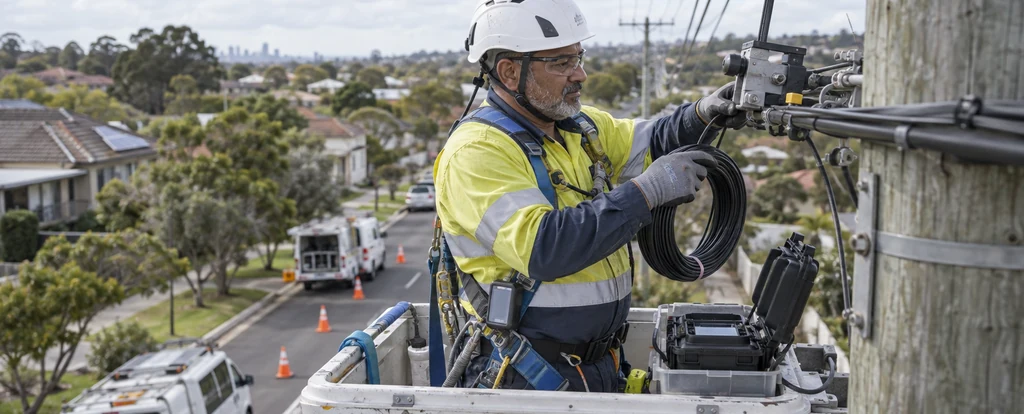
Telecommunications linesworkers build and maintain the outside plant of phone, internet and data networks: the poles, aerial spans, underground cables and conduits that run between exchanges and premises. They work for telcos, network contractors and construction firms, often outdoors and at heights, and the job is distinct from a telecommunications technician, who mostly works on equipment, exchange systems and customer premises. Most of the day happens in a small crew with a van, a job list and the tools for pulling, lashing, splicing and testing cable.
How much do telecommunications linesworkers earn?
The median full-time salary for a telecommunications linesworker is $91,000 per annum, before tax, up $18,800 since 2018.
Most linesworkers are paid under an enterprise agreement, which sets a base rate and the loadings that sit on top of it. Overtime, on-call and after-hours fault work, and living away from home on regional projects all add to the base, so two people with the same job title can take home noticeably different amounts. Remote and project work tends to pay more than routine city maintenance.
What does a telecommunications linesworker do day to day?
The list below is what fills most weeks; the exact mix shifts with seniority and whatever stage the current work is at.
- Pulling and lashing aerial cable between poles, and hauling cable through underground conduits
- Splicing and jointing copper and optical fibre, including work in pits and on live networks
- Testing spans and joints with an OTDR and tracing faults back to a single splice or damaged section
- Setting up the worksite, including traffic control, ladders, elevated work platforms and confined space entry
- Reading network plans and locating existing services before digging or erecting poles
What skills do telecommunications linesworkers need?
Employers look for installation and maintenance, worksite safety management, plant and equipment operation, backed by Fusion splicer fluency and strong safety and compliance awareness.
Specialist skills
- Installation and maintenance
- Worksite safety management
- Plant and equipment operation
- Hand and power tool work
- Reading plans and specifications
Software and tools
- Fusion splicer
- OTDR (optical time domain reflectometer)
- Elevated work platform
- Cable lashing machine
- GPS and GIS mapping tools
General skills
- Safety and compliance awareness
- Physical stamina and dexterity
- Problem solving
Is the job growing?
About 1,300 people work as telecommunications linesworkers in Australia, and employment is projected to grow 3.8% over the decade to 2035. That's modest growth: demand is steady rather than booming.
How do you become a telecommunications linesworker?
Here's the path most telecommunications linesworkers take, step by step.
- 1Finish school or gain some site experience
Year 10 or Year 12 is the usual starting point, and maths and English help with the testing and documentation side of the job. Some people begin as a cable hand or labourer and start the apprenticeship later, once they know they like the work.
- 2Start a Certificate III in Telecommunications Technology apprenticeship
The apprenticeship usually runs three to four years and combines paid work on live networks with study at TAFE or a private registered training organisation. Telcos, network contractors and infrastructure builders take on apprentices, so you earn while you train.
- 3Get the licences the work requires
Cabling work needs ACMA cabling registration, and construction sites require a White Card. A high risk work licence covers boom-type elevating work platforms above 11 metres, and employers usually arrange confined space and traffic management training for you.
- 4Choose a specialisation
Experienced linesworkers tend to settle into fibre splicing, cable jointing, or overhead and underground construction. Others move into crew leading, network design and supervision, which usually means less time on the tools.
Ready to apply as a telecommunications linesworker?
Whether you're working toward becoming a telecommunications linesworker or already are one and want a hand with the next step (sharpening your resume for ATS screening, tightening your cover letter, or knowing what you'll actually be asked at interview), here are examples grounded in this specific role, not generic templates.
What jobs can a telecommunications linesworker move to?
Moving into Powerline Worker typically comes with the biggest pay rise, worth $51,000 a year more on average.
| Move to | Typical pay change | Overlap | Retraining |
|---|---|---|---|
| Powerline Worker Powerline work uses electrical and working-at-heights skills, though the apprenticeship pathway requires requalification.Known move | +$51,000 | 73% | requalify |
| Telecommunications Technician Moving to telecommunications technician builds on infrastructure and fault-finding skills, but the apprenticeship credential means requalifying.Known move | +$0 | 43% | requalify |
| Telecommunications Cable Jointer Cable jointing uses cable handling and termination skills, with minimal retraining needed to specialise.Known move | +$0 | 62% | minimal |
| Data Cabler Structured cabling installs and terminates wiring in buildings, and a short course covers the networking standards.Known move | −$10,400 | 59% | short course |
Moves are chosen from Jobs and Skills Australia's Data on Occupation Mobility, which follows income tax records between 2011-12 and 2020-21, together with entry requirements and skill overlap. A known move is one people were seen making in that data. Pay change compares median full-time pay for the two roles.
Who works as a telecommunications linesworker?
The typical telecommunications linesworker is 41 years old; 97% are men, 72% work full-time, and full-timers average 41 hours a week.
- 41
- Median age
- 3%
- Female share
- 72%
- Full-time
- +1h
- vs all-jobs avg
What's it like being a telecommunications linesworker?
The work splits into planned build and fault response, and the rhythm of a week depends on which is running. On a build you might spend days on one street pulling cable before moving to the next site, while a storm or a digger through a cable brings a call at any hour and a crew that works until service is back. People who like being outdoors, working with their hands and seeing a job finished tend to stay with it.
What people like
- You can point to what you built. Poles, spans and joints stay in place for years, and a suburb's connection depends on work you did with your own hands.
- Outdoor work with variety. Days move between sites and tasks rather than sitting in one place, and the physical side of the job keeps you fit.
- Fault finding has a clear answer. When a service goes down, the problem usually traces to one span or splice, and the test equipment tells you where to start looking.
- Small crews and real responsibility. Most work happens in a two or three person crew, so you are trusted with the job in front of you rather than watched at every step.
What people find hard
- Weather and time away. Rain, heat and regional projects mean working outdoors in poor conditions and sometimes staying away from home for weeks.
- After-hours callouts. Storm damage and cable strikes do not wait for business hours, and fault crews take turns being on call.
- Heights, pits and confined spaces. Poles, ladders, elevated work platforms and underground pits are part of most days, and not everyone adjusts to them.
- Long drives and waiting. Travel between jobs, traffic control and permits can eat into a day, particularly on city work.
Based on our synthesis of professional-body surveys and public accounts of the role, not first-person verified reviews.
Which industries employ telecommunications linesworkers?
Information Media and Telecommunications employs the largest share of telecommunications linesworkers, followed by Construction.
Top employing industries
- 1Information Media and Telecommunications
- 2Construction
Ranked by employment share; the source doesn't publish an exact percentage per industry.
| Certificate III/IV | 40.4% | |
|---|---|---|
| Year 12 or below | 34.6% | |
| Bachelor degree | 8.8% | |
| Diploma / Advanced Diploma | 8.4% | |
| Postgraduate | 4% |
Will AI replace telecommunications linesworkers?
AI exposure in this job is low. Design tools, GIS records and automated fault analysis change how a job is planned and diagnosed, and fusion splicers have automated part of the jointing for years, but none of it climbs a pole, pulls cable or works in a pit. The physical work on live networks stays with the crew.
Share of typical working time by exposure level
- Pulling, lashing and terminating cableRunning aerial spans and hauling cable through conduits is physical site work, guided by plans and location records but not performed by software.40%low
- Splicing and jointing cableA fusion splicer sets the splice and measures its loss, but lining up fibres in a pit and sealing the joint by hand still decides whether it holds.25%moderate
- Setting up the worksite and working at heightsTraffic control, ladder work, elevated platforms and confined space entry are regulated tasks that stay with the person on site.20%low
- Testing and fault findingOTDR traces and network records can be read and partly interpreted by software, which shortens the hunt for a fault but leaves the repair to the crew.15%moderate
Common questions about becoming a telecommunications linesworker
Straight answers to the questions people ask most.
How much do telecommunications linesworkers earn?
Median full-time pay for telecommunications linesworkers is $91,000 per annum, before tax. That is a guide to the middle of the range rather than a starting rate, and overtime, on-call allowances and remote project loadings sit on top of it.
How do you become a telecommunications linesworker?
The usual route is a Certificate III in Telecommunications Technology (ICT30524) apprenticeship, which takes about three to four years and is paid from the first day. You also need ACMA cabling registration for cabling work and a White Card before you step onto a construction site. Starting as a cable hand or labourer is a common way in for people who come to the trade later.
Are telecommunications linesworkers in demand?
Telecommunications linesworkers are currently in shortage nationally, and employment is projected to grow 3.8% over the decade to 2035. The occupation is small, so a good share of openings comes from people leaving or retiring rather than from new positions. Being willing to travel widens what is available to you, since work is spread across city and regional projects.
Will AI replace telecommunications linesworkers?
Exposure here is low. Design software, GIS records and automated fault analysis change how a job is planned and diagnosed, and fusion splicers have automated part of the jointing for years, but none of it climbs a pole, pulls cable or works in a pit. The physical work on live networks stays with the crew.
What can telecommunications linesworkers move into?
Moving into cable jointing uses the splicing and termination skills you already have and needs minimal retraining, and your pay would be about the same. Data cabling takes a short course in networking standards, though your pay would be $10,400 less, while powerline work pays $51,000 more and means completing a lineworker apprenticeship. Many experienced linesworkers also move into crew leading or start their own contracting business, which is often where earnings grow.
What is the difference between a linesworker and a telecommunications technician?
A linesworker builds and maintains the outside plant, the poles, cables and conduits in the street, while a telecommunications technician works on equipment, exchange systems and customer premises. The two jobs share testing and fault-finding skills, and both commonly start from a similar apprenticeship.
Related roles
- Telecommunications Technician
- Powerline Worker
- Telecommunications Cable Jointer
- Data Cabler
- Telecommunications Cable Jointer
- Rigger
Not sure this is you? Take the career quiz and get a ranked shortlist of roles that fit how you like to work.