Tow Truck Driver
Tow truck drivers recover and transport broken down, damaged or illegally parked vehicles, keeping roads clear and getting people moving again.
- Median salary*
- $70,200
3.7%vs last year, before tax
- People employed
- 2,200
0.0%vs last year
- Projected growth*
- +2.5%
to 2035
- AI exposure*
- Low
- automation risk
- Average hours*
- 44/wk
+4h vs all jobs
- Shortage status*
- Not in shortage
national
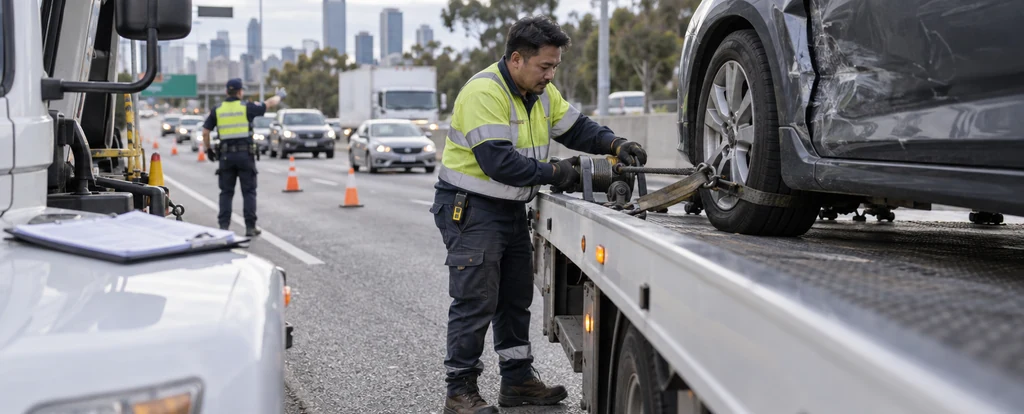
Tow truck drivers work for towing operators, roadside assistance providers and government agencies, responding to breakdowns, crashes and parking and impound jobs. Much of the role is heavy handling and judgement at the roadside: loading a car onto a tilt tray or underlift, securing it, and getting it to a repairer or holding yard. It differs from general truck driving because the vehicle being moved is damaged or immobile, and the scene is usually live traffic.
How much do tow truck drivers earn?
The median full-time salary for a tow truck driver is $70,200 per annum, before tax, up $14,500 since 2018.
Smaller operators often pay close to the award rate, while larger fleets and government contracts tend to sit higher, so the employer matters as much as the job title. How the roster is built makes the biggest difference: rotating shifts, on-call weeks and public holiday callouts usually carry penalty rates, and some operators pay a commission or a share of each job instead of a flat hourly rate. Vehicle class counts too, since heavy recovery and accident work pays better than light towing.
What does a tow truck driver do day to day?
The list below is what fills most weeks; the exact mix shifts with seniority and whatever stage the current work is at.
- Taking dispatch calls for breakdowns, crashes and illegally parked cars
- Assessing the scene and planning a safe lift, including traffic control and working alongside police at crash sites
- Loading and securing vehicles onto tilt trays and underlifts
- Operating winches, hydraulic lifts and recovery equipment
- Completing job sheets, payment and impound paperwork
What skills do tow truck drivers need?
Employers look for driving and transport operations, plant and equipment operation, backed by Towbook fluency and strong customer service.
Specialist skills
- Driving and transport operations
- Plant and equipment operation
Software and tools
- Towbook
- Dispatch Anywhere
- GPS navigation
- Hydraulic winch
- Tilt tray
General skills
- Customer service
- Safety and compliance awareness
- Problem solving
- Physical stamina and dexterity
- Attention to detail
Is the job growing?
About 2,200 people work as tow truck drivers in Australia, and employment is projected to grow 2.5% over the decade to 2035. That's modest growth: demand is steady rather than booming.
How do you become a tow truck driver?
Here's the path most tow truck drivers take, step by step.
- 1Get a full car licence and keep a clean record
Employers check your driving history and demerit points, and a probationary licence is rarely enough. Some also ask for a police check, since the job involves taking possession of other people's vehicles.
- 2Move up to a heavy vehicle licence
An HR licence covers most tilt tray work and heavier recovery vehicles, and an HC licence opens up the biggest tows. Training through a registered driving school takes a few weeks and requires medical and eyesight checks.
- 3Apply for your state's tow truck accreditation
Queensland and Victoria require tow truck drivers to be accredited, and New South Wales issues a tow truck driver authority. Background checks and eligibility rules differ by state, so confirm the requirements with your state transport authority before applying for work.
- 4Learn the equipment with an operator
Most training happens on the job, covering tilt tray, underlift and winch operation, load restraint and safe work at crash scenes. A Certificate III in Driving Operations (TLI31222) or a short towing and recovery course can help you get hired, and a first aid certificate is useful at incident scenes.
- 5Specialise or go out on your own
After a couple of years, drivers often move into heavy recovery, accident response or contracted government work. Buying your own truck and working as a subcontractor is a common next step, and it needs capital plus an operator's accreditation in most states.
Ready to apply as a tow truck driver?
Whether you're working toward becoming a tow truck driver or already are one and want a hand with the next step (sharpening your resume for ATS screening, tightening your cover letter, or knowing what you'll actually be asked at interview), here are examples grounded in this specific role, not generic templates.
What jobs can a tow truck driver move to?
Moving into Truck Driver typically comes with the biggest pay rise, worth $31,700 a year more on average.
| Move to | Typical pay change | Overlap | Retraining |
|---|---|---|---|
| Truck Driver Tow truck drivers can step into general truck driving, though a heavier licence class and freight experience are needed. | +$31,700 | 38% | reskill |
| Bus Driver Tow truck drivers know road rules and heavy vehicle handling, so moving to bus driving needs a passenger endorsement. | +$23,100 | 53% | short course |
| Tanker Driver Tow truck drivers already handle heavy vehicles and roadside recovery, so their driving skills carry into tanker work with a dangerous goods ticket. | +$15,600 | 83% | minimal |
| Waste Collector Tow truck drivers can move into waste collection, where heavy vehicle handling transfers and a truck licence is already held. | +$5,800 | 47% | short course |
| Driving Examiner Tow truck drivers with clean records can become driving examiners, applying road law knowledge after assessor training. | +$2,600 | 47% | short course |
Moves are chosen from Jobs and Skills Australia's Data on Occupation Mobility, which follows income tax records between 2011-12 and 2020-21, together with entry requirements and skill overlap. A known move is one people were seen making in that data. Pay change compares median full-time pay for the two roles.
Who works as a tow truck driver?
The typical tow truck driver is 44 years old; 98% are men, 77% work full-time, and full-timers average 44 hours a week.
- 44
- Median age
- 2%
- Female share
- 77%
- Full-time
- +4h
- vs all-jobs avg
What's it like being a tow truck driver?
Full-time weeks average around 44 hours and shifts run around the clock, so the job has a rhythm of quiet stretches broken by urgent callouts in heavy traffic or bad weather. Most of the time the driver is alone with the truck and has to decide how to lift a damaged car, secure it and keep passing traffic safe. It suits people who like driving, practical problem solving and finishing a job without someone checking every step.
What people like
- Every callout is a different problem. A car wedged against a kerb, a truck on its side in a paddock and a sedan in a shopping centre car park all need a different plan, so the work rarely feels like the same job twice.
- You work on your own. Dispatch sends the job and you decide how to do it, with no one standing over you, which suits drivers who like making their own calls.
- The result of the job is obvious. You clear the road, hand the car over and the driver is on their way again, so the day's work is visible in a way that a lot of jobs aren't.
- Heavy recovery skills are worth having. Drivers who can right a rolled truck or recover a spilled load safely are the ones operators call first, and those jobs often come with better pay and steadier work.
What people find hard
- The roster covers nights and weekends. Breakdowns don't keep business hours, so expect rotating shifts, on-call weeks and public holidays, and family plans that move around the roster.
- Roadside work is exposed. You stand in live traffic or on a shoulder at night with cars passing close, and staying safe depends on watching them as much as the vehicle you are loading.
- Not everyone is pleased to see you. Crashes, vehicle seizures and impound tows put you in front of people having a bad day, and some of that frustration lands on the driver.
- Physical work in all weather. Winching, kneeling and lifting in rain or summer heat adds up, and a difficult recovery can stretch a shift by hours.
Based on our synthesis of professional-body surveys and public accounts of the role, not first-person verified reviews.
Which industries employ tow truck drivers?
Transport, Postal and Warehousing employs the largest share of tow truck drivers, followed by Other Services.
Top employing industries
- 1Transport, Postal and Warehousing
- 2Other Services
- 3Public Administration and Safety
- 4Construction
- 5Wholesale Trade
Ranked by employment share; the source doesn't publish an exact percentage per industry.
| Certificate III/IV | 34% | |
|---|---|---|
| Diploma / Advanced Diploma | 26% | |
| Bachelor degree | 20% | |
| Year 12 or below | 20% |
Will AI replace tow truck drivers?
Tow truck driving has low exposure to AI. Recovering a vehicle is physical, unpredictable work in live traffic, and a person has to assess the scene, operate the winch and take the load down the road. Dispatch apps such as Towbook and Dispatch Anywhere automate job allocation, routing and paperwork, which takes time out of the admin but doesn't change what happens at the roadside.
Share of typical working time by exposure level
- Loading and securing vehiclesWinching a car onto a tilt tray or underlift needs someone on the ground judging angles, watching for damage and keeping clear of passing traffic.40%low
- Driving to and from calloutsDispatch software and GPS can plan the route, but a truck carrying a damaged car on its back still needs a licensed driver behind the wheel.30%low
- Job sheets, payment and impound paperworkDigital job sheets and card payments cut the paperwork, though impound rules and insurer requirements still need a person to check them.15%moderate
- Taking dispatch calls and quoting jobsSoftware can suggest a price band and assign the nearest truck, but a caller whose car has just been hit wants a person to explain what happens next and when.15%moderate
Common questions about becoming a tow truck driver
Straight answers to the questions people ask most.
How much does a tow truck driver earn?
The median for full-time tow truck drivers is $70,200 per year before tax. What you take home depends heavily on the employer and roster: rotating shifts, on-call availability and public holiday callouts usually attract penalty rates, and some operators pay a commission or a share of each job on top of a base rate.
How do you become a tow truck driver?
You need a full car licence, a heavy vehicle licence and, in most states, some form of tow truck accreditation or driver authority. From there, operators train you on tilt trays, underlifts and winches on the job, and a Certificate III in Driving Operations (TLI31222) or a short towing course helps you get a start.
Are tow truck drivers in demand?
Tow truck drivers are currently not in shortage, and employment is projected to grow 2.5% over the decade to 2035. With about 2,200 people in the role, most openings come from drivers leaving or retiring rather than new positions being created, so a clean driving record and the right licences matter more than timing.
Will AI or automation affect tow truck driving?
Very little of the work is exposed. A car still has to be assessed, winched, secured and driven away by someone standing at the roadside in traffic, and no system does that job. Dispatch software such as Towbook and Dispatch Anywhere automates job allocation, routing and paperwork, which trims the admin side of the shift rather than the recovery itself.
What other jobs can a tow truck driver move into?
Tanker driving is a close fit and pays $15,600 more, usually with a dangerous goods licence added to the heavy vehicle licence you already hold, while bus driving pays $23,100 more and needs a passenger endorsement. General truck driving pays $31,700 more but typically requires a heavier licence class and freight experience. Many drivers eventually buy their own truck or run a small towing business, which is often where earnings grow.
Do tow truck drivers work night shifts?
Yes. Towing operators cover the road around the clock, so rosters usually rotate through nights, weekends and public holidays, and on-call weeks are common. If regular hours matter to you, ask about the roster pattern before you accept a job, because it varies a lot between operators.
Related roles
Not sure this is you? Take the career quiz and get a ranked shortlist of roles that fit how you like to work.