Waste Collector
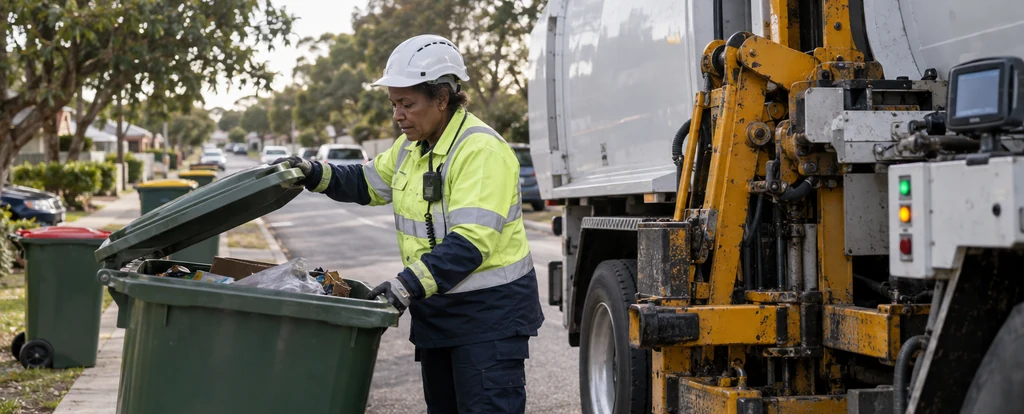
Waste collectors drive collection trucks along set routes and empty bins from the kerb, taking household and commercial waste away for disposal or recycling.
- Median salary
- $76,000
4.0%vs last year, before tax
- People employed
- 3,400
0.0%vs last year
- Projected growth
- +4.9%
to 2035
- AI exposure*
- Moderate
- automation risk
- Average hours
- 43/wk
+3h vs all jobs
- Shortage status*
- In shortage (regional)
national
Most waste collectors work for local councils or private contractors, running fixed rounds through suburbs, town centres and industrial estates. The job is more than driving: a rear-loading truck usually carries a driver and a runner who wheels bins out and back, while side-loading trucks let one person empty a whole street from the cab. It's outdoor shift work, and the round gets finished in rain, heat and traffic.
How much do waste collectors earn?
The median full-time salary for a waste collector is $76,000 per annum, before tax, up $15,800 since 2018.
Pay depends heavily on who you work for, with councils and large contractors usually paying under an enterprise agreement and smaller private operators sticking closer to the award. Early starts, weekend runs and public holidays attract penalty rates, and holding a higher heavy vehicle licence class usually lifts the rate because it lets the depot put you on more runs. It's worth asking which licence class a job needs before you compare two offers.
What does a waste collector do day to day?
The list below is what fills most weeks; the exact mix shifts with seniority and whatever stage the current work is at.
- Driving rear-loading or side-loading compaction trucks along a set run of streets
- Working the bin lift or side-loading arm to empty wheelie bins and return them to the kerb
- Checking loads for the wrong items, such as batteries or gas bottles, before they go into the truck
- Running pre-start checks on brakes, hydraulics and bin lift equipment before leaving the depot
- Recording load weights and reporting missed bins or equipment faults by radio
What skills do waste collectors need?
Employers look for driving and transport operations, plant and equipment operation, worksite safety management, backed by Rear-loading compactor trucks fluency and strong physical stamina and dexterity.
Specialist skills
- Driving and transport operations
- Plant and equipment operation
- Worksite safety management
- Cleaning and grounds maintenance
Software and tools
- Rear-loading compactor trucks
- Automated side-loading bin lifts
- Onboard weighing systems
- Fleet telematics
- Two-way radio
General skills
- Physical stamina and dexterity
- Safety and compliance awareness
Is the job growing?
About 3,400 people work as waste collectors in Australia, and employment is projected to grow 4.9% over the decade to 2035. That's modest growth: demand is steady rather than booming.
How do you become a waste collector?
Here's the path most waste collectors take, step by step.
- 1Finish school with a clean driving record
Most people in the job have no post-school qualification: 63% of the current workforce lists Year 12 or below as their highest level of study. What matters more at this stage is a licence and a driving history an employer can check.
- 2Get a heavy vehicle licence
An HR (heavy rigid) licence is the usual requirement, though some depots will take an MR licence for smaller vehicles. You can train through a registered driving school, or upgrade on the job if an employer is willing to put you through it.
- 3Pick up the supporting checks and cards
A police check and a medical are standard, and a White Card is needed if your round includes construction sites. A forklift licence helps if you'll also work at a transfer station.
- 4Start on a crew, often as the runner
Many collectors begin offsiding, walking bins out and back while someone else drives, which is also how you learn the routes and the truck. It's paid work, and drivers usually come up from there.
- 5Learn the equipment on the job
Training on side-loading arms, compaction controls and onboard weighing happens at the depot, and it's what makes you a driver who can be put on any run.
Ready to apply as a waste collector?
Whether you're working toward becoming a waste collector or already are one and want a hand with the next step (sharpening your resume for ATS screening, tightening your cover letter, or knowing what you'll actually be asked at interview), here are examples grounded in this specific role, not generic templates.
What jobs can a waste collector move to?
Moving into Truck Driver typically comes with the biggest pay rise, worth $25,900 a year more on average.
| Move to | Typical pay change | Overlap | Retraining |
|---|---|---|---|
| Truck Driver Waste collectors bring heavy vehicle handling and route discipline to general truck driving, though a higher licence class or ticket may be required.Known move | +$25,900 | 19% | reskill |
| Process Worker Waste collectors understand sorting, plant and manual handling, so they can move into production process work with further training.Known move | +$3,000 | 18% | reskill |
| Street Sweeper Operator Waste collectors already operate heavy vehicles on public routes, so moving to street sweeping needs only a short ticket or licence. | −$600 | 81% | short course |
Moves are chosen from Jobs and Skills Australia's Data on Occupation Mobility, which follows income tax records between 2011-12 and 2020-21, together with entry requirements and skill overlap. A known move is one people were seen making in that data. Pay change compares median full-time pay for the two roles.
Who works as a waste collector?
The typical waste collector is 39 years old; 77% are men, 75% work full-time, and full-timers average 43 hours a week.
- 39
- Median age
- 23%
- Female share
- 75%
- Full-time
- +3h
- vs all-jobs avg
What's it like being a waste collector?
The job sits in the middle. Collection trucks are increasingly automated, and route planning, weighing and reporting are largely software-driven, but someone still has to get the bins to the truck and deal with what's inside them.
What people like
- The shift ends early. Rounds usually start before dawn and finish by early afternoon, which leaves the rest of the day free.
- You spend the day outdoors. There's no desk and no office; the work moves street by street, and the day changes with the weather and the suburbs on your run.
- You can see the round finish. The measure of a good day is simple: the route is done and the truck is back at the depot.
- Steady work on a set roster. Councils and large contractors run the same rounds every week, so the work is predictable and the crew becomes familiar.
What people find hard
- Bad weather is unavoidable. Rain, heat and wind don't stop a collection round, and working behind a truck through a wet morning gets old quickly.
- Some loads are unpleasant. Food waste in summer, nappies and the liquid that collects in the bottom of bins are all part of the job, and the smell stays with the truck.
- Traffic and tight streets. Parked cars, narrow lanes and roadworks can add an hour to a round that still has to be finished.
- Early starts take a toll. A 4am alarm suits some people and grinds others down, and moving to a nine-to-five schedule usually means changing jobs.
Based on our synthesis of professional-body surveys and public accounts of the role, not first-person verified reviews.
Which industries employ waste collectors?
Electricity, Gas, Water and Waste Services employs the largest share of waste collectors, followed by Public Administration and Safety.
Top employing industries
- 1Electricity, Gas, Water and Waste Services
- 2Public Administration and Safety
- 3Wholesale Trade
Ranked by employment share; the source doesn't publish an exact percentage per industry.
| Year 12 or below | 63.2% | |
|---|---|---|
| Certificate III/IV | 22.4% | |
| Diploma / Advanced Diploma | 4.1% | |
| Bachelor degree | 3.2% | |
| Postgraduate | 1% |
Will AI replace waste collectors?
Waste collection sits in the middle: trucks are increasingly automated and most planning and record keeping is software-driven, but someone still has to get the bins to the truck and deal with what's in them. Side-loading arms and fleet telematics have changed how a round is run more than whether it needs a person.
Share of typical working time by exposure level
- Driving the collection roundRoute software and telematics plan the order of streets and track progress, but the driver still reads access, parked cars and traffic.40%moderate
- Working the bin lift or side-loading armAutomated arms do the lifting on side-loading rounds, but bins still have to be presented, checked and returned to the kerb.30%moderate
- Pre-start checks and basic maintenanceBrakes, hydraulics and the bin lift are checked by hand each morning, and faults go to the workshop.15%low
- Recording loads and reporting issuesOnboard weighing and fleet software log load weights and missed bins automatically, leaving the driver to confirm the exceptions.15%high
Common questions about becoming a waste collector
Straight answers to the questions people ask most.
How much does a waste collector earn?
The median is $76,000 per year before tax. Council and contractor enterprise agreements, penalty rates for early starts and weekend work, and your heavy vehicle licence class all shift that figure in either direction.
How do you become a waste collector?
Get a heavy rigid licence, pass a police check and medical, then apply to a council or a private collection contractor. Many people start as the runner on a rear-loading truck and move into driving once they have the licence and know the routes.
Are waste collectors in demand?
Waste collectors are currently in shortage in regional areas, and employment is projected to grow 4.9% over the decade to 2035. Rounds run every week, so vacancies come up steadily, and depots outside the capital cities are often the easier places to get a start.
Will automation replace waste collectors?
Partly. Automated side-loading arms, route optimisation software and onboard weighing already handle some of the lifting and most of the record keeping, but bins still have to be presented, checked for contamination and returned, and rear-loading rounds in dense streets stay manual. The job is more likely to change around the technology than to disappear.
What can a waste collector move on to?
Truck driving is one option: the licences and route discipline carry over to general freight, which pays $25,900 more than collection rounds. Moving to street sweeping uses the same vehicle skills with a short course, and the pay is $600 less.
What are the hours like?
Full-time waste collectors average 43 hours a week, and the shift usually starts before dawn so rounds are done by early afternoon. Rosters often include a Saturday or public holiday run, which normally attracts penalty rates.
Related roles
Not sure this is you? Take the career quiz and get a ranked shortlist of roles that fit how you like to work.