Truck Offsider
Truck offsiders work alongside a driver to load, unload and deliver freight, keeping each run moving on time.
- Median salary*
- $62,400
3.8%vs last year, before tax
- People employed
- 1,300
0.0%vs last year
- Projected growth*
- −1%
to 2035
- AI exposure*
- Moderate
- automation risk
- Average hours*
- 44/wk
+4h vs all jobs
- Shortage status*
- Not in shortage
national
Truck offsiders are the second person on a delivery or freight run, loading, unloading and securing goods while the driver stays with the vehicle. The job sits between warehousing and driving: a freight handler stays in the yard, and a delivery driver does the run alone, while an offsider handles the freight at both ends. Road freight, retail and wholesale distribution, construction and manufacturing are the main employers, and many shifts start before dawn.
How much do truck offsiders earn?
The median full-time salary for a truck offsider is $62,400 per annum, before tax, up $13,000 since 2018.
Pay usually follows the Road Transport and Distribution Award or an enterprise agreement, so base rates and overtime rules differ between employers. Shift and weekend work, long-distance runs and holding a forklift licence are the things that lift an offsider's earnings above the base rate.
What does a truck offsider do day to day?
The list below is what fills most weeks; the exact mix shifts with seniority and whatever stage the current work is at.
- Loading and unloading trucks by hand or with a pallet jack
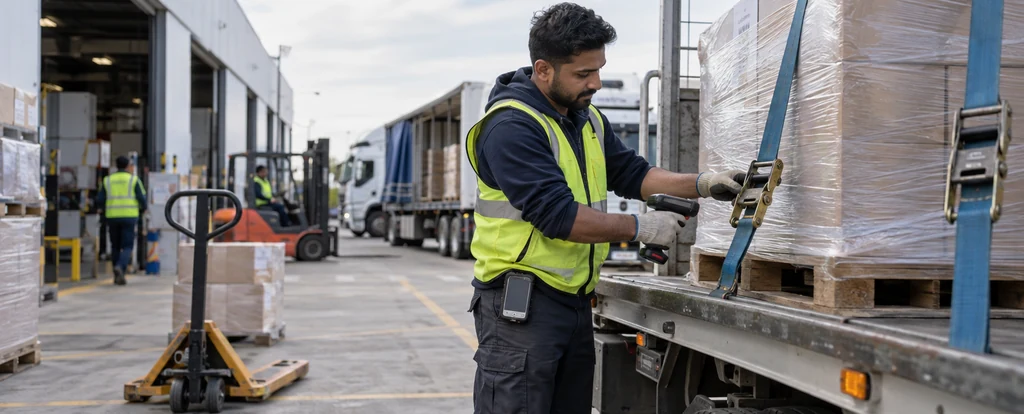
- Securing loads with straps, ropes and restraints before the truck moves
- Checking delivery dockets against the freight as it is loaded
- Guiding the driver when reversing into docks and tight customer sites
- Collecting signatures and completing proof of delivery on a handheld scanner
What skills do truck offsiders need?
Employers look for driving and transport operations, warehousing and despatch, inventory management, backed by Electronic proof of delivery (EPOD) system fluency and strong physical stamina and dexterity.
Specialist skills
- Driving and transport operations
- Warehousing and despatch
- Inventory management
Software and tools
- Electronic proof of delivery (EPOD) system
- Handheld barcode scanner
- Forklift
- Pallet jack
- GPS navigation
General skills
- Physical stamina and dexterity
- Customer service
- Safety and compliance awareness
- Attention to detail
Is the job growing?
About 1,300 people work as truck offsiders in Australia, and employment is projected to decline 1% over the decade to 2035. That's a real decline, worth weighing carefully before training into the role.
How do you become a truck offsider?
Here's the path most truck offsiders take, step by step.
- 1Apply for an offsider or freight handling job
The role has no formal entry requirement. Employers look for physical fitness, reliability and a driver licence, and many offsiders move across from warehouse or yard work. The most common qualification in the workforce is a Certificate III/IV, held by about 34% of truck offsiders, but it is not needed to start.
- 2Get the cards and licences that open up sites
A White Card is required to work on construction sites, and a forklift licence lets you load and unload pallets yourself where there is no dockhand. Both are short courses, often a day or two.
- 3Learn load restraint properly
Nationally recognised load restraint training covers the straps, chains and rated equipment used for different types of freight. It is the part of the job with the clearest safety and legal rules, and it transfers directly to driving work later.
- 4Add a heavy vehicle licence if you want to drive
An MR or HR licence opens the move into truck driving. Offsiders already know the loading routine, the routes and the customers, which is the experience an employer looks for when a driving position comes up.
Ready to apply as a truck offsider?
Whether you're working toward becoming a truck offsider or already are one and want a hand with the next step (sharpening your resume for ATS screening, tightening your cover letter, or knowing what you'll actually be asked at interview), here are examples grounded in this specific role, not generic templates.
What jobs can a truck offsider move to?
Moving into Truck Driver typically comes with the biggest pay rise, worth $39,500 a year more on average.
| Move to | Typical pay change | Overlap | Retraining |
|---|---|---|---|
| Truck Driver A truck offsider already loads and secures freight, so moving into truck driving adds a heavy vehicle licence and on-road responsibility. | +$39,500 | 50% | short course |
| Courier A truck offsider already sorts and handles freight, so courier work adds van driving and timed deliveries. | +$15,800 | 50% | short course |
| Delivery Driver A truck offsider knows freight handling and loading routines, so delivery driving adds vehicle operation and customer drop-offs. | +$5,600 | 60% | short course |
| Removalist A truck offsider's loading, lifting and securing skills transfer directly to removalist work, with little extra training needed. | +$0 | 71% | minimal |
Moves are chosen from Jobs and Skills Australia's Data on Occupation Mobility, which follows income tax records between 2011-12 and 2020-21, together with entry requirements and skill overlap. A known move is one people were seen making in that data. Pay change compares median full-time pay for the two roles.
Who works as a truck offsider?
The typical truck offsider is 27 years old; 91% are men, 48% work full-time, and full-timers average 44 hours a week.
- 27
- Median age
- 9%
- Female share
- 48%
- Full-time
- +4h
- vs all-jobs avg
What's it like being a truck offsider?
The day has a clear shape: load up, run the stops, hand over the freight, then return empty or reloaded. The pressure is physical rather than mental, with delivery windows and weather sitting on top of the lifting. People who like being outdoors, working with their hands and finishing each run tend to settle in, and the job suits anyone who wants to start earning quickly while deciding whether to move toward driving.
What people like
- You are never stuck at a desk. The work is outdoors and physical, and a run takes you to different sites rather than one fixed spot.
- Two-person crews share the load. You work alongside the same driver for a shift, so there is company and someone to read a difficult site with.
- The day's work is visible. Freight loaded is freight delivered, and the run ends when the last item is off the truck, which gives the job a clear daily finish.
- You can start without a qualification. Employers mostly want fitness, reliability and a licence or two, so offsiding is a way into transport with training on the job.
What people find hard
- The lifting is constant. Building materials, whitegoods and drink pallets are handled by hand as often as by equipment, and backs carry the cost over years.
- Long days and early starts. Full-time offsiders average 44 hours a week, and freight schedules often mean starting well before dawn.
- Delays are out of your hands. Traffic, a slow loading dock or a customer who is not ready pushes the run out, and the crew absorbs the pressure at the next stop.
- Tight quarters with one other person. You spend the whole shift in a cab and on a tailgate with the same driver, which suits some people and wears on others.
Based on our synthesis of professional-body surveys and public accounts of the role, not first-person verified reviews.
Which industries employ truck offsiders?
Road Freight Transport employs the largest share of truck offsiders, followed by Retail Trade.
Top employing industries
- 1Road Freight Transport
- 2Retail Trade
- 3Wholesale Trade
- 4Construction
- 5Manufacturing
Ranked by employment share; the source doesn't publish an exact percentage per industry.
| Certificate III/IV | 34% | |
|---|---|---|
| Diploma / Advanced Diploma | 26% | |
| Bachelor degree | 20% | |
| Year 12 or below | 20% |
Will AI replace truck offsiders?
The role sits at moderate exposure to AI and automation. Scheduling, docketing, scanning and proof-of-delivery records are increasingly handled by software, and routing tools decide the order of stops, but no system can lift a fridge or tension a strap. The admin around the run is exposed; the physical handling at each end largely is not.
Share of typical working time by exposure level
- Loading and unloading freightFreight still comes off the truck by hand, pallet jack or forklift, and the shape, weight and stacking order of each load changes stop by stop.35%low
- Route planning and scheduling around the driverRouting software sets the order of stops and estimated times, while the crew still works around site access, traffic and dock queues.25%moderate
- Securing loads with straps and restraintsChoosing the right strap, chain or rated restraint for the load and checking it holds is still a hands-on judgement made at the tailgate.20%low
- Proof of delivery and docket paperworkHandheld scanners and phone apps now capture signatures, photos and delivery times on the spot, replacing paper dockets and the filing that went with them.20%high
Moves least exposed to AI
These career moves from truck offsider work are rated low for AI exposure:
- Removalist
High skill overlap (71%), little retraining to get there, and a low automation-risk profile.
Common questions about becoming a truck offsider
Straight answers to the questions people ask most.
How much do truck offsiders earn?
Full-time truck offsiders earn a median of $62,400 per year before tax. Because much of the work runs on shift rosters and enterprise agreements, weekend and overtime hours can lift take-home pay above that figure.
How do you become a truck offsider?
Most people apply directly for offsider, freight handling or warehouse roles, since the job has no formal entry requirement. A driver licence, a White Card and load restraint training make you easier to hire.
Are truck offsiders in demand?
Truck offsiders are currently not in shortage, and employment is projected to decline 1% over the decade to 2035 over the decade to 2035. With the role itself barely changing in size, openings tend to come from people leaving rather than new positions, so licences and a good driving record help you stand out.
Will AI replace truck offsiders?
Not the physical part of the job. Route planning, scheduling and proof-of-delivery paperwork are increasingly handled by software and phone apps, but someone still has to load, restrain and hand over the freight at each stop.
What can a truck offsider move into?
Truck driving pays $39,500 more and builds on the loading skills you already use, once you hold a heavy vehicle licence. Delivery driving ($5,600 more) and removalist work (about the same) also draw on the same handling, securing and customer contact experience.
Do you need a forklift licence to be a truck offsider?
No, but it helps. A forklift licence lets you load and unload pallets yourself at sites with no dock equipment, which makes you more useful to an employer.
Related roles
Not sure this is you? Take the career quiz and get a ranked shortlist of roles that fit how you like to work.